TOP 13 Best Maze Games — Play Free Online
Few gaming experiences match the pure satisfaction of finally cracking a maze you've been stuck in for ten minutes. The best Maze games do something clever — they take a simple premise (find the exit) and layer it with enough variety, tension, and clever design that you genuinely lose track of time. Whether the labyrinth hides monsters, physics puzzles, dinosaurs, or alphabet characters, the core appeal stays the same: spatial reasoning meets problem-solving meets that specific joy of suddenly knowing exactly where you are.
This guide covers the top Maze games available on FreeJoy right now — all free, all playable in your browser without registration or installation. We tested each one, assessed the mechanics, and ranked them based on what actually makes a maze game worth your time.
What Makes the Best Maze Games Stand Out
Picking the best Maze games for this list meant setting clear standards. With hundreds of titles available, "maze" alone isn't a useful filter. Here's what separated the top picks from the also-rans:
Mechanical depth — The best maze games don't just ask you to find the exit. They add enemies, time limits, physics interactions, or story context that make navigation decisions feel meaningful rather than arbitrary.
Level design quality — A well-designed maze is asymmetric and layered, with multiple apparent routes and deliberate dead ends that teach you something about the layout rather than just wasting your time. Poor maze games generate random corridors. Great ones craft them.
Replayability — Do you want to run through again after finishing? Either because the difficulty ramps up, the design is varied enough to feel fresh, or there are score systems that incentivize optimization. Games that expire after a single run didn't make this list.
Accessibility — Everything here runs in your browser without plugins, account creation, or downloads. Smooth performance on mid-range hardware was a baseline requirement.
Player reception — FreeJoy user data (play counts, ratings, session lengths) provided a useful signal beyond our own testing. Games that hold attention consistently tend to earn it.
Tone variety — Horror, comedy, educational, action, puzzle. The best collection of maze games covers the spectrum rather than repeating the same approach eight times.
With those filters applied, here's what survived.
Top 8 Best Maze Games Ranked
1. Robby: The Speed Maze
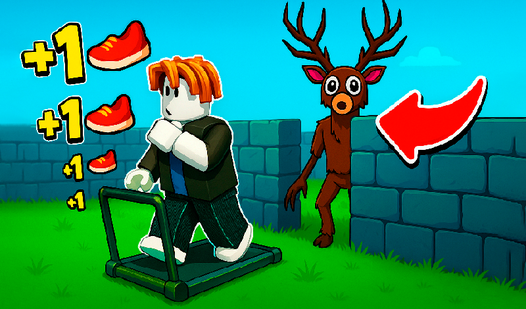
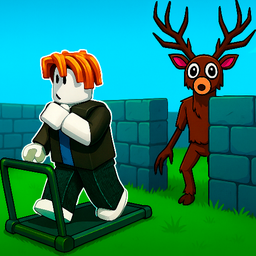
Robby: The Speed Maze earns its spot at the top because it does something most maze games don't: it makes speed feel genuinely dangerous. The mazes are intricate, designed with multiple routes and hidden passages, but you can't take your time exploring them because the game is constantly throwing monsters, mechanical traps, and environmental hazards into your path.
The level design deserves specific praise here. Each stage introduces new obstacle combinations rather than recycling the same threats with slightly longer corridors. One level might feature roaming enemies with predictable patrol patterns that you can learn and route around. The next throws in pressure plates that activate wall spikes, requiring you to figure out the trigger sequence before committing to a path. The variety keeps the game feeling fresh well past the early stages.
For players who like optimization — finding the fastest clean route through a stage — Robby delivers excellent replay value. The timing mechanics reward efficient play without punishing exploration on your first attempt.
Robby: The Speed Maze
Staring at the clock waiting for the workday or school hours to end can feel like an eternity. Robby: The Speed Maze is the perfect escape when you ne...
▶ Play Free2. Robbie Horror: Herobrine's Maze
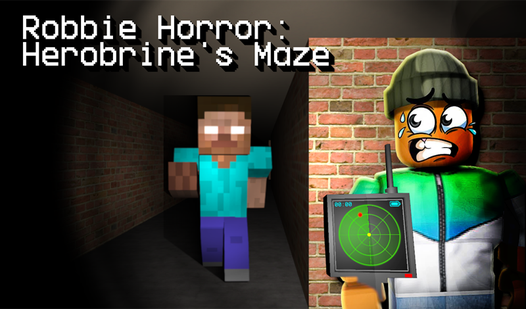
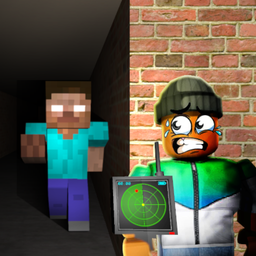
If Robby is about speed, Robbie Horror: Herobrine's Maze is about dread. This 3D horror experience drops you into dark labyrinths with one goal: find the exit before Herobrine finds you. The Minecraft-adjacent visual style gives it an immediately recognizable aesthetic, and the developers use that familiarity cleverly — the familiar blocky world made threatening and claustrophobic through lighting and audio design.
The maze layouts in this game are notably disorienting in a way that feels intentional rather than careless. Corridors look similar enough that you'll second-guess yourself even on paths you've already traveled. That disorientation is the mechanic — Herobrine exploits your uncertainty, appearing where you least expect it because you don't have a confident mental map of the space.
The audio design elevates the experience significantly. Footsteps, ambient sounds, and the subtle audio cues that signal danger nearby all contribute to an atmosphere that makes this one of the best Maze games for players who want genuine tension rather than abstract puzzle-solving.
Robbie Horror: Herobrine's Maze
Staring at the clock while the minutes crawl by is the ultimate workday struggle, but a pulse-pounding escape is only a click away. Robbie Horror: Her...
▶ Play Free3. Space Shooter: Space Maze
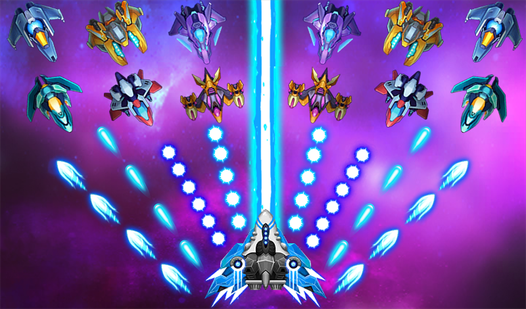
Genre fusion is tricky to pull off. Space Shooter: Space Maze manages it by treating both halves of its concept with equal seriousness. The maze structure isn't a gimmick layered onto a shooter — it's the core of the level design, shaping how combat plays out by controlling sight lines, movement options, and positioning.
The space-themed presentation gives the developers visual vocabulary they use well. Corridors lit by neon energy conduits, zero-gravity sections that change movement physics, enemy types suited to the environment. The classic block-breaking elements integrate with the maze in ways that feel organic: destroying certain walls opens new routes, while others might collapse and cut off paths you'd planned to use.
Players coming from either genre will find something familiar here. Shooter fans get satisfying combat mechanics. Puzzle fans get maze layouts that reward careful planning. The crossover audience — which turns out to be larger than you'd expect — gets something that feels genuinely fresh.
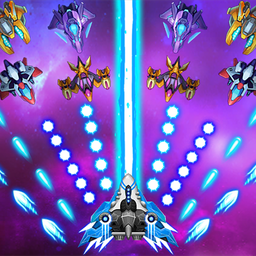
Space Shooter: Space Maze
Staring at a stagnant screen while your coffee gets cold is the ultimate productivity killer. Space Shooter: Space Maze turns those dull moments into ...
▶ Play Free4. Dinopark: Survive in the Maze
The premise of Dinopark: survive in the maze sounds like it should produce a chaotic mess: a puzzle game set in a prehistoric labyrinth where you're simultaneously navigating corridors and dealing with dinosaurs. In practice, the game earns its concept by making the dinosaurs genuinely part of the puzzle rather than obstacles stapled on top of maze navigation.
Different dinosaur species behave in distinct ways. Smaller ones patrol fixed routes and ignore you if you stay out of their line of sight. Larger ones respond to sound, meaning how quickly you move affects whether you attract attention. The maze layout is designed with these behavioral differences in mind — certain routes are only viable if you understand that particular dino's detection range and movement speed.
The tone is lighter than the horror entries on this list, which makes it more accessible for players who want strategic challenge without atmosphere that gets under your skin. The visual design is colorful and expressive, giving each dinosaur personality that makes learning their behavior feel like character study rather than mechanical memorization.

Dinopark: survive in the maze
Navigating a complex labyrinth requires sharp instincts and even sharper math skills when prehistoric predators are hunting you down. Dinopark: surviv...
▶ Play Free5. Alphabet Lore Maze
Alphabet Lore Maze carries an educational label, but dismissing it as "just a kids' game" would be a mistake. The Alphabet Lore universe — built around letter characters with distinct personalities — provides a genuinely inventive framework for maze puzzle design that works for players of any age.
Each maze level is structured around specific letters, and the puzzle mechanics require understanding sequences and letter relationships while navigating the labyrinth. The challenges scale from simple recognition exercises in early levels to complex sequential puzzles later that require you to plan several moves ahead. The maze layouts become significantly more intricate as you progress, demanding real spatial reasoning regardless of whether the alphabet theming is personally meaningful to you.
For younger players, this is an excellent entry point — it builds problem-solving habits and pattern recognition while remaining genuinely engaging. For adult players, the later levels deliver legitimate challenge wrapped in a presentation that keeps things light.
6. My Magic Maze
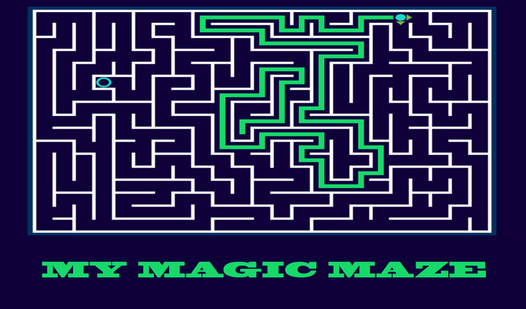
My Magic Maze earns its spot through sheer commitment to the maze genre as a pure form. There's no combat, no horror atmosphere, no educational framing. Just you, hundreds of increasingly complex labyrinth designs, and the satisfying work of navigating through them.
The magic theming provides visual variety that prevents the extensive level count from feeling monotonous. Different magical environments — enchanted forests, crystalline caverns, arcane towers — each bring distinct visual languages and, in the better-designed sections, mechanics that suit their aesthetic. Moving through a crystalline maze feels different from navigating a forest labyrinth, not just visually but in terms of how the level designers used the space.
The difficulty curve is calibrated carefully enough that players new to maze games can build their skills through the early stages, while experienced players will find the later levels genuinely demanding. My Magic Maze offers more hours of pure maze content than anything else on this list — if the genre itself is what you love, this is the endurance champion.
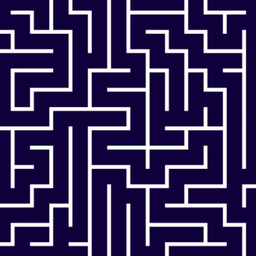
My magic maze
Fans of brain-teasing puzzles will find their new obsession with My magic maze, a challenge that tests your spatial awareness and patience. This addic...
▶ Play Free7. Cheburashka and Huggy Wuggy in the Maze
This game shouldn't work as well as it does. Combining Cheburashka — the beloved Soviet animated character known for warmth and friendship — with Huggy Wuggy from Poppy Playtime produces a tonal clash that somehow resolves into something genuinely effective.
The contrast is the mechanic. Cheburashka's cheerful, rounded visual design against the dark, threatening maze corridors and Huggy Wuggy's looming presence creates a sustained dissonance that keeps you on edge. You're rooting for a character you want to see safe, which makes the threat feel meaningful rather than abstract.
The maze layouts are designed with chase mechanics in mind — multiple routes between any two points, hiding spots that provide temporary safety, and dead ends that become traps when Huggy Wuggy is close. Learning the maps rewards careful players while keeping the urgency high for everyone. This is one of the best Maze games for players who want emotional stakes alongside the navigation puzzle.

Neon Maze
Navigate glowing corridors by tilting your device to guide a sphere toward the exit of a shifting labyrinth. Neon Maze turns simple navigation into a ...
▶ Play Free8. Balls in the Maze — A Challenging Puzzle
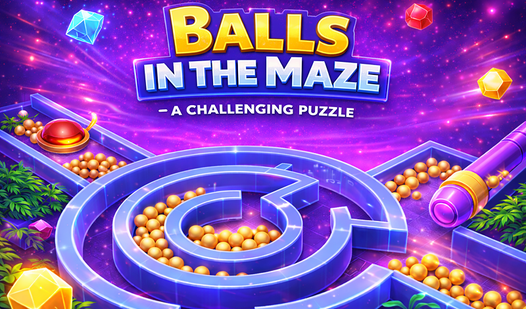
The physics-based approach that Balls in the Maze takes sets it apart from every other game on this list. You don't navigate through the maze directly. You guide balls out of it using physics interactions — manipulating the environment, creating bounces, exploiting momentum — with no direct movement control over the balls themselves.
The puzzle design is specifically built to defeat your intuitions. Solutions that look correct fail in unexpected ways because the physics simulation honors rules your assumptions didn't account for. A ball that should bounce toward the exit instead catches an edge and rolls backward. A path that seemed clear has a subtle slope that redirects everything wrong.
When you finally solve a level that's been defeating you, the satisfaction hits hard precisely because the solution feels discovered rather than figured out — you tested ideas, watched them fail informatively, and eventually constructed an understanding of the level that made the right approach obvious. That's difficult to design, and Balls in the Maze executes it reliably across its level set.
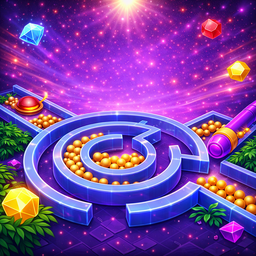
Balls in the Maze - A Challenging Puzzle
Fans of brain training games will find their new obsession with the relaxing mechanics found in Balls in the Maze - A Challenging Puzzle. Players navi...
▶ Play FreeAlso Worth Playing
Beyond the eight featured titles, FreeJoy's maze collection includes several games that nearly made the main list:
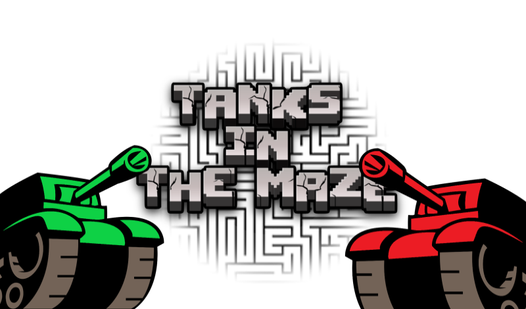
Tanks in The Maze adds vehicle combat to the labyrinth — navigating narrow corridors while managing tank fire creates a spatial puzzle with kinetic payoff. The maze constrains your movement in ways that make the combat feel tactically interesting rather than straightforward.
Tanks in The Maze
Fans of high-stakes tank battles will find their new obsession navigating the tight corridors of Tanks in The Maze. This fast-paced action game pits y...
▶ Play FreeBuild a Maze reverses the concept entirely. Instead of solving a labyrinth, you construct one and test it against an AI pathfinder. Creating a maze that's genuinely confusing without being unsolvable turns out to be harder than it sounds, and the creative challenge is endlessly engaging.
Build a maze
Fans of strategic puzzle games will absolutely love the unique challenge found in Build a maze. This addictive title turns simple geometric constructi...
▶ Play FreeBoth are worth your time if you exhaust the top eight or want something that approaches the genre from a different angle.
Tips for New Players
Getting started with maze games is easy. Getting good at them requires a few mental adjustments:
Treat dead ends as data, not failure. Every dead end tells you something useful: that route doesn't lead to the exit. Rather than feeling frustrated, recognize that you've successfully eliminated a possibility. You're not lost — you're mapping.
Watch enemies before engaging their territory. In games with enemy patrols (Robby, Dinopark, Huggy Wuggy), spending five seconds observing movement patterns before committing to a route pays off far more than moving fast and reacting to whatever appears. Most enemies follow consistent patterns. Learn the pattern, then exploit it.
Use landmarks aggressively. Maze corridors often look similar by design. Find visual anchors — a distinctive wall marking, a differently colored tile, an unusual architectural feature — and use them to build a mental map. "The turning where the cracked wall is" beats "somewhere in the middle section."
Change your direction heuristic when stuck. If you've been consistently turning in one direction at junctions, try the opposite. Many maze games are designed with players' natural turning preferences in mind, and the intended route often requires breaking that habit.
In physics games, observe before acting. Balls in the Maze rewards patience. Run the ball once without trying to win — just watch what the physics do naturally. The level design often reveals its solution through how the default physics behave.
Shorter sessions solve more puzzles. Spatial reasoning degrades with fatigue faster than most players expect. A maze that seems impossible after thirty minutes of failed attempts will often look straightforward after a ten-minute break. Fresh eyes genuinely see different things.
Sound is navigation data. In horror maze games especially, audio cues about enemy proximity and direction are as useful as visual information. Play with audio on and pay attention to directionality — what you hear often tells you where not to go before you can see the threat.
Why Maze Games Remain One of Gaming's Core Experiences
Maze games have existed in some form since the earliest days of interactive entertainment, and the reason is simple: they map directly onto a problem-solving instinct that humans have always had. Finding efficient paths through complex environments is something our brains are specifically wired to do and to find rewarding.
Modern maze games layer this fundamental engagement with contemporary design vocabulary. Horror games use the maze to amplify threat — disorientation as atmosphere. Physics games use it as a mechanical constraint that makes simple-sounding challenges complex. Educational games use it to contextualize learning in a way that makes the maze itself the motivation rather than the reward.
The free browser format suits maze games particularly well. Sessions can be short without feeling incomplete — finishing a single maze level in five minutes is genuinely satisfying in a way that spending five minutes in an open-world game often isn't. The contained scope of each level creates natural session breakpoints that fit browser gaming habits better than almost any other genre.
FreeJoy's collection of the best Maze games online covers every approach to the genre. Whatever draws you to labyrinths — speed, survival, puzzles, exploration — there's something here that matches it.