How to Play Maze: Rules, Strategies & Free Games
Learning how to play Maze games is surprisingly straightforward — but mastering them is a whole different story. From hand-drawn labyrinths on paper to full 3D horror experiences, maze games have been captivating players for decades. If you're figuring out how to play Maze games for the first time, or looking to sharpen your existing skills, this guide covers everything: the core rules, smart strategies for escaping faster, and a lineup of the best free maze games available online right now.
What Is a Maze Game?
A maze game is any game where the primary challenge is finding a path through a complex network of passages — from a starting point to an exit. The genre spans an enormous range. There are gentle puzzle mazes for kids, intense speedrunning labyrinths, horror survival corridors, and even maze-shooter hybrids. The common thread is always the same: explore, orient yourself, and find the way out.
Maze games have been part of gaming culture since the earliest arcade era. Pac-Man's maze is arguably the most iconic layout in gaming history. Since then, the genre has grown to include everything from classic 2D overhead layouts to sprawling procedurally generated 3D dungeons with enemies lurking around every corner.
What makes them interesting isn't just the path-finding. It's the pressure. A maze is rarely a static puzzle. There are timers, monsters, traps, locked doors, and hidden passages. The rules of Maze change depending on the subgenre, but the fundamentals stay constant.
How to Play Maze: The Core Rules
Understanding how to play Maze comes down to a few universal mechanics that apply across nearly every version of the genre.
Movement and Navigation
You control a character — or sometimes a ball, vehicle, or object — through a grid or free-roam environment. Movement is typically handled with arrow keys, WASD, or touch controls. Your goal is to move from the starting point to the exit, which is usually marked clearly: a door, a glowing portal, a flag, or an open path leading out of the level boundary.
Finding the Exit
Sounds simple, but labyrinths are designed specifically to confuse. Paths loop back on themselves, corridors look identical, and dead ends are everywhere. Your job is to systematically explore the space without losing your bearings. Many games add a fog-of-war mechanic — you can only see the immediate area around your character — which forces you to build a mental map as you go.
Hazards and Obstacles
Most maze games layer on enemies, traps, or time pressure. In some games, touching a wall resets your progress. In others, monsters patrol the corridors and catching you means instant death or significant progress loss. Locked doors require keys scattered across the maze. Pressure plates, switches, and levers open new paths. These mechanics sit on top of the navigation puzzle to create something far more dynamic than pure path-finding.
Scoring and Completion
Completion conditions vary:
- Reach the exit — the most common win condition
- Collect all items before exiting — forces thorough exploration
- Beat the clock — adds pressure and rewards route knowledge
- Survive until escape — common in horror and survival maze hybrids
Understanding which mode you're playing changes your entire approach before you take a single step.
Strategies That Actually Work
Knowing the rules is one thing. Finishing efficiently is another. These strategies consistently improve performance across maze game types.
The Right-Hand Rule
The oldest maze-solving algorithm: keep your right hand touching the wall at all times as you move. This guarantees you'll eventually reach the exit — as long as the maze is simply connected (no isolated interior loops). It won't always find the shortest path, but it will find a path. Great for unfamiliar mazes when you have no map and no prior knowledge of the layout.
Build a Mental Map
The moment you start a new maze, stop rushing. Walk methodically and build a mental picture of where you've been. Dead ends are useful information — note them so you don't backtrack into them repeatedly. In video games, use distinctive landmarks, in-game markers, or memorize turning patterns. The players who finish fastest on their second run are the ones who mapped carefully on their first.
Prioritize Intersections
Intersections are where decisions happen. At every fork, pause and evaluate. Which direction seems to have more open space? Does one path narrow suspiciously, suggesting a dead end? Are there any visual hints — a glow, a sound, enemy movement — pointing toward the goal? Over time you develop an instinct for which paths look promising, and this instinct is what separates casual maze players from efficient ones.
Manage Your Resources
In games with pickups — keys, health, ammo, power-ups — don't hoard. Use what you find when it makes sense. A key you're carrying does nothing if you never find its lock. Health packs saved "for later" are wasted if you run out first. Collect early, use strategically, and don't leave rooms empty-handed if items are sitting there.
Speed vs. Safety Trade-offs
Some mazes reward speed with score multipliers or time-based stars. Others punish rushing with sudden deaths. Know which type you're playing before you start moving fast. If there's a leaderboard and you know the layout, sprint through familiar sections and slow down only at decision points. If it's your first time through an unknown maze, patience wins every time.
Best Free Maze Games Online
1. Robby: The Speed Maze
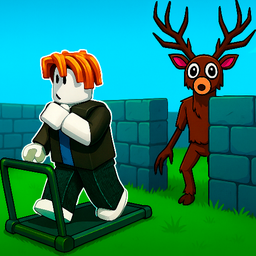
If your ideal maze includes monsters chasing you through every corridor, Robby: The Speed Maze delivers exactly that. This game throws intricate labyrinth layouts at you while populating them with monsters, traps, and obstacles that require quick reactions as much as navigation skill. The speed element means you can't cautiously probe every dead end — you need to commit to paths and adapt when they don't pan out. Great for players who find pure puzzle mazes too slow.
Robby: The Speed Maze
Staring at the clock waiting for the workday or school hours to end can feel like an eternity. Robby: The Speed Maze is the perfect escape when you ne...
▶ Play Free2. Robbie Horror: Herobrine's Maze
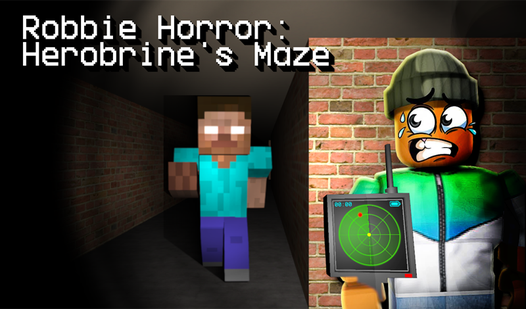
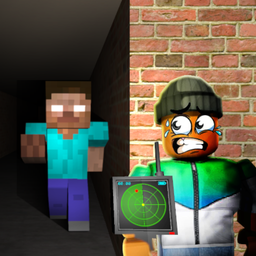
For players who want their maze experience wrapped in genuine atmosphere, Robbie Horror: Herobrine's Maze stands out. This 3D horror maze game puts you in dark labyrinths where the goal isn't just navigation — it's survival. Low visibility, oppressive sound design, and constant threat of enemies make every corridor feel dangerous. Learning how to play Maze in a horror context means accepting that panic is part of the design, and learning to override it.
Robbie Horror: Herobrine's Maze
Staring at the clock while the minutes crawl by is the ultimate workday struggle, but a pulse-pounding escape is only a click away. Robbie Horror: Her...
▶ Play Free3. Space Shooter: Space Maze
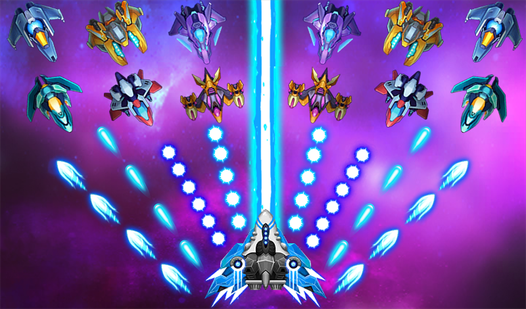
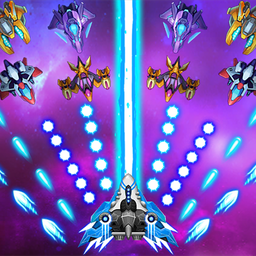
Not every maze game needs to be a labyrinth explorer. Space Shooter: Space Maze layers classic block-breaking mechanics on top of maze structures, creating something genuinely fresh. You're moving through a space-themed environment while handling shooter elements — which means strategic movement matters as much as firing accuracy. The maze layout changes how combat works and vice versa, producing unexpectedly deep gameplay once you get past the first few levels.
Space Shooter: Space Maze
Staring at a stagnant screen while your coffee gets cold is the ultimate productivity killer. Space Shooter: Space Maze turns those dull moments into ...
▶ Play Free4. Dinopark: Survive in the Maze
Dinopark: Survive in the Maze turns the genre into a strategic puzzle with a prehistoric twist. You're exploring a labyrinth full of dinosaurs, and you need to outwit them — not necessarily outrun them — to progress. The puzzle design encourages thinking about pathing and enemy positioning before committing to a move. The art style is charming enough to work for younger players, while the difficulty scaling keeps adult players genuinely engaged.

Dinopark: survive in the maze
Navigating a complex labyrinth requires sharp instincts and even sharper math skills when prehistoric predators are hunting you down. Dinopark: surviv...
▶ Play Free5. Alphabet Lore Maze
Alphabet Lore Maze does something clever: it wraps maze exploration in an educational context, building alphabet knowledge while players solve labyrinth puzzles. It works surprisingly well across age groups — kids learn while playing, and adults find the letter-recognition angle charming rather than condescending. If you want something that's genuinely fun but also leaves you knowing something useful afterward, this one earns its place.
How to Get Better Fast
Getting good at maze games requires deliberate practice, not just more hours played. Here are the habits that separate average maze players from consistently fast ones.
Replay completed mazes. After finishing a maze, replay it immediately. Your second run is almost always dramatically faster because you've eliminated uncertainty. The speed improvement — flying through a layout you previously struggled with — builds genuine maze intuition that transfers directly to new levels.
Learn to read maze structure. Maze designers reuse patterns. Long straight corridors often lead somewhere meaningful. Rooms with multiple exits are usually important hubs. Suspiciously isolated paths are often dead ends or traps. The more mazes you play, the better your pattern recognition becomes, and eventually you can "read" new mazes more efficiently from the first step.
Use sound as navigation data. In 3D maze games especially, audio carries information. Enemy sounds, ambient music shifts, and environmental effects often hint at your position relative to the exit or important items. Never mute sound effects in a maze game — you'll miss too much.
Grid instead of spiral. When exploring freely, resist the urge to spiral inward. Try maintaining a loose grid pattern instead: go north until you hit a wall, check east, continue. Systematic grid exploration covers territory more efficiently than intuitive wandering and significantly reduces the chance of missing sections entirely.
More Free Maze Games Worth Playing
Beyond the featured titles, there's a strong selection of maze games on FreeJoy covering different styles and skill levels.
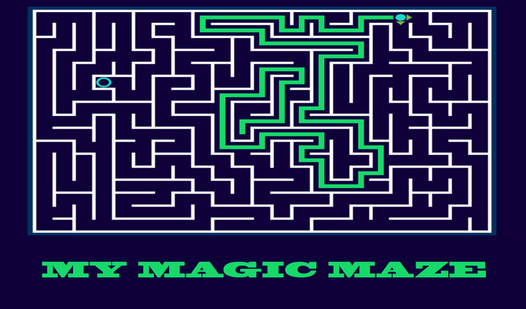
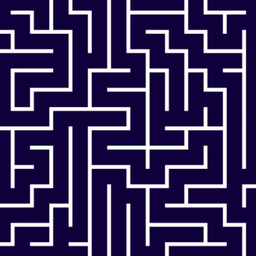
My Magic Maze takes a more whimsical approach — colorful visuals and puzzle elements that feel relaxed compared to survival-oriented maze games. Good for a casual session or introducing younger players to the genre.
My magic maze
Fans of brain-teasing puzzles will find their new obsession with My magic maze, a challenge that tests your spatial awareness and patience. This addic...
▶ Play FreeCheburashka and Huggy Wuggy in the Maze blends recognizable characters with maze puzzles in a way that's immediately accessible. The familiar faces make it easy to pick up, and the maze layouts have enough complexity to hold attention past the first few levels.
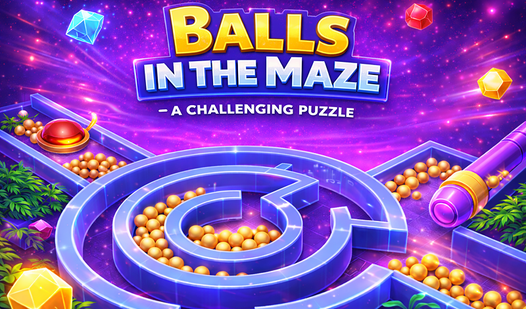
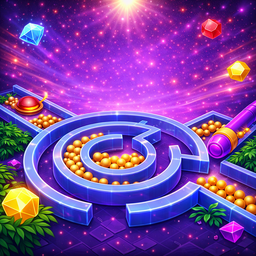
Balls in the Maze - A Challenging Puzzle takes the genre in a physics-based direction. Instead of guiding a character, you're rolling a ball through labyrinthine passages — which means momentum and inertia become part of the puzzle. Overshooting a turn sends you down the wrong path. The physics model makes even visually simple mazes genuinely challenging.
Balls in the Maze - A Challenging Puzzle
Fans of brain training games will find their new obsession with the relaxing mechanics found in Balls in the Maze - A Challenging Puzzle. Players navi...
▶ Play FreeBomberman in Maze Mod brings classic Bomberman gameplay into a maze context. You're dropping bombs, blasting through walls, and navigating — but the destructibility of the environment means the maze itself changes as you play. The static maze format gets a lot more dynamism when walls aren't permanent.
Exit the Maze lives up to its name with a pure, distraction-free maze exit challenge. No enemies, no gimmicks — just increasingly complex labyrinths that test navigation alone. If you want to train the core skill of how to play Maze without anything layered on top, this is the cleanest version available.
Maze Game Subgenres Explained
Not all maze games are the same, and knowing what subgenre you're playing helps you apply the right strategy before you start.
Classic 2D Overhead Mazes — Top-down view, full or partial layout visible. Puzzle-focused. The right-hand rule and grid exploration work well here.
3D First-Person Mazes — You see only what's directly in front of you, which is dramatically harder. Requires mental mapping, landmark recognition, and audio cues. Horror maze games almost universally use this perspective.
Physics Maze Games — You control an object with physics properties: a ball, a car, a rolling block. Navigation is complicated by momentum, friction, and gravity. Pure path-knowledge isn't enough — motor skill matters too.
Maze Hybrids — Maze layouts combined with other genres: shooters, horror survival, puzzle games, platformers. Each hybrid requires adapting core maze strategies to its secondary mechanic.
Procedural / Infinite Mazes — Fresh layouts every run, making route memorization impossible. These test raw spatial reasoning most directly, and they're the hardest to master because every session is genuinely new.
Common Mistakes Players Make
Even experienced players fall into these traps regularly.
Rushing early. The first few screens of a new maze game are when you learn the mechanics. Players who speed through them miss systems that become critical later. Spend extra time on the first few levels even if they feel easy.
Assuming dead ends are useless. Dead ends sometimes contain items, secrets, or shortcuts. Don't skip them entirely. Explore fully at least once on a new map.
Ignoring the map. Many maze games include a mini-map or a full map screen. Players inexplicably ignore it. Even a partial map with unexplored areas marked is invaluable for cutting down backtracking.
Panic movement. Under time pressure or enemy pursuit, players make random directional choices. Random movement in a maze is worse than systematic movement. When pressure mounts, slow your decision-making internally even if the external situation is urgent.
Mismatching approach to genre. Applying horror maze caution to a speedrun maze wastes time. Applying speedrun aggression to a horror maze gets you killed. Match your approach to what the game's design is actually asking for.
Why Maze Games Are Worth Your Time
Maze games get underestimated. They look simple — find the exit, it's just navigation — but well-designed maze games are genuinely complex experiences that develop real cognitive skills. Spatial reasoning, working memory, pattern recognition, and calm decision-making under pressure all get exercised seriously. Research on puzzle games consistently shows benefits for maintaining cognitive sharpness, and maze games specifically train the ability to hold and manipulate a mental model of a physical space.
Beyond the cognitive angle, they're satisfying in a very particular way. There's something uniquely rewarding about the moment when a confusing labyrinth suddenly clicks into a comprehensible map in your head — when you realize you know exactly where the exit is and every remaining path is just confirmation. That moment of spatial clarity is hard to replicate in other genres, and chasing it is a completely legitimate reason to keep playing.
The free maze games on FreeJoy cover the full range — casual to intense, friendly to frightening, relaxed to deeply strategic. Pick a difficulty level that matches your mood and start navigating.