TOP 10 Best Snake Games to Play Free Online
Snake games never really go away — they just keep getting better. What started as a single-button arcade concept in the 1970s and then conquered Nokia phones in the late 1990s has evolved into a surprisingly diverse genre. Today's best Snake games range from cutthroat multiplayer arenas to brain-bending puzzle challenges, and everything in between.
This list focuses on the best Snake games you can play right now, directly in your browser, completely free. No installation, no waiting, no paywalls. We've played through the options, filtered out the forgettable ones, and put together a top 5 that covers the full range of what the genre has to offer — plus a handful of extra picks worth bookmarking.
If you grew up playing classic Snake and want to see how far the concept has come, you're in for a treat.

Cute Snake io
Staring at a blank screen during a lunch break often feels like a chore, so why not spice things up with a little chaos? Cute Snake io turns those idl...
▶ Play FreeHow We Picked the Best Snake Games
Calling something a "best Snake game" is a real claim, so it's worth being transparent about how we judged them. Here are the criteria that guided every decision on this list:
Gameplay depth beyond the basics. Classic Snake is a great game, but a great list needs entries that build on the concept rather than copy it. We looked for games that add something — a mechanic, a twist, a new kind of challenge — that makes the experience richer than eat-and-grow alone.
Responsive, trustworthy controls. This is non-negotiable for Snake games. The entire genre is built on precision timing and split-second direction changes. If the controls are laggy, floaty, or inconsistent, even a brilliantly designed game becomes unplayable. Every game on this list passes the control test.
Replay value. A good game pulls you back after the first session ends. We prioritized games with progression systems, leaderboards, escalating difficulty, or enough procedural variety that no two runs feel identical. Games that burn bright and fade fast after twenty minutes didn't make the cut.
Accessibility. All picks work in any modern browser. No plugins, no downloads, no country restrictions. You should be able to click through and be playing within seconds.
Visual and audio quality. Presentation matters even for simple games. Clean graphics, satisfying sound design, and a coherent aesthetic all signal a game that was built with care. Several games on this list look genuinely impressive for browser titles.
Variety across the genre. A top list that contains five multiplayer .io games isn't a useful recommendation — it's just more of the same. We deliberately selected games that cover different playstyles, so no matter what kind of Snake game you're in the mood for, something here fits.

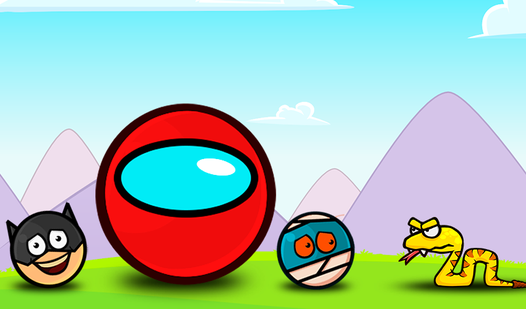
Red ball vs snakes
Platformer fans know that nothing beats the thrill of a high-speed chase where every bounce counts toward survival. Red ball vs snakes puts your refle...
▶ Play FreeTOP 5 Best Snake Games — Our Picks
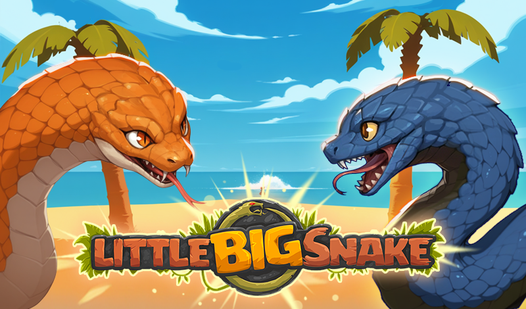
1. Little Big Snake — The Ultimate Multiplayer Arena
Little Big Snake is the competitive snake game done right. It drops you into a massive shared arena alongside hundreds of real players, all growing their snakes and trying to survive longer than everyone else. The .io format is familiar, but Little Big Snake layers enough original content on top to make it feel like a full game rather than a quick browser experiment.
The core mechanic works like this: slither around the map collecting glowing orbs, grow longer, and try to force other snakes into crashing into your body. When another player's head hits any part of your body, they're eliminated and their mass scatters across the map for you to collect. Every death becomes a feeding opportunity for survivors.
What separates the best players from the rest is the use of the speed boost. Tapping the boost key makes your snake lunge forward faster — but at the cost of losing body mass. The optimal play is to use boosts surgically: cut off an opponent's path, force a collision, then collect their remains before they can scatter too far. New players use boosts randomly and waste mass constantly; experienced players use them like surgical strikes.
Beyond the core combat, Little Big Snake has a substantial content layer. There are creature skins ranging from simple patterns to elaborate designs, upgradeable abilities that change how your snake handles in combat, and seasonal events that introduce new map areas and mechanics. The game rewards long-term engagement with a progression system that keeps things interesting well past the first few hours.
The lobby is almost always full of real players, which keeps every match genuinely unpredictable. You can never fully read the map because every player is making their own decisions. That human element is what makes competitive snake games feel alive in a way that solo games can't replicate.

Little Big Snake
Fans of classic arcade challenges and modern .io games will get hooked on Little Big Snake! This isn't your grandma's snake game; it's a vibrant arena...
▶ Play Free2. Snake Escape — Puzzle Mastery One Move at a Time
Snake Escape takes everything you know about the genre and flips it into a puzzle framework. You're not surviving — you're solving. The snake is trapped inside a grid-based level, and your only goal is to navigate it out through the designated exit.
The early levels look almost trivially easy. The grid is small, the path seems obvious, and you'll breeze through the first handful of challenges wondering what the fuss is about. Then the game introduces pressure plates that open and close gates, blocks that need to be pushed in a specific order, and exits that only unlock after you've cleared certain conditions. Suddenly you're spending five minutes on a single level, replaying it from scratch every time you box yourself in.
The puzzle design in Snake Escape is genuinely clever. Many levels have one clean solution and several dead ends that look promising until you're two moves in and realize you've blocked your own exit. The game teaches you to think about your snake's body as an obstacle — every space your tail occupies is space you can't pass through later unless you plan correctly.
What keeps Snake Escape from feeling frustrating is pacing. When you fail a level, you restart instantly. There's no penalty, no lives system, no countdown timer. The only cost of failure is a few seconds. This design choice keeps the experience meditative rather than stressful — you're thinking through a puzzle at your own pace, not racing against anything.
For players who want a calm, mental challenge rather than reflexes and competition, Snake Escape is one of the best Snake games on this list.

Snake Escape
Staring at a blank screen during a midday slump is the worst, but finding the right mental spark can turn your mood around instantly. Snake Escape off...
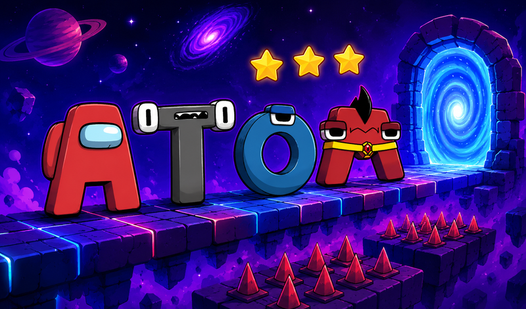
▶ Play Free3. Alphabet Lore: Snake — Personality-Packed Puzzles
At first glance, Alphabet Lore: Snake looks like a licensed kids' game built on familiar brand recognition. Spend ten minutes with it and that impression changes. The puzzle design is thoughtful, the difficulty curve is well-tuned, and the Alphabet Lore visual style adds genuine charm rather than just slapping recognizable characters on a generic game.
The setup puts you in control of a snake character themed around letters from the Alphabet Lore series. Each level is a grid puzzle where the snake needs to reach a goal — but the path isn't always obvious, and the growing body mechanic creates increasingly complex routing challenges as you progress.
What makes Alphabet Lore: Snake interesting rather than just cute is how it uses the character designs as actual gameplay elements. Different levels lean into the personalities of the letters, with visual cues that hint at the solution approach. It's a subtle design touch, but it rewards players who engage with the game's world rather than just grinding through levels mechanically.
The difficulty ramps at a reasonable pace. You'll cruise through the first dozen or so levels, then hit a point where you genuinely need to sit down and think. The game never becomes punishing — it just respects your intelligence enough to give you something worth solving.
Even if you're not familiar with the Alphabet Lore animations at all, this game stands on its own as a well-crafted puzzle experience. The visual identity is distinctive and appealing, and the gameplay holds up independently of any external reference.
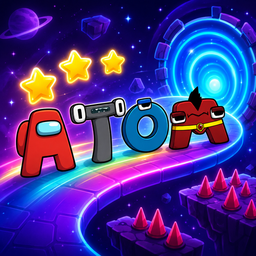
Alphabet Lore: Snake
Fans of logic challenges and alphabet lore will find this charming puzzle adventure impossible to put down. Navigating the snake across the grid requi...
▶ Play Free4. Army on Snake: Robots Attack — Strategy Meets Snake
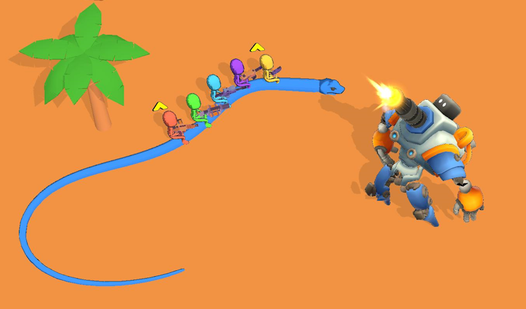
This is the most conceptually ambitious entry on the list, and it earns its spot by delivering on an unusual premise. Army on Snake: Robots Attack takes the snake growth mechanic and repurposes it as an army-building system. Your snake isn't just getting longer — it's getting stronger.
As you move through the game world, you collect military units that attach to your snake and extend its length. Each unit type has different combat properties, and your snake's overall combat effectiveness depends on which units you've collected and how many. When you encounter robot enemies — and there are plenty of them — your collected forces automatically engage while you focus on positioning and movement.
The strategy layer comes from deciding what to prioritize. Do you push deep into contested territory to grab powerful units, or play it safe near the edges and build your army slowly? Do you commit to attacking a heavily fortified robot base early, when you're small but agile, or wait until you've grown enough to overpower the defenses?
There's also a base-building element that rounds out the experience. Resources gathered during combat can be invested in upgrades and defensive structures that persist between runs. This gives the game a progression loop that feels more like a light strategy title than a typical arcade experience, and it's one of the reasons Army on Snake has real staying power.
Each run plays out differently depending on what spawns, what you collect, and how aggressively you push into enemy territory. The replayability is genuine — not manufactured through arbitrary randomness, but through the natural variety of strategic choices.
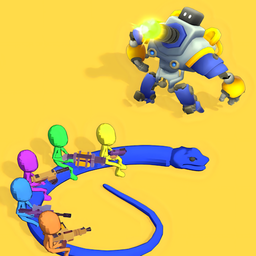
Army on Snake: Robots Attack
Modern warfare meets the classic arcade snake genre in a high-stakes battle for survival against mechanical invaders. Controlling a growing squad of s...
▶ Play Free5. Snake Puzzle: Slither to Eat! — The Classic Reimagined Thoughtfully
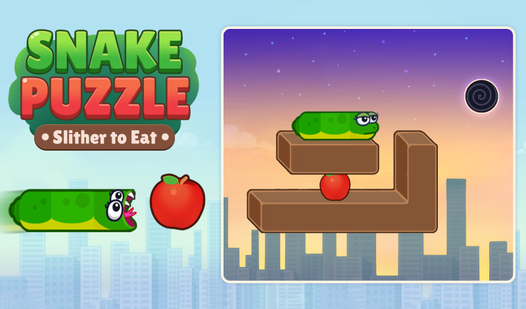
The final entry on this best Snake games list brings things full circle. Snake Puzzle: Slither to Eat! takes the fundamental mechanic that defined classic Snake — guide a growing serpent to eat — and restructures it around clean puzzle design.
Every level presents a grid with apples scattered across it and a snake that needs to eat them all to clear the stage. The catch is that your snake grows with each apple eaten, and the growing body blocks future paths. You need to plot a route through the entire board that lets you collect everything without boxing yourself in.
The spatial reasoning this game demands is surprisingly sharp. You learn to trace routes backwards from the final apple, thinking about where your tail will be at each stage of the path rather than just where your head is going now. It's a genuinely different way of thinking than classic Snake requires, and that mental shift is what makes the game interesting rather than just familiar.
Snake Puzzle: Slither to Eat! also has excellent level design. The puzzles feel handcrafted rather than randomly generated — each one has a satisfying solution that makes sense once you find it, and the difficulty escalates smoothly without any jarring difficulty spikes. Getting through a particularly tricky level gives the same quiet satisfaction as finishing a good crossword.
For anyone who loved classic Nokia Snake and wants to experience that nostalgia through a fresh, modern lens, this is the most direct recommendation on the list.
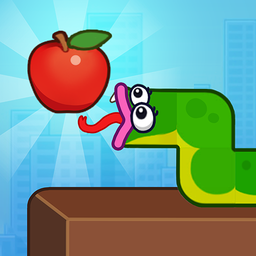
Snake Puzzle: Slither to Eat!
Stuck in a boring meeting or just waiting for your coffee to brew, you need a quick mental escape that actually stimulates your brain. Snake Puzzle: S...
▶ Play FreeMore Snake Games Worth Your Time
The top 5 cover the best of what the genre has to offer, but the snake genre runs deep. Here are three additional games worth adding to your playlist:
Noob Snake 2048 fuses the snake concept with the 2048 number puzzle that took the internet by storm a few years back. Your snake grows by eating numbered blocks, and blocks with matching values merge when they collide, increasing their number. The goal is reaching the highest number possible before you run out of board space. It sounds like a strange combination, but it works — both mechanics reinforce each other, and the result is a game that has more depth than either component alone.
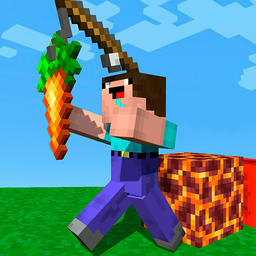
Noob snake 2048
Slither your way to numerical dominance by merging blocks in the addictive world of Noob snake 2048. You control a growing cube creature that merges w...
▶ Play FreeSnake: A Call to the Digital Circus brings one of internet animation's most recognizable casts into the snake game format. The Digital Circus characters translate surprisingly well into this context — their visual personalities carry into the game design, and even players unfamiliar with the source material will find the art direction distinctive and fun. The gameplay is solid snake action wrapped in a genuinely appealing aesthetic package.

Snake: a call to the digital circus
Navigate a colorful arena to collect glowing apples while growing your character in Snake: a call to the digital circus. This fast-paced experience bl...
▶ Play FreeSnake of Bullets: Collect and Shoot! goes in a completely different direction from the puzzle games. Here, your snake picks up weapons and ammunition as it moves, and then uses those collected tools to shoot through obstacles and enemies. The result is loud, fast, and satisfying — an action-oriented take that trades planning for pure reaction-based fun.

Snake of Bullets: Collect and Shoot!
Fans of action games will find a new obsession in Snake of Bullets: Collect and Shoot!, a title that blends classic genre mechanics into a single addi...
▶ Play FreeTips for Playing Snake Games Better
Whether you're new to the genre or returning after a break, a few practical habits will sharpen your performance across almost every type of snake game.
Don't rush the movement. Speed feels like an advantage but almost always creates problems. Moving faster gives you less time to react to obstacles, opponents, and your own body. Most new players play significantly too fast. A deliberate, controlled pace lets you read the board, spot threats early, and make smart decisions rather than reactive ones.
Think about your whole body, not just your head. This is the single most important mental shift in snake games. Your head decides where you go next, but your body determines what space is actually available. Before committing to a move, visualize where every segment of your tail will be after the next few turns. In puzzle games, this forward visualization is everything. In action games, it keeps you from accidentally cornering yourself.
Use the edges strategically in multiplayer. The center of an .io snake map is chaos. Multiple players converge there, collisions happen constantly, and it's hard to read the situation clearly. New players are much safer moving along the outer edges of the map, where there are fewer opponents. Build your length in calmer territory before pushing toward the high-traffic center.
In puzzle games, plan backwards. This is counterintuitive but effective: figure out where you need to end up and what configuration your snake needs to be in to complete the last few moves. Then trace backwards from that endpoint to find the only starting sequence that leads there cleanly. This works because most puzzle levels have one valid end-state, which constrains the entire solution.
Restart without guilt. Snake game rounds are short. In competitive games, you'll die dozens of times per session. In puzzle games, you'll restart levels many times before finding the solution. Treating each failure as a learning moment rather than a setback keeps the experience positive. The fastest improvement path is playing many short games, not trying to salvage a bad position in one long game.
Watch better players. Many multiplayer snake games let you spectate after you're eliminated. Use this time — observe where skilled players position themselves, how they use speed boosts, how far ahead they seem to be planning. Patterns that aren't obvious when you're playing become clear when you're watching without the pressure of keeping your snake alive.
In competitive games, don't grow indiscriminately. A longer snake is more powerful but also harder to maneuver. Early in a match, consider staying moderately sized to maintain agility. Only build maximum length when you're confident in your ability to control it and have enough board space to operate effectively.
The Snake Game Legacy
The concept traces back to the 1976 arcade game Blockade, but Snake became a cultural touchstone through Nokia phones. For a generation of people, Snake was their first video game — the thing available on their parent's phone when smartphones didn't exist and options were limited to whatever came preloaded on a handset.
The original's genius was its self-generating difficulty. You start with a tiny snake on an empty board, and as you eat and grow, your own body becomes your primary obstacle. The threat builds from nothing without any external enemy system — you make your own trap. This elegant design scaled naturally from beginner to expert across a single continuous session.
Modern snake games have taken that original tension and multiplied it. Multiplayer arenas transform every other player's growing body into a shared obstacle field. Puzzle games formalize the self-blocking mechanic into designed challenges. Action games give the snake external tools that make growth a source of power rather than danger.
The fact that all these variations still feel recognizably like Snake games — and that all of them still work as compelling gameplay — proves how well-designed the original concept was. Decades of evolution haven't improved on the core idea; they've just found new angles from which to appreciate it.