TOP 19 Best Multiplication Games — Free Online
Looking for the best Multiplication games to sharpen your math skills without boring textbook drills? You've landed in the right place. Whether you're a kid struggling with times tables, a parent searching for something educational yet genuinely fun, or just someone who enjoys a solid brain workout — this list covers 14 top-rated multiplication games you can play for free, right in your browser.
No downloads. No subscriptions. No app store required. Just open a tab, pick a game, and start playing. Every title here runs directly in your browser and works on both desktop and mobile.
Multiplication doesn't have to feel like a chore. The right game makes it feel like the natural thing you want to do between other tasks — and before you know it, those times tables are just in your head. Permanently.
How We Chose These Best Multiplication Games
Putting together this Multiplication rating wasn't random. We looked at several factors before each game made the cut:
Gameplay quality. Does it feel like a game or like a worksheet? A good multiplication game should be something you want to return to, not something you endure to earn a gold star.
Educational value. Does it actually teach multiplication, or just test it? The best entries on this list do both — they build understanding and push you to recall facts quickly under pressure.
Accessibility. Can anyone jump in without reading instructions for five minutes? The ideal game is intuitive from the first screen. If you need a tutorial just to understand what's happening, the design has already failed.
Variety of approach. Different learners absorb information differently. Some people need visual representation. Some need repetition with a progress tracker. Others learn better through puzzles that sneak multiplication into the background. This list covers all three types.
Browser performance. Everything here loads fast and runs smoothly. Nothing is more frustrating than a game that stutters right when you're in a flow state.
The result is a deliberately diverse mix: dedicated math trainers for serious practice, crossword puzzles with arithmetic twists, and casual merge games that build number sense while keeping your brain relaxed and engaged.
Top 14 Best Multiplication Games You Can Play Right Now
1. Cat Tower — Trainer for Multiplication Table
Cats make everything better — including times tables. Cat Tower wraps multiplication practice inside a charming tower-building game where your answers determine how high your kitty climbs. Answer correctly and the tower grows taller. Get it wrong and your cat stays stuck, looking mildly disappointed in you.
This game works particularly well for younger players who need repetition to lock in multiplication facts but get bored with traditional flashcard-style apps within minutes. The visual reward system keeps motivation high, the cats are genuinely adorable, and the pace hits a sweet spot between challenging and encouraging. Progress feels satisfying rather than punishing — a crucial distinction for learners who've already had difficult experiences with math.
Cat tower - trainer for multiplication table
Math enthusiasts and cat lovers will adore Cat tower - trainer for multiplication table, a cozy educational experience that turns arithmetic into a de...
▶ Play Free2. Multiplication Table
Sometimes you want something clean, focused, and completely free of distractions. Multiplication Table delivers exactly that — a structured trainer that walks you through the full multiplication table step by step, tracks your progress across sessions, and clearly shows which multipliers you've mastered and which ones still give you trouble.
It's not flashy, but that's entirely the point. If you're serious about learning your times tables and want to actually measure improvement over time, this is the most systematic tool on this list. It functions like a personal math tutor available whenever you need it — patient, methodical, and completely free.
Multiplication Table
Math enthusiasts and students needing a boost in their studies will find Multiplication Table the perfect companion for mastering arithmetic skills. T...
▶ Play Free3. Multiplication Simulator
Visual learners, this one's specifically built for you. Multiplication Simulator uses apples — illustrated, clearly grouped apples — to demonstrate what multiplication actually means at a conceptual level before asking you to recall anything from memory.
Instead of presenting "4 × 6 = ?" as an abstract formula, it shows you four distinct groups of six apples arranged on screen. You count them, you see the answer, and you understand why the answer is correct rather than simply memorizing that it is. This conceptual foundation is exactly what many learners are missing when multiplication facts refuse to stick, and providing it through a visual, interactive experience makes it far more effective than any explanation on a whiteboard.
Multiplication Simulator
Students and curious minds will love Multiplication Simulator because it turns boring arithmetic into a rewarding fruit-collecting challenge. You face...
▶ Play Free4. Multiplication Table Math Game
Consistent practice beats cramming — every single time. Multiplication Table Math Game builds on this principle by serving up a steady stream of multiplication problems in a format that's genuinely easy to pick up and harder to put down than you'd expect.
The interface is clean, feedback is instant, and difficulty scales naturally with your performance. What makes this stand out from a plain quiz generator is the way it gamifies the entire experience — you're not just answering questions in isolation, you're building a score, chasing streaks, and pushing against your personal best. Five minutes a day with this game, maintained consistently over a few weeks, adds up to real and measurable improvement.
Multiplication Table Math Game
Mastering the multiplication table becomes an exciting challenge when you turn daily practice into a competitive race against the clock. Every correct...
▶ Play Free5. Multiplication Table Training
Flexibility matters enormously when building a sustainable study habit. Multiplication Table Training lets you choose exactly which multipliers to focus on, so if 7s and 8s are your specific weak spot, you can drill those directly instead of cycling through the entire table every session.
The interface is refreshingly simple — no animations competing for your attention, no countdown timers cranking up stress. Just clean, customizable practice that respects both your time and your intelligence. This is the one to recommend to students preparing for a specific math test who need targeted, efficient review rather than a general refresher.
Multiplication Table Training
Students and math enthusiasts will immediately appreciate how Multiplication Table Training turns repetitive drills into an engaging challenge. Master...
▶ Play Free6. Math: Multiplication Table
Another strong trainer, Math: Multiplication Table keeps things approachable while being genuinely useful for building speed. The game presents multiplication problems at a comfortable pace, giving you actual thinking time rather than rushing you into panicked guessing — a design choice that pays dividends for learners who freeze under pressure.
What separates it from basic flashcard websites is the light game layer on top: a sense of progression, small rewards for correct answers, and a structure that makes returning to it feel natural the next day. Great for daily warm-ups before homework sessions or as a low-pressure way to maintain multiplication skills you've already built.
Math: Multiplication Table
Staring at the screen during a dull break and craving a quick mental workout is common, but Math: Multiplication Table turns those idle moments into p...
▶ Play FreeAt this point we've covered the core multiplication trainers — six games that directly target times table knowledge with different approaches and learning styles in mind. Now let's shift to something with a different flavor: games where arithmetic meets puzzle mechanics.
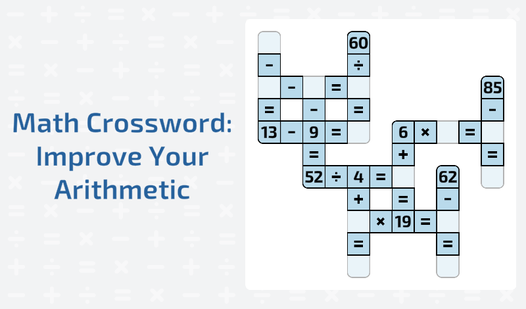
7. Math Crossword: Improve Your Arithmetic
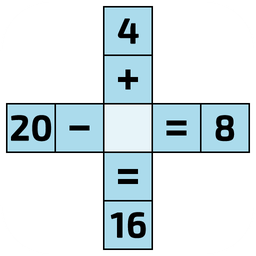
Crossword puzzles have trained vocabulary for generations. Math Crossword applies the same proven logic to arithmetic, and the result is more effective than it might initially sound. You fill in a grid — but instead of words, you're working with numbers, and the clues are multiplication and arithmetic problems you need to solve.
The crossword format forces a different kind of engagement than a standard quiz. A number that satisfies a horizontal clue might not satisfy the vertical one, so you're constantly cross-referencing your calculations and double-checking your work. That kind of active, multi-directional thinking produces retention that passive review simply can't match.
Math Crossword: Improve Your Arithmetic
Drag and drop number tiles into empty slots to solve complex equations in this addictive brain teaser. Math Crossword: Improve Your Arithmetic challen...
▶ Play Free8. MathCross: Math Crossword Puzzle
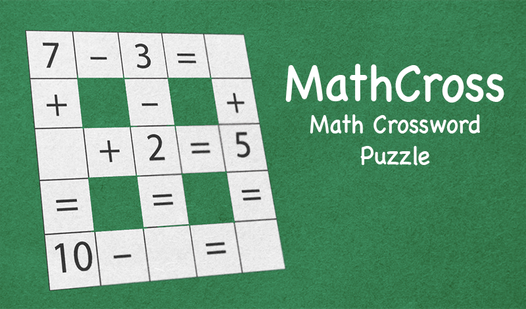
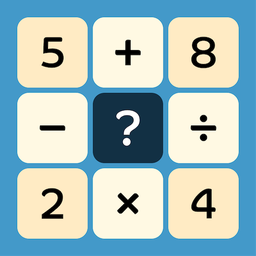
MathCross takes the crossword-arithmetic concept and scales it up significantly. The puzzles here are more complex, the grids larger, and the satisfaction of completing one noticeably higher. If Math Crossword is an engaging warm-up round, MathCross is the main event.
It's also a genuinely excellent option for adults who want to keep their mental math sharp without playing something that feels designed exclusively for a third-grade classroom. The puzzle format carries a sophistication that makes it comfortable to recommend to friends, colleagues, or family members regardless of age.
MathCross: Math Crossword Puzzle
Numbers are the universal language of logic, but rarely do they get to play the lead role in a grid-based brain teaser like they do here. MathCross: M...
▶ Play FreeNow for something entirely different. The next six games are merge puzzles — a category that rewards strategic thinking and naturally builds number intuition while you play. They're relaxing on the surface and more strategically rich than they first appear.
9. Merge the Flowers: Create a Summer Meadow
Picture a game board slowly filling with colorful flowers as you slide and combine matching tiles. Merge the Flowers puts a botanical spin on the merge-puzzle formula, with blooms that grow more elaborate and visually striking as you combine them into higher values.
The multiplication connection here is intuitive rather than explicit — you're constantly thinking in terms of doubling, combining, and working toward exponentially larger values. The math stays pleasantly in the background, but the number sense it builds over repeated sessions is real and transfers to other contexts. Beautiful to look at, genuinely engaging to play.

Merge the Flowers: Create a Summer Meadow!
Staring at the clock and waiting for your shift to end feels like an eternity when the workday hits a slump. Merge the Flowers: Create a Summer Meadow...
▶ Play Free10. Fairytale Mood: Build Your Dream Meadow
If Merge the Flowers is a bright summer afternoon, Fairytale Mood is its dreamy, storybook counterpart. The aesthetic shifts to something softer and more whimsical — illustrated flowers with a hand-drawn quality, a palette that feels like a children's book come to life.
The gameplay mechanics follow a similar merge-and-grow structure, but the atmosphere is distinct enough to feel like a genuinely different experience. Particularly appealing for younger players who respond to fairytale visual language, though the strategic depth of the puzzle is accessible to anyone who enjoys a relaxing brain teaser.

Fairytale Mood: Build Your Dream Meadow!
Matching puzzle games hit that perfect sweet spot between relaxing zen and intense strategy. Fairytale Mood: Build Your Dream Meadow! brings a charmin...
▶ Play Free11. Combine Fruits: Sweet Delight
Fruits add cheerful, saturated energy to the merge-puzzle format, and Combine Fruits makes excellent use of them. You slide fruits together to create new, more valuable ones — grapes become oranges, oranges become watermelons — and the visual progression is immediately satisfying in the way only good merge games can be.
The fruit theme makes numbers feel friendly rather than intimidating, which matters more than you might expect for players who've developed any level of math anxiety. Working out "what comes after this watermelon?" is the same mathematical thinking as "what's 2 × 32?" — just wearing a much friendlier outfit.
Combine fruits: Sweet Delight!
Matching games are the ultimate way to turn a boring coffee break into a high-stakes challenge of logic and reflexes. Combine fruits: Sweet Delight! t...
▶ Play Free12. Lightly Salted Cucumbers: 2048
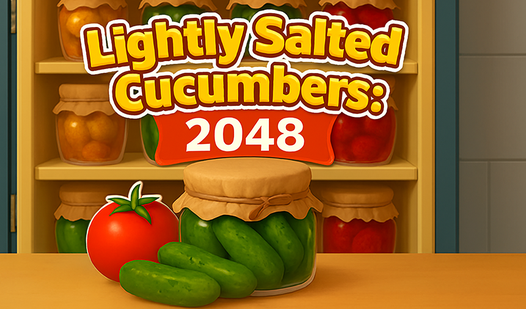
Yes, cucumbers. This is almost certainly the most unusual setting for a puzzle game on this entire list, and that's precisely why it works so well. Lightly Salted Cucumbers takes the classic 2048 sliding format and fills the grid with illustrated pickles that fall and connect when matching values meet.
The absurdity is genuinely the point. It's memorable, it occasionally makes you laugh, and it keeps you engaged well past the point where a more serious game would lose you. Meanwhile, you're doubling numbers in your head, working toward exponentially larger values, and building real mathematical intuition — without it ever feeling like practice.
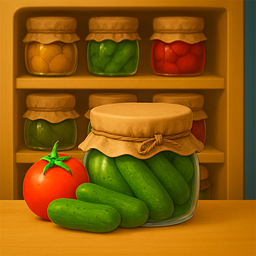
Lightly salted cucumbers: 2048!
Combine the crunchy challenge of a vegetable garden with the addictive logic of a classic puzzle to experience a fresh take on the genre. Lightly salt...
▶ Play Free13. Plant Vegetables: 2048
A close relative of the cucumber game, Plant Vegetables swaps the pickles for a full garden of produce. Carrots, tomatoes, cabbages — they all fall, combine, and grow into higher-value vegetables as you successfully slide them into matching tiles.
The 2048 mechanic is particularly well-suited to building multiplication instincts because every move requires thinking ahead: what values will this create, where will they land, and how do you avoid painting yourself into a corner? Casual enough on the surface to pick up and put down easily, but strategic enough underneath to keep you genuinely thinking.

Plant Vegetables: 2048!
Drop vibrant crops into the grid and watch them merge to master the classic 2048 formula with a fresh agricultural twist. You need to carefully positi...
▶ Play Free14. Merge the Medals: Awards from the USSR
Rounding out the list with something that brings genuine historical flavor. Merge the Medals takes Soviet-era military awards — visually distinctive medals with real history behind them — and builds a merge puzzle around their collection and combination. Medals fall into the play area, you combine matching ones to earn higher-ranked awards, and the visual progression through the hierarchy of decorations feels like assembling an actual collection.
The aesthetic is unlike anything else in this genre of math game, and the nostalgic quality adds a layer of cultural interest that goes beyond the puzzle mechanics. A great option to share with older family members who might not immediately warm up to a standard math trainer.

Merge the medals: Awards from the USSR!
Drop falling items onto the play area and watch them combine to form higher-tier rewards. This addictive puzzle challenge forces you to strategically ...
▶ Play FreeMore Games Worth Exploring
Can't get enough? Here are five more titles from the best Multiplication online collection that are absolutely worth adding to your rotation:
Merge Vases: 2048 — Elegant porcelain aesthetics meet sliding-puzzle strategy. Each combined vase is more ornate than the last, making the progression visually rewarding in a way that keeps you coming back.

Merge Vases: 2048!
Fans of addictive puzzle challenges will find Merge Vases: 2048! to be the perfect way to pass the time. This unique 2048 game puts a creative twist o...
▶ Play FreeMerging Wreaths: Connect the Summer — Seasonal wreaths that grow more elaborate with each successful merge, wrapped in a warm, inviting summer palette.

Merging wreaths: Connect the summer!
Staring at the clock while your coffee goes cold is the perfect signal that you need a mental refresh. Merging wreaths: Connect the summer is the ulti...
▶ Play FreeMerge Food 2048: USSR Store — A quirky, nostalgia-heavy puzzle featuring iconic Soviet-era grocery products. The combination of familiar items and satisfying puzzle mechanics makes it oddly compelling.
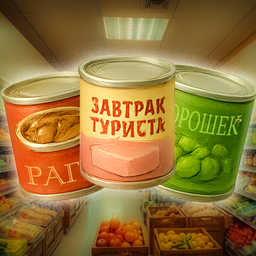
Merge food 2048: USSR store!
Drop colorful cans into the store inventory and watch them combine into higher values to master this unique puzzle challenge. Merge food 2048: USSR st...
▶ Play FreeMerge the Medals of the USSR — Another entry in the medal-merging category with a distinct collection of decorations and its own distinctive gameplay feel.

Merge the medals of the USSR!
Staring at a blank screen during a midday slump is the worst way to spend your free time. Merge the medals of the USSR offers the perfect distraction ...
▶ Play FreeHarvesting: 2048 — A harvest-themed merge puzzle where crops combine and grow across a seasonal progression. Satisfying in the deeply agricultural way only a good harvest game can manage.

Harvesting: 2048!
Staring at a blank screen during a midday slump is the worst, but a quick challenge is the perfect remedy to refresh your mind. Harvesting: 2048! turn...
▶ Play FreeTips for Getting the Most Out of These Games
Getting started is easy. Getting genuinely better at multiplication through games takes a little more intentionality. These habits will accelerate your progress significantly.
Start with understanding, not memorization. If you're learning multiplication for the first time, begin with Multiplication Simulator. See what multiplication is before you try to remember multiplication facts. Once the concept clicks, everything else sticks much faster.
Focus your drilling. Everyone has weak spots — for most people it's 7s, 8s, or 9s. Multiplication Table Training's customizable settings exist precisely so you can address those weaknesses directly instead of spending the bulk of your practice time on facts you already know well.
Alternate between game types. Rotate between the structured trainers (games 1–6) and the puzzle games (games 7–14). Trainers build speed and accuracy through direct repetition. Puzzles build number intuition and strategic thinking through indirect engagement. Both matter, and neither alone is sufficient.
Keep sessions short and consistent. Fifteen minutes every day is significantly more effective than ninety minutes once a week. Every trainer on this list is designed for sessions that short. Make one your default browser activity during a commute or a lunch break.
In the merge games, slow down and plan ahead. These reward strategic thinking, not speed. Before each move, consider what values you're about to create and where they'll land on the board. This habit — thinking several moves ahead — is itself a valuable form of mathematical reasoning.
Track your errors deliberately. When you miss a problem in a trainer, note which multiplication fact it was. Patterns in your mistakes are extremely informative. After a week of daily play, you'll have a clear picture of your actual weak spots rather than a vague sense that "I'm bad at big numbers."