How to Play Multiplication Games: Rules & Tips
Multiplication games have become one of the most effective ways to actually learn math — not just memorize formulas, but genuinely understand how numbers work together. If you're wondering how to play Multiplication games online, what the rules look like, and which free options are worth your time, you've landed in the right place.
Whether you're a parent looking for something engaging for your kid, a student who needs to lock in the times tables before a test, or just someone who wants to flex their mental math muscles, this guide covers everything from basic rules to smart strategies.
How to Play Multiplication: The Core Rules
Before jumping into the games themselves, it helps to understand what "multiplication" actually means as a game mechanic. Most multiplication games share a common structure: you're shown a math problem (like 7 × 8) and you have to provide the correct answer, usually under time pressure or within a limited number of attempts.
The fundamental rules across almost all multiplication games:
Know your factors. Every multiplication problem involves two numbers (factors) that you multiply together to get a product. In 6 × 9 = 54, the numbers 6 and 9 are factors, and 54 is the product.
Speed matters. Most online multiplication games reward fast answers. The quicker you respond correctly, the more points you earn or the faster you progress.
Accuracy over guessing. Random guessing usually costs you — either through lost lives, point penalties, or broken streaks. It's better to slow down slightly and answer correctly than to spam inputs hoping one sticks.
Progressive difficulty. Almost every well-designed multiplication game starts with simpler tables (×1, ×2, ×5, ×10) and ramps up to harder ones (×7, ×8, ×9). Don't skip the easy stuff — it builds your mental speed for when things get tough.
Track your weak spots. Good multiplication games highlight which tables you struggle with. Pay attention to those patterns rather than just grinding through your strengths.
What Makes Multiplication Games Different From Just Doing Worksheets?
Math worksheets are fine, but they're passive. You do them once, hand them in, and move on. Multiplication games create a feedback loop — you answer, you see the result immediately, and the game adjusts to what you actually need more practice with.
There's also the element of motivation. When a game wraps multiplication problems in a story, a character, or a progression system, your brain engages differently. You're not just solving math; you're playing. That shift in framing is surprisingly powerful for retention.
Games also tend to track your performance over sessions. You can see exactly how long it took you to answer 8 × 7 last Tuesday versus today. That progress visibility is harder to replicate with a pencil and paper.
Multiplication Strategies That Actually Work
Knowing the rules is one thing. Having a strategy means you'll actually improve rather than just grinding the same mistakes over and over.
Build Anchor Points First
Some multiplication facts are just easier to memorize and can serve as anchors for the harder ones. The ×5 table (everything ends in 0 or 5), the ×10 table (just add a zero), and the ×2 table (just double the number) are your foundation. Get these automatic before worrying about ×7 or ×9.
Use the Commutative Property
Multiplication is commutative — 6 × 8 gives the same answer as 8 × 6. This cuts your memorization load roughly in half. If you know 7 × 4 = 28, you automatically know 4 × 7 = 28. Many players don't consciously exploit this and end up treating them as two separate facts.
Patterns for the ×9 Table
The ×9 table has a beautiful pattern: the digits of the product always add up to 9 (9×2=18, 1+8=9; 9×3=27, 2+7=9; and so on). Also, the tens digit is always one less than the number you're multiplying by (9×4=36, the tens digit is 3, which is 4-1). Once you see this pattern, the ×9 table becomes one of the easier ones.
The ×8 Doubling Trick
For ×8, you can double three times: 8×7 = (7×2)×2×2 = 14×2×2 = 28×2 = 56. This sounds slow written out, but with practice your brain executes it in under a second.
Don't Drill Randomly — Target Weak Spots
If you practice every multiplication fact equally, you'll spend too much time on things you already know. Good multiplication games track which facts trip you up. Focus your practice sessions there. Spending 80% of your time on your worst 20% of facts will improve your overall speed faster than drilling everything evenly.
Timed Practice in Short Bursts
Research on skill acquisition consistently shows that shorter, more frequent practice sessions beat longer, infrequent ones. 10 minutes of focused multiplication practice every day will outperform a 90-minute cramming session once a week. Most online multiplication games are designed for exactly this — short rounds you can repeat daily.
Best Free Multiplication Games to Play Online
Now for the part you've been waiting for. Here are the top free multiplication games available right now, each with their own approach to making math click.
Cat Tower — Trainer for Multiplication Table
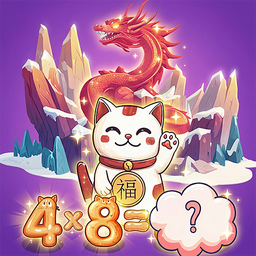
If you need something that makes learning feel genuinely fun, Cat Tower wraps multiplication practice in a charming tower-stacking game with animated kittens. The cozy aesthetic keeps younger learners engaged, but the math underneath is solid. You're drilling multiplication facts in a context that doesn't feel like drilling at all. The cat characters react to your answers, which gives just enough feedback to stay motivated through harder problems.
Cat tower - trainer for multiplication table
Math enthusiasts and cat lovers will adore Cat tower - trainer for multiplication table, a cozy educational experience that turns arithmetic into a de...
▶ Play FreeMultiplication Table
For learners who prefer a clean, no-frills approach, Multiplication Table focuses entirely on memorization through structured tasks. The game tracks your progress across all tables, showing you clearly which ones you've mastered and which still need work. It's the kind of tool that works well if you set a goal (master the ×7 table today) and work through it systematically. The progress tracking is genuinely useful for anyone following a study schedule.
Multiplication Table
Math enthusiasts and students needing a boost in their studies will find Multiplication Table the perfect companion for mastering arithmetic skills. T...
▶ Play FreeMultiplication Simulator
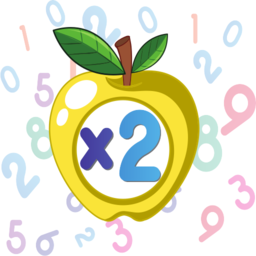
Multiplication Simulator takes a visual approach that works particularly well for learners who think in pictures rather than symbols. Instead of just showing you 4 × 3 = 12, it visualizes the multiplication with groups of objects (apples, in this case), helping you build an intuitive sense of what multiplication actually represents. This is excellent for younger learners or anyone who's been memorizing without really understanding what's happening mathematically.
Multiplication Simulator
Students and curious minds will love Multiplication Simulator because it turns boring arithmetic into a rewarding fruit-collecting challenge. You face...
▶ Play FreeMultiplication Table Math Game
This one is designed specifically for regular, habit-based practice. Multiplication Table Math Game presents problems in a clean interface that encourages you to return daily. The repetition model here is similar to flashcard apps — you keep seeing the facts you get wrong more often than the ones you've nailed. If you're preparing for a timed math test, this game's format will feel familiar and help you build genuine speed.
Multiplication Table Math Game
Mastering the multiplication table becomes an exciting challenge when you turn daily practice into a competitive race against the clock. Every correct...
▶ Play FreeMultiplication Table Training
The standout feature of Multiplication Table Training is its customization. You can select specific multipliers to focus on, which means you're not stuck drilling ×2 when you actually need to work on ×8. This kind of targeted practice is more efficient than randomized drilling. The interface is straightforward — no gimmicks, just a reliable simulator that lets you practice exactly what you need, when you need it.
Multiplication Table Training
Students and math enthusiasts will immediately appreciate how Multiplication Table Training turns repetitive drills into an engaging challenge. Master...
▶ Play FreeMore Multiplication Games Worth Trying
Beyond the featured picks above, these three games add variety to your practice routine — especially useful once the main games start feeling repetitive.
Math: Multiplication Table
A solid alternative for structured table practice, with a slightly different interface that some learners find easier to follow. Good for switching things up when you need a fresh format for the same material.
Math: Multiplication Table
Staring at the screen during a dull break and craving a quick mental workout is common, but Math: Multiplication Table turns those idle moments into p...
▶ Play FreeMath Crossword: Improve Your Arithmetic
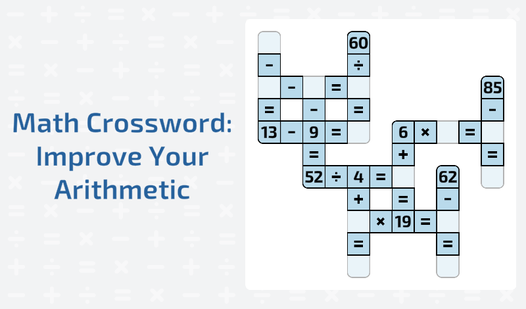
This one applies multiplication in a crossword puzzle format, which forces you to think about answers in context rather than isolation. If you've been drilling pure multiplication facts and want to apply them in a slightly different way, crossword-style math challenges your recall from a different angle. The crossword format also builds number sense more broadly, which supports multiplication fluency.
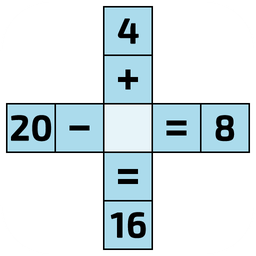
Math Crossword: Improve Your Arithmetic
Drag and drop number tiles into empty slots to solve complex equations in this addictive brain teaser. Math Crossword: Improve Your Arithmetic challen...
▶ Play FreeMathCross: Math Crossword Puzzle
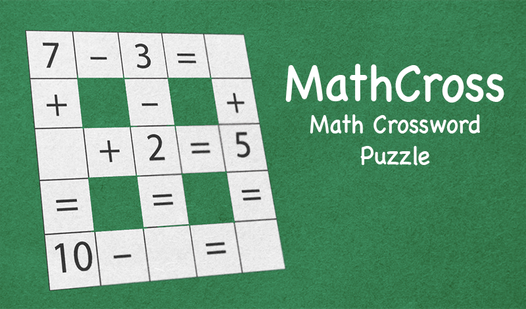
Similar crossword-style gameplay but with more complex puzzle structures. MathCross works well for learners who've already built solid multiplication foundations and want to challenge themselves with more demanding problem sets. The puzzle format means every answer you fill in affects the surrounding clues, so you can actually check your work as you go.
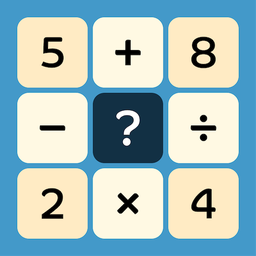
MathCross: Math Crossword Puzzle
Numbers are the universal language of logic, but rarely do they get to play the lead role in a grid-based brain teaser like they do here. MathCross: M...
▶ Play FreeBuilding a Multiplication Practice Routine
Having access to great games is only half the battle. The other half is actually using them consistently. Here's a routine that works for most learners:
Week 1-2: Foundation tables. Focus on ×1, ×2, ×5, and ×10 until they're instant. Use Cat Tower or Multiplication Simulator for engaging daily sessions of 10-15 minutes.
Week 3-4: Mid-range tables. Move to ×3, ×4, and ×6. Add Multiplication Table Math Game for structured tracking. Keep your Week 1-2 tables warm with quick review sessions.
Week 5-6: Hard tables. Tackle ×7, ×8, and ×9. Use the Multiplication Table Training's custom multiplier feature to focus specifically on these. Don't abandon earlier tables — rotate through everything daily.
Ongoing: Mixed practice. Once you've covered all tables, switch to random mixed practice to build genuine speed. This is where the crossword-style games become valuable — they present multiplication in less predictable contexts.
The key metric to track isn't just accuracy (getting the right answer) but fluency (getting it fast and automatically). You want multiplication facts to be reflexive, not calculated. That level of fluency takes weeks of consistent practice, but these games make the process significantly more engaging than any alternative.
Common Mistakes to Avoid
Skipping the boring tables. The ×1 and ×10 tables feel too easy to bother with, but drilling them builds the automatic retrieval habit your brain needs. Don't skip them.
Only practicing in one format. If you only play one game, your knowledge gets tied to that game's specific format. Using two or three different games — including crossword styles — builds more flexible knowledge.
Practicing when you're mentally exhausted. Multiplication practice requires active thinking. Doing it while half-asleep or distracted produces almost no improvement. Short sessions when you're alert are far more effective.
Ignoring errors. When you get something wrong, pause and figure out why before continuing. One moment of genuine understanding is worth more than ten more rushed repetitions.
Setting unrealistic goals. "Learn all multiplication tables in three days" usually ends in frustration and gives up. Sustainable improvement happens over weeks. Set a small daily goal (15 minutes, or a specific table to master) rather than a huge outcome goal.
Who Are Multiplication Games Actually For?
The obvious answer is children learning math in school — and yes, these games work extremely well for that audience. But multiplication games are genuinely useful for a broader range of people:
Adults returning to education. If you're going back to school or preparing for a math-heavy certification, refreshing your multiplication fluency through games is much faster than starting from scratch with textbooks.
Parents learning alongside their kids. Playing multiplication games together creates a shared activity that motivates the child while keeping the parent involved in the learning process.
Anyone who uses mental math at work. Estimating costs, calculating percentages, checking quantities — fast mental multiplication is a practical professional skill that these games actually train.
Competitive math learners. Some people compete in mental math competitions where multiplication speed is a scored skill. Regular game-based practice is a legitimate training method for this.
Final Thoughts
Learning multiplication doesn't have to be about grinding through rote repetition until the numbers stick. The games covered here — from the charming Cat Tower to the focused Multiplication Table Training — give you multiple angles of attack on the same underlying skill. Use them together, follow a consistent routine, and apply the strategies outlined above, and you'll find your multiplication speed improving faster than you'd expect.
The most important thing is to start. Pick one game from the list, set a 10-minute timer, and see how it feels. Adjust from there. The math isn't going anywhere, and neither is your ability to get better at it.