TOP 15 Best Japanese Games — Free Online
Japan has gifted the world some of the most captivating puzzle traditions, strategy games, and tile-matching experiences ever devised. If you're searching for the best Japanese games to play right now — zero installation, zero cost — you've found the right place. This list covers 13 genuinely excellent titles spanning meditative nonograms, traditional shogi, satisfying mahjong tile stacks, and classic spatial puzzles. Every game runs in your browser and is completely free on FreeJoy.games.
Japanese-style games have a particular quality: they're easy to pick up for a few minutes, but they create a pull that keeps you going far longer than you planned. There's clean logic to a nonogram, deep strategy in shogi, and quiet satisfaction in clearing a mahjong board that no amount of flashy graphics can replace. That core appeal is what every game on this list shares.
How We Selected the Best Japanese Games
Not every game with a cherry blossom in the thumbnail belongs on a list like this. Three criteria drove the selection:
Authentic roots. Every game here either originates from genuine Japanese game traditions — shogi, mahjong, nonograms — or carries the unmistakable design DNA of Japanese puzzle culture: methodical logic, clean visual language, and reward structures built on patience rather than reflexes.
No barriers to entry. No pay-to-win mechanics, no mandatory account creation, no tutorial that runs 15 minutes before you're allowed to touch anything. You click, the game starts, you play.
Real variety. Japanese gaming culture spans centuries and dozens of distinct forms. This list doesn't just stack 13 mahjong games — it covers nonograms, chess variants, tangram puzzles, tile-connection games, and more. Whatever kind of thinker you are, something here fits.
With that foundation in place, here are the 13 best Japanese games to play free online.
TOP-13 Best Japanese Games: The Full List
1. Yamabusi Japanese Crosswords
Yamabusi is the gold standard nonogram experience for browser play. The grid is clean, the numbered clues are precise, and the payoff when a hidden picture slowly materializes from your correct cell choices is deeply satisfying. Difficulty scales naturally from approachable beginner puzzles to genuinely challenging grids that require careful logical deduction rather than guesswork. The monochrome aesthetic keeps distractions away and your attention exactly where it should be: on the numbers.
If you've never tried a nonogram before, Yamabusi is the perfect starting point. If you're a veteran, it'll feel like coming home.

Yamabusi. Japanese Crosswords
Logic puzzle enthusiasts will find endless satisfaction in Yamabusi. Japanese Crosswords as they unravel hidden images through careful deduction. This...
▶ Play Free2. Beautiful Nonograms — Japanese Crossword Puzzle
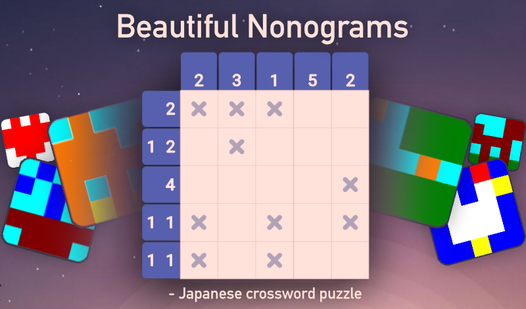
Same tradition, different feel. Beautiful Nonograms takes the core nonogram logic and wraps it in noticeably prettier presentation — soft color palettes, polished completed images, and a visual atmosphere that makes longer sessions more comfortable on the eyes. The puzzles themselves are solid and well-constructed, and the overall experience leans more toward relaxation than challenge.
Where Yamabusi is crisp and focused, this one is a bit like solving puzzles in a quiet garden. Both are worth playing; your preference depends on mood.
Beautiful Nonograms - Japanese crossword puzzle
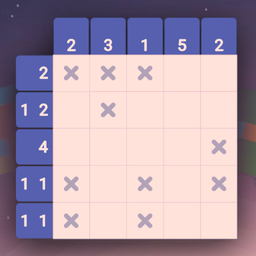
Reveal hidden pictures by filling in cells based on numerical clues found along the grid edges. Beautiful Nonograms provides a meditative experience w...
▶ Play Free3. Shogi: Japanese Chess
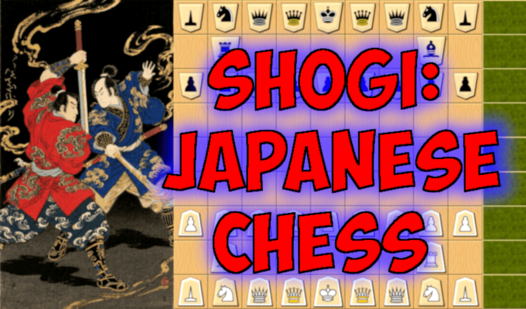
Here's where the list takes a serious strategic turn. Shogi shares a board-and-pieces structure with Western chess, but plays almost nothing like it. The rule that defines the entire game: when you capture an opponent's piece, it changes sides and joins your forces. You can then drop it back onto the board as your own piece on any future turn.
That single mechanic transforms the game entirely. Material never leaves play permanently, which means comeback victories are always theoretically possible, and the board state stays dynamic from the first move to the last. The browser version handles all rule enforcement automatically — legal moves are highlighted, captures are tracked — so you can focus on learning the strategic layer rather than memorizing restrictions.
Shogi takes longer to reach competence than mahjong or nonograms, but the ceiling is extraordinary. Players who get hooked tend to stay hooked.

Shogi: Japanese Chess
Shogi is a legendary strategy challenge that brings the ancient tradition of japanese chess to your screen with a unique twist. Unlike Western chess, ...
▶ Play Free4. Japanese Puzzle: Tangram
Tangram is a puzzle tradition with roots stretching back centuries in China and Japan alike. The setup is deceptively simple: you receive a set of flat geometric shapes — triangles of different sizes, a square, a parallelogram — and a silhouette outline to fill. Every piece must be used. None can overlap. The outline must be filled completely.
In practice, this is considerably harder than it sounds. Many silhouettes have multiple valid solutions, but finding even one requires genuine spatial reasoning. The game here features a solid variety of silhouettes from animals to abstract geometric forms, organized by difficulty. A clean, minimalist interface keeps the focus on the puzzle itself rather than the chrome around it.
5. Nonogram: Japanese Puzzle
A third nonogram entry, and it earns its spot. This version has a distinct puzzle set and a slightly different interface feel from the first two — the grid interactions have a somewhat different rhythm, and color is used more deliberately across the puzzle selection. If you're working through nonograms seriously and want volume, having multiple quality versions available means you won't hit a wall and run out of fresh puzzles.
The difficulty range here is well-distributed between genuinely accessible and properly challenging, making it suitable for both casual afternoon play and extended solving sessions.
6. Sakura Branch
Sakura Branch sits a little differently from the strict puzzle games on this list. The gameplay involves careful arrangement and spatial thinking, but the overall experience is framed in a distinctly Japanese aesthetic — soft pink blossoms, calm backgrounds, deliberate pacing. The game doesn't rush you, and the visual language communicates tranquility in every element.
If you want something that feels like a mental exhale rather than a mental workout, this is the pick. It's meditative in a way the more demanding logic puzzles aren't, and that serves a real purpose when you want engagement without tension.

Sakura Branch
Rotate scattered wooden fragments to reconstruct a majestic Sakura Branch and watch as it bursts into vibrant life. Sakura Branch challenges your logi...
▶ Play Free7. Vita Mahjong 2025
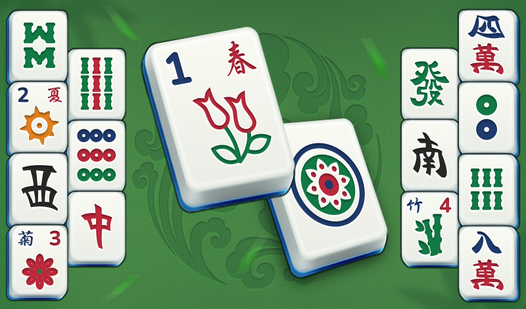
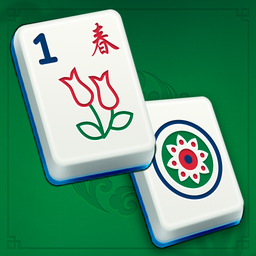
Mahjong solitaire is one of the most enduringly popular tile games in the world, and Vita Mahjong 2025 is one of the best browser implementations available. The tile graphics are large and readable, the interface is smooth, and the 2025 update brings improved performance and fresh tile set designs that make repeat play feel less repetitive.
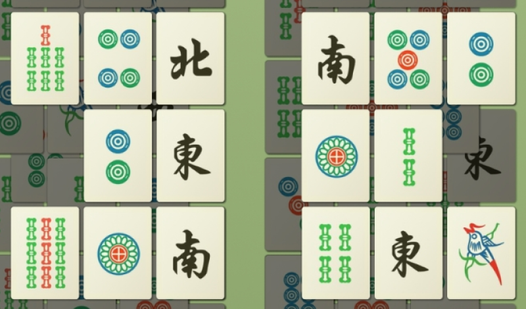
For anyone new to mahjong solitaire: the goal is to clear the board by matching identical tile pairs that have at least one open side. Stacking and layer order matter, so planning a few moves ahead consistently beats reactive clicking. This version teaches that rhythm quickly.
Vita Mahjong 2025
Matching ancient symbols has remained one of the most intellectually satisfying ways to unwind after a long day. Vita Mahjong 2025 elevates this class...
▶ Play Free8. Triple Mahjong
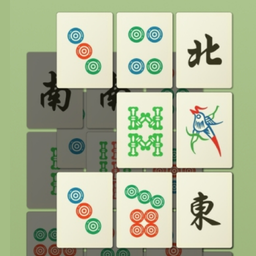
Triple Mahjong introduces a meaningful rule variation: instead of matching pairs, you need to find groups of three identical tiles. The change sounds incremental but substantially shifts the strategic calculus. Pair-matching allows a certain flexibility; triple-matching requires planning further ahead and managing board state more carefully.
The satisfying click when a valid triple lands and the tiles vanish is a slightly different texture than standard mahjong — maybe even more rewarding, because the search takes longer and the find feels earned. Recommended once you've internalized the basic mahjong logic and want a harder problem to chew on.
Triple Mahjong
Puzzle enthusiasts who enjoy a relaxing mental challenge will find Triple Mahjong an addictive way to unwind. This clever take on the classic mahjong ...
▶ Play Free9. Magic Mahjong
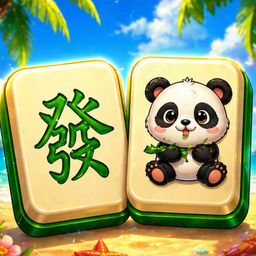
Magic Mahjong layers a fantasy visual theme over the solitaire mechanics — glowing tiles, mystical symbols, an atmospheric color palette that reads more like an illustrated spellbook than a traditional game set. The core gameplay is unchanged: match identical tiles with open sides, clear the board. But the aesthetic reframe makes it feel fresher for players who find traditional mahjong tile designs a bit dry after extended play.
The mechanic execution is solid, and the fantasy theme adds enough variety across tile sets to keep repeated sessions visually interesting.
Magic Mahjong
Clear the playing field by matching identical tiles in Magic Mahjong, a captivating puzzle experience that sharpens your mind. You will scan the compl...
▶ Play Free10. Rat's House — Nonogram
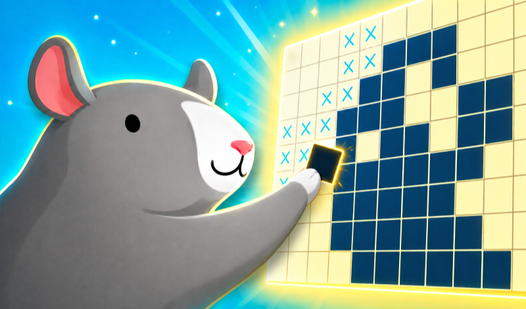
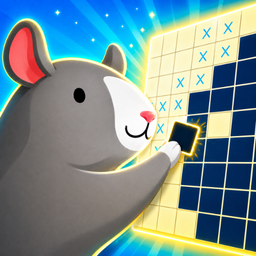
One of the warmest entries on the list. Rat's House pairs its nonogram puzzles with a cozy domestic theme — the completed grid images reveal small scenes from a comfortable rodent household, complete with furniture, cozy corners, and homey details. The puzzles are accessible rather than punishing, the illustrated art is genuinely charming, and the whole experience has the feel of a quiet evening with a satisfying puzzle book.
For players who find harder nonograms stressful or who want a more narrative-adjacent puzzle experience, Rat's House delivers something genuinely special.
Rat's House - Nonogram
Logic puzzles become truly cozy when you trade numbers for a bustling tower of adorable tenants. Rat's House - Nonogram blends the brain-teasing depth...
▶ Play Free11. The Shogun Nonograms
The Shogun Nonograms bring historical weight to the puzzle format. Every completed grid reveals imagery from feudal Japan — warriors, crests, castles, traditional weapons, and landscapes that feel pulled from woodblock prints. The theme gives each solve a sense of uncovering something rather than just completing a puzzle.
Difficulty is well-paced across the available levels, with enough variety to hold experienced nonogram players while still being approachable for those earlier in their puzzle journey. The combination of solid mechanics and genuinely evocative imagery makes this one of the stronger theme-based puzzle games in the best Japanese games category.

The Shogun nonograms
Fans of brain-teasing challenges and artistic expression will find their new obsession in The Shogun nonograms. These logic games invite you to uncove...
▶ Play Free12. Cozy Mahjong
The name is accurate. Cozy Mahjong is designed from the ground up for relaxation rather than competition. Soft pastel tile designs, gentle ambient audio, a forgiving pace, and a visual warmth that most mahjong games don't bother with — this version prioritizes the feeling of play as much as the mechanics.
It's a strong end-of-day game. The board clears satisfyingly, the sound design is pleasant without being intrusive, and there's no pressure anywhere in the experience. Multiple tile set options add variety without overcomplicating the interface.
Cozy Mahjong
Match identical tiles and clear the board in Cozy Mahjong, a relaxing online puzzle experience designed to unwind your mind. Swipe or click to select ...
▶ Play Free13. Onet PaoPao 2.0
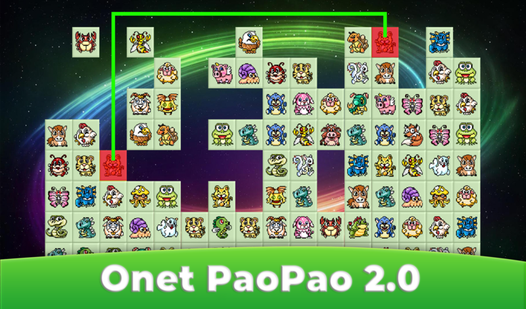
Closing the list with something distinct from everything above it. Onet PaoPao is a tile-connection puzzle: locate matching tile pairs and link them with a path that bends no more than twice. When a valid path exists, the pair clears. When the board gets crowded, finding legal connection routes becomes a genuine spatial challenge — you're not just matching images, you're navigating geometry.
The gameplay is fast and snappy in individual rounds, making it excellent for short sessions when you want puzzle satisfaction without a long time commitment. The 2.0 version brings cleaner graphics and smoother controls over the original.
Onet PaoPao 2.0
Fans of classic brain teasers will adore the vibrant challenge found in Onet PaoPao 2.0. This addictive puzzle experience requires sharp eyes and quic...
▶ Play FreeMore Games to Check Out
Two more titles from the FreeJoy catalog worth your time:
Free MAHJONG Online is the no-frills version for players who want to get straight into mahjong solitaire without any extra layers. No setup, no tutorial, just tiles and the goal of clearing the board.
Free MAHJONG online
Staring at a stagnant screen while your coffee gets cold is the universal sign that you need a quick mental escape. Free MAHJONG online serves as the ...
▶ Play FreeNoob and Pro: Uchiha vs Uzumaki brings anime energy to the mix. Inspired by the Naruto universe, this action game is a completely different flavor from the puzzle-heavy list above — but if Japanese pop culture gaming pulls you in as much as traditional puzzle formats, this one earns a place in your browser tabs.

Noob and Pro: Uchiha vs Uzumaki
Stuck in a boring meeting or just need a quick escape from your daily routine, Noob and Pro: Uchiha vs Uzumaki is the perfect remedy for your boredom....
▶ Play FreeTips for New Players
Getting started with Japanese-style games for the first time? A few things that will save you frustration:
Begin with nonograms if logic appeals to you. The rule set is short, difficulty scales cleanly, and there's no time pressure in any of the games on this list. Yamabusi or Rat's House Nonogram are both forgiving starting points. Once you've solved five or six puzzles, the logic patterns become intuitive and the difficulty range opens up naturally.
For mahjong, start with Vita Mahjong 2025. The interface is the most beginner-friendly of the three mahjong options here, and the tile graphics are clear enough that you won't spend half your attention trying to read what each tile depicts. Once the core matching logic is comfortable, Triple Mahjong or Cozy Mahjong are natural progressions.
Shogi rewards patience above all else. The drop mechanic — placing captured enemy pieces back onto the board as your own — takes genuine time to internalize. The best way to learn it isn't reading about it but watching how the computer uses captured pieces against you. Lose games deliberately, pay attention to what the CPU is doing, and the strategy will reveal itself over time.
Tangram is harder than it looks — for everyone. Spatial rotation is not a skill most people consciously practice, and Tangram exposes that gap quickly. If you're stuck on a silhouette, stepping away for a few minutes often works better than grinding at the same arrangement. Solutions tend to appear the moment you stop forcing them.
Sample broadly before committing. All 13 games here are free and immediately accessible. Spend 10 minutes on four or five of them before deciding which to stick with. The game that clicks for you might not be the one you expected — mahjong fans sometimes find nonograms captivating, and puzzle veterans occasionally discover shogi is the thing they've been missing.
The best Japanese games span a wide range of play styles and moods. Whatever brought you to this list — curiosity about Japanese game culture, the appeal of logic puzzles, or just the desire to try something different — there's a solid starting point somewhere in these 13.