Play Word Games Online With Friends — TOP 18 Free
There's something genuinely satisfying about sitting down to play word games online with friends — testing each other's vocabulary, racing against the clock, and arguing about whether "qi" counts as a real word. The best part? You don't need app installs, subscriptions, or special hardware. Every game on this list runs right in your browser, completely free, and most of them take under a minute to get started.
If you want to play word games online with friends tonight, this list gives you 10 solid options ranging from chaotic party-style explanation games to focused competitive spelling challenges. We've organized them by play style so you can find the right fit for your group — whether you're looking for a quick five-minute warm-up or a marathon session that goes well past midnight.
Best Multiplayer Word Games to Play With Friends
These games are built for social play. They work best when you've got a voice call running and bragging rights on the line.
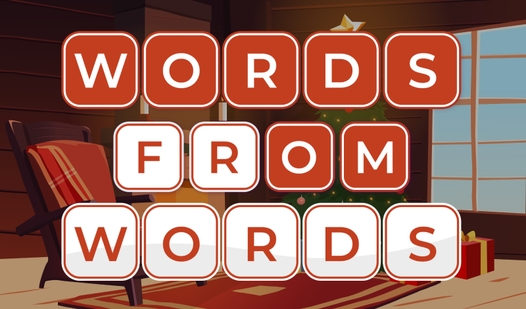
1. Words from Words
If you've ever stared at a jumble of letters and tried to squeeze every possible word out of them, Words from Words is your game. The premise is clean and simple: you're given a set of letters and your goal is to form as many valid words as possible from that pool. The catch? Everyone else is working with the same letters.
What makes this game particularly well-suited for friend groups is the shared-challenge format. Everyone starts equal, but different players will spot different words — the three-letter obvious ones, the rare seven-letter finds that blow everyone's minds. It's the kind of game where competitive word nerds and casual players can square off on even ground, because vocabulary isn't the only factor. Lateral thinking and pattern recognition matter just as much, and sometimes the person who isn't even trying wins by finding a word nobody else noticed.
Set a timer, compare results, and see who found the most. Simple, fair, and surprisingly deep once you start chasing those long words.
Words from Words
Language is a vast playground where even a single long noun hides dozens of shorter secrets waiting to be unlocked. Words from Words challenges your v...
▶ Play Free2. Letter Chain: Word Merge!
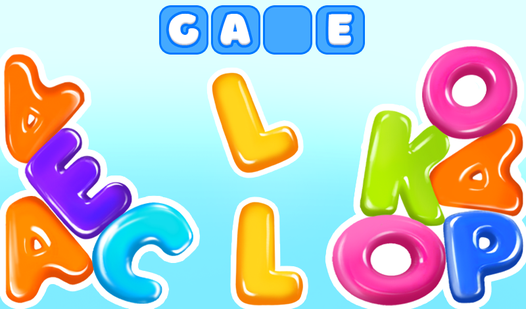
Letter Chain: Word Merge! takes the word-building concept and blends it with merge puzzle mechanics and balloon physics — a combination that sounds odd on paper but absolutely works in practice. You connect letter tiles to form words, and as you do, the board evolves. Balloons pop, chains extend, and the playfield shifts with each successful word you build.
Playing this one alongside friends creates a back-and-forth where everyone is trying to understand the board's logic before the others do. It's less about raw vocabulary and more about spatial awareness and puzzle intuition, which means players who aren't word nerds can still hold their own and occasionally outperform the bookworms. The merge mechanic adds a layer of strategy that pure word games don't have — you're not just thinking about letters, you're thinking about chain reactions.
For groups that like variety, this one stands out. It scratches the word game itch while feeling genuinely different from a standard crossword or spelling challenge.
Letter Chain: Word Merge!
Launch bouncy jelly letters into the air to collide and merge them into new characters across a vibrant playfield. Letter Chain: Word Merge! challenge...
▶ Play Free3. Alias Word
Alias Word is the digital version of the classic party game many of us played at family gatherings — except now you can play it with friends across the country without needing a physical box. One player gets a word and has to explain it to their teammates without using the word itself or obvious derivatives. The team guesses. Points are scored. Controlled chaos ensues.
What makes Alias Word work so well online is that it creates actual conversation. You're not just staring at a screen clicking buttons in silence — you're talking, gesturing (even over video), describing, and sometimes desperately saying "you know, the thing, THE THING" while your teammates howl. Of all the ways to play word games online with friends, this one generates the most laugh-out-loud moments.
It pairs perfectly with a Discord or FaceTime call. Split into two teams, take turns explaining, and keep a running score. With larger groups, the chaos scales up beautifully — four or five people all shouting guesses at once is genuinely fun in a way that most digital games can't match.
Alias Word
Word game fans who enjoy high-energy group challenges will find their new favorite pastime in Alias Word. This classic team-based challenge pits frien...
▶ Play FreeWord Puzzle Games You Can Play Together
Not every shared word game needs to be a head-to-head competition. Some of the best sessions happen when you're working through the same puzzle together, pooling your knowledge and arguing about the right answer. These games work great in cooperative mode.
4. English Words
English Words is a vocabulary and learning game that covers numbers, colors, shapes, and meals through structured tests. It works especially well as a cooperative challenge — one person reads out the prompt, the other guesses, and you swap. Lightweight and educational, it becomes genuinely competitive when you keep your own score and compare results at the end.
This one is also a great pick for groups that include people learning English. The structure is accessible and clear, but the tests can trip up even native speakers. Ask yourself right now how you'd spell "turquoise" or "millennium" without autocorrect. The game has a way of humbling confident players, which makes it a good equalizer in mixed-skill groups.
The test-based format also means sessions are short and repeatable. You can knock out a round in five minutes and immediately want to run it again to improve your score.
English Words
Mastering a new english vocabulary has never been this accessible or fun for young minds. English Words transforms the educational process into an int...
▶ Play Free5. MathCross: Math Crossword Puzzle
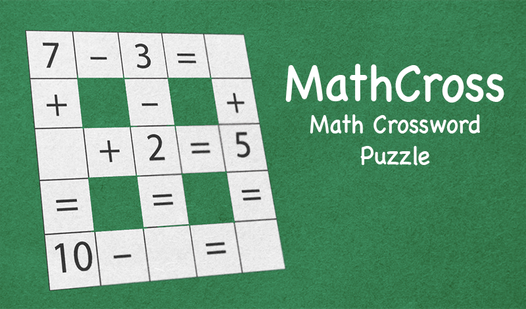
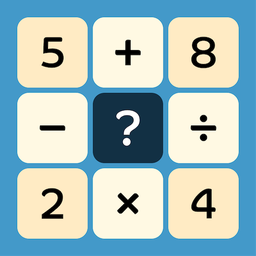
Yes, this is technically a math game — but the crossword format that word game fans already love is fully intact here. MathCross: Math Crossword Puzzle uses the familiar grid structure and cross-referencing mechanic, but the clues are arithmetic challenges rather than word definitions.
For friend groups that enjoy puzzles across categories, this is a brilliant format switch between heavier word rounds. It's also a solid choice when your group includes players who aren't strong spellers but have sharp numerical thinking — the math-brained member finally gets their moment in the spotlight, and that's good for group dynamics.
The crossword grid still requires the same systematic thinking as its word-based cousin: you're working from confirmed answers to fill in unknowns, checking across and down, and using process of elimination. The subject matter changes; the puzzle logic doesn't.
MathCross: Math Crossword Puzzle
Numbers are the universal language of logic, but rarely do they get to play the lead role in a grid-based brain teaser like they do here. MathCross: M...
▶ Play Free6. Mathematical Crossword
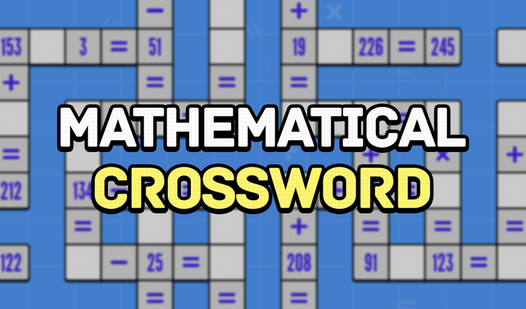
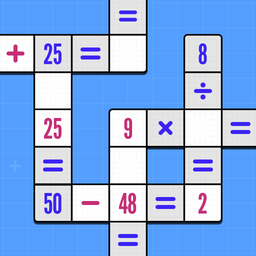
Mathematical Crossword is randomly generated every time you play, with adjustable difficulty settings that make it flexible for any group. Because the puzzle is always fresh, you never run out of content — you and your friends can keep generating new boards for as long as you want to keep playing.
The adjustable difficulty is what really sells this for regular use. Crank it up for competitive rounds where you want a serious challenge, or dial it back for a relaxed session where the goal is simply to finish the grid together before the timer runs out. The randomized generation means everyone is always playing blind — nobody has an advantage from having seen the puzzle before, which keeps competition fair across repeated sessions.
For groups that meet up regularly for game nights, this kind of infinite content with variable difficulty is genuinely valuable. You won't exhaust it.
Mathematical crossword
Drag numbers and operators into empty grid slots to solve equations and complete the logic grid. Mathematical crossword challenges you to balance rows...
▶ Play Free7. Math Puzzles: Crosswords
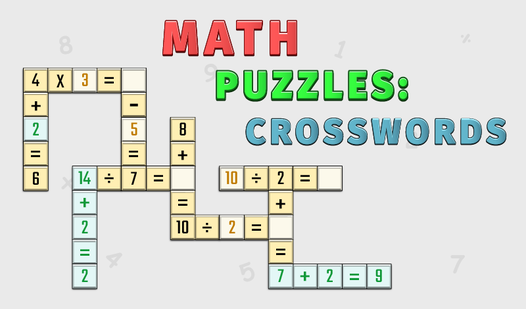
Math Puzzles: Crosswords combines the visual structure of crossword puzzles with mathematical logic, and is explicitly designed to work across all ages. If you have a wide age range in your group — kids, adults, grandparents — this is one of the few games that can genuinely bring everyone into the same activity without feeling watered down for the adults or impenetrable for the younger players.
The crossword grid provides the familiar visual structure, but the clues require number logic rather than vocabulary or trivia knowledge. It's a different mode of thinking, and one of the consistently satisfying things about this game is watching someone crack a clue you've been stuck on — that mix of frustration and admiration is the hallmark of a good cooperative puzzle.
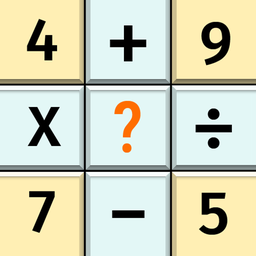
Math Puzzles: Crosswords
Staring at a blank screen during a coffee break is a recipe for boredom when you could be sharpening your mind instead. Math Puzzles: Crosswords is th...
▶ Play FreeCompetitive Spelling and Vocabulary Games
Ready to get serious? These games put individual skill front and center. You're not collaborating — you're competing. May the best speller win.
8. Crossword — Make a Word from Letters
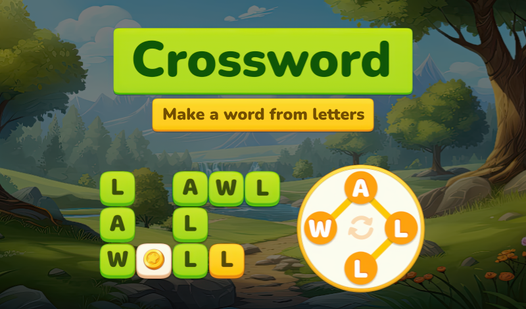
Crossword — Make a Word from Letters challenges you to find hidden words within a crossword grid using a set of available letters. The words aren't obvious — you have to scan the grid systematically, recognize letter patterns, and connect the right tiles in the right sequence before you run out of moves.
This game translates brilliantly into a time-attack format with friends. Set a timer and see who can complete the puzzle fastest. Or have everyone open the same game on their own device simultaneously, compare completion times in a group chat, and determine a winner. The puzzle structure is consistent across plays, making it a reliable format for regular competitive sessions where you need fair, repeatable challenges.
The satisfaction of finding a long word that threads through multiple directions in the grid is very real, and very shareable — screenshot your solution and post it before anyone else finishes.
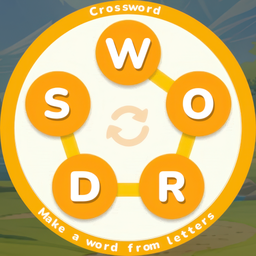
Crossword - Make a word from letters
Staring at the clock during a slow afternoon is the worst, but a quick mental escape can turn your entire day around. Crossword - Make a word from let...
▶ Play Free9. Sea of Words
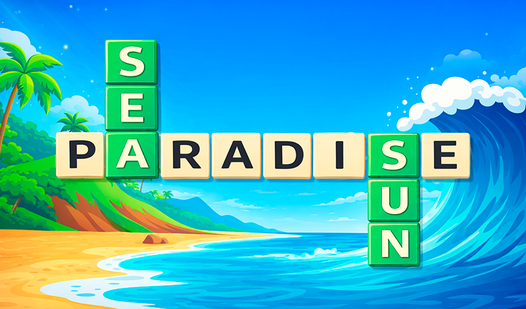
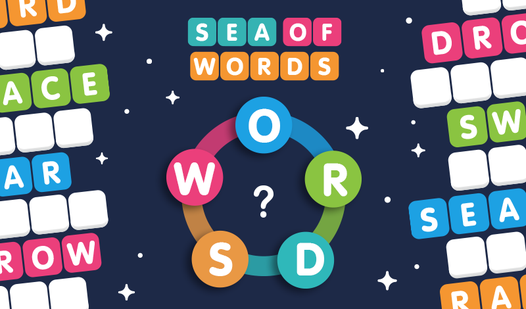
Sea of Words is a brain-training word search game with a relaxing ocean-themed visual style. You scan a grid of letters and locate hidden words — a format that sounds simple but develops real strategic depth at higher difficulty levels, where words overlap, share letters, and run in unexpected directions.
For competitive play, word search has a natural built-in scoring mechanism: whoever finds more words in a given time wins, full stop. But Sea of Words also functions beautifully as a cooperative challenge where both players scan the same grid and call out words as they spot them. The calm aesthetic keeps the experience pleasant even when the competition heats up.
It's also a solid choice for longer, more relaxed sessions. Unlike puzzle games with strict timers, you can set your own pace and still feel the competitive pull when a friend is catching up to your word count.
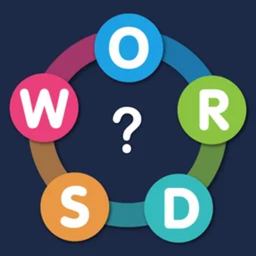
Sea of Words
Fans of stimulating brain teasers will find Sea of Words to be the ultimate companion for daily mental sharpening. This engaging word game puts your l...
▶ Play Free10. Tiny Words
Tiny Words takes the classic Mahjong tile format and layers wordplay on top — you match tiles by forming words rather than by matching identical symbols. It's a fresh hybrid approach that rewards players who can think both visually and verbally at the same time.
In a friend session, Tiny Words works best as a side-by-side challenge: both players run separate sessions on the same puzzle configuration and race to clear the board. The Mahjong-word hybrid mechanic makes it genuinely difficult to optimize, so even experienced players are still figuring out the best approaches. That uncertainty levels the playing field — the person who usually dominates spelling games won't automatically have an edge here because tile logic and word-building require different instincts working in parallel.
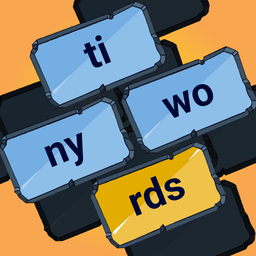
Tiny Words
Word enthusiasts and puzzle fans will find endless delight in the soothing challenge of Tiny Words. This clever twist on the classic mahjong solitaire...
▶ Play FreeHow to Start a Word Game Session With Friends
The simplest way to play word games online with friends is to pick a game, send the link, and go. But a bit of structure makes the experience significantly better. Here are four setups that work well across different group sizes and scenarios:
Screen share + voice call — One player runs the game and shares their screen via Discord, Zoom, or FaceTime while the group plays together, calling out answers. This works great for games like Alias Word where conversation is the whole point, and it means players who struggle with the game's interface can still participate without friction.
Parallel play — Everyone opens the same game on their own device and races to finish or score highest. Just coordinate your start time via group chat and compare results when everyone finishes. Works well for Crossword — Make a Word from Letters, Sea of Words, and Tiny Words.
Turn-based rounds — Pass the game link between players in turns. Set a house rule like "each player gets 3 minutes" and keep a running score on a shared note or in the group chat. Works for almost any game on this list and scales to any group size.
Async score challenges — Post your score screenshot in a group chat and challenge others to beat it. This format is surprisingly compelling — people come back hours later specifically to knock your score off the top spot. No need to coordinate timing at all.
No accounts needed. No downloads. No setup beyond opening a browser tab. The barrier to entry is basically zero, and that's the real advantage of browser-based word games over apps or board game nights — someone can join mid-session and be playing within 30 seconds.
More Word Games Worth Trying
Looking for even more options to expand your rotation? Here are eight additional word and puzzle games from the FreeJoy catalog that pair well with friend sessions:
Words Crosswords
Language is a vast landscape of hidden patterns that reveals itself the moment you start connecting random characters into meaningful sequences. Words...
▶ Play Free
Words Crossword Puzzle
Crossword puzzles have remained a timeless staple of mental fitness because they force the brain to bridge the gap between memory and logic. Words Cro...
▶ Play Free
Yamabusi. Japanese Crosswords
Logic puzzle enthusiasts will find endless satisfaction in Yamabusi. Japanese Crosswords as they unravel hidden images through careful deduction. This...
▶ Play Free
5 letters wordle
Guess the hidden mystery word by strategically testing combinations of letters in 5 letters wordle. Every time you submit a guess, the game provides c...
▶ Play Free
Wordle: Guess the words from 5 letters
Crack the code by guessing hidden five-letter terms using your sharp wit and refined vocabulary. You enter a word to test your luck, receiving color-c...
▶ Play Free
Words with hints
Connect letters across the grid to clear the board and master this addictive brain training experience. Words with hints challenges you to uncover hid...
▶ Play Free
Connect words
Vocabulary challenges are the ultimate test for your brain, turning simple letter soup into a strategic battle of wits. Connect words keeps you glued ...
▶ Play Free
Kitty Scramble
Connecting letters to form hidden terms turns every session of Kitty Scramble into a brain-bending quest for feline fun. You scan the grid for scrambl...
▶ Play Free