Play Survival Craft Games Free Online
There's something uniquely satisfying about starting from absolutely nothing — no tools, no shelter, no food — and slowly turning raw wilderness into a functioning base. That's the core appeal when you play survival craft games: a loop of gather, build, survive, and repeat that's somehow never gets old. Whether you're floating on a makeshift raft while a shark circles below, holding back waves of zombies with walls you hammered together seconds earlier, or trading blocks you mined from a pixel landscape, the genre delivers a kind of creative pressure that few others match.
The best part? Every game in this list runs directly in your browser. No downloads, no launchers, no subscriptions. Just pick a game and start surviving.
What are survival craft games?
Survival craft games combine two core mechanics: resource gathering and construction. You collect raw materials from the environment — wood, stone, food, metal, fabric — and use them to craft tools, weapons, shelters, and eventually entire fortified bases. The genre is built on a ladder of progression: punch tree, make axe, chop more trees, build shelter, survive the night, repeat at scale.
The loop really broke into mainstream gaming when Minecraft proved that "gather, craft, build" could sustain thousands of hours of play. Since then, developers have layered increasingly sophisticated systems on top of the core: hunger and thirst meters, day/night cycles where monsters appear at dark, weather hazards, ocean drift mechanics, zombie wave systems, RPG progression trees, and more.
What separates genuinely good survival craft games from forgettable ones is balance. The pressure has to be real — if there's no threat, there's no reason to care about your base. But the game can't be so brutal that newcomers quit before they figure out the systems. The best titles give you just enough breathing room to learn the ropes while keeping genuine stakes on the table.
Online browser versions of these games tend to distill the genre to its most essential form. That makes them accessible without being shallow — you get the full satisfaction of the genre without needing to invest in expensive hardware or hundreds of hours of progression. A well-designed browser survival craft game can give you a complete experience in a single session or keep you coming back for weeks.
The games in this list represent a range of scenarios: ocean survival, island wilderness, zombie apocalypse, voxel-world crafting, and resource extraction. All of them are free. All of them have something worth experiencing.
Best Minecraft-style survival craft games to play free
If Minecraft shaped your idea of what survival craft games should feel like, this section is for you. These games capture the voxel aesthetic and block-building satisfaction that made that genre iconic — and they run right in your browser without any installation.
Block Craft: Resource Extraction drops you into a world that looks and feels immediately familiar to anyone who's spent time in a block-based sandbox. You're mining materials, managing your extraction operations, and selling your haul in a classic Minecraft-inspired environment. The economic layer adds something interesting on top of the usual crafting loop — you're not just building for survival, you're building toward a resource economy. Smart players learn which materials command the best prices and structure their extraction routes accordingly.
The game rewards patience and planning over raw reflexes. If you approach it systematically — figure out the resource hierarchy, optimize your routes, reinvest your profits into better tools — you'll find the progression loop deeply satisfying. If you just go wherever looks interesting, you'll still have fun, but you'll feel the friction of inefficiency.
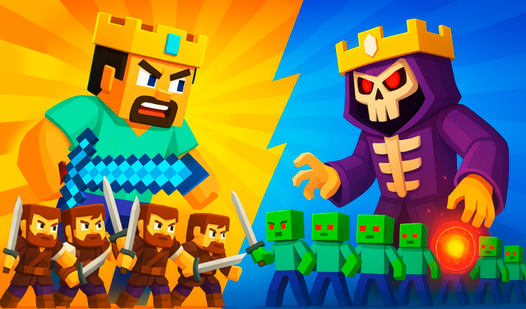
Pixel Craft: Zombie Apocalypse takes the same blocky visual DNA and drives it into much darker territory. You're defending a medieval settlement from constant zombie assault in a voxel-based RPG strategy hybrid. The pixel art aesthetic gives it a nostalgic charm, but the strategic depth is genuinely demanding. You're simultaneously managing resource gathering, crafting defensive structures, upgrading weapons, and pushing your character's RPG progression — all while the zombie threat escalates.
The medieval setting is an interesting choice for the genre. It strips out gunpowder and modern materials, so you're relying on walls, trenches, and hand-crafted weaponry. That constraint forces creative problem-solving that more modern settings sometimes bypass.
Pixel Craft - Zombie Apocalypse
Stuck in a long meeting or just need a quick distraction from the daily grind? Pixel Craft - Zombie Apocalypse arrives just in time to transform those...
▶ Play FreeCraft Arena Zombie Apocalypse brings a tighter, arena-style structure to the Minecraft-inspired zombie survival formula. Sessions are more contained than open-world survival games, which makes the crafting decisions feel immediately consequential. Run out of upgrade materials during a wave and you'll know about it instantly. The arena format is ideal if you want the intensity of survival craft gameplay without committing to a long open-ended session.
Craft Arena Zombie Apocalypse
Staring at the clock and waiting for your shift to end can be absolute torture when you just need a mental escape. Craft Arena Zombie Apocalypse is th...
▶ Play FreeAll three of these games share the feedback loop that made the block-building genre so compelling: every resource feels meaningful because you know exactly what you can build with it. The connection between gathering and construction is tight and legible, which is exactly what makes play survival craft games rewarding at any skill level.
Survival games with base building
Base building is where the genre earns its long-term hooks. You're not just reacting to threats as they arrive — you're anticipating them. Planning walls before nightfall. Stocking supplies before conditions worsen. Setting up resource routes so you're never caught empty-handed when it matters most.
Survival Game on a Raft: Try to Survive is one of the most creative survival scenarios in this genre. You begin on a single wooden plank in the middle of open ocean. Your immediate problems are dehydration, starvation, and a shark that won't stop circling the edges of your tiny platform. Your only tool for gathering resources is a hook that you throw to catch debris floating past on the current.
The crafting here works within a very specific physical constraint: everything you build must fit on the raft, and expanding the raft itself costs materials you're fighting to gather. That means every crafting decision carries real weight. Do you build a water purifier or expand the deck first? Do you prioritize fishing gear for food or hull reinforcement for shark protection? The shark turns what might otherwise be a relaxing crafting session into something that keeps you genuinely alert. Veteran raft survivors say the game hits differently once you've lost a half-built water purifier to a shark attack.
Survival Game on a Raft - Try to Survive
Staring at the clock during a long afternoon usually means it is time for a quick escape into a high-stakes challenge. Survival Game on a Raft - Try t...
▶ Play FreeIsland Survival moves the setting to land but maintains the urgency. You're stranded on a desert island with absolutely nothing, and you'll need to explore the terrain, hunt wildlife, gather plants, and craft tools just to make it through the opening days. The island rewards exploration — resources and useful items aren't always obvious, so there's genuine discovery layered into the survival loop rather than just a static map to grind through.
What distinguishes Island Survival is how it handles biological needs. Hunger and health aren't just numbers to keep topped up — they actively affect your capabilities. A depleted character moves slower, crafts less efficiently, and is far more vulnerable to environmental threats. That makes food and water feel like actual urgent priorities rather than background chores you can handle whenever convenient.
The game also does a good job of scaling threat. Early days are about figuring out the basics. As you get more established, new challenges emerge. It's the kind of survival game that keeps finding new ways to pressure you just when you think you've got things under control.
Island Survival
Staring at the clock waiting for your shift to end or just need a quick distraction from the daily grind? Island Survival turns your browser into a tr...
▶ Play FreeZombie Horde: Build & Survive applies the base-building formula to wave defense. Between waves, you construct and upgrade your defenses. Then you watch your work get tested when the horde arrives. It's a satisfying loop precisely because the building phase is calm and strategic while the wave phase is loud and stressful — the contrast between those two modes keeps the game feeling dynamic across extended sessions.
The key decision point in Zombie Horde is always resource allocation during build phases. Do you strengthen existing walls or add new ones? Do you upgrade your weapons or expand your perimeter? Every choice is a bet on what the next wave will throw at you.
Zombie Horde: Build & Survive
Staring at the clock while waiting for your next meeting or class to end is a drag, but Zombie Horde: Build & Survive turns that boredom into an adren...
▶ Play FreeMine: Base Defenses adds a vertical dimension to the usual survival craft formula. You're managing both underground mining operations and surface defense simultaneously. The underground resources fuel your surface defenses, but time spent below means the surface goes unguarded. It creates a genuine juggling act that keeps longer sessions feeling tense and dynamic — you're never quite doing one thing, always weighing two competing priorities.
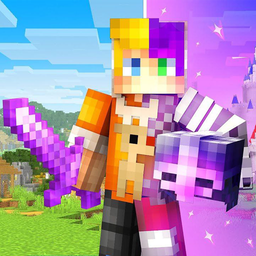
Mine - base defenses
Fans of strategic survival and block-based building will find their new obsession in Mine - base defenses. This immersive experience challenges you to...
▶ Play FreeMore resource games worth your time
Not every survival craft game needs zombie hordes and shark attacks. These titles take a lighter approach to the resource-gathering side of the genre.
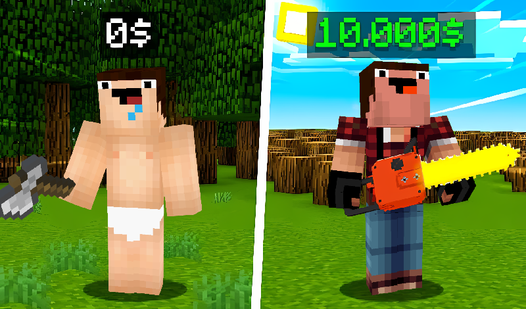
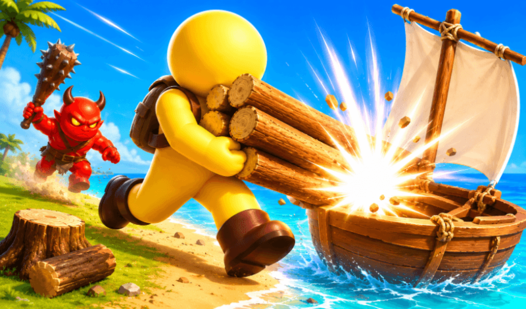
Noob Lumberjack keeps things simple: you're chopping trees, managing tool durability, and building up your lumber operation. The threat-based survival pressure is lower here, making it more of a progression game than a fight-for-your-life one. But the core satisfaction — watching your resource count climb as your efficiency improves — is very much in the same family as the harder survival titles.
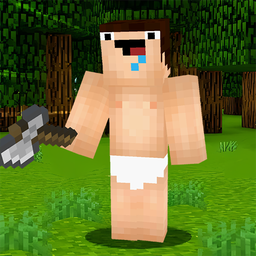
Noob Lumberjack
Swing your axe to harvest timber and transform a wild island into your own private estate. Noob Lumberjack challenges you to manage a growing business...
▶ Play FreeLumberjack: The Evolution of the Forest takes that same premise further with a full evolution and progression system. You start as a basic woodcutter with minimal gear and grow into a fully equipped forestry operation with better tools, unlocked areas, and upgraded capabilities. The "evolution" framing is literal — you're watching a character arc play out through resource management and skill progression. If long-term crafting progression is your thing, this one rewards extended sessions.
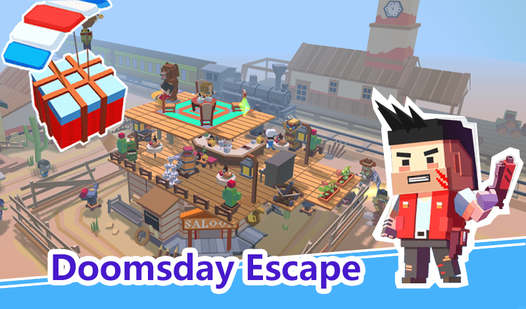
Doomsday Escape takes a different angle on the survival genre by centering puzzle-solving alongside crafting. You're not defending a base — you're crafting your way out of a post-apocalyptic situation. The mechanics serve escape objectives rather than wave defense, which gives it a different rhythm and pace. For players who find base-defense loops repetitive, this is a fresh take on what survival craft games can be.

Doomsday Escape
Fans of gripping survival challenges will find their new obsession in Doomsday Escape, a strategic base-building experience that tests your nerves. Yo...
▶ Play FreeCrafting and resource management tips
These principles apply across most browser survival craft games, whether you're on a raft, an island, or defending against a zombie horde.
Prioritize tools over structures. Early game, every instinct tells you to build a base. Resist that. Your first crafting targets should almost always be the tools that make gathering faster and more efficient. A better axe means more wood per minute. A fishing rod creates passive food income. An upgraded container lets you carry more per expedition. Tools multiply your output — decorative structures don't.
Learn the resource ladder before anything else. Every survival craft game has a hierarchy of materials: raw materials feed into basic tools, which unlock processed materials, which enable advanced construction. Skipping rungs wastes time and resources. Spend your first session understanding the full chain, then work it systematically. Players who try to jump straight to end-game structures without building the ladder properly always hit a wall.
Keep your inventory clean before long runs. Running out of inventory space mid-gathering expedition is one of the most common efficiency killers in the genre. Before any major resource run, drop everything you don't need and carry only essential tools. Build storage structures early and use them consistently — a well-organized base is a faster base.
Check your meters on a schedule. Hunger, thirst, structural integrity, tool durability — these are easy to ignore when you're absorbed in building. That's exactly when they cause problems. Build a habit of checking resource meters every few minutes, especially during long craft sequences.
Use nighttime productively. Many survival craft games make outdoor exploration dangerous at night. That's not downtime — it's crafting time. Organize your inventory, upgrade your tools, review your material stockpiles, and plan tomorrow's priorities. Players who use the night well consistently outpace players who wait for dawn.
Diversify your gathering, don't hoard one material. Gathering 500 units of wood when you have zero stone means you can't build anything that needs both. Check your active crafting recipes regularly and keep your gathering runs diversified to match what you actually need next.
Scout before committing to a base location. In zombie survival games especially, where you build matters enormously. Spend a few minutes at the start of each run evaluating natural chokepoints, resource density near your position, and available escape routes. Relocating mid-session after your base is half-built is expensive and demoralizing.
Depth beats expansion. A compact, well-upgraded base consistently outperforms a sprawling, poorly equipped one. In wave-defense games, two upgraded walls do more work than four basic ones. Resist the temptation to expand just because you have the materials — ask whether an upgrade to existing infrastructure would serve you better.
Keep an emergency material reserve. Getting caught in a wave with nothing left to repair your walls — because you used every last piece of material on expansion — is a painful lesson to learn. Set aside a reserve of critical materials and don't touch them except for genuine emergencies.
Watch experienced players for layout ideas. Most browser survival craft games have active player communities. Seeing how experienced players structure their bases — and understanding the reasoning behind their choices — saves hours of trial and error. You don't need to copy exactly; understanding the principles helps you adapt those ideas to whatever specific situation you face.