How to Play Tycoon Games: Beginner's Guide
So you've seen friends obsessing over their virtual factories, ice empires, and cheese businesses — and now you want in. Learning how to play tycoon games is genuinely one of the most satisfying skills you can pick up in browser gaming. These games reward patience, smart resource allocation, and a dash of greed. This guide covers everything: the core mechanics, the different styles of play, the best games to start with, and strategies that separate casual players from actual tycoon masterminds.
What Makes Tycoon Games Unique
Most game genres test your reflexes or puzzle-solving under pressure. Tycoon games are different — they test your ability to think like an owner. You're not just playing a character; you're running a system.
The fundamental loop in any tycoon game looks like this: you start with minimal resources, invest them into something that generates income, then reinvest that income into bigger upgrades. Over time, small snowballs become avalanches of cash. The satisfaction comes from watching a system you built start running faster and faster, almost by itself.
What sets tycoon games apart from other sim genres:
- Ownership mentality — you don't control a single character, you control an entire operation
- Compounding returns — early investments pay off exponentially later
- Multiple layers — production, upgrades, expansion, and often a story or goal running underneath
- No time pressure by default — most tycoon games let you think and plan at your own pace
Browser tycoon games in particular have perfected this formula for short sessions. You can log in for 10 minutes, make a few key upgrades, and log back off feeling like a genius.
Core Mechanics — How to Play Tycoon Games Properly
Before you touch any specific title, understanding these core mechanics will make every tycoon game click faster.
Income Generation
Every tycoon game revolves around income — money, resources, points, or whatever currency the game uses. Income comes from sources you build or unlock. In a factory game, machines produce goods. In a food tycoon, kitchens serve customers. In an empire builder, citizens pay taxes.
The key insight: not all income sources are equal. Early in the game, your first machines produce trickles. After a few upgrades, those same machines can produce rivers. Always trace where your income is actually coming from — then dump resources into multiplying that source before spreading to new ones.
Upgrades — The Real Game
Raw income is just the beginning. Upgrades are where tycoon games live. Most games have several types:
- Speed upgrades — make your production faster
- Output multipliers — make each production cycle generate more
- Unlock tiers — open entirely new revenue streams
- Prestige/reset — sacrifice progress for permanent bonuses
A common beginner mistake: spreading upgrades thin across everything. Instead, identify the bottleneck in your income chain and upgrade that link specifically. If customers arrive fast but your production is slow, upgrading the customer flow does nothing.
Expansion
Once your core operation is humming, tycoon games typically let you expand — new floors, new territories, new product lines. Expansion feels exciting, but it often comes with hidden costs. New areas require maintenance, management, or separate upgrade tracks. Don't expand until your existing operation can fund the new area without starving your main income.
Take Obby: Money Tycoon. Tower to the Sky! as a great example — you literally build upward, each floor being a new production layer. The game forces you to balance vertical expansion with the income your lower floors generate. It's a brilliant physical representation of the tycoon principle.
Currency Loops
Many tycoon games have two currencies: a primary (earned from play) and a premium (harder to earn). Always spend your primary currency aggressively on upgrades — hoarding it does nothing. For premium currency, save it for efficiency multipliers rather than cosmetics. Premium multipliers can cut hours of grinding into minutes.
Idle Tycoon vs Active Tycoon — Which Style Suits You
This is the fork in the road that splits most tycoon players. Understanding both styles helps you pick games you'll actually enjoy.
Idle Tycoon
Idle games are designed around passive accumulation. You set up your operation, then the game continues running even when you're not watching. Come back after an hour, collect the income your machines generated, reinvest it, and leave again.
The appeal: incredibly relaxing. There's no fail state, no punishment for being offline. Progress feels inevitable. The strategy happens in short bursts — you make a few decisions, then let time do the work.
Idle Cinema Empire Tycoon is a textbook idle tycoon. You build cinema rooms, hire staff, and the money flows in from ticket sales whether you're watching or not. The decisions are about which rooms to upgrade and which staff to assign — short, satisfying bursts of strategy between longer idle periods.

Idle Cinema Empire Tycoon
Stuck in a boring meeting or just need a quick mental escape from your daily grind? Idle Cinema Empire Tycoon transforms your screen into a bustling m...
▶ Play FreeActive Tycoon
Active tycoons demand your attention. Production doesn't happen on its own — you click, manage, and make decisions in real time. These games feel closer to management sims, where efficiency depends on your engagement.
The appeal: much more control, higher skill ceiling, and a stronger feeling of direct impact. When your business explodes in an active tycoon, you feel responsible for it.
Sprunk Factory: Become a Money Tycoon! leans active — you're building and managing a Sprunk production facility, making real-time calls about factory layout and production priorities. The hands-on nature makes milestones hit harder.

Sprunk Factory. Become a Money Tycoon!
Building an empire from scratch is the ultimate power fantasy for any aspiring business mogul. Sprunk Factory. Become a Money Tycoon! turns this dream...
▶ Play FreeHybrid Games
Most modern tycoon games blend both approaches. You actively manage during play sessions, but income accumulates while you're offline. This is arguably the best design — it rewards both active engagement and patience.
Cheese Tycoon Robby hits this balance well. Running your cheese factory requires active decisions about production chains and market timing, but the operation keeps ticking while you step away. Coming back to a cheese stockpile ready for a big sale feels genuinely satisfying.

Cheese Tycoon Robby
Staring at the clock waiting for the workday to end is exhausting when you just need a quick mental escape. Cheese Tycoon Robby serves as the perfect ...
▶ Play FreeBest Tycoon Games for Beginners
Now that you understand the mechanics, here are the best starting points — games that teach the genre naturally without overwhelming new players.
Start Simple, Then Layer
The biggest mistake beginners make is jumping into complex tycoon games with 50 systems running simultaneously. Start with games that have one clear production chain, then graduate to more complex operations.
Ice Tycoon is a perfect beginner game for this reason. The premise is unique — you're melting ice to save a city from a volcano — but the mechanics are clean. One core resource (ice), one transformation process, one income stream. You learn the fundamental tycoon loop in its purest form before any complexity is added. Once you understand that loop, every other tycoon game makes sense.
Ice Tycoon
Strategic thinkers and management experts will find Ice Tycoon to be a brilliant challenge that tests their resourcefulness under pressure. Your prima...
▶ Play FreeObby Tycoon Formats
If you're newer to browser gaming in general, Obby-format tycoon games are particularly friendly. These blend obstacle course movement with tycoon building, so there's always something physically interesting happening alongside the economic management.
Obby: Raft Tycoon. Ocean of Money! does this beautifully. You're building a mansion on a raft, island by island, combining platformer traversal with tycoon investment loops. The physical movement gives beginners something concrete to interact with while they're still learning the economic side.

Obby: Raft Tycoon. Ocean of Money!
Navigate a modest platform across an endless blue horizon while gathering essential resources to transform your humble raft tycoon setup into a sprawl...
▶ Play FreeObby Tycoon: Build the City of Dreams takes a similar approach but scales up the ambition — you're building an entire city, giving you a much bigger canvas for long-term planning.

Obby tycoon: Build the city of dreams
Construct your urban masterpiece in Obby tycoon: Build the city of dreams by strategically placing buildings and managing your growing population. You...
▶ Play Free3D Builders for Visual Thinkers
Some players think better when they can see their empire taking shape in three dimensions. If you're more visual, 3D tycoon games will click faster.
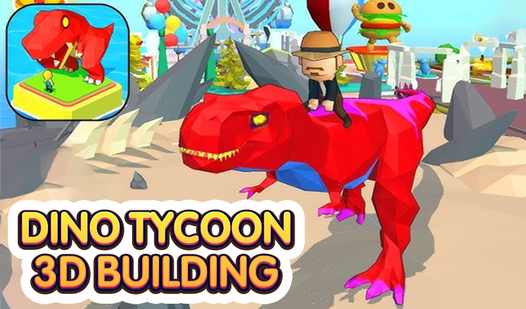
Dino Tycoon — 3D Building combines dinosaur collection with tycoon empire construction in full 3D. Watching your dino park grow in three dimensions makes the economic progress feel tangible. When your velociraptor enclosure funds a new wing, you see exactly where that money went.

Dino Tycoon - 3D Building
Excavate ancient fossils and extract precious DNA to breathe life into legendary ancient creatures. Dino Tycoon - 3D Building puts you in charge of a ...
▶ Play FreeJurassic Park: Dino Island and Farm Idle Tycoon 3D goes even bigger — you're managing a prehistoric island, balancing farm income with the dinosaur attraction business. It's a step up in complexity but still very approachable because the theme is so engaging.

Jurassic Park: Dino Island and Farm Idle Tycoon 3D
Managing a prehistoric sanctuary requires more than just luck because balancing ecological needs with visitor entertainment is a true art form. Jurass...
▶ Play FreeWinter Themes for Cozy Play
Seasonal and themed tycoon games often have tighter scope, making them excellent learning tools. Mine Winter Tycoon wraps classic mining tycoon mechanics in a winter aesthetic — you're managing extraction, processing, and sales while working against the environment. The seasonal constraints teach resource scarcity in a fun way.
Advanced Tycoon Strategies
Once you've got a few games under your belt, these strategies will help you push further faster.
Optimize for Throughput, Not Balance
Beginners often try to keep all their income sources at equal levels — upgrading everything evenly. This feels fair but it's inefficient. Instead, find your highest-earning source and over-invest in it until returns diminish, then move to the next. Unbalanced investment in the right area beats balanced investment everywhere.
Think of it like a real factory assembly line. If one station processes 100 units per minute but feeds into a station that only handles 50, the bottleneck costs you 50 units every minute. Fix the bottleneck first.
The Prestige Calculus
Prestige (resetting progress for permanent bonuses) is one of the most psychologically difficult choices in tycoon games. Players often wait too long because resetting feels like losing. In reality, a well-timed prestige can multiply your next run's speed dramatically.
The rule of thumb: prestige when your progress has slowed to a crawl. If you're spending an hour to earn what used to take 10 minutes, the game is telling you it's time to reset and rebuild with your new multipliers. The rebuild will be much faster, and you'll hit a higher ceiling in the same time.
How to Play Tycoon Games During the Early Game
The early game is where most players make their most expensive mistakes. Common errors:
Spreading too thin — unlocking every possible income source before maxing out your starting ones. Resist the urge to expand until your first source is at maximum output.
Ignoring free bonuses — many tycoon games have daily bonuses, ad rewards, or achievement bonuses. These are often disproportionately powerful in the early game. Claim them every time.
Not reading the prestige bonuses — before you prestige, actually read what bonuses you'll get. Some bonuses only apply to specific production types, making them useless if you've been building the wrong way.
Spending premium currency on speed-ups — speed-ups feel urgent but they disappear instantly. Multipliers compound across your entire run. Multipliers almost always win.
Reading the Economy
Advanced tycoon players treat the in-game economy like a puzzle to be solved rather than a wall to push against. Ask yourself:
- What is my current income per minute?
- What would a 10% upgrade to my best source generate over the next hour?
- Is there a "break even" upgrade that pays for itself quickly?
When you can answer these questions without doing heavy math, you've internalized how to play tycoon games at a competitive level.
Long Sessions vs Short Sessions
Different tycoon games are optimized for different session lengths. Idle games reward short check-ins every few hours — log in, reinvest, leave. Active tycoons need 20-30 minute focused sessions to make meaningful progress. Mismatching your play style to the game type creates frustration.
Before committing to a tycoon game, ask: how long do they expect me to play at once? The answer is usually in the UI — if there's an "offline earnings" button on the main screen, it's built for short sessions. If there's no offline component, plan for longer play.
Multiplayer and Social Features
Many modern browser tycoon games include leaderboards, co-op elements, or competitive features. In competitive contexts, the players at the top are almost always prestige cycling faster than everyone else — not necessarily playing more hours, just timing their resets better.
In co-op tycoon games, specialization matters. Different players upgrading different parts of a shared operation almost always outperforms everyone doing the same upgrades. If you're playing with friends, coordinate who owns which income stream.