How to Play Business Games: Beginner's Guide to Tycoons
So you want to build an empire from scratch — no investors, no safety net, just your wits and a spreadsheet full of virtual cash. Business games are one of the most satisfying genres in online gaming, but if you've never tried them before, the menus, upgrade trees, and economic loops can feel overwhelming. This guide covers how to play Business games from your very first session, walking you through the core mechanics, the difference between idle and active styles, and which titles are the best starting points.
Business Game Basics — How to Play Tycoon Games
At their core, business games simulate running a company. You start with limited money and a simple operation, then grow it by making smart decisions: hiring staff, buying equipment, expanding your product line, and serving customers faster than your competitors.
The loop is almost always the same:
- Earn money by selling goods or services
- Spend money on upgrades that increase output or efficiency
- Reinvest profits into new departments or entirely new business lines
- Repeat — but at a bigger scale each time
What makes it addictive is the compounding effect. A small improvement in production speed might feel tiny at first, but after three or four upgrades, your income doubles, then triples. You start seeing numbers you'd never expect from a free browser game.
Most business games don't punish failure harshly. If you overspend and go broke, you can usually restart from a checkpoint or grind back up. This makes the genre genuinely beginner-friendly — experiment freely, because mistakes teach you more than playing it safe.
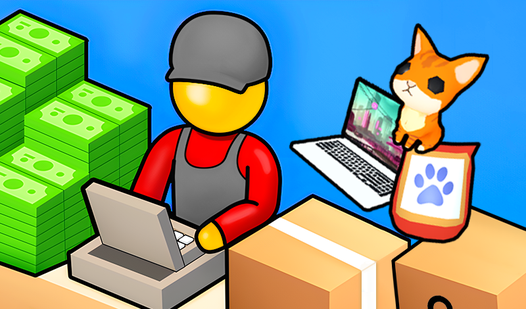
One of the cleanest introductions to the genre is Shopping Business, where you manage your own shopping center. You place stores, hire staff, and watch foot traffic turn into revenue. The visual feedback — seeing customers fill up your mall — makes the money mechanics immediately tangible.
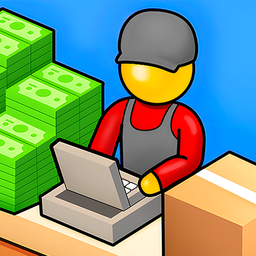
Shopping Business
Staring at the clock and waiting for your shift to end can be a real drag when you need a quick mental escape. Shopping Business turns that downtime i...
▶ Play FreeKey Mechanics — Revenue, Upgrades & Expansion
Once you understand the basic loop, the real depth of business games opens up. Here's what you'll encounter in almost every title:
Revenue Streams
Most games give you one initial source of income, then gradually unlock secondary ones. A restaurant game might start with burgers, then add drinks, desserts, and a delivery service. Always prioritize unlocking new revenue streams over maxing out existing ones — diversification compounds faster.
Upgrade Trees
Upgrades typically fall into three categories:
- Speed upgrades — staff work faster, machines produce more per minute
- Capacity upgrades — you can serve more customers at once or store more inventory
- Multiplier upgrades — a flat percentage boost to all income, the most valuable type
Early on, speed upgrades give the best return. Later, multipliers dominate. Most beginners make the mistake of spreading upgrades too thin — pick one bottleneck and fix it completely before moving on.
Staff and Management
Many business games include a hiring system. Staff have stats like efficiency, speed, or specialization. It's almost always better to hire a few high-quality workers than a large crew of mediocre ones. Over-staffing wastes your payroll budget; under-staffing creates queues that lose you customers.
A great example of staff-based management done well is My Car Service Business, where you run a car repair shop. Balancing mechanic availability, spare parts inventory, and customer wait times teaches all three upgrade categories at once.

My car service business
Staring at the clock waiting for your shift to end or just need a quick distraction during your commute? My car service business turns downtime into a...
▶ Play FreeExpansion and Prestige
At some point you'll unlock a new location, a second business, or a "prestige" button that resets your progress in exchange for a permanent bonus. Prestige mechanics are common in idle games — don't fear the reset. The bonuses you carry over make subsequent runs dramatically faster.
Risk and Crime Mechanics
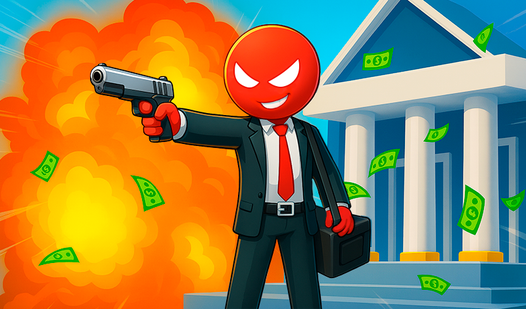
Not every business game is strictly legal. Some titles introduce risk: you can take shortcuts, cut corners, or run operations that skirt the rules. These high-risk plays usually offer high rewards. Mafia Business: Money Empire 3D leans fully into this idea, putting you in the shoes of a crime boss planning daring robberies and building a criminal empire. It's a wilder ride than a traditional tycoon but teaches the same core lesson — calculated risk is the engine of growth.
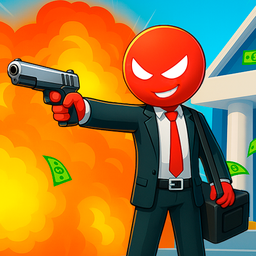
Mafia Business: Money Empire 3D
The life of a professional heist artist is far more complex than simple movies might have you believe. Mafia Business: Money Empire 3D challenges your...
▶ Play FreeIdle vs Active Business Games
This is the most important split in the genre, and knowing which style suits you will save a lot of frustration.
Active Business Games
Active games require constant input. You're clicking, making decisions, managing queues in real time. The engagement is higher, but so is the attention required. These are best played in focused sessions of 20–40 minutes.
Signs you're playing an active game:
- Customers are waiting and you must serve them manually
- Upgrades unlock only when you're online
- Clicking directly generates income
Active games are better for people who want to feel in control and engaged throughout.
Idle Business Games
Idle games run even when you step away. You invest in automation — managers, passive income streams, offline bonuses — so that your empire keeps growing while you're doing something else. When you return, you collect hours of accumulated profit and reinvest it.
Signs you're playing an idle game:
- A "collect offline earnings" button appears when you log back in
- Managers can run departments without your input
- The early game is fast, but late-game upgrades cost trillions
Idle games are excellent for casual players or anyone who wants to feel progress without constant attention.
Idle Business Empire: Money Farm Idle Tycoon 3D is a textbook example of the idle format done right — multiple income streams, offline earnings, and a satisfying prestige loop.

Idle Business Empire: Money Farm Idle Tycoon 3D
Aspiring entrepreneurs who dream of building a massive wealth empire will find Idle Business Empire: Money Farm Idle Tycoon 3D absolutely addictive. Y...
▶ Play FreeHybrid Games
Many modern titles blend both approaches. You can play actively early on and gradually automate as you hire managers, making the game shift from active to idle as your empire grows. This is arguably the best design: the early game feels engaging and the late game feels rewarding without demanding constant attention.
Best Business Games for Beginners
Here's a curated breakdown of which games to start with depending on your preferred style.
If You Want a Classic Tycoon Feel
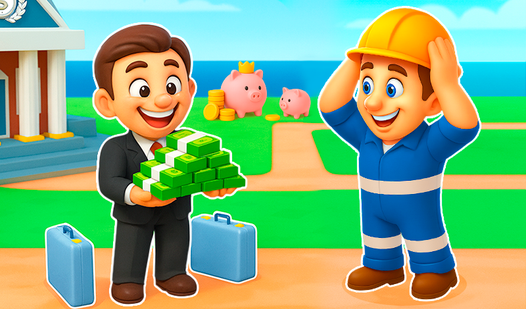
Christmas Robby: Businessman Simulator is inspired by Roblox-style games and drops you at the very beginning of a business journey. You're starting from zero, learning to manage capital, and gradually building something real. The playful Christmas theme keeps the tone light, which is perfect when you're still learning the mechanics without pressure.
If You Want to Build and Upgrade
Robbie the Businessman: Build and Upgrade puts you in charge of a production line. You build factories, purchase equipment, and optimize workflow — a great introduction to the manufacturing side of business games. The upgrade system here is particularly transparent: you can clearly see what each purchase does for your output, which makes it ideal for learning how upgrade prioritization works.

Robbie the Businessman: Build and Upgrade
Staring at the clock and waiting for your shift to end can be a real drag when you need a quick mental escape. Robbie the Businessman: Build and Upgra...
▶ Play FreeIf You Want a Niche Theme
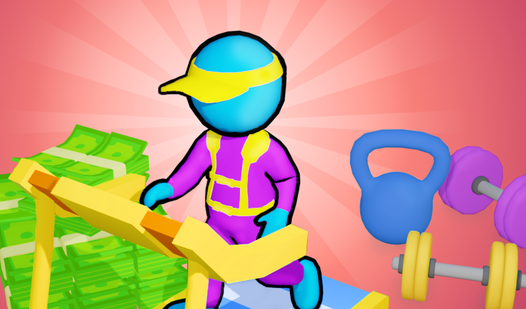
Sometimes a specific setting makes everything click. Fitness Empire: Business Simulator challenges you to run a gym — managing memberships, buying equipment, hiring trainers, and keeping clients happy. The fitness theme makes all the mechanics feel grounded and relatable, which lowers the mental overhead of learning a new game system.
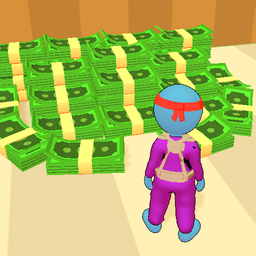
Fitness empire: business-simulator
Aspiring entrepreneurs who love building things from scratch will find Fitness empire: business-simulator an incredibly addictive challenge. Your goal...
▶ Play FreeIf You Want to Go Sci-Fi
Idle Space Business Tycoon takes the standard business loop and wraps it in a space exploration setting. You're not just running a company — you're building an interstellar enterprise. The idle mechanics mean you can make progress over time, but the sci-fi backdrop gives everything a sense of epic scale that's genuinely motivating.

Idle Space Business Tycoon
Aspiring entrepreneurs with a hunger for cosmic domination will find their calling in Idle Space Business Tycoon. This addictive idle experience tasks...
▶ Play FreeIf You Want Food & Service
Restaurant Business Taikon focuses on the food service industry, one of the most classic business game themes. You manage a restaurant, balance supply and demand, train staff, and expand your menu. The kitchen management aspect adds a fun time-pressure element that breaks up the usual upgrade loop.
If You Want Silly and Fun
Cheese Tycoon Robby takes the tycoon formula and injects it with absurdist humor. You're building a cheese empire. The gameplay is as serious as any other tycoon, but the premise keeps things light — perfect when you want to learn the genre without taking yourself too seriously.

Cheese Tycoon Robby
Staring at the clock waiting for the workday to end is exhausting when you just need a quick mental escape. Cheese Tycoon Robby serves as the perfect ...
▶ Play FreePractical Tips for New Players
Before you feel ready to tackle any of these games, here are the strategies that separate beginners who plateau from those who keep growing.
Always read the upgrade tooltips. The difference between a 10% speed boost and a 10% income multiplier sounds small, but over hundreds of cycles, it's enormous. Take five seconds to understand what you're buying.
Don't save money, spend it. This is the most counterintuitive lesson in business games. Holding cash in reserve earns you nothing. Every coin sitting idle is a coin not generating more coins. Spend aggressively as soon as you can afford an upgrade.
Prioritize automation early. If you're playing a hybrid game, unlocking the manager system is almost always the highest-value move. Once departments run themselves, your income continues even when you're navigating menus or tabbed out.
Use the prestige system when offered. First-time players often resist prestige because it feels like losing progress. It isn't. The permanent bonuses compound across every subsequent run. Most veteran players prestige far more often than beginners expect.
Set a goal for each session. Idle and tycoon games can swallow hours without you noticing. Before you open the game, decide on a clear goal: "I want to unlock the second department" or "I want to reach $1M in daily income." This keeps sessions focused and satisfying.
Playing Business Games Unblocked
One of the best aspects of browser-based business games is accessibility. Business games unblocked on platforms like FreeJoy.games require no downloads, no installations, and no accounts. You open the page and play immediately.
This makes them ideal for quick sessions anywhere — at home, at school, or on a break. The unblocked format doesn't compromise quality; many of these games are full-featured tycoons that offer dozens of hours of progression if you want to pursue them seriously.
The games listed throughout this article are all playable directly in your browser. No special permissions, no plugins, just click and build.