How to Play Survival Games — Beginner's Guide to Browser Survival
So you've decided to test your instincts and figure out how to play Survival games. Welcome — and fair warning: you're about to lose track of time. Survival games online free are some of the most addictive experiences in browser gaming. One moment you're punching trees for wood, the next you're defending a fortress from nighttime threats with a full inventory of crafted gear. This guide covers everything a beginner needs to know: what to do in your first spawn, how to manage resources smartly, and which free browser survival games to start with right now.
Survival Game Basics — Gather, Craft, Build, Fight
Every survival game — regardless of setting — runs on four core loops. Master these and you'll have a foundation that works across virtually any title in the genre.
Gather
Gathering is the heartbeat of survival gameplay. You collect raw materials from the environment: wood from trees, stone from rocks, food from plants and animals, fiber from grass. In ocean survival games, you're pulling resources from floating debris, fishing, and scavenging nearby islands. The rule is simple: always be gathering. Dead time (standing still, waiting, wandering aimlessly) is wasted potential.
Early-game priority list for gathering:
- Wood/planks — almost everything is built from wood first
- Food and water — your health and hunger bars drain faster than you expect
- Stone or metal — needed for better tools after the starter tier
- Fiber or rope — essential binding material for most crafting recipes
Craft
Crafting turns raw materials into useful items: tools, weapons, shelter components, food. Most survival games use a recipe system — you need X of material A plus Y of material B to produce item C. Early-game, focus on a pickaxe (mines stone faster), an axe (chops wood faster), and some form of storage container. Better tools = faster gathering = faster progression. It compounds quickly.
Don't waste materials on flashy gear before you've secured food and shelter. Many beginners burn their first good resources on a sword, then die of hunger five minutes later.
Build
A base isn't just cosmetic — it's your respawn anchor, your storage hub, and your protection from the environment. Start small: four walls, a roof, a door, a chest. Expand once you've stabilized your food and water supply. In ocean survival specifically, your raft IS your base, and every plank you add increases both your storage space and your survivability.
Fight
Combat in survival games ranges from basic (punch animals for food) to complex (boss encounters requiring specific weapon loadouts). As a beginner, avoid fighting anything bigger than you until you have at least leather or basic armor. Prioritize running over fighting in early game. Resources are more valuable than kills when you're just starting out.
Now let's see these mechanics in action with one of the most iconic browser survival setups: open-water raft survival.
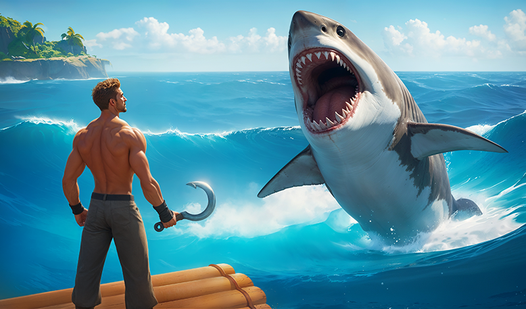
Survival Game on a Raft: Try to Survive drops you onto a tiny floating platform in the middle of the ocean. You've got a hook on a rope — your only tool. Use it to fish debris out of the water, build your raft outward, add a water purifier (your first real crafting challenge), and deal with the shark circling below. It's a tight, focused experience that teaches every one of the four core loops simultaneously. Sharks punish greed (reaching too far), hunger punishes passivity, and the ocean rewards steady, methodical play.
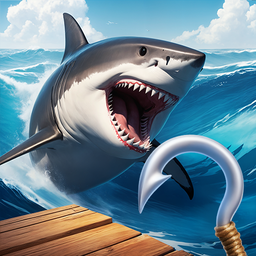
Survival Game on a Raft - Try to Survive
Staring at the clock during a long afternoon usually means it is time for a quick escape into a high-stakes challenge. Survival Game on a Raft - Try t...
▶ Play FreeHow to Play Survival — What to Do in Your First 5 Minutes
The first few minutes of any survival game are critical. Most new players panic, run around randomly, and then die from something embarrassing like thirst or a single wolf. Here's a structured approach that works across almost every survival title.
Minute 1: Assess Your Surroundings
Don't move yet. Scan the environment. Identify:
- Your nearest resource node (tree, rock pile, debris field)
- Any immediate threats (hostile animals, weather warnings)
- Water sources if thirst is a mechanic
- Any structures or items that might give you a head start
In ocean survival games, check what's floating nearby before your hook or paddle runs out of range.
Minutes 2–3: Gather the Absolute Basics
Focus entirely on gathering the starter materials. Don't build yet — just collect. Your inventory should have wood, stone, and if possible some food before you craft a single item. This is where patience pays off. New players often build a shelter immediately with minimal materials, leaving nothing for tools. Wrong order.
Priority: Food/water > tools > shelter > weapons
Minute 4: Craft Your First Tools
With basic materials in hand, open the crafting menu and build:
- A basic tool (axe, pickaxe, or hook depending on the game)
- A storage container if available
- Any food preparation item (fire, cooler, water purifier)
Better tools multiply your gathering speed, so this investment pays back within seconds.
Minute 5: Secure One Basic Need
Before anything else, resolve either hunger or thirst. A full hunger/hydration bar gives you much more time to make decisions without the game pressuring you with flashing health warnings. Once that's handled, start laying your first structure.
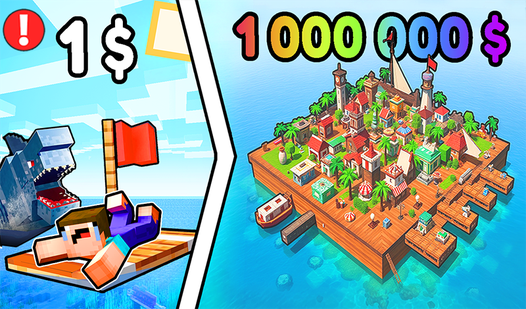
Noob Raft: Ocean Survival is a perfect practice ground for this exact routine. The game eases you into the ocean survival flow with a clear progression system — you start with almost nothing, learn the hook mechanic, expand your raft, and unlock new crafting recipes as you explore nearby islands. It's forgiving enough for absolute beginners but still meaningful enough that mistakes have real consequences.
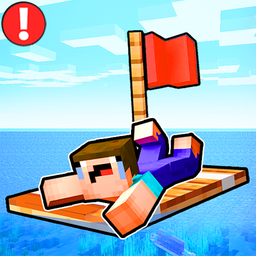
Noob Raft: Ocean Survival
Scavenge debris floating across the vast blue horizon to turn your tiny plank into a sprawling floating fortress in Noob Raft: Ocean Survival. You nav...
▶ Play FreeThe One Mistake That Kills Beginners Most
Overcommitting to a single activity. Players who spend ten minutes only gathering wood, or who only explore without gathering — they fall behind. Good survival players are always doing at least two things: gathering while moving, scanning for threats while building. Keep multiple loops running simultaneously and your progress accelerates dramatically.
Resource Management Tips for Survival Games
Once you're past the first few minutes, the mid-game challenge in survival titles is resource management. You have more materials coming in, more things to build, and not enough of everything at once. Here's how to manage it intelligently.
Stack Priorities, Don't Split Them
Pick ONE goal and pursue it until completion before switching. If you're building a second floor on your base, gather all the materials for that floor before starting. Half-built structures eat materials and don't provide benefits. Half-filled storage chests don't protect anything.
Always Keep a Buffer
Never spend your last piece of food, your last plank, or your last rope on something non-essential. Keep a minimum buffer of starter materials at all times:
- 10 wood / planks minimum
- 3–5 food items
- Enough rope for one emergency repair
Survival games love throwing surprise situations at you — a storm, a new threat, sudden equipment damage. Buffers save you from cascading failures.
Upgrade Tools as Soon as Possible
Every tool tier multiplies your resource income. A stone axe cuts trees twice as fast as a wooden one; a metal pickaxe harvests five times more per strike than stone. The time investment to upgrade tools always pays back quickly. Prioritize tool upgrades over cosmetics, extra weapons, or decorative building.
Know What Runs Out Fastest
Every survival game has a "bottleneck resource" — the material you always run out of before everything else. Learn what it is in your game early, and set up a dedicated gathering routine for it. In ocean survival, it's usually plank material or rope. On island games, it tends to be food or a specific crafting component for your next upgrade.
Island Survival is one of the most comprehensive survival tutorials available in browser form. This game covers hunting, mining, crafting, farming, and base building on a stranded island — and it does so in a way that actually teaches each system properly. If you want to understand how all the pieces of a full survival game connect, this is the one to spend real time with.
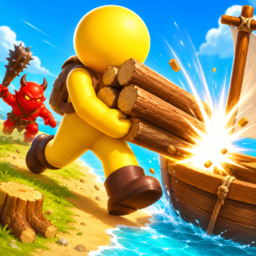
Island Survival
Staring at the clock waiting for your shift to end or just need a quick distraction from the daily grind? Island Survival turns your browser into a tr...
▶ Play FreeOrganize Your Storage
Messy chests kill efficiency. Separate your storage by category: one chest for building materials, one for food, one for tools and weapons, one for rare or crafted items. Sounds obvious, but mid-game chaos always comes from unorganized inventory. When you need five rope and you're digging through 200 mixed items to find it, that's time and focus wasted.
Don't Hoard at the Expense of Progress
The opposite mistake: players who stockpile resources but never spend them. A thousand planks in a chest don't help you if your raft is still two tiles wide and the shark gets you every time you try to fish. Spend resources on progression. The game always has more materials — your goal is to advance your base and tools, not fill a chest.
Noob: Survival on Island! captures this balance well. The game's escape mechanic creates a clear end goal, which forces players to actually spend resources on progression rather than endless stockpiling. You gather, you extract specific materials, you build toward escape. It's an excellent beginner template for how resource management should feel.
Best Free Survival Games for Beginners Online
Here are the best places to practice what you've just learned, all playable free in your browser right now.
1. Crafted Survival Chronicles 2
If you want a survival game that doesn't hold your hand but still rewards a methodical approach, Crafted Survival Chronicles 2 is the answer. Procedurally generated worlds mean every playthrough starts fresh — different biomes, different resource distributions, different terrain challenges. You get complete freedom: build where you want, explore as far as you want, pursue whatever goals you set for yourself. The sandbox format makes it ideal for experimenting with everything this guide has covered in a low-stakes environment.
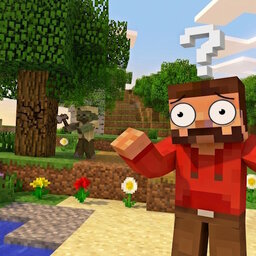
Crafted Survival Chronicles 2
Staring at a blank wall while waiting for a meeting to end is the ultimate productivity killer. Crafted Survival Chronicles 2 turns that idle time int...
▶ Play Free2. More Free Survival Games to Try
The survival genre in browser gaming is wide, and different settings test different skills. Here are more options worth exploring:
Dino Survival: 3D Simulator — survive in a prehistoric environment where dinosaurs are both the threat and the resource. Great for players who want survival with stronger combat emphasis.
Survival on an Uninhabited Planet — sci-fi survival with planetary exploration mechanics. Familiar loop, alien setting.

Survival on an uninhabited planet
Building a thriving settlement on a desolate alien rock is the ultimate test of strategic management and quick thinking. Survival on an uninhabited pl...
▶ Play FreeUnderwater Survival: Deep Dive — everything you know about survival, applied to the ocean floor. Resource nodes, crafting, and base building all adapt to the underwater environment in interesting ways.
Mine Survival: Noob and Pro — a mining-focused survival experience that emphasizes the crafting loop more than combat or base building. Great for players who enjoyed the resource management section of this guide.
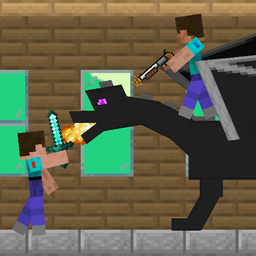
Mine Survival: Noob and Pro
Staring at the clock waiting for your shift to end or just need a quick distraction from a dull afternoon? Mine Survival: Noob and Pro is the ultimate...
▶ Play FreeNatural Disaster Survival Obby — survival under extreme environmental pressure. Less crafting, more reaction-based challenge.
Noob Builder Survival — combines construction mechanics with survival pressure. If base building is your favorite part of the genre, start here.
Survival in Natural Disasters — another disaster-focused title with a strong emphasis on environmental awareness and quick decision-making.
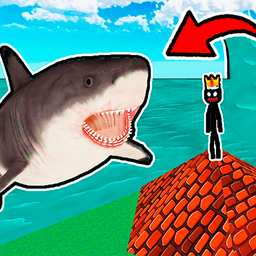
Survival in Natural Disasters
Outrun lethal tsunamis and survive chaotic meteor showers while testing your parkour instincts against the elements. Survival in Natural Disasters cha...
▶ Play FreeLast Hero: Survival — a more combat-heavy survival experience for players who want to put their fighting skills to the test once they've got the basics down.
How to Choose Your First Game
Use this quick filter:
- Want the most forgiving start? → Noob Raft: Ocean Survival
- Want the most complete tutorial? → Island Survival
- Want total freedom and no hand-holding? → Crafted Survival Chronicles 2
- Want clear goals and fast progression? → Noob: Survival on Island!
- Want ocean atmosphere and tight mechanics? → Survival Game on a Raft
There's no wrong answer. All five featured games are free, browser-based, and playable in minutes. The best survival game for a beginner is the one you actually play — so just pick one and start.
Advanced Tips to Improve Faster
A few habits separate players who survive their first hour from players who actually thrive:
Play slowly, think fast. Don't rush across the map. Move deliberately, gather constantly, scan for threats. Quick decisions matter; rushed movement doesn't.
Death is a teacher, not a failure. Every death in a survival game teaches you something specific — what ran out, what enemy got you, what you forgot to craft. Treat each run as data, not a loss.
Read the UI carefully. Most browser survival games pack a lot of information into small status bars. Health, hunger, thirst, warmth, oxygen — each bar depletes at different rates. Learn your game's specific warning signs before they hit zero.
Experiment with builds. The best base in a sandbox survival game is different for every player. Some people build wide; others build tall. Some front-load defense; others focus on storage. Experiment. The resource cost of a "wrong" build choice teaches you more than any guide can.
Set a timer for resource runs. When gathering away from your base, set a real-world timer for 3–4 minutes. When it goes off, return to base regardless of what you're doing. This habit prevents the classic mistake of wandering too far, getting caught by a threat, and losing your collected materials.