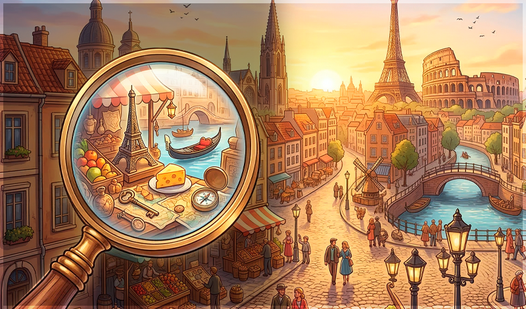
How to Play Seek and Find Games: Tips & Tricks
Hidden object games are one of the most satisfying genres in casual gaming. You scan a busy scene, your eye catches something half-buried under a pile of props, and that little burst of recognition is genuinely rewarding. But knowing how to play Seek And Find games well — finding things quickly, staying relaxed on tough levels, and building solid habits — can turn frustration into pure fun. This guide covers everything from the basics to the sharper techniques that experienced players use, plus a curated list of great games to play right now.
What Are Seek and Find Games
Seek and find games (also called hidden object games or HOGs) are puzzle games where your main task is to locate specific items, characters, or differences within a detailed scene. The scene might be a cluttered attic, a tropical island, a hotel lobby, or a fantasy forest. You're given a list of objects — sometimes as text, sometimes as silhouettes — and you click or tap to mark each one you find.
The genre sounds simple, but the best games are genuinely clever. Designers hide objects in plain sight by blending them into backgrounds, overlapping them with similar shapes, or placing them at unexpected angles. A pair of scissors might be half-hidden behind a curtain. A frog might be camouflaged against green leaves. A cat might be tucked into the corner you keep skipping over.
There are also variations that mix things up: match-the-pair games, spot-the-difference challenges, and 3D environments where you can rotate the view to find objects tucked behind things. The core skill — careful, methodical visual scanning — applies across all of them.

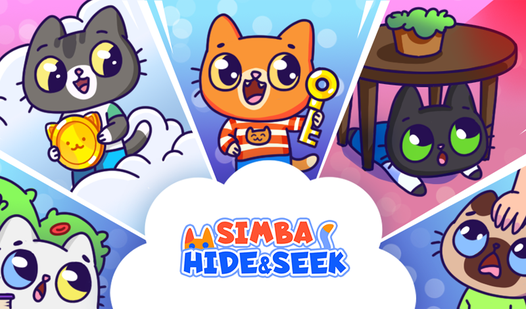
Simba Hide&Seek
Fans of creative hide and seek will find endless entertainment in Simba Hide&Seek as they master the art of evasion or keen observation. You choose be...
▶ Play FreeThe beauty of seek and find games is their accessibility. You don't need quick reflexes or complex controls. You need patience, a good eye, and a system. That's exactly what we're going to build here.
How to Spot Hidden Objects Faster
This is the section most guides skip — the actual technique behind fast, accurate searching. Randomly clicking around a scene gets slow and stressful. A methodical approach finds objects faster and feels less chaotic.
Scan in zones, not at random. Divide the scene into a mental grid — left-to-right rows, or quadrants. Work through each zone before moving to the next. This prevents you from repeatedly scanning the same area while ignoring others.
Look for outlines before details. When you're searching for a specific object, your brain works better when you're hunting for its silhouette rather than its full appearance. A key is a key-shaped thing, regardless of color or texture. Train yourself to notice shapes first.
Use the object list strategically. Start with the objects you already have a rough mental image of — things you'd recognize immediately. Save vague or unusual items for later when you've cleared out the easy ones and can give them more attention.
Slow your eye movement down. Counter-intuitive, but true — rapid scanning actually misses more than a slow, deliberate pass. Your eyes need a moment to register each area properly. Move your gaze slower than feels natural.
Take breaks from problem spots. If you've been searching for one specific item for more than a minute, look away from that part of the scene entirely. Search another area. Come back fresh. Your brain has a habit of locking onto a "not-found" pattern, and breaking that pattern often makes the object appear almost immediately.
Check overlapping areas. Designers love to hide objects where two or more other objects overlap — the edges of furniture, the join between a wall and a shelf, the gap between two characters standing close together. When you're stuck, target these spots.

Find the Frog - Hidden Objects
Scan intricate hand-drawn scenes to spot hidden objects that blend perfectly into their surroundings. You will navigate through thematic worlds rangin...
▶ Play FreeAdjust your screen brightness. Dark corners of a scene can hide objects that look obvious at full brightness. If you play on a device with adjustable brightness, a slightly brighter screen helps reveal low-contrast hiding spots.
Read object names carefully. "Cup" and "mug" might look identical, but the game distinguishes them. "Blue bird" matters — not any bird. Reading the list precisely prevents clicks on the wrong item.
Types of Seek and Find Games
Not all hidden object games work the same way. Knowing the type you're playing helps you adjust your approach.
Classic hidden object scenes — A cluttered scene with a text or image list of items to find. Pure seek-and-find. Most beginner-friendly, and the widest variety of themes.
Spot-the-difference — Two nearly identical images side-by-side. You find what's different between them. Requires systematic comparison rather than free searching — line up corresponding areas and compare them directly.
Purr tour Find differences
Stuck in a boring meeting or just waiting for your coffee to brew, you need an instant mental refresh to brighten your day. Purr tour Find differences...
▶ Play FreeMatch-the-pair games — You flip cards or tiles to find matching pairs. The challenge is memory: you need to remember where you've seen each item to match it on subsequent turns. The visual identification element is still there, but memory becomes the primary skill.

Children's games: Find a couple
Staring at a blank screen during a short break is never fun when you could be sharpening your brain instead. Children's games: Find a couple turns tho...
▶ Play Free3D hidden object games — The scene exists in three dimensions and you can rotate the environment or move through it. Objects might be hidden on the back of a surface or tucked behind obstacles. You need to think spatially and check angles you haven't seen yet.

Find all the Sprunks 3D!
Hidden object games offer a unique thrill that turns every corner of a digital world into a potential treasure trove of discovery. Find all the Sprunk...
▶ Play FreeAdventure/narrative HOGs — Hidden object scenes are embedded in a story. You search scenes to progress through a mystery or storyline. These tend to be longer and more complex, often mixing object-finding with light puzzle-solving.
Character search games — Instead of finding random objects, you're finding specific characters — a cat, a frog, a particular person — hidden among crowds or complex backgrounds. The character's camouflage is the main challenge.
Spot the Cat. Hidden Cats
Scan every inch of vibrant, hand-drawn scenes to find the cat hiding in plain sight. Spot the Cat. Hidden Cats turns your screen into a massive scaven...
▶ Play FreeBest Free Seek and Find Games to Start With
If you're new to the genre, starting with games that are well-designed and genuinely fun makes a big difference. Here are the best options available to play free in your browser right now.
Hidden Objects: Find All Sprunki is a great entry point. You're searching for recognizable characters from the Sprunki universe across colorful, detailed scenes. Because the target characters have distinctive visual styles, you're learning to track specific shapes and colors — a core skill for the whole genre.
Hidden Objects: Find All Sprunki
Finding tiny details in a chaotic scene is the ultimate test of focus and patience for any puzzle enthusiast. Hidden Objects: Find All Sprunki turns t...
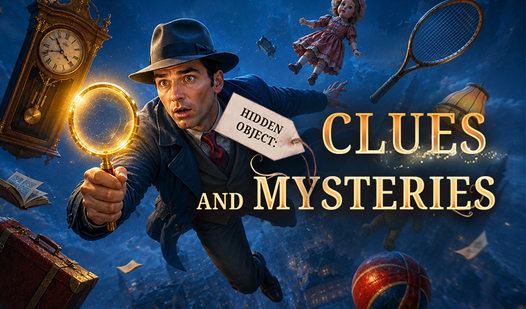
▶ Play FreeHidden Object: Clues and Mysteries sits closer to the narrative end of the spectrum. Scenes are crafted with atmosphere, and you're gathering clues as you search. This is the game for players who want more context to their object hunting — the "why" behind what you're finding.
Hidden Object: Clues and Mysteries
The human brain is naturally wired to find patterns in chaos, making the classic hidden object genre the ultimate test of observation. Hidden Object: ...
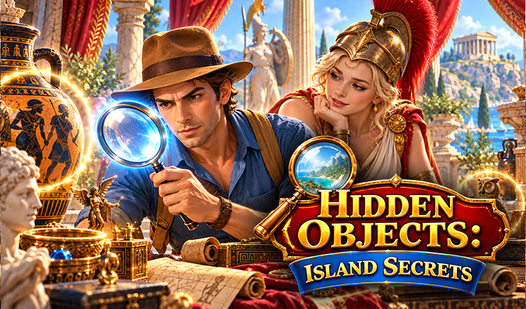
▶ Play FreeHidden Objects: Island Secrets uses a tropical setting with lush, layered scenes. Island environments are particularly good for beginners because natural settings have a visual logic — you'd expect to find certain things near water, near vegetation, near buildings. That context helps narrow down where to look.

Hidden Objects: Island Secrets
Fans of detective games will find themselves hooked by the mysterious atmosphere of Hidden Objects: Island Secrets. This captivating adventure challen...
▶ Play FreeHidden Object: My Hotel puts you in a busy hotel environment. Interior spaces like this reward the zone-scanning approach because rooms have clear visual boundaries — you can work through the lobby, then the hallway, then the kitchen. Structured environments build good habits.

Hidden Object: My Hotel
Fans of mystery and renovation will fall in love with Hidden Object: My Hotel instantly. This captivating hidden object adventure tasks you with resto...
▶ Play FreeFirson's Riddles: Hidden Object adds a puzzle-adventure twist. The riddle format means you're not just scanning — you're interpreting clues to know what you're looking for. A slightly higher cognitive challenge, but enormously satisfying when you crack it.

Firson's Riddles: Hidden Object
Fans of cozy puzzles will adore Firson's Riddles: Hidden Object, a delightful journey where a chatty cat guides your every step. You take charge of Au...
▶ Play FreeHidden Objects: Traveling America and Hidden Objects: European Journey are worth playing together. Both use real-world locations as their backdrop, which adds an educational element. The visual style is consistent across both, so skills transfer directly between them.

Hidden Objects: Traveling America
Road trips are the ultimate way to see the world, and now your living room is the starting point for a cross-country adventure. Hidden Objects: Travel...
▶ Play Free
Hidden Objects: European Journey
Afternoon slumps at the desk often leave you craving a mental escape to somewhere far more exciting than your current office view. Hidden Objects: Eur...
▶ Play FreeAdvanced Techniques for Tough Levels
Once you've got the basics down, harder levels in seek and find games require sharper tools. These are the techniques that separate fast, confident players from frustrated ones.
Use hints strategically, not desperately. Most games give you a limited number of hints. Don't burn them the moment you're stuck. Give yourself at least two to three minutes of genuine effort before using one. Hints used too early become a crutch; hints used as a last resort after real searching stay genuinely helpful.
Notice what you've eliminated. As you find objects and they're removed from the list, mentally note which areas of the scene you've already cleared. This shrinks the active search area for remaining items. Advanced players track this automatically — they're not re-searching areas they've already confirmed.
Watch for "object blending" tricks. Designers use several classic techniques to make objects harder to find:
- Color matching: the object is the same color as its background
- Partial obscuration: part of the object is hidden behind another element
- Unexpected scale: the object is much smaller or larger than expected
- Rotation: the object is tilted or upside-down
- Texture integration: the object's texture blends with the surrounding surface
When you're stuck, ask yourself which of these techniques might be in play and search accordingly.
Play in shorter sessions on tough levels. Eye fatigue is real. After 20-30 minutes of intense visual scanning, your brain's pattern recognition degrades noticeably. You'll miss things you'd normally spot instantly. If you're hitting a frustrating wall on a difficult level, taking a 10-minute break and coming back fresh often solves it faster than grinding through.
For spot-the-difference games, compare systematically. The most efficient method: pick a corner of both images, then scan corresponding rows across both images simultaneously. Don't jump around comparing random areas. Move in a fixed direction and keep your comparison point anchored.
For character-hunt games, memorize the target early. At the start of a level, spend a few seconds really looking at the character or object you're hunting. Study its specific features — not just "orange cat" but the exact shade, the ear shape, the eye style. The sharper your mental template, the faster your eye catches matches.
Turn off music if it's distracting. Some players concentrate better in silence. The ambient sound design in hidden object games is often beautiful, but if you're genuinely stuck, muting the audio removes one layer of distraction and helps you focus purely on the visual.
On mobile: zoom in on dense areas. If you're playing on a phone or tablet, don't be afraid to zoom into dense clusters of objects. Small screens compress details that would be easier to see on a larger display. Zooming into difficult corners can reveal objects that are simply invisible at default scale.