How to Play Physics Stick Simulator Games
If you've ever wondered how to play physics stick simulator games without constantly watching your stickman flop around helplessly, you're in the right place. These games are deceptively simple-looking — just little matchstick figures bouncing around a screen — but underneath that minimalist exterior is a surprisingly deep system of physics, momentum, and strategy. Whether you're trying to solve a puzzle, win a fight, or just cause as much chaos as possible, understanding how the physics engine works changes everything.
This guide covers everything: what makes these games tick, how ragdoll physics actually function, practical tips for getting better at controlling your stickman, and a roundup of the best free stickman physics games you can play right now.
What Are Physics Stick Simulator Games?
Physics stick simulator games are browser-based (or mobile) titles where stickman characters — simplified human figures made of lines and joints — interact with the world through realistic or semi-realistic physics. Every arm, leg, and torso segment responds to gravity, collisions, and applied forces. That's what makes them feel alive, even when your character is ragdolling off a cliff in slow motion.
The genre splits into a few flavors:
Sandbox/destruction games — You're handed a ragdoll and a playground full of hazards. The goal is usually to make the doll suffer in increasingly creative ways. Sounds dark, but it's genuinely satisfying physics experimentation.
Fighting/combat games — Two stickmen beat each other up with weapons or superpowers. Physics determines how hits land, how bodies fly, and how the environment responds to impacts.
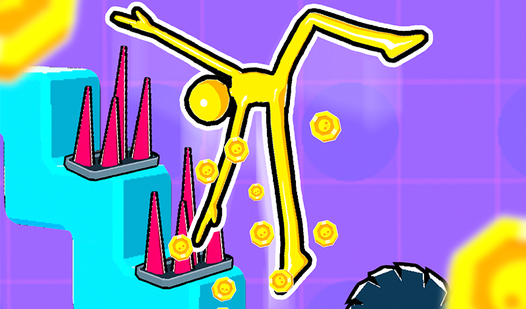
Puzzle/adventure games — Your stickman needs to get from A to B using platforming, climbing, or physics-based interactions. These demand more precision and planning.
Arena/battle games — Multiple stickmen (sometimes including you against AI or other players) compete in chaotic physics arenas with weapons, hazards, and environmental destruction.
The common thread is that physics isn't just a visual flourish — it's the core mechanic. You're not just pressing "jump" and watching an animation play. You're applying force to a jointed figure and seeing what actually happens based on mass, velocity, and collision detection.
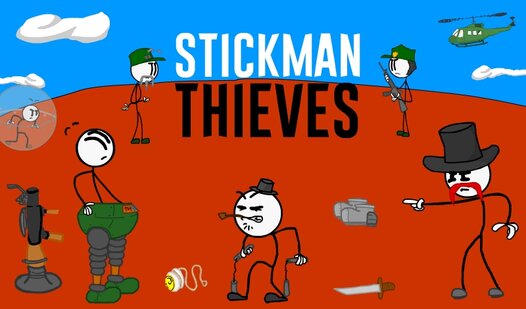
A great entry point into the adventure side of the genre is Stickman Thieves, which uses physics-based puzzle mechanics to move your stickman character through environments full of obstacles and interactive objects.

Stickman Thieves
Staring at the clock while your motivation slowly fades away is a universal struggle that calls for a quick distraction. Stickman Thieves serves as th...
▶ Play FreeRagdoll Physics — How They Work
Ragdoll physics is the system that makes characters feel like actual bodies rather than rigid statues. The name comes from the way a limp ragdoll toy flops around — and that's exactly how these characters behave when they're not actively being controlled.
The Joint System
A stickman in a physics simulator is built from rigid body segments connected by joints (sometimes called constraints or hinges). Each segment has:
- Mass — heavier parts require more force to move
- Velocity — current speed and direction
- Angular momentum — spin and rotation
The joints limit how far each segment can rotate relative to its neighbor. A knee can bend backward but not forward. A spine can twist but not fold in half (usually). When physics exceed these limits, you see the dramatic ragdoll flopping that makes these games so entertaining.
Active vs. Passive Ragdoll
This is the key distinction you need to understand to get better at how to play physics stick simulator games:
Passive ragdoll — The character has no active control. Gravity and collisions determine everything. This happens when your character gets knocked out, falls, or is in a sandbox destruction mode.
Active ragdoll — The character's joints have motors (simulated muscle force) that try to maintain a target pose. This is how controlled movement works. When you press "jump," the game applies upward force at the legs and tries to keep the torso upright. The physics still apply, but they're fighting against your input.
The tension between active and passive states is what creates that wobbly, unpredictable quality that makes these games fun. You're always one bad landing away from losing control of your character.
Momentum and Collision
When your stickman hits something, the impact force distributes across the body based on what made contact first and how fast it was moving. Hit a wall face-first at high speed? The head and shoulders absorb the impact and the legs fly forward. Land on your feet after a big jump? The legs compress and the torso bobs down.
Understanding this helps you predict outcomes in combat and puzzle games. If you want to send an enemy flying in a specific direction, you need to think about where you're applying force, not just whether your attack lands.

Stick Kombat 2D
Stickman brawlers bring a unique brand of chaotic energy that turns simple arenas into high-stakes battlegrounds. Stick Kombat 2D perfectly captures t...
▶ Play FreeTips for Controlling Stickman Characters
Getting good at physics stick simulator games is less about reflexes and more about understanding the physics model and working with it instead of against it.
1. Don't Fight the Physics — Use Momentum
New players often try to correct every wobble immediately, which usually makes things worse. If your character is leaning forward, sometimes it's better to commit to that lean and use it to accelerate rather than trying to snap back to upright. This is especially true in obstacle and platform sections.
2. Learn the Weight Distribution
Every ragdoll has a center of mass, and it changes based on limb positions. When jumping, bring your legs up — it raises your center of mass and lets you clear obstacles more easily. When landing, bend your knees (or the game equivalent) to absorb impact and stay upright.
3. Aim With Your Whole Body in Combat Games
In stickman fighting games, your hit direction is determined by your character's orientation and momentum, not just where you're pointing. A running punch carries more force than a standing one. A downward swing from a jump can knock enemies off balance in ways a horizontal swing can't. Experiment with your approach angle before committing to attacks.
4. Use the Environment
Physics environments are interactive. Walls can deflect you, slopes can accelerate you, and platforms can be used as launch points. In sandbox games, environmental objects often have their own physics — barrels roll, crates stack, ropes swing. Understanding what each object does before you throw yourself at it saves a lot of restarts.
5. In Sandbox Games, Start Small
If you're building obstacle courses or setting up complex physics interactions, start with simple setups. Get one hazard working the way you want before adding more. Complex chains of physics interactions are unstable — one piece behaving unexpectedly can cascade into chaos (sometimes that's the point, but usually you want some control over the outcome).
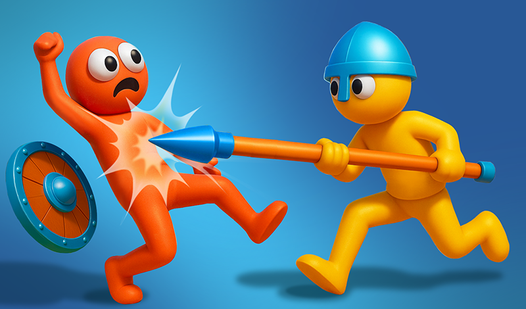
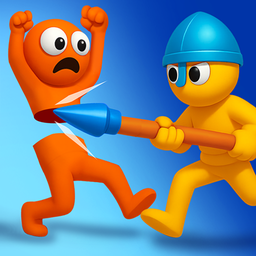
The Ragdoll Arena! Fun Spear Battle! is a great game to practice reading ragdoll collisions — throwing spears at opponents teaches you a lot about force vectors and impact angles.
Ragdoll Arena! Fun Spear Battle!
Stuck in a boring meeting or just need a quick escape from reality? Ragdoll Arena! Fun Spear Battle! is the ultimate distraction that turns your scree...
▶ Play Free6. Master the Pause (Where Available)
Some physics simulator games let you pause mid-action or play in slow motion. Use this. Pausing to analyze what went wrong after a crash teaches you more than 10 retries at full speed. You can see exactly which joint folded, where the contact point was, and what the trajectory looked like before it went sideways.
7. Expect and Accept Chaos
Part of the appeal of ragdoll physics is that outcomes are never perfectly predictable. The same jump, performed the same way, might land differently each time due to tiny variations in starting position or timing. Elite players in these games aren't trying to eliminate randomness — they're making high-probability plays and adapting when things go unexpectedly. Build mental models, not muscle memory.
Best Free Stickman Physics Games Online
Now let's get to the actual games. These are all free to play directly in your browser on FreeJoy.games, no downloads required.
Playground Man! Ragdoll Show!
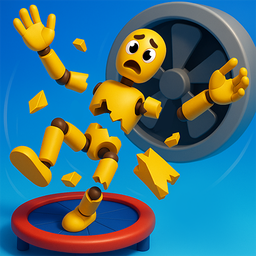
This is the essential sandbox destruction experience. You have a physics-simulated ragdoll stickman and a playground full of interactive objects — ramps, springs, spikes, vehicles, and more. The game gives you tools to construct obstacle courses and then run your doll through them. It's perfect for learning how ragdoll physics respond to different types of hazards because you can control exactly what hits your character and from what angle.
The environmental objects all have their own physics properties. Wooden crates behave differently from metal barrels. Springs propel differently than ramps. Understanding these properties is satisfying on its own, before you even factor in the destruction.
Playground Man! Ragdoll Show!
Physics-based mayhem turns every interaction into a hilarious experiment in Playground Man! Ragdoll Show! where gravity is your biggest enemy and best...
▶ Play FreeNo Pain No Gain — Ragdoll Sandbox
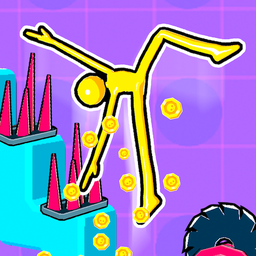
If Playground Man is the playground, No Pain No Gain is the physics laboratory. This sandbox gives you even more control over obstacle course construction using a full set of physical objects and tools. It's the best game in the genre for players who want to learn how physics stick simulator games work from the ground up — you're essentially building your own physics problems and solving them.
The game rewards creativity. The most satisfying runs aren't the clean ones — they're the Rube Goldberg chains where every object in your course serves a purpose and your ragdoll bounces through all of them in sequence.
No Pain No Gain - Ragdoll Sandbox
Create chaotic obstacle courses where every tumble earns you a massive payout in No Pain No Gain - Ragdoll Sandbox. You act as the architect of destru...
▶ Play FreeStickman Superheroes
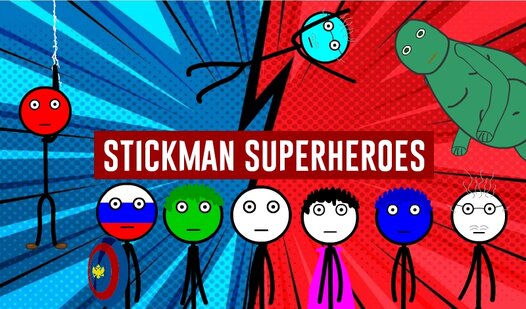
Takes the stickman formula and gives characters superpowers, which changes how physics interactions work dramatically. Now you're not just dealing with normal gravity and impact forces — abilities like flight, super strength, or energy blasts add new vectors of force. It's a good next step after you've mastered vanilla stickman combat.
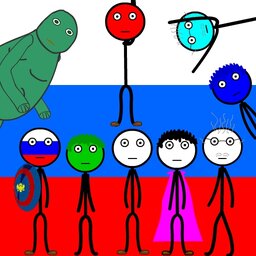
Stickman Superheroes
Fans of action-packed adventures will love Stickman Superheroes for its fast-paced combat and iconic hero roster. You take control of a brave stickman...
▶ Play FreeStick: Dinosaur Arena
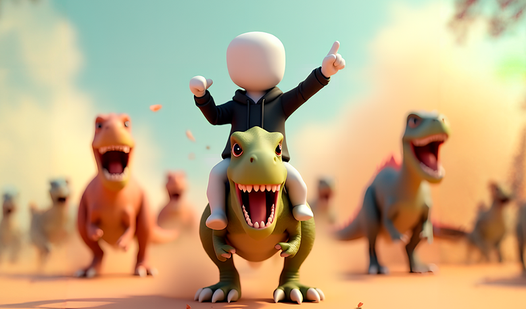
Arena combat with a prehistoric twist. Fighting oversized dinosaur opponents changes the scale of physics interactions significantly — you're a small stickman dealing with creatures that have enormous mass and momentum. Learning to time dodges and attacks against something that outmasses you by a factor of ten is a specific physics skill that this game teaches well.

Stick: Dinosaur arena
Prehistoric combat takes a chaotic turn when stickman warriors collide with ancient reptiles in Stick: Dinosaur arena. This strategic battler blends r...
▶ Play FreeNinja vs Ragdolls: Sharp Knife Throw!
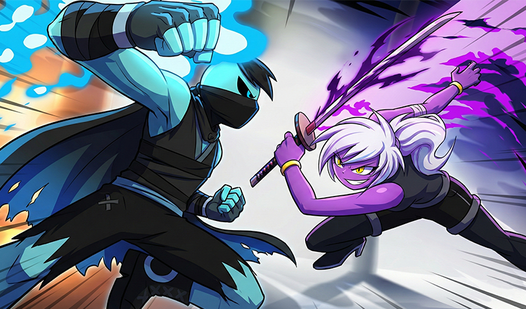
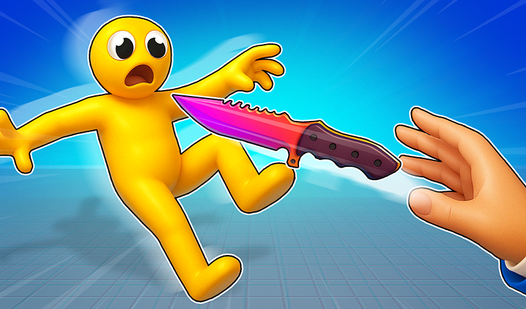
Pure projectile physics. You're throwing knives at ragdoll stickman targets, and the challenge is reading how the targets are positioned and where they'll be when your projectile arrives. It isolates the trajectory calculation aspect of physics gameplay in a satisfying way. If you want to get better at predicting where fast-moving objects will land, this game is excellent practice.
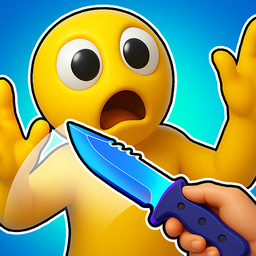
Ninja vs Ragdolls: Sharp Knife Throw!
Calculate your trajectory and launch blades with lethal precision to dismantle every stickman standing in your way. Ninja vs Ragdolls: Sharp Knife Thr...
▶ Play FreeEpic Sword Battle! Fight in the Ragdoll Arena!
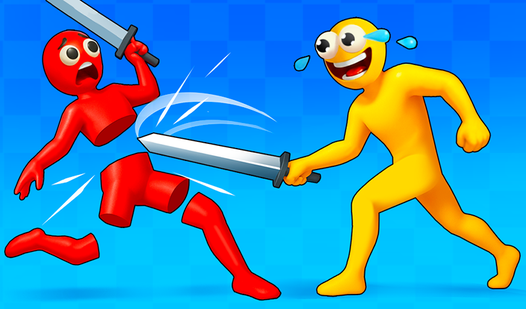
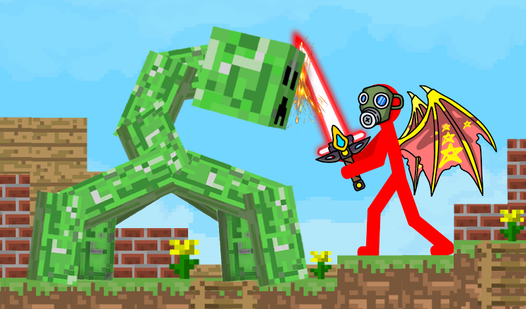
Melee combat in a ragdoll arena with swords. This one captures the chaotic energy of ragdoll physics combat while still having enough structure to feel like a real fight. Sword swings have weight and momentum — overcommitting to a swing leaves you open, and landing a hit sends enemies flying in satisfying directions.
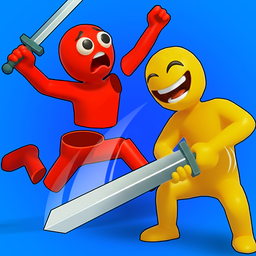
Epic Sword Battle! Fight in the Ragdoll Arena!
Swing your blade with precision to dominate every duel in Epic Sword Battle! Fight in the Ragdoll Arena! as you master the chaotic physics of combat. ...
▶ Play FreeStick Mega Battles!
Scale is the differentiator here — instead of single combat, you're managing or watching physics-driven battles involving many stickman characters at once. Mass stickman physics simulations create emergent behavior that individual fights don't, and the chaos is spectacular.
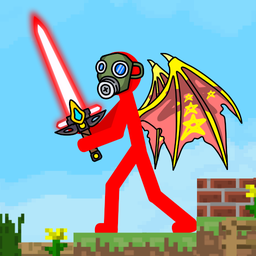
Stick Mega Battles!
Staring at a blank screen during a lunch break often feels like a wasted opportunity to have some real fun. Stick Mega Battles! turns those dull momen...
▶ Play FreeObby: Break Your Bones 3D Ragdoll
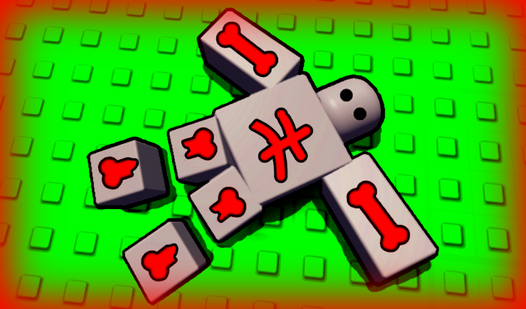
The 3D perspective changes everything about how you read physics interactions. Most stickman games are 2D, which means you're reading a flat projection of 3D space. Going fully 3D introduces depth perception as a skill requirement — you need to judge distances in three dimensions, which is significantly harder. This game is a genuine challenge for anyone who's gotten comfortable with 2D stickman physics.
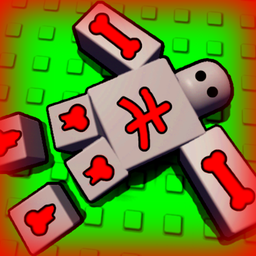
Obby: Break Your Bones 3D Ragdoll
Send your character tumbling down steep slopes and watch the hilarious chaos unfold in Obby: Break Your Bones 3D Ragdoll. You earn cash for every sing...
▶ Play FreeRagdoll Show: Throw, Break and Destroy!
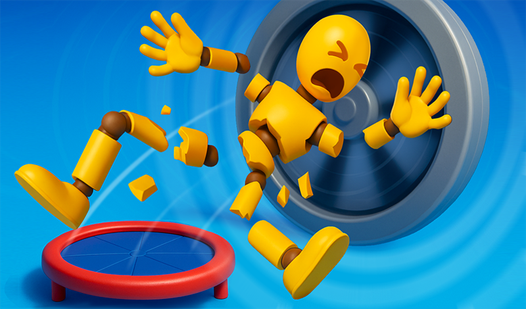
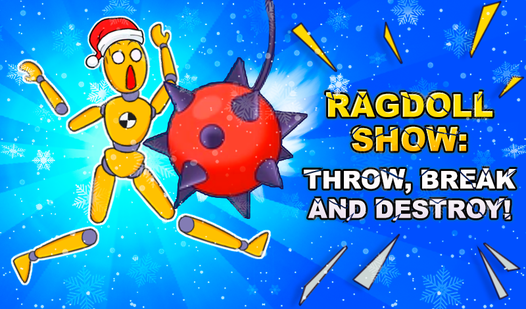
The name is accurate. This is destruction physics at its purest — throwing ragdolls at breakable structures and watching everything shatter. It's oddly therapeutic and teaches you a lot about how impact force distributes through connected rigid bodies.
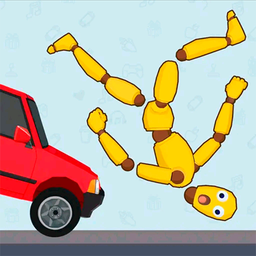
Ragdoll Show: Throw, Break and Destroy!
Fans of physics-based play will appreciate the chaotic satisfaction found in Ragdoll Show: Throw, Break and Destroy! This engaging title challenges yo...
▶ Play FreeSprunki Ragdoll: Royal Chaos
A chaotic multiplayer-style ragdoll arena with characters from the Sprunki universe. The "royal chaos" in the title is accurate — this is one of the more anarchic entries in the genre, with lots of simultaneous physics interactions happening at once. Great for players who've mastered the basics and want to handle more complex emergent situations.
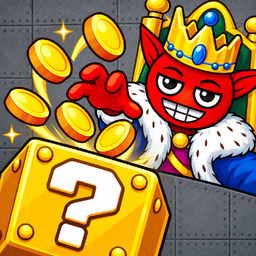
Sprunki Ragdoll: Royal Chaos
Staring at a blank screen during a lunch break often feels like a slow descent into madness. Sprunki Ragdoll: Royal Chaos turns that downtime into a t...
▶ Play FreeCommon Mistakes and How to Fix Them
Before the FAQ, a quick troubleshooting section for the most common problems new players run into:
"My character keeps falling over" — You're probably correcting too aggressively. Try smaller inputs. Most active ragdoll systems respond better to gentle, sustained adjustments than hard jerks.
"My attacks don't seem to do anything in combat games" — You're likely hitting without momentum. Move toward your target before attacking — a moving strike carries physics force, a stationary one often doesn't.
"My obstacle courses collapse before they start" — Objects in contact with each other at setup can generate physics conflicts. Leave small gaps between placed objects or use connection tools (joints, ropes) instead of stacking.
"I can't get past a certain platforming section" — Break it into phases. Identify exactly which part of the movement is failing, then work on that specific micro-segment. Landing zones for jumps are often more forgiving at the edges than the center — use the physics to your advantage.