How to Play Parkour in Rivals: Beginner Guide
Parkour games are all about momentum, timing, and that satisfying click of nailing a tricky jump. Whether you're figuring out how to play parkour in Rivals, trying to crack Hypixel's obstacle courses, or jumping into Parkour Civilization for the first time — the core skills carry over everywhere. This guide breaks down controls, essential techniques, and advanced tricks so you can stop falling and start flying.
How to Play Parkour in Rivals: Controls and Movement Basics
The first thing you need to understand about any parkour game is that it's not just about pressing jump at the right time. Movement is a whole system, and every button you press affects your speed, trajectory, and recovery window.
Basic control layout (most parkour games):
- WASD / Arrow Keys — directional movement
- Space — jump (tap for short hops, hold for max height)
- Shift — sprint (maintains momentum, critical for longer gaps)
- Ctrl / C — crouch or slide
- Mouse — camera control (essential for precise landings)
If you're playing in a Roblox-style game, Shift Lock (right-click or toggle in settings) significantly improves precision movement since it locks your camera behind your character. In Rivals specifically, you want to set your camera sensitivity to medium — too fast and you overshoot turns, too slow and you can't react to obstacles ahead.
Momentum is your best friend. Most beginners stop sprinting before a jump because they're nervous about the gap. That's backwards. You should be accelerating into jumps, not decelerating. Speed converts directly to horizontal distance in almost every parkour game engine. If a jump feels impossible, the answer is usually "go faster."
Camera angle matters more than you think. Keep your camera slightly tilted down when approaching a platform. This gives you better depth perception on where you'll land. When doing wall runs or ledge grabs, tilt the camera toward the wall so you can see what's coming next.
Checkpoint usage: Always activate every checkpoint you pass. Sounds obvious, but in the excitement of a good run, players often skip checkpoints to save time and then lose minutes recovering from a fall. Especially when learning how to play parkour in Rivals or similar competitive maps, checkpoints are free insurance.
One great game to practice these fundamentals in a relaxed, low-pressure environment is Skebob: Obby Parkour. It nails the classic Roblox obby feel with well-spaced obstacles, forgiving hit detection, and a clean checkpoint system that lets you drill individual sections without replaying the whole course.
Essential Parkour Techniques for Beginners
Once you've got basic movement down, you need a toolkit of techniques. These are the bread-and-butter moves that appear in every parkour map — whether you're on Hypixel, playing how to play parkour in Hypixel maps, or grinding a browser game.
Bunny Hopping (Bhop)
Bunny hopping is the act of jumping the moment you land, chaining jumps together to maintain or increase your speed. It's the backbone of efficient movement in most parkour games.
How to bhop:
- Sprint forward
- Jump
- The moment your feet touch the ground, jump again
- Slightly strafe with A/D mid-air to maintain trajectory
The timing window varies by game. Some games have tight windows (CS:GO-style), others are forgiving (Roblox-style). Practice the rhythm without moving forward first — just practice the jump-land-jump timing in place until it feels natural.
Strafing and Air Control
Mid-air, you're not helpless. Most parkour games give you some degree of air control — the ability to nudge your direction while airborne. Use A/D to make micro-corrections during long jumps. This is the difference between landing on the edge of a platform (risky) and landing in the center (safe).
Key tip: Don't over-correct. Small, deliberate strafes are better than panicked direction changes that send you off course.
Edge Jumps (Low Jumps)
Also called "edge hopping" — jumping from the very edge of a platform gives you slightly more horizontal distance because you spend less of your jump height decelerating toward the platform. It feels scary, but it's a legitimate technique used in speedrunning and competitive parkour.
Practice this on flat, safe platforms before applying it to actual difficult sections.
Crouch Jumps (Head Clearance)
Some obstacles require you to crouch mid-air to fit through tight gaps. In most games: sprint, jump, then tap Ctrl/Shift at the peak of your jump. Timing is everything — too early and you lose height, too late and you clip the ceiling.
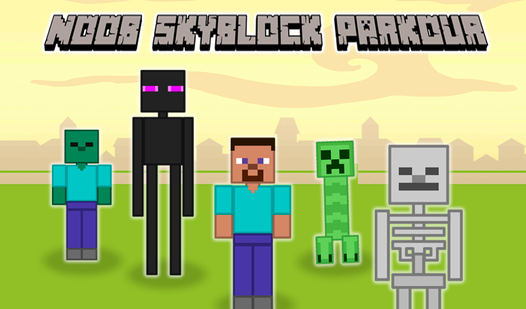
Noob Skyblock Parkour is an excellent sandbox for drilling all these fundamentals. Its Minecraft-adjacent visual style keeps things simple and readable (you can always see exactly where blocks are), while the parkour challenges gradually introduce tighter timing requirements for each technique listed above.
Noob Skyblock Parkour
Parkour fans and fans of challenging geometry style obstacles will find their new favorite addiction in Noob Skyblock Parkour. You take control of a d...
▶ Play FreeWall Touches and Surface Reading
A lot of beginners treat walls as obstacles. Experienced parkour players treat them as tools. Even if a game doesn't have explicit wall-jump mechanics, you can often use walls to redirect momentum — bump the wall at an angle to change direction without losing too much speed.
Read surfaces before you commit: Is the platform moving? Rotating? Does it disappear? In complex parkour maps, you'll encounter moving platforms, disappearing blocks, and timed obstacles. The biggest beginner mistake is jumping before understanding what the obstacle does. Watch the pattern for a full cycle, then move.
Speedrunning Mindset vs. Completion Mindset
When learning, use the completion mindset: safe, center-of-platform landings, activate all checkpoints, no rush. Once you know a map, switch to speedrunning mindset: edge jumps, bhopping, skip checkpoints to save reset time.
Don't try to do both at once — it leads to crashes in hard spots and slow progress overall.
Nubik Parkour on a Jet Ski switches up the formula in a fun way — it's parkour, but you're on a jet ski, which means the movement physics are subtly different. Practicing here helps you adapt momentum-management skills to non-standard environments, which is surprisingly useful for maps with conveyor belts, ice, or other friction modifiers.
Advanced Tricks — Wall Jumps and Speed Runs
Now we're getting into the techniques that separate good parkour players from great ones. These require muscle memory, so expect to wipe out a lot before these click.
Wall Jumps
Wall jumps let you gain extra height or cross gaps that would otherwise be impossible. The basic mechanic:
- Run toward a wall at an angle (not straight on)
- Jump into the wall
- The moment you contact the wall, push off with another jump input
- Use air control to redirect toward your target
Common mistakes:
- Running straight into the wall (you bounce back instead of up)
- Jumping too early (you miss the wall entirely)
- Not redirecting after the wall jump (you just go back where you came from)
The angle of approach is the key variable. Roughly 30-45 degrees from the wall surface is the sweet spot in most engines. Steeper than that and you bounce unpredictably.
Wall Runs
Not all games have wall runs, but when they do, they're one of the coolest techniques to execute correctly. Standard wall-run approach:
- Build sprint speed
- Jump at the wall when you're very close (almost touching)
- Hold your directional key into the wall while pressing jump
- A successful wall run lets you travel horizontally along the wall and jump off at the end
Wall runs are time-limited in most games — you'll start sliding down after 1-3 seconds. Use this time to aim your exit jump carefully.
Hook Mechanics and Grappling
Some parkour games add hooks, grapples, or swing mechanics. These are wild and take the longest to master because you're now dealing with pendulum physics on top of everything else.
Grapple timing basics:
- Hook at the peak of your jump (not at the start)
- Use the swing momentum to launch yourself — release at 45 degrees on the upswing
- Don't spam the hook — one well-timed hook beats three panicked ones
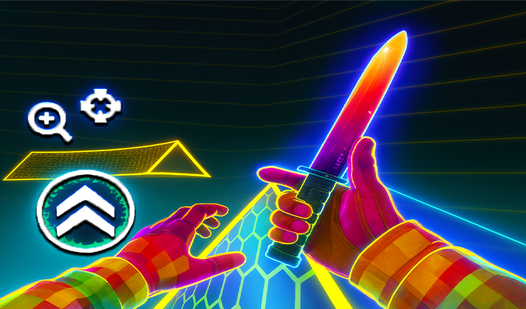
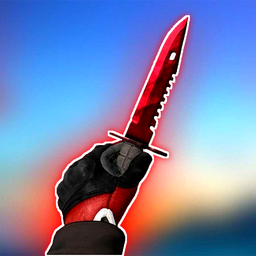
GRAVITATION - Parkour with Knives is one of the best games to practice wall slides and hook mechanics. The stylish art direction keeps things readable while throwing genuinely challenging technique requirements at you, including timed wall slides and knife-based hooks that add a unique twist to standard parkour mechanics. If you can handle this game's obstacle sets, you're ready for competitive maps anywhere.
GRAVITATION - Parkour with Knives
Speed freaks and adrenaline junkies gravitate toward the high-octane action found in GRAVITATION - Parkour with Knives. This title pushes your reflexe...
▶ Play FreeSpeed Runs and Optimization
Once you know a map, how do you go faster?
Line optimization: The shortest path isn't always the fastest. Sometimes a slightly longer route lets you maintain momentum instead of stopping and starting, which nets faster overall times.
Cut corners: Instead of landing on a platform and jumping from the center, aim to land on the edge and immediately jump again. Cuts fractions of a second per platform, which adds up across a full map.
Learn skip spots: Most parkour maps have at least one unintended skip — a jump that bypasses a section entirely. These come from creative angle-finding and are the backbone of competitive speed records.
Practice individual sections: Don't speedrun the whole map until you've drilled each section separately. Pick the 2-3 parts where you die most and grind those specifically. When you're confident in every section, link them together cleanly.
Bhop in CS-Style Games
If you're playing CS:GO-inspired parkour (including how to play parkour in Hypixel's CS-themed maps), bhop timing is stricter and requires mouse scroll as your jump input. Mouse scroll gives you a faster input than Space, making perfect bhop timing more achievable. Bind jump to scroll wheel down, sprint, and scroll rhythmically. You'll know you're doing it right when you hear the consistent jump sound and see your speed meter climb.
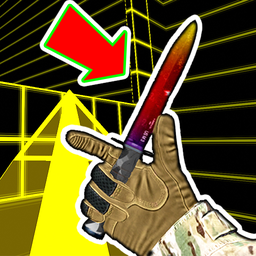
Surf GO: CS 2 Parkour and Case Simulator lets you practice exactly this — bhop mechanics in a CS2-adjacent environment with actual surf ramps and parkour sections. The case simulator element keeps it entertaining between practice sessions, and the mechanics are authentic enough that skills you build here transfer directly to Hypixel CS-themed maps and other competitive servers.
Surf GO: CS 2 Parkour and Case Simulator
Fans of high-adrenaline movement and weapon collecting will find their new obsession here. Surf GO: CS 2 Parkour and Case Simulator captures the thril...
▶ Play FreeBest Parkour Games to Practice On
Theory only gets you so far. Here are five solid options for putting everything above into practice — ranging from relaxed casual runs to technical precision challenges.
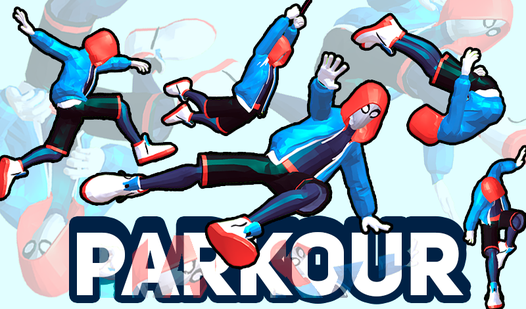
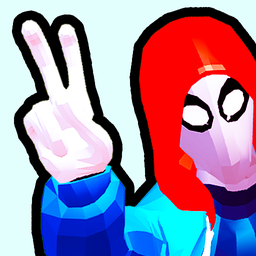
Parkour: Climb and Jump strips everything down to the core movement experience. No distractions, clean level design, and a focus on proper jump timing and height calculation. Great for drilling basics without noise.
Parkour: Climb and Jump
Mastering the concrete jungle requires more than just guts, and Parkour: Climb and Jump turns every rooftop into your personal playground. This high-o...
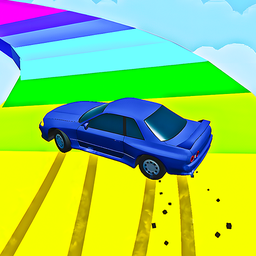
▶ Play FreeRobby Racing Parkour combines speed with obstacle navigation, giving you a feel for how momentum-based decision-making works under pressure. The racing element adds a time component that forces you to think about line optimization — a skill that pays off in any competitive parkour context.
Robby Racing Parkour
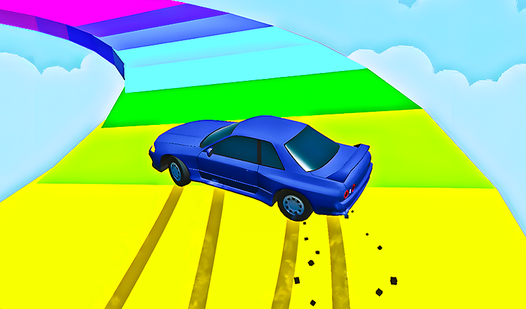
Navigate your drift car through a chaotic obstacle course where every turn tests your reflexes. Robby Racing Parkour blends high-speed racing with pre...
▶ Play FreeLemon Obby: The Cutest and Funniest Parkour!!! doesn't sound like a serious training ground, but the cheerful aesthetic hides some legitimately tricky obstacle sections. The light tone reduces frustration when you're failing on a hard section, which actually helps learning — you're more likely to retry when you're smiling than when you're grinding your teeth.
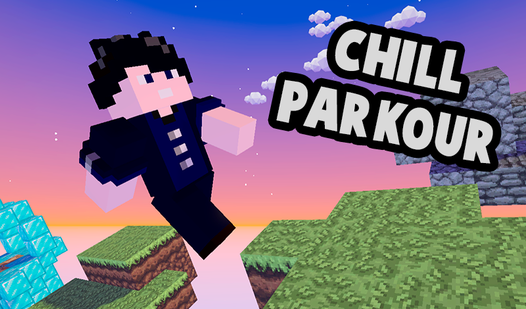
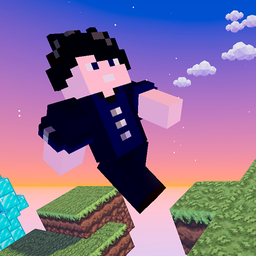
Chill Parkour is exactly what it sounds like — parkour without the competitive pressure. This is the game you run after a frustrating session on a hard map to reconnect with why parkour is fun in the first place. The relaxed pacing is also perfect for working on technique without rushing. Low stakes, genuine skill practice.
Chill Parkour
Leap across floating blocks and balance on narrow ledges to conquer every stage of Chill Parkour. This browser-based challenge blends classic block-wo...
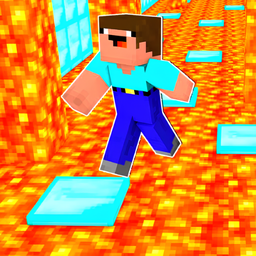
▶ Play FreeNoob Parkour: Obby Skyblock blends the high-altitude tension of skyblock with standard obby progression. Playing at height changes your psychology — falls feel more consequential, which sharpens your focus and teaches you to be deliberate rather than reactive. A surprisingly effective training tool.
Noob Parkour: Obby Skyblock
Skyblock survival reaches new heights when you combine pixelated platforming with the chaotic charm of a classic obstacle course. Mastering these floa...
▶ Play FreePractical Tips Before You Start Any Parkour Map
Before jumping into a new map — especially when exploring how to play parkour in Parkour Civilization or any server with complex mechanics — run through this checklist:
Settings to configure first:
- Jump keybind — make sure it's comfortable, especially if you'll be bhopping
- Sprint toggle vs. hold — toggle is better for long maps, hold gives more control in tight sections
- Camera sensitivity — test in a safe area before committing to hard sections
- FOV — higher FOV gives better peripheral awareness of nearby platforms
Map awareness habits:
- Read the whole visible path before running
- Note where moving platforms are and time their cycles
- Identify checkpoints early — know where your last save point was
- Watch for visual traps — platforms that look solid but aren't, or gaps that look wider than they are
Mental approach:
- Each section is a separate problem. Don't get frustrated by failures if you're consistently getting further than before — that's progress.
- If you're stuck on one section for more than 10-15 attempts, skip it temporarily if possible, or break it into micro-steps.
- Film or screenshot particularly tricky spots. Looking at them from outside a first-person panic state often reveals the solution immediately.