How to Play Mahjong Online: Rules, Strategy & Tips
Mahjong has been captivating players for over a century — and now you can learn how to play Mahjong without needing a physical tile set, three friends, or a free Saturday afternoon. Browser Mahjong games online free are everywhere, and the solo solitaire format makes the classic tile-matching puzzle instantly accessible to anyone. Whether you're eyeing the board for the very first time or returning after a long break, this guide walks you through the rules, the board, smart strategy, and the best places to start playing.
Mahjong Tile Matching Rules Explained: How to Play Mahjong
The first thing to clarify: the Mahjong you'll find in most browser games is Mahjong Solitaire, not the four-player game from Chinese tradition. Mahjong Solitaire is a one-player puzzle where your only job is to clear all the tiles off the board by matching identical pairs.
The Three Basic Rules
1. Tiles must match exactly. Each tile has a symbol, character, or image on it. You pair two tiles only when they display the exact same design. No near-matches, no partial credit.
2. A tile must be "free" to be selected. A tile is free when:
- Its left or right side is not blocked by another tile (at least one horizontal side is open)
- It has no tile sitting directly on top of it
If a tile is sandwiched horizontally or buried under another, it's locked — you can't touch it until the blocking tiles are cleared.
3. Match, remove, repeat. Select one free tile, then find its pair among other free tiles. Click both — they disappear. The board shifts, new tiles become free, and you keep going until either the board is empty (you win) or no valid pairs remain (you're stuck).
The Tile Sets
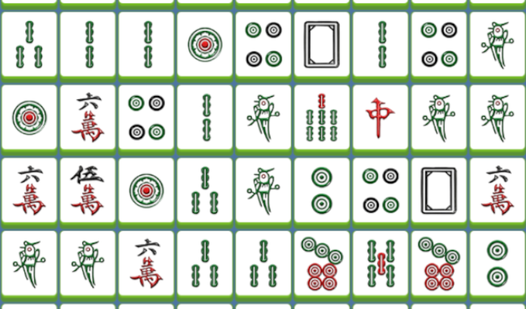
A standard Mahjong Solitaire set contains 144 tiles divided into groups:
- Suits (numbered 1–9): Circles (Dots), Bamboo (Sticks), Characters (Chinese numerals)
- Honor tiles: Four Winds (East, South, West, North) and Three Dragons (Red, Green, White)
- Bonus tiles: Flowers and Seasons — these are special because each flower tile matches any other flower tile, same for seasons
Most online games display the symbols visually, so you don't need to memorize the Chinese characters. The game highlights valid matches as you click, making the learning curve very gentle.
Cozy Mahjong
Match identical tiles and clear the board in Cozy Mahjong, a relaxing online puzzle experience designed to unwind your mind. Swipe or click to select ...
▶ Play FreeWhat Counts as a Stuck Board?
You lose (or need a shuffle) when no two free tiles on the board form a valid pair. This happens more often than beginners expect — it's not always about running out of tiles, sometimes the free tiles are all mismatched orphans with their partners buried underneath. That's why planning a few moves ahead matters enormously.
How to Read the Board Layout
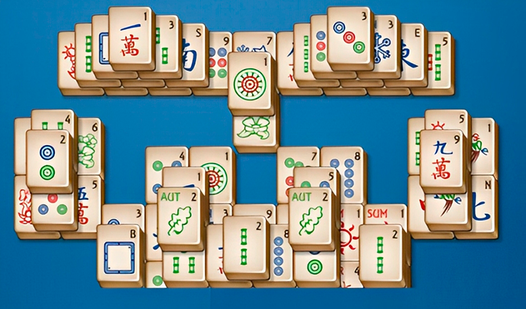
The layout — sometimes called the "turtle," "dragon," "pyramid," or dozens of other names — is the three-dimensional stack of tiles you see when you start a game. Understanding how to read it changes everything about how you approach each round.
Height and Depth
Most board layouts stack tiles two, three, even four layers high in the center. Tiles on higher layers are automatically free on top (nothing above them), but they may still be locked horizontally. Meanwhile, ground-floor tiles can be completely buried and won't become available until several layers are cleared above them.
Beginner mistake: focusing only on the ground layer. The tiles you want are often locked at the bottom, while the upper layers hold the keys. Clear the towers first.
The Classic Turtle Layout
The most common layout looks like a turtle when viewed from above — a wide rectangular body with small extensions for head, tail, and feet. It's the layout most players encounter first because it's balanced: not too many deep stacks, not too many isolated tiles.
Other popular layouts include:
- Pyramid — tiles rise from a wide base to a single peak, often forcing a specific clearing order
- Cross — symmetric, satisfying to clear cleanly
- Spider/Dragon — sprawling, complex, great for experienced players
Mister Mahjong
Ancient tile-matching puzzles remain the ultimate way to sharpen your focus after a long day. Mister Mahjong delivers a relaxing experience where you ...
▶ Play FreeIdentifying Bottlenecks
A bottleneck is any pair of tiles that are both locked under heavy stacks. If there are only two tiles of one type in the entire set and both are buried, you can't match them until you clear a path. Before making random matches, scan the board for:
- Tiles that appear only twice (you need both free simultaneously)
- Tiles that are stacked directly on top of each other (they can never both be free at the same time in the same move — you must clear others to separate their layers)
- Columns where a single tile is blocking four or five tiles beneath it
Spotting these early prevents the frustration of "winning" your way into an unwinnable position.
Using the Hint and Undo Buttons
Almost every Mahjong game online offers hints and undos. Use hints sparingly — they often show you a valid match, not the best one. Undos are more valuable: if you realize a match blocked a critical tile, undo and rethink.
Mahjong for every day
Staring at the clock during a long work break is a recipe for frustration when you just need a quick mental reset. Mahjong for every day serves as the...
▶ Play FreeWinning Strategies and Common Mistakes
Once you understand the rules and the board, strategy is what separates players who consistently clear boards from those who get stuck on the last 20 tiles every time.
Strategy 1: Prioritize High Stacks
Clear from the top down whenever possible. Every tile you remove from a tall stack frees up the tiles below it. If you have a choice between matching two ground-level tiles and matching a pair that sits on top of a four-tile stack, take the stack pair first.
Why? The ground pair will likely stay free for several more moves. The stack pair won't help free anything until the layers are peeled back.
Strategy 2: Break Up Concentrations
When many tiles cluster in one section of the board, that area acts as a traffic jam. Prioritize matches that open up congested zones, even if those matches seem less "important" by tile type.
Strategy 3: Track Your Pairs
Each tile type appears exactly four times. When you see two of one type already matched and gone, the remaining two are your last chance. If those two are buried, note it and clear toward them. If one is still free and you match it carelessly with a random free tile, you might trap the fourth permanently.
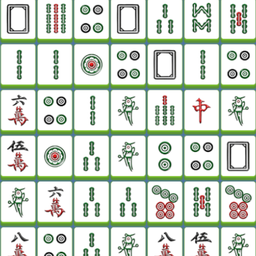
Mahjong Bang Bang
Matching tiles might seem like childs play until the board layout forces you into a strategic corner. Mahjong Bang Bang takes the classic tile-matchin...
▶ Play FreeStrategy 4: Watch for Isolated Tiles
Some layouts have tiles at the edges or corners that will only become free after specific other tiles are removed. These are easy to overlook until it's too late. Glance at the perimeter of the board once in a while to check if any isolated tiles are accessible and whether their partners are visible.
Common Mistakes That Kill Your Run
Matching the first pair you see. Impulsive matching works fine for the first half of the board; it kills you in the second half. Take an extra three seconds to scan for better moves.
Ignoring bonus tiles. Flower and season tiles are flexible — any flower matches any flower. Use these matches to thin out congested areas quickly since they don't require specific pairing.
Underestimating the shuffle. Most games offer one or more shuffles when you're stuck. Shuffles reposition only the remaining free tiles, so a well-timed shuffle right before a bottleneck can save a board. Hoarding your shuffle until the very end often means you're already stuck in an unwinnable state.
Choosing speed over thought (in timed modes). Some Mahjong games online include countdowns. If you're new, start with untimed modes to practice deliberate play before adding clock pressure.
Mahjong Solitaire For Free
Match pairs of identical tiles to clear the board in this relaxing brain teaser. Your main objective is to identify free pieces and remove them from t...
▶ Play FreeBuilding a Consistent Routine
Good Mahjong players develop a three-step habit before each move:
- Scan — look at the entire board, not just the area where you last clicked
- Identify — find all current free tiles and mentally group them by type
- Prioritize — choose the match that opens the most new tiles or removes the biggest bottleneck
This takes about five seconds and dramatically improves your completion rate.
Best Mahjong Games for New Players
If you want to play Mahjong games online free, here's where to start. These games are available directly in your browser — no installs, no accounts required.
Top Picks
Cozy Mahjong brings a warm, welcoming atmosphere that makes it perfect for first-timers. The interface is clean and visually appealing, tiles are large and easy to distinguish, and the relaxed pacing means you're never rushed.
Cozy Mahjong
Match identical tiles and clear the board in Cozy Mahjong, a relaxing online puzzle experience designed to unwind your mind. Swipe or click to select ...
▶ Play FreeMister Mahjong is the go-to for players who want to focus purely on the puzzle. It features multiple layouts and removes the time pressure entirely — great for practicing the strategic thinking described above.
Mister Mahjong
Ancient tile-matching puzzles remain the ultimate way to sharpen your focus after a long day. Mister Mahjong delivers a relaxing experience where you ...
▶ Play FreeMahjong Solitaire For Free delivers the full classic experience in full-screen mode with no time limits. If you want a clean, no-frills version to practice on, this is it.
Mahjong Solitaire For Free
Match pairs of identical tiles to clear the board in this relaxing brain teaser. Your main objective is to identify free pieces and remove them from t...
▶ Play FreeMahjong for Every Day adds a light tactical layer — the game challenges your mental sharpness with varied daily boards, making it a good habit for keeping your pattern recognition sharp.
Mahjong for every day
Staring at the clock during a long work break is a recipe for frustration when you just need a quick mental reset. Mahjong for every day serves as the...
▶ Play FreeMahjong Bang Bang offers a slightly snappier energy for when you want more challenge. The gameplay is easy to pick up but the later levels push your strategy skills, making it a natural step up after you've mastered the basics.
Mahjong Bang Bang
Matching tiles might seem like childs play until the board layout forces you into a strategic corner. Mahjong Bang Bang takes the classic tile-matchin...
▶ Play FreeMore Games Worth Trying
Once you're comfortable with the fundamentals, the following games offer fresh layouts, themes, and twists:

Mahjong Classic
Ancient board games have survived for centuries because they perfectly balance relaxation with intense mental stimulation. Mahjong Classic honors this...
▶ Play Free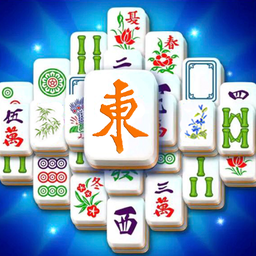
Mahjong Classic Chinese
Puzzle enthusiasts who appreciate timeless logic challenges will find Mahjong Classic Chinese to be an essential addition to their daily routine. This...
▶ Play Free
Mahjong Zodiac
Staring at a blank screen during a midday slump is the fastest way to lose your momentum. Mahjong Zodiac provides the perfect mental reset, blending s...
▶ Play Free
Mahjong: Super Match
Fans of classic card puzzles will find Mahjong: Super Match to be their new favorite way to unwind after a long day. This engaging experience challeng...
▶ Play Free
Mahjong Sakura Garden
Staring at a stagnant screen for hours often leaves the brain feeling foggy and drained of creativity. Mahjong Sakura Garden serves as the perfect men...
▶ Play Free
Mahjong for free
Fans of logic challenges will appreciate the relaxing pace of Mahjong for free, a timeless puzzle experience that keeps your brain sharp. This classic...
▶ Play Free
Solitaire Mahjong Classic
Staring at the screen during a mid-day slump is the worst way to spend your break. Solitaire Mahjong Classic is the perfect remedy to sharpen your foc...
▶ Play Free
Mahjong Pyramid
Ancient board games have a timeless appeal that sharpens the mind while providing a much-needed mental escape. Mahjong Pyramid brings this classic exp...
▶ Play FreePicking the Right Game for Your Mood
| You want... | Try this |
|---|---|
| Relaxed, no-pressure session | Cozy Mahjong, Mister Mahjong |
| Classic layout, clean UI | Mahjong Classic, Solitaire Mahjong Classic |
| Something visually fresh | Mahjong Sakura Garden, Mahjong Zodiac |
| A tougher challenge | Mahjong Bang Bang, Mahjong Pyramid |
| Daily puzzle habit | Mahjong for Every Day |
The variety across these games means you'll never run out of boards to clear. Most are browser-native, load in seconds, and work on both desktop and mobile.