How to Play Jump Scare Games: Rules and Strategies
Jump scare games tap into something primal. That split-second shock when a monster lunges at the screen, the heart hammering against your ribs, the involuntary yelp — it's terrifying, sure, but it's also weirdly addictive. If you want to know how to play Jump Scare games without losing your mind (or your dinner), this guide covers everything: the core rules, smart strategies, and the best free titles you can play right now on FreeJoy.
What Is a Jump Scare Game?
A jump scare is a moment in a game — or any media — where something sudden and scary appears, usually paired with a loud sound or a flash of disturbing imagery. The genre borrows heavily from horror movies but turns the formula interactive: instead of just watching someone get scared, you are the one navigating the danger.
Jump scare games come in dozens of flavors:
- Survival horror — manage limited resources while avoiding lethal threats (FNAF-style)
- Meme horror — deliberately absurd scares wrapped in internet humor
- Escape/exploration horror — walk through dark corridors and trigger scripted shocks
- Multiplayer horror — get scared alongside friends, which somehow makes it worse
What unites all of them is the core mechanic: tension builds, your guard drops for a fraction of a second, then bam — something explodes onto the screen. The best jump scare games use that rhythm masterfully. The bad ones just throw monsters at you constantly until you go numb.
Understanding this rhythm is the first step to actually surviving these games. Once you know a scare is coming, it still gets you — but you recover faster and make smarter decisions.
Rules and Basics of Jump Scare Games
The Two Phases: Dread and Shock
Every jump scare game operates on a cycle of dread (slow, quiet, creeping tension) and shock (the scare itself). Learning to read the dread phase is the single most useful skill you can develop.
Watch for:
- Music shifting from ambient noise to complete silence
- Flickering lights or sudden darkness
- A door, window, or vent that wasn't open before
- NPCs behaving oddly or disappearing
- The game slowing your movement speed (a classic trick)
When you notice any of these signals, assume a scare is seconds away. Take a breath, pull back from the screen slightly, and prepare to make a decision quickly — close a door, change a camera, activate a mechanic.
Resource Management Is Everything
Most jump scare games tie scares to a resource system. Run out of power in Five Nights at Freddy's and the lights go dark. Run out of sanity in a psychological horror game and the world starts lying to you. Ignore the fuel gauge in a survival title and your flashlight dies at the worst possible moment.
The trap most new players fall into is panic-spending resources. You hear a sound, you slam every available button, and suddenly you've burned through half your power in the first hour. Slow, deliberate resource use is almost always the correct play.
Know When to Look Away (and When Not To)
This sounds obvious but: sometimes the game wants you to look away. Some games actually reward players who face the scare directly — staring at the animatronic, holding your ground — rather than flinching. Others are designed so that turning away increases danger (the scare approaches while you're not watching).
Before your first session with any new title, spend five minutes reading about its core mechanic. You don't need spoilers — just understand whether the game rewards aggression or patience.
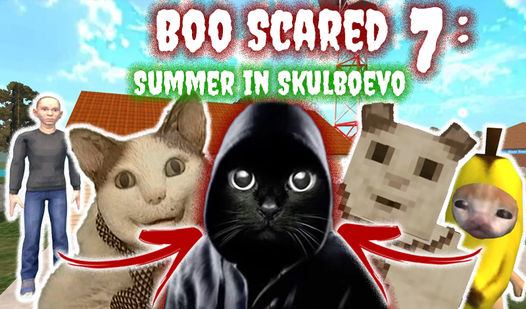
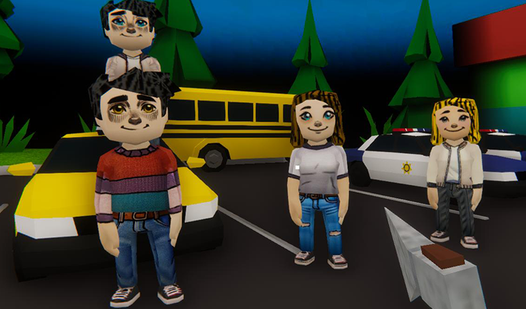
One of the best examples of the meme-horror approach to jump scares is Boo Scared 7: Summer in Skulboevo — a game that leans hard into absurdist Russian internet culture while still managing to deliver genuine shocks. The humor disarms you, which makes the scares hit even harder. The disconnect between "this is funny" and "wait, that was terrifying" is the whole point.
Boo Scared 7: Summer in Skulboevo
Navigate the eerie village of Skulboevo as Cat Boo to uncover the truth behind the bizarre Okak mystery. You will dodge threats while completing quirk...
▶ Play FreeStrategies and Tips for Jump Scare Games
1. Play With Headphones — But Be Ready
Headphones make jump scare games dramatically more effective. Spatial audio tells you exactly where a threat is coming from, giving you a real gameplay advantage. The downside: the scares are also dramatically louder and more effective.
Practical tip — keep your volume at about 60-70% rather than maxed out. You still get all the directional information, but the sudden blasts won't damage your ears or send you flying off your chair.
2. Use the Pause Strategically
Many horror games allow you to pause. This is not cheating — it's a tool. If you feel your anxiety spiking to the point where you're making bad decisions, pause the game, breathe, look away for 30 seconds, then return with a clear head. You'll make better choices and actually enjoy the experience more.
3. Map Your Threats
In games with multiple enemy locations (like FNAF-style titles with camera systems), mentally or physically map where each threat is and how quickly they move. After a few rounds you'll develop an instinct for the patrol patterns. What felt chaotic on your first run becomes predictable — and predictable is manageable.
4. First Playthrough: Panic Mode Is Fine
Your first run through any jump scare game is essentially a scouting mission. You're going to get scared. You're probably going to lose. That's the experience. Don't stress about optimizing your first run — just observe: where do scares happen, what triggers them, what sound/visual cue precedes them? This knowledge is worth more than any strategy guide.
5. Desensitize With Lower Stakes Games First
If you're new to the genre and want to build your tolerance, start with games that have a lighter touch — horror-adjacent titles with humor or clearly telegraphed scares. Once your nervous system stops treating every dark corridor as a genuine life-or-death situation, you'll be able to think clearly enough to actually play well.
Call Boo Urgently: Scared? Don't Worry! fits perfectly into this on-ramp role. Boo is a lovable trickster whose whole thing is scaring people — the framing is playful, the scares are real, but the tone keeps you from fully panicking. Great entry point.
6. Learn Enemy Tells in FNAF-Style Games
In camera-based survival horror, every animatronic has a specific set of behaviors that signal they're moving toward you. In Five Nights at Freddy's, Bonnie tends to disappear from the stage before appearing near your office. Foxy runs — literally runs — if you don't check his curtain frequently enough.
These are learnable patterns. Once you know them, what feels like random chaos resolves into a puzzle you can actually solve.
Best Free Jump Scare Games Online
Five Nights at Freddy's Remaster
The original FNAF is one of the most influential games ever made. You're a night security guard at Freddy Fazbear's Pizza, and the animatronic characters are, to put it mildly, not friendly after midnight. You have a limited power supply, a bank of security cameras, and two doors you can lock — that's it.
The genius of FNAF is that the jump scares are almost entirely your fault. You ran out of power. You forgot to check the camera. You locked the wrong door. The game makes you feel responsible for your own terror, which is why it remains so compelling years after its release.
Five Nights at Freddy's Remaster
Monitor security cameras and manage a dwindling power supply to survive a terrifying shift at Freddy Fazbear's Pizza. This Five Nights at Freddy's Rem...
▶ Play FreeFive Nights at Freddy's 2 Remaster
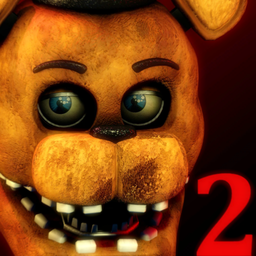
The sequel swaps door mechanics for a flashlight and a Freddy Fazbear mask — which you use to fool certain animatronics into leaving you alone. There are more animatronics, faster movement, and a new set of camera blind spots to worry about. If the original felt too manageable after a few nights, FNAF 2 will immediately humble you.
The introduction of the withered animatronics — older, more aggressive versions of the original cast — adds a layer of visual horror that the first game only hinted at. Some of the designs here are genuinely unsettling even outside of gameplay context.
Five Nights at Freddy's 2 Remaster
Fans of intense survival horror games will find themselves gripping the edge of their seats during every shift at this terrifying pizza parlor. Five N...
▶ Play FreeUCN — Ultimate Custom Night
This one is for people who found the first two games too easy. UCN puts 50 animatronics in front of you simultaneously. You can customize the AI level of each one from 0 to 20, creating a difficulty curve that goes from "tutorial mode" to "mathematically impossible nightmare." The community has spent years figuring out which combinations are actually completable.
Even at moderate settings, UCN is a genuine test of multitasking and pattern recognition. You're managing temperature, audio cues, camera systems, and multiple simultaneous threats — all while waiting for the next jump scare to arrive from whichever direction you happened to stop watching.

UCN - Ultimate Custom Night
Survival horror reaches its peak when you are forced to manage dozens of relentless animatronics simultaneously. UCN - Ultimate Custom Night turns the...
▶ Play FreeColor by Number: Horror!
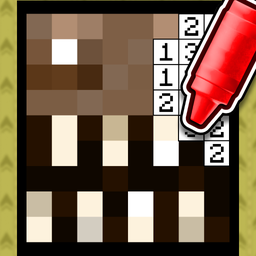
Not every horror experience needs to end with your heart rate at 160. Color by Number: Horror! takes the relaxing coloring book format and injects it with horror imagery — creatures, dark scenes, unsettling art that slowly reveals itself as you fill in the numbers. The jump scares here are subtler, more about atmosphere and sudden image reveals than loud sounds.
It's an interesting angle on the genre: the act of methodically coloring creates a false sense of calm that the images themselves undercut. Recommended for horror fans who want something a bit more cerebral.
Color by Number: Horror!
Fill numbered cells with vibrant colors to reveal chilling illustrations while battling a creature that actively sabotages your progress. This unique ...
▶ Play FreeFNAF Alchemy: Unlock All Animatronics
A different angle on the Five Nights universe — less survival horror, more collection puzzle. FNAF Alchemy challenges you to combine and unlock all the animatronics through a series of mechanics. It still carries the tension and aesthetic of the main series, but the core loop is about discovery rather than pure survival. Good entry point if the stress of the main games feels overwhelming but you love the FNAF world.
Death Forest: Horror Multiplayer
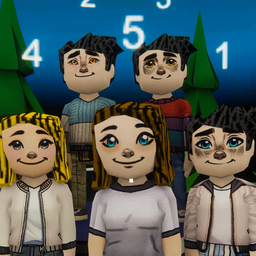
Playing jump scare games alone is terrifying. Playing them with friends is a completely different category of experience — somehow worse and better simultaneously. Death Forest is a multiplayer horror game set in a dark, dense forest where players must cooperate while the environment throws scares and threats at the group.
The social element changes everything. Someone screams on voice chat and suddenly everyone screams. Someone runs in the wrong direction and pulls three people toward a threat. The shared panic creates moments that single-player horror simply can't replicate.
Death Forest: Horror Multiplayer
Navigate a dark, atmospheric wilderness while desperately searching for a way to flee from a relentless killer in Death Forest: Horror Multiplayer. Yo...
▶ Play FreeUnderstanding Jump Scare Difficulty Curves
One thing that separates good jump scare games from bad ones is how they build difficulty. A well-designed horror game doesn't just add more scares as it goes — it increases your responsibility to pay attention. The scares themselves become more complex, the telegraphing becomes subtler, the window to react narrows.
When you're approaching a new jump scare game, try to identify its difficulty philosophy early:
- Punishing from the start — games like FNAF expect you to die and learn. Death isn't failure, it's curriculum.
- Gradual escalation — games that start slow and ramp up are giving you time to learn the systems. Use that time. Don't get comfortable.
- Randomized threats — some games use procedural elements so no two runs are identical. Here, adaptability matters more than memorization.
- Scripted sequences — many story-driven horror games front-load their jump scares into specific scenes. These can be memorized, which is useful for achievement hunters and speedrunners.
The Headphone Effect and Volume Management
Worth repeating because players underestimate this: audio design is doing enormous work in jump scare games. The silence before a scare is not empty — it's loaded with subtle sound design choices. A distant creak. A change in the ambient background hum. A note that resolves in the wrong direction.
Paying close attention to audio frequently gives you a few extra seconds of warning. Those seconds are often the difference between a clean response and a jump scare that sends you flying off your chair. Train yourself to listen, not just watch.
Why Jump Scares Keep Working
There's a genuine neurological reason jump scares are effective regardless of how experienced you are with horror. The startle reflex — the automatic flinch response to sudden stimulus — happens in 14-21 milliseconds. Your brain processes whether the threat is real roughly 300 milliseconds later. During that window, your body has already reacted: muscles tensed, breath held, adrenaline released.
This is why horror veterans still flinch at jump scares they've seen dozens of times. The reflex doesn't care about context or prior experience. What changes with experience is the recovery — you return to calm faster, you make better decisions in the aftermath, and you don't let the lingering adrenaline push you into panic spending resources.
The community around games like Five Nights at Freddy's has built an entire vocabulary around this — talking about "getting got" and "that scare still works" with a kind of respect for the craft. There's a reason people play FNAF for years: surviving the scares feels genuinely good, in the same way that a rollercoaster feels good after the drop.