How to Play Idle Games: Beginner's Guide
So you've heard about idle games and you're wondering what all the fuss is about. Maybe a friend recommended one, or you stumbled onto a clicker while looking for something casual to play. Either way, you're in the right place. This guide will walk you through everything you need to know about how to play idle games — from the very first click to mastering prestige mechanics like a pro.
Idle games (also called clicker games, incremental games, or tycoon games) are one of the most satisfying genres in free online gaming. They're easy to pick up, surprisingly deep, and uniquely rewarding because they keep working even when you're not playing. Let's get into it.
What Makes Idle Games Different from Other Genres?
Most video games demand constant attention. You die if you stop paying attention in a shooter. You fall behind if you tab out of an RTS. Idle games flip that script entirely.
The core idea is simple: your progress continues whether you're actively playing or not. You set up systems — workers, buildings, upgrades — and those systems generate resources over time. When you come back after an hour or a day away, you'll find a pile of accumulated resources waiting for you.
This makes idle games fundamentally different from action games or strategy games. They're less about reflexes and more about smart decision-making: which upgrade to buy first, when to reset, and how to structure your resource chains for maximum efficiency.
There are several sub-genres you'll encounter:
- Clicker games — the original format. You click to generate resources, then buy upgrades to automate clicking. Cookie Clicker is the classic example.
- Idle tycoon games — you build and manage a business or empire. Think restaurants, mines, theme parks.
- Merge idle games — you combine identical items to produce upgraded versions, generating resources in the process.
- Idle RPGs — your character automatically fights enemies and levels up while you manage gear and abilities.
What ties all of these together is the satisfaction of exponential growth. Numbers going up feels good — and idle games are designed from the ground up to deliver that dopamine hit as efficiently as possible.
Core Mechanics — Clicking, Upgrades & Automation
The Early Game: Click to Start
When you first start how to play idle games, you'll almost always be doing the same thing: clicking something to earn your first resource. It could be coins, gold, cookies, energy — the name changes, but the mechanic is identical.
At this stage, your goal is simple: accumulate enough resources to buy your first upgrade or building. That first purchase is a milestone, because it begins the shift from active clicking to passive generation.
Buildings and Generators
Most idle games have a tiered system of buildings or generators. Each one produces a certain amount of resources per second (often abbreviated as RPS or DPS). You'll unlock progressively more powerful generators as you progress.
The key insight: each generator type is usually 10–100x more expensive than the previous tier, but also 10–100x more powerful. Your goal is always to push toward the next tier.
Upgrades
Alongside generators, you'll find upgrades — one-time purchases that multiply your production rates. Upgrades are often better value than additional generators. If you see an upgrade that doubles your output for the cost of a few generators, buy the upgrade first.
Most idle games sort upgrades into categories:
- Flat boosts — add a fixed amount to production
- Multipliers — multiply production by a percentage
- Milestone unlocks — unlock new mechanics or building types

Merge Miners: Idle Digger
Fans of addictive idle experiences will fall in love with the rhythmic satisfaction of Merge Miners: Idle Digger immediately. This title perfectly ble...
▶ Play FreeAutomation and Managers
One of the great joys of idle games is the moment you unlock automation. In tycoon-style games, this often comes as a "manager" — an NPC who runs a generator so you don't have to tap it manually. Once all your generators are managed, the game becomes truly idle.
In clicker games, automation usually comes through "auto-clicker" upgrades that click on your behalf. Early on, these feel modest. By the mid-game, you'll have billions of clicks per second happening automatically.
Offline Progress
Almost every modern idle game tracks time while the app is closed and gives you the resources you would have earned. This is called offline progress or offline income.
The catch: most games cap offline progress at a certain number of hours (commonly 4–12 hours). Some games let you watch an ad or pay a small premium to double your offline earnings. Knowing your game's offline cap helps you decide how often to check in.
Prestige & Reset Systems Explained
This is where idle games go from simple to genuinely deep. After you've played for a while and your progress starts slowing down, most idle games offer a prestige mechanic — a voluntary reset of your progress in exchange for a permanent bonus.
Why Would You Reset on Purpose?
Sounds crazy, right? You've spent hours building up your empire, and the game is asking you to wipe it all out?
Here's the thing: prestige currencies (gems, stars, multipliers, souls — every game names them differently) are usually worth far more than grinding through the late game at a crawl. A single prestige might give you a 2x permanent multiplier. Your second playthrough will blow past your previous endpoint in a fraction of the time.
When to Prestige
The classic rule: prestige when the game starts feeling slow. More specifically, most veterans recommend prestige when:
- Your resources-per-second has barely grown in the last 30 minutes of active play
- You've already bought every upgrade available at your current tier
- The prestige reward shown is at least a 50% improvement over what you currently have
Don't rush your first prestige. The first run through a game is usually about learning systems. Subsequent runs are about optimization.

Drive-in Cinema: Idle Game
Business simulation fans will obsess over the strategic depth of Drive-in Cinema: Idle Game as they transform a humble lot into a blockbuster hotspot....
▶ Play FreeAscension and Meta-Prestige
Some idle games go even deeper with a second reset layer — often called Ascension or Transcendence. These work the same way as prestige but on a grander scale, usually unlocking entirely new mechanics or game layers.
If you see an Ascension button, don't panic. Read what it gives you before committing. These resets typically happen after multiple prestige cycles and offer the most dramatic power spikes in the whole game.
Best Idle Games for Beginners
Ready to actually play something? Here are some excellent choices if you're new to the genre — all available as idle games online free, right in your browser.
Start With a Business Sim
Idle tycoon games are some of the most approachable entries in the genre. They give your clicking and upgrading a clear narrative context — you're building something real. Restaurants, cinemas, mining companies — the theme makes the mechanics intuitive.
Idle Vlogger Simulator drops you into the life of a content creator. You produce videos, grow your audience, and unlock better equipment and content types. It's a great first idle game because the progression feels natural and the goals are always clear.

Idle Vlogger Simulator
Aspiring content creators will love the journey to internet stardom in Idle Vlogger Simulator where every click brings you closer to massive fame. Bui...
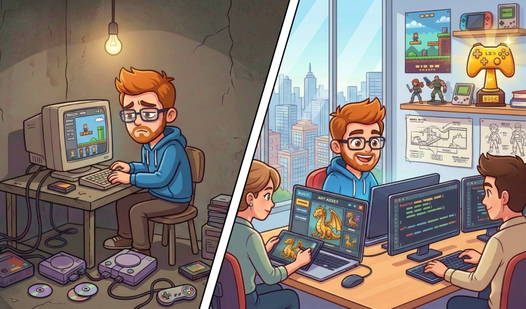
▶ Play FreeIf you want something with more of a corporate strategy flavor, Idle Game Dev Simulator puts you in charge of a game studio. You hire developers, manage projects, and scale up from a bedroom indie dev to a full publishing house. The meta-humor of playing an idle game about making idle games is a bonus.

Idle Game Dev Simulator
Stuck in a boring meeting or just need a quick distraction between tasks to keep your brain sharp? Idle Game Dev Simulator is the perfect solution for...
▶ Play FreeTry a Merge Idle Game
Merge mechanics add a satisfying puzzle layer to idle gameplay. Instead of just watching numbers grow, you're actively combining items on a grid to create upgrades. It slows down the early game in a good way — you feel more engaged without it becoming stressful.
Merge Miners: Idle Digger is a great example. You're digging through layers of earth, merging miners and tools to dig deeper and earn more. The familiar characters and clean UI make it immediately accessible.
Go for Humor and Action
LOL Rockets: Idle Meme RPG Clicker mashes idle mechanics with tower defense and RPG elements, wrapped in meme-heavy humor. It's louder and more chaotic than a typical idle game, but that energy is part of the appeal. If pure passive progress feels too slow for you, this one keeps things spicy.

LOL Rockets: Idle Meme RPG Clicker
Idle rpg mechanics turn simple tapping into a chaotic symphony of destruction where every click sends a barrage of holy missiles toward invading demon...
▶ Play FreeAdvanced Tips for Idle Game Veterans
Once you understand the basics of how to play idle games, the question becomes: how do you play them well? Here's what separates casual players from optimizers.
Prioritize Multipliers Over Flat Boosts
This seems obvious once you understand exponential growth, but new players routinely buy flat +X upgrades when a 10% multiplier would have been a much better use of resources. Run the math: if your base production is already 1,000,000 per second, a flat +5,000 upgrade is noise. A 10% multiplier adds 100,000 per second.
As your numbers grow, multipliers become increasingly dominant. Always check whether a multiplier upgrade exists before buying flat boosts.
Know Your Game's "Bottleneck"
Every idle game has a resource that constrains everything else. In a mining game, it might be ore processing speed. In a tycoon game, it might be customer throughput. Identify the bottleneck and throw upgrades at it specifically rather than spreading resources evenly across all generators.
Idle Game Dev Simulator
Stuck in a boring meeting or just need a quick distraction between tasks to keep your brain sharp? Idle Game Dev Simulator is the perfect solution for...
▶ Play FreeCheck In at Smart Times
The "offline progress cap" means there's a real optimal check-in frequency. If your game caps offline earnings at 8 hours, there's no benefit to leaving it running for 24 hours — you'll waste 16 hours of potential income. Set a rough schedule based on your game's specific cap.
Conversely, if a game has no offline progress at all (rarer in modern titles), you need to stay more engaged during active sessions to push past gates before the game freezes up.
Use the Community
For any idle game you get seriously into, there's almost certainly a wiki or subreddit with optimal build guides. The math in these games gets complex fast — the community has already done the optimization work for you. Don't feel like looking up a guide is cheating; it's just efficient.
Stack Bonuses Before a Prestige
In many idle games, there are temporary multipliers — daily bonuses, event rewards, ad-watched boosts — that stack with your production rate. If you're close to a prestige threshold, it can be worth waiting for one of these boosts to maximize the prestige currency you earn from the reset.
More Games to Explore
If the titles above have you hungry for more, here's a broader selection of idle games online free to try. Each one has its own spin on the core formula:

Jurassic Park: Dino Island and Farm Idle Tycoon 3D
Managing a prehistoric sanctuary requires more than just luck because balancing ecological needs with visitor entertainment is a true art form. Jurass...
▶ Play Free
Idle Business Empire: Money Farm Idle Tycoon 3D
Aspiring entrepreneurs who dream of building a massive wealth empire will find Idle Business Empire: Money Farm Idle Tycoon 3D absolutely addictive. Y...
▶ Play Free
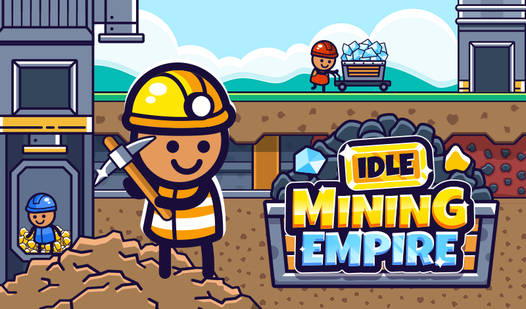
Idle Mining Empire
Manage a sprawling gold mining operation by tapping your way to riches in Idle Mining Empire. You start with a single humble shaft and must use smart ...
▶ Play Free
Food Truck: Idle Street Chef
Stuck in a boring meeting or just need a quick mental escape from your daily grind? Food Truck: Idle Street Chef is the ultimate cure for boredom that...
▶ Play Free
Idle Supermarket Tycoon
Business strategy fans will find endless entertainment building the ultimate retail empire in Idle Supermarket Tycoon. This addictive simulator challe...
▶ Play Free
Crypto Mining Tycoon: Idle Merge Clicker
Building a digital fortune from a dusty garage is the ultimate fantasy for anyone fascinated by the fast-paced world of crypto. Crypto Mining Tycoon: ...
▶ Play FreeWhether you want to run a dino theme park, operate a food truck empire, or mine cryptocurrency on a virtual rig, there's an idle game in here that'll click with you. All playable right in your browser — no installs, no accounts required.