How to Play Food Games: Rules, Strategies & Tips
Food games are one of the most satisfying categories in online gaming — and once you know how to play Food games properly, it's hard to stop. The genre spans everything from relaxed ASMR cooking experiences and merge puzzles to fast-paced food truck management and geometry-style food destruction. If you've ever wondered what separates a casual player from someone who actually dominates a food game leaderboard, this guide breaks it all down: core rules, sub-genre mechanics, proven strategies, and the best free Food games you can play right now, no account needed.
What Are Food Games?
At their core, food games are any browser games where food is the central mechanic, theme, or progression system. But that single sentence barely scratches the surface of what the genre actually contains.
Sub-genres within food gaming include:
- Clicker and evolution games — click to spawn ingredients, combine them to evolve into higher-tier foods
- Idle/management games — run restaurants, food trucks, or kitchens with autonomous progression
- Trivia and quiz games — answer questions about cuisine, ingredients, and food culture
- Merge puzzles — combine matching food items to unlock rarer ones
- ASMR and relaxation games — slow-paced cooking activities focused on satisfying sounds and visuals
- Obstacle and action games — food as a theme in platform runners or geometry-style challenges
- Craft games — creative activities like cross-stitching or decorating food items
The variety is what makes the genre so appealing. You can find a food game that fits your mood on any given day — whether that's a brain workout in a trivia format or a completely stress-free slice-and-dice ASMR session.
The connecting thread across all of them is a satisfying feedback loop: interact with food, receive rewards, progress further. The specific reward might be a higher-tier merged item, a full restaurant level, a trivia high score, or just the visual and audio satisfaction of a well-executed cooking motion. That loop is why food games have remained consistently popular across all age groups.
One of the best entry points into the genre is Kitty's Clicker: The Evolution of Food — a clicker game built around the idea of combining food items through evolutionary stages. You start with basic ingredients and click your way toward increasingly exotic foods, each combination revealing something new. It's immediately intuitive and deeply satisfying once the combos start chaining.
How to Play Food Games: Universal Rules That Apply Everywhere
Before focusing on sub-genre-specific strategies, it helps to understand the rules that cut across almost every food game out there. Knowing how to play Food games at a foundational level means you'll adapt to new titles much faster.
The Progression Principle
Every food game is built on progression. Something is always getting bigger, better, faster, or more complex. The question is what currency drives that progression — coins, experience points, combo multipliers, or simply time. Identify the core currency early, and then make every decision through the lens of "does this help me earn more of it, faster?"
New players often spread resources across multiple upgrades simultaneously, which feels productive but actually slows progress. Focused investment in one upgrade path — the one with the highest return — almost always beats spreading thin.
The Patience/Intensity Split
Food games broadly split into two play styles: patience-based games (idle, merge, ASMR) and intensity-based games (timed management, action, trivia). Neither is harder than the other — they just reward different things.
In patience games, the best move is often to set the game down and let passive systems work. In intensity games, you need to be present, quick, and decisive. Playing an idle game with the mindset of an action player leads to frustration; playing a timed management game too casually leads to missed scores. Recognize which type you're playing before deciding how to engage.
Resource Efficiency vs. Resource Generation
Every food game forces you to choose, at some point, between two priorities: spending resources on immediate efficiency (faster cooking, higher click output) or on generation (more passive income, more items per second). Generation almost always wins in the long run because the gains compound. Efficiency is valuable early but levels off. Keep this in mind whenever you hit an upgrade screen.
The Tutorial Is Not Optional
Even the simplest food games often hide critical mechanics in their opening tutorial that aren't explained again. Skipping the tutorial might seem like a time saver, but it frequently leads to discovering you've been playing a game "wrong" — missing combo systems, bonus rounds, or daily mechanics that would have dramatically accelerated your progress.
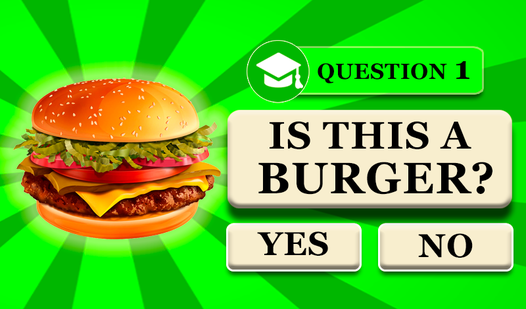
Trivia Quiz: Tasty Food is a perfect example of a game where understanding the scoring rules upfront makes a significant difference. It's not just about knowing the right answer — the speed of your response directly affects your score. Players who understand this from the start chase fast answers; players who missed it focus only on accuracy and leave points on the table.
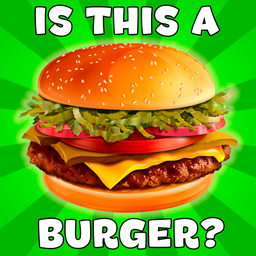
Trivia Quiz: Tasty food
Identify popular international dishes and test your culinary knowledge by choosing the correct answer from multiple options in Trivia Quiz: Tasty food...
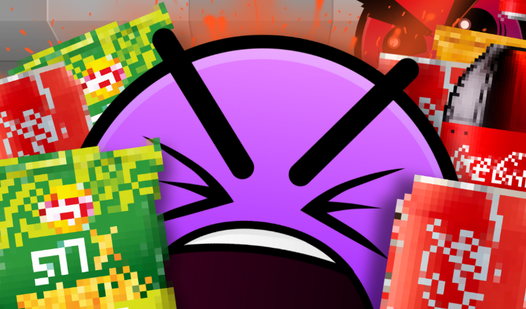
▶ Play FreeFood games don't always follow predictable rules either. Destroy CHIPS, COLA, and FOOD in Geometry Mod! takes an entirely different approach — here the goal is to survive a geometry-style rhythm challenge where food obstacles appear and must be destroyed at precisely the right moment. Timing is everything, and the "food" connection is thematic rather than mechanical. Understanding this from the first level means you'll stop trying to collect items and start focusing on rhythm.
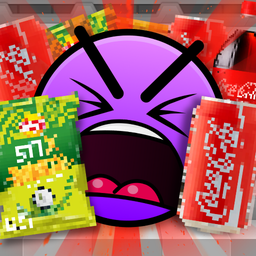
Destroy CHIPS, COLA, and FOOD in Geometry Mod!
Staring at the clock and waiting for your shift to end can be a real drag, but a chaotic snack-smashing session is the perfect cure. Destroy CHIPS, CO...
▶ Play FreeHow to Play Food Games: Strategies by Sub-Genre
General rules get you started. Sub-genre strategies get you good. Here's a breakdown of the most common food game formats and the tactics that actually work in each.
Idle and Management Games: The Long Game
In food truck and restaurant-style management games, your primary goal is building systems that run efficiently even when you're not actively clicking. The smartest early-game moves are:
Build passive income first. Anything that generates resources per second, per customer, or per cycle is more valuable than upgrades that improve your direct actions. The sooner you establish a passive income base, the faster every subsequent upgrade becomes affordable.
Never let bottlenecks form. In kitchen management games, the worst thing that can happen is a queue backing up at a single station. Identify your slowest step and upgrade it before anything else. A perfectly upgraded stove means nothing if the prep station before it creates a four-order backlog.
Reinvest early, enjoy later. Resist the urge to bank resources. Spending aggressively in the early-to-mid game on income-generating upgrades creates an exponential advantage. The "saving up for one big thing" strategy sounds satisfying but almost always loses to continuous reinvestment.
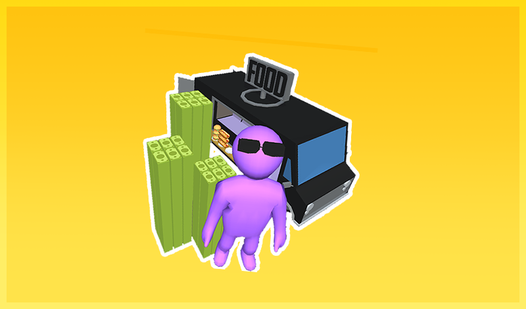
Food Truck: Idle Street Chef is an ideal game to practice these principles. You manage a growing food truck operation, balance customer flow with prep speed, and gradually expand your menu and service capacity. The game rewards systematic thinkers who build efficiently rather than those who react to each order individually.
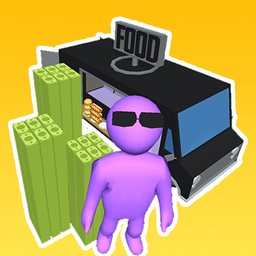
Food Truck: Idle Street Chef
Stuck in a boring meeting or just need a quick mental escape from your daily grind? Food Truck: Idle Street Chef is the ultimate cure for boredom that...
▶ Play FreeMerge and Puzzle Games: Board Management Is Everything
The core challenge in merge-style food games isn't the merging itself — it's keeping your board in a state where merges are always possible. Most players hit a wall when their board fills with low-tier items and they no longer have room to operate.
Clear from the bottom up. Always prioritize merging your lowest-tier items first to free up board space. High-tier items can sit in a corner while you clean up. Low-tier clutter will paralyze you.
Never place an item with nowhere to go. Before you drop a new item onto the board, visualize what merges it enables. If there's no immediate match and no obvious path to a match, reconsider placement.
Use corner and edge positions for items you don't need yet. These positions are easiest to isolate, which means they're least likely to accidentally block future merges.
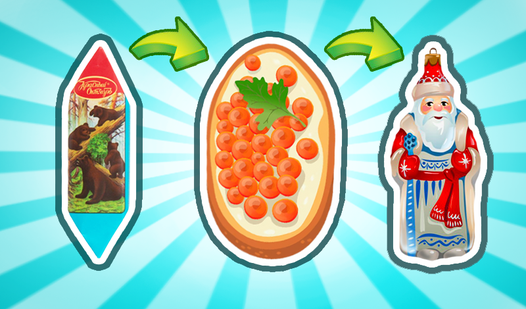
Merge Food from the USSR! uses these mechanics with a brilliant nostalgia twist — you're combining iconic Soviet-era food items to unlock increasingly rare culinary treasures. The merge logic is straightforward, but managing a full board of matryoshka-themed ingredients takes real spatial thinking.
Trivia and Quiz Games: How to Win When You're Not Sure
Food trivia games test culinary knowledge, but they're also strategy games in disguise. Even when you don't know an answer, smart elimination gets you further than guessing randomly.
Eliminate geographically impossible answers first. If a question asks about the origin of a dish and one answer is "Antarctica," that's gone. Similarly, if you know a dish is Asian in origin, eliminate European and American options immediately.
Trust your first instinct. Food trivia studies consistently show that players who change their answers frequently perform worse than those who commit to the first option that feels right. Overthinking food trivia is a trap.
Focus on the categories you know. Most trivia games let you see which topic is coming next (or have category rounds). If baking questions are your strength, maximize your score in those rounds even if you guess more in others.
Themed and Narrative Games: Context Is a Mechanic
Some food games are built around a specific cultural or historical setting that shapes how items behave, what combinations are possible, and what the progression looks like. Treating the theme as decoration rather than information means missing the systems underneath it.
New Year's Day in USSR: Toys and Food is a beautiful example. The game is set around the Soviet New Year tradition — a celebration with its own iconic foods, rituals, and atmosphere. The items in the game reflect actual dishes from the Soviet holiday table: olivier salad, mandarins, herring under a fur coat. Knowing (or learning) what these items represent gives you a real advantage in anticipating what comes next in the progression.
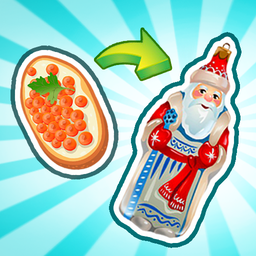
New Year's Day in USSR: Toys and Food
Combine festive Soviet-era treats and vintage ornaments to reach the highest score in New Year's Day in USSR: Toys and Food. You drop colorful figures...
▶ Play FreeThe Best Free Food Games on FreeJoy Right Now
All of the following games are free to play directly in your browser — no installation, no account, no waiting. Here's what makes each one worth your time.
Food Master: ASMR Cook & Relax
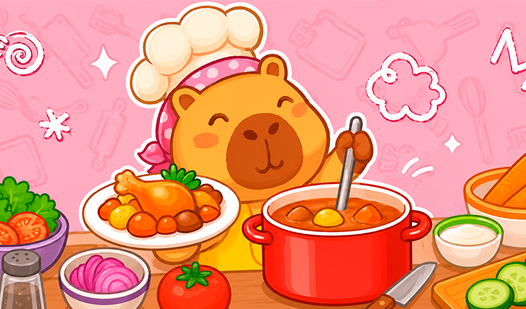
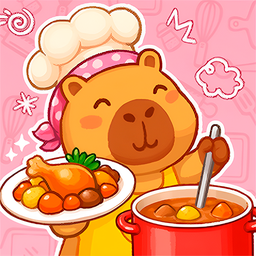
For those moments when you need to slow down, Food Master: ASMR Cook & Relax delivers a genuinely calming experience. You work through cooking tasks with satisfying audio feedback — the crunch, the sizzle, the satisfying thwack of a knife through fresh vegetables. The game isn't about scores or timers; it's about the sensory pleasure of the process.
Food Master: ASMR Cook & Relax
Kitchen work is surprisingly therapeutic when you trade the real-world pressure for the rhythmic clicking of a digital stove. Food Master: ASMR Cook &...
▶ Play FreeDandy World Food Simulator 3D
Dandy World Food Simulator 3D brings a full three-dimensional cooking environment to browser gaming. The visual depth and dynamic environment make food preparation feel more immersive than the typical flat UI of most web games. If you want something with visual polish and a satisfying spatial dimension, this one delivers.

Dandy World Food Simulator 3D
Arena survival games turn simple growth mechanics into high-stakes competition where only the biggest survive. Dandy World Food Simulator 3D traps you...
▶ Play FreeFood Truck: Cooking Games
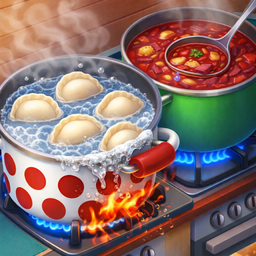
Food Truck: Cooking Games focuses on the rush of a busy service window. You take orders, cook to spec, and serve customers before their patience runs out — all under a ticking clock. The game rewards players who develop a mental map of their prep sequence and start each dish before the previous one is even plated.
Food Truck: Cooking Games
Staring at the clock waiting for your lunch break to arrive is a classic struggle that usually leads to frantic boredom. Food Truck: Cooking Games tur...
▶ Play FreeDigital Circus: Fast Food Masquerade
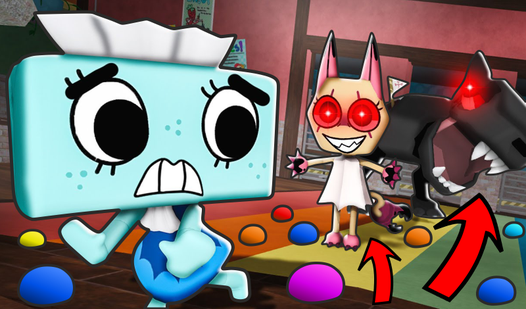
Digital Circus: Fast Food Masquerade wraps fast-food mechanics inside the anarchic world of the Digital Circus. The characters are bizarre, the setting is surreal, and the food challenges are genuinely surprising. It's a great pick for players who want something unexpected from their food gaming experience.
Obby: Food Absorption
Obby: Food Absorption turns eating into a platform mechanic. As you run through obstacle courses, absorbing food items increases your size, power, or abilities. The progression feels immediately rewarding — each item absorbed visibly changes what you're capable of on the next obstacle. Deceptively simple and surprisingly addictive.
Cross Stitching: Food
Cross Stitching: Food is something different entirely. You complete cross-stitch patterns of food items, placing each colored thread pixel by pixel until the full image emerges. It's meditative, creative, and completely free of time pressure. A perfect game for long sessions when you want to be mentally engaged without feeling stressed.
Pancakes — Cooking Food for Children ASMR
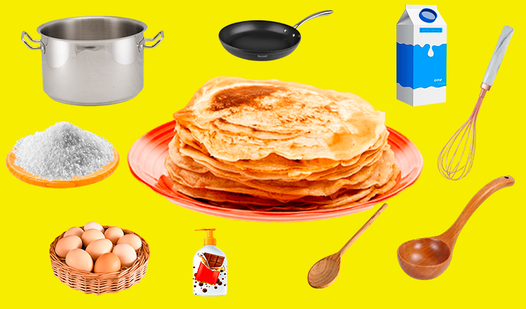
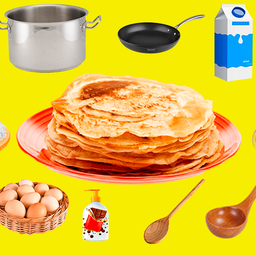
Pancakes - Cooking Food for Children ASMR is the gentlest entry on this list — specifically designed for younger players but genuinely enjoyable for anyone who wants a low-stakes, cheerful experience. Flip pancakes, stack them, add toppings, and enjoy the sounds. Simple, warm, and endlessly charming.
Pancakes - cooking food for children ASMR
Little chefs who love hands-on fun will adore Pancakes - cooking food for children ASMR. This cooking game lets you master the art of making fluffy tr...
▶ Play FreePlaying Food Games on Mobile vs. Desktop
All food games on FreeJoy work in both mobile and desktop browsers — but the experience differs depending on which sub-genre you're playing.
Desktop advantages: Precision clicking is much easier with a mouse. Management games with complex UI panels, multiple upgrade menus, and small interactive elements are significantly easier to navigate with a cursor. Keyboard shortcuts (where supported) also make quick decisions faster.
Mobile advantages: Touch controls feel completely natural for tap-based clicker games, ASMR cooking interactions, and merge mechanics. Swiping and tapping on ingredients or food items maps perfectly to touch input. Mobile also lets you play during commutes, breaks, or any short window of time.
The safest approach: play management-heavy games and trivia on desktop where precision and speed matter, and keep clickers, ASMR titles, and merge games for mobile where touch input shines.
How to Get Better at Food Games Faster
If you want to accelerate your learning curve across food games generally, a few consistent habits help more than any single tip:
Play one sub-genre deeply before branching out. If you master idle mechanics in food truck games, you'll find the same principles transfer immediately to any other management-style food game. Breadth comes after depth.
Watch the economy, not the action. In any food game with a resource system, the single most important number on screen is your income rate — not your current balance. Players who track income rate make better upgrade decisions than players who react to how much they currently have.
Use your pause. Many management food games include a pause button that lets you survey the situation and plan. Use it liberally. There's no penalty for pausing, and the decisions you make in calm moments are almost always better than the ones you make in a rush.
Revisit games after time away. Idle and passive food games reward players who step away and return later. Accumulated resources often mean you can skip several upgrade levels at once, which creates sudden surges of progress that feel great and motivate continued play.
Don't overlook themed games. The most unique food game experiences often come from titles with a specific cultural or creative angle — Soviet nostalgia, circus absurdity, ASMR craft. These games often have the most original mechanics precisely because they're not trying to be generic.