How to Play Crash Games: Controls, Physics & Tips
Car crash games are pure, guilt-free destruction — and knowing how to play crash game mechanics properly is what separates a bored driver from someone who walks away with a high score, a crumpled masterpiece of sheet metal, and zero regrets. Whether you're launching a sedan off a ramp or engineering a chain-reaction pile-up, this guide covers everything: controls, physics systems, damage mechanics, and which games deserve your time right now.
Car crash game controls explained
Before you floor it into a concrete barrier, spend thirty seconds learning the control scheme. Most browser crash games follow a predictable layout, but there's enough variation to trip you up if you assume every game works the same way.
Standard keyboard controls (most games)
| Action | Keys |
|---|---|
| Accelerate | W or ↑ |
| Brake / Reverse | S or ↓ |
| Steer left | A or ← |
| Steer right | D or → |
| Camera switch | C or V |
| Reset vehicle | R |
| Handbrake | Space |
The reset key is your best friend in crash games. When a car flips and won't right itself — which happens constantly — tapping R respawns it at the nearest checkpoint or starting position. Some games reset with full damage intact, which changes your strategy if you're trying to accumulate total wreck points rather than survive.
Mouse-driven games
A handful of titles, especially physics sandbox games, use the mouse for grabbing and throwing objects. Click, hold, and drag to pick things up; release to launch. The faster you swing before releasing, the more momentum you transfer — this is basic physics, but it matters a lot when you're trying to demolish a structure with a single well-aimed throw.
Mobile and touch controls
On a phone or tablet, on-screen joystick layouts replace the keyboard. These are less precise, but crash physics are forgiving enough that slight steering imprecision rarely matters — you're going to hit something anyway, and that's kind of the point.
Gamepad support
Some titles recognize browser gamepad APIs. If you plug in a controller and it works, the left stick handles steering while triggers handle throttle and brake. Detection can be inconsistent across browsers, so test before committing to a long session.
The single most useful control tip: don't just hold the accelerator the entire time. Modulating speed before a ramp or impact gives you meaningful control over angle and force — which directly affects how much damage you deal.
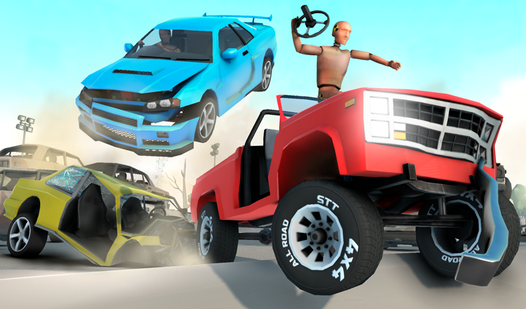
Car Crash is a great place to practice these basics. It delivers realistic physics alongside detailed 3D graphics, giving you a convincing sense of real metal deforming on impact. You can test different cars under different conditions and immediately feel how speed and angle change the outcome.
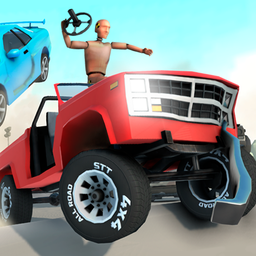
Car Crash
Stuck in a dull afternoon slump where the clock seems to be ticking backward? Car Crash is the ultimate stress buster that lets you unleash pure chaos...
▶ Play FreeHow to play crash game physics in the browser
Physics is the backbone of every crash game, and the difference between a mediocre title and a great one is almost entirely about how the physics engine behaves. Here's what's happening under the hood.
Rigid body vs. soft body physics
Most browser crash games use rigid body physics — objects collide and bounce, but don't actually deform. Damage is simulated visually (crumpled panels, broken glass textures, detached bumpers) without the underlying mesh genuinely changing shape. This runs efficiently in a browser and is the industry standard for web-based titles.
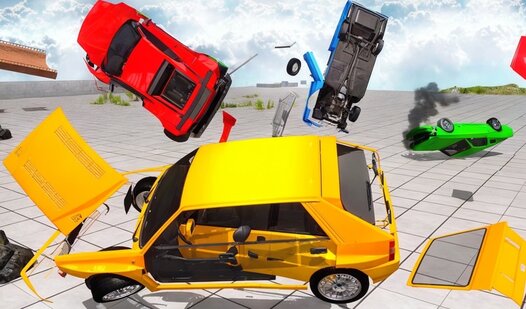
Soft body physics goes further: the car's mesh deforms in real time based on force vectors and material properties. These simulations are heavier on processing power and rarer in browser games, but they produce dramatically more satisfying crashes. When a bumper actually crumples inward instead of triggering a "damaged" animation state, it feels fundamentally different.
Velocity and mass
Force equals mass times acceleration. The heavier your vehicle and the faster it's moving, the more energy transfers to whatever you hit. A compact car at top speed does less total damage than a heavy truck at the same speed — but a compact at twice the speed can close that gap, since kinetic energy scales with the square of velocity (KE = ½mv²). In practical terms: going faster is almost always better.
Angular momentum and flipping
Cars flip because their center of gravity shifts during sharp cornering or off-angle impacts. Low-profile cars are harder to flip; trucks and vans tip over easily. Some crash games let you control the flip deliberately — catching air off a ramp and rotating mid-air before landing on the roof is often the most efficient way to fully total a vehicle.
Friction and surface material
Ice, gravel, asphalt, and mud all behave differently. Ice reduces friction significantly, meaning you'll slide rather than stop. Gravel adds resistance and unpredictability. Understanding the surface under you helps predict slide distances and where the car will end up after impact — which matters a lot for chain-reaction setups.
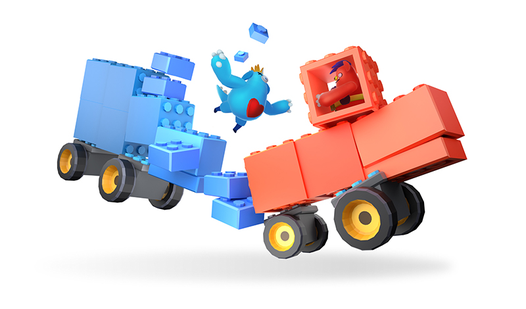
TOYS: Crash Arena puts physics understanding directly into practice. You build your vehicle from constructor kits — mixing cars, tanks, and toy block components — then send it into a crash arena. The physics of each build varies based on assembly: where you place mass affects center of gravity, and the collision surfaces of your contraption determine how impacts play out.
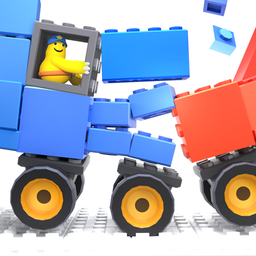
TOYS: Crash Arena
Building the ultimate combat vehicle from humble construction blocks is the ultimate childhood dream turned into high-stakes reality. TOYS: Crash Aren...
▶ Play FreeMultiplayer crash games add another physics layer. Two moving objects hitting each other produce more chaotic results than one object hitting a static wall. If you play car crash games online against real opponents, expect outcomes that are harder to predict and often more spectacular for it.
How to cause maximum destruction
You're not here to drive carefully. Here's how to maximize damage and wreck counts in a structured way.
Speed is everything — to a point
More speed generally means more damage, but the relationship isn't linear across all speed ranges. Some physics engines have a sweet spot where mid-high speeds produce the most visible deformation. At extreme speeds, collisions can become glitchy — objects passing through each other or bouncing unrealistically. Test the speed range in each game to find where the physics feels most rewarding.
Hit at angles, not head-on
Counterintuitively, a T-bone collision or a 45-degree side impact often produces more visible damage and better flipping than a straight-on crash. Head-on crashes absorb energy symmetrically — the front crumples but the car stays upright. Angled impacts transfer rotational energy, producing spins, rolls, and far more dramatic visual results.
Use ramps and elevation
Gaining air time before impact multiplies the effective force when you land. Ramp-based crashes are essentially about arc optimization: too steep an angle and you lose horizontal distance; too shallow and you don't get enough height. The ideal launch produces a long, high arc ending with the car hitting at a punishing angle.
Engineer chain reactions
In sandbox and arena games, positioning matters as much as speed. Cluster cars, barrels, and obstacles before triggering your run. A single car hitting five vehicles in a close group creates exponentially more total damage than five separate isolated crashes. Chain reactions are the difference between a 1,000-point crash and a 50,000-point crash.
Save boosts for the last second
Many crash games include nitro or speed boosts. Save them for the moment just before impact, not for general driving across the map. The final half-second of acceleration before contact is where extra speed pays off most dramatically.
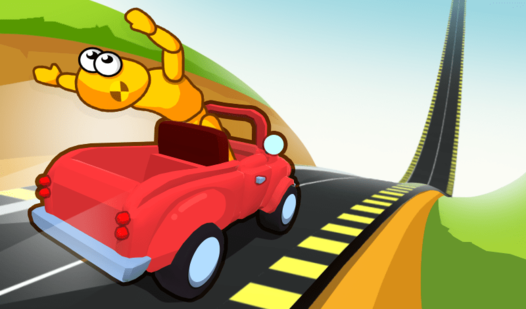
Downhill Car Ride: Crash Test is designed specifically around destruction maximization. Players get a huge arsenal of tools and an abandoned town as their testing ground. The objective is explicitly to put on a destructive show — this game is excellent for learning how to sequence damage events for maximum combined effect.
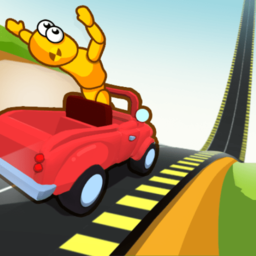
Downhill Car Ride: Crash Test
Fans of explosive arcade challenges will find their new obsession in Downhill Car Ride: Crash Test. This title delivers pure mayhem by letting you unl...
▶ Play FreeFor sandbox-style destruction with open-world freedom:
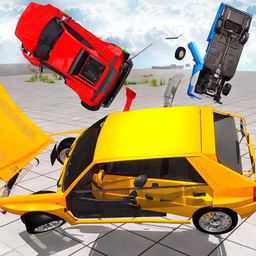
Destructive Car Crash Simulator
Adrenaline junkies who live for high-speed mayhem will find their new obsession in Destructive Car Crash Simulator. This physics-based playground lets...
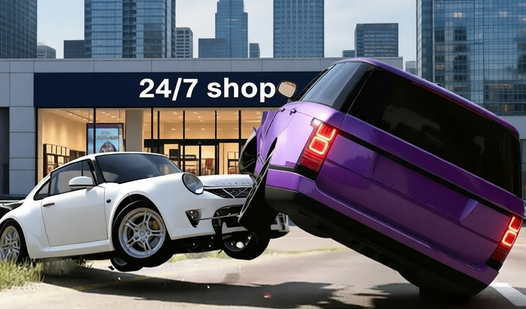
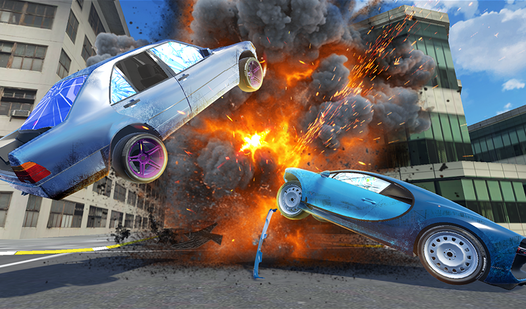
▶ Play FreeCar Smash Simulator: Crash & Tune takes the open-world approach furthest. A giant sandbox with realistic vehicle damage lets you smash and customize freely. The "Crash & Tune" element adds a setup layer — you can tune your vehicle's performance characteristics before testing it against the environment, which adds real strategic depth to what might otherwise be pure chaos.
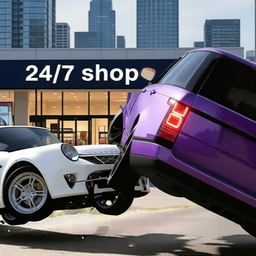
Car Smash Simulator: Crash & Tune
Staring at the clock during a dull afternoon usually leaves you craving some high-octane excitement to clear your head. Car Smash Simulator: Crash & T...
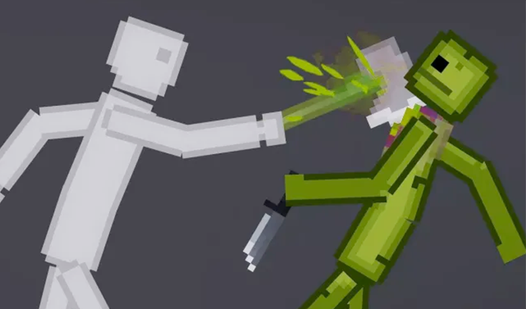
▶ Play FreePhysics arcade games approach destruction from a completely different angle. Melon: Epic Crash strips everything back to the most essential question: what happens when you throw a melon at something? The physics are exaggerated and fun, the damage is satisfying, and it works brilliantly as a stress reliever with an actual scoring system attached.
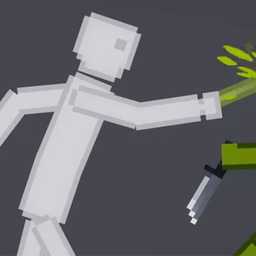
Melon: Epic Crash
Send your fruit flying down a treacherous mountain to cause maximum carnage in Melon: Epic Crash. This physics-based arcade challenge tasks you with l...
▶ Play FreeFor ramp-based action, Hyper Cars Ramp Crash focuses on getting maximum airtime before the inevitable collision. The ramp physics are tuned specifically for spectacular crashes, making it easier to learn how launch angle affects impact damage before applying that knowledge elsewhere.
Best car crash games for beginners
New to the genre? The priority is finding games with clear feedback, predictable physics, and a low barrier to getting something satisfying on screen within the first thirty seconds.
What makes a good beginner crash game
- A visible damage counter or score system so you know when you're doing well
- Physics that behave consistently — not so realistic they're confusing, not so arcade-y that every crash feels random
- Quick restart — you'll crash in the wrong direction constantly early on; fast resets keep the pace up
- Obvious objectives — "smash X cars" or "reach Y damage total" are cleaner entry points than open sandboxes with no direction
Top picks to play car crash games online for the first time
Car Crash is the best first stop. The combination of realistic-but-understandable physics and clean 3D visuals gives you immediate feedback on how your choices affected the crash. Controls are standard, the reset is instant, and the damage models are detailed enough to make every collision interesting.
For something with more structure, Bimka 2.0: Online Crash Racing adds a racing layer on top of crash mechanics. You're competing against other players while simultaneously trying to wreck them. This dual objective keeps beginners engaged because there's always something to aim for, even if you're not yet landing huge damage totals.
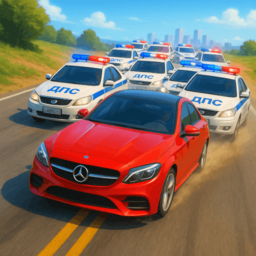
Bimka 2.0: Online Crash Racing
Staring at the clock and feeling that afternoon slump hit you hard? Bimka 2.0: Online Crash Racing is the perfect remedy when you need a high-octane e...
▶ Play FreeCar Smash! Car Crash Simulator is another accessible entry point. The game rewards aggressive play immediately, which clicks faster for newcomers than nuanced simulation gameplay does. Less thinking, more smashing — and that's fine early on.
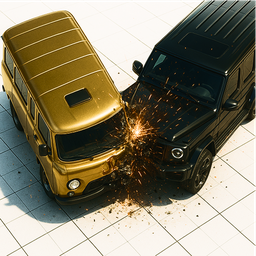
Car Smash! Car Crash Simulator
Adrenaline junkies who live for high-speed mayhem will find their new obsession in Car Smash! Car Crash Simulator. This chaotic experience pushes meta...
▶ Play FreeCrashOut rounds out the beginner-friendly options. It's direct, it's fast, and the objective is clear from the first second. Less setup, more chaos — exactly what a new player needs to understand what makes crash games fun before getting into the more technical aspects.
Practical progression tips for new players
- Start at low speed, learn how the car handles, then increase speed gradually
- Try single-obstacle crashes first before targeting clusters or chain reactions
- Switch camera angles to understand what's happening on both sides of an impact
- Notice what each speed increment adds to your damage total — this trains intuition for the physics system
- Try to flip the car deliberately. Intentionally attempting flips is how you learn the limits of the physics engine, which helps you engineer better crashes later
Moving from beginner to intermediate
Once you're consistently landing satisfying crashes in simpler games, move to sandbox titles with open environments. Less guidance, but also more creative freedom — you can position obstacles, choose different vehicles, and plan multi-stage crash sequences instead of single one-shot impacts.
The shift from beginner to intermediate is mostly about intentionality. Beginners crash into things. Intermediate players engineer crashes — they think about angle, speed, surface, and what happens after the first hit before triggering anything. Once you start thinking that way, your scores jump fast.
The best time to play car crash games online is when you want zero-stakes, immediate-feedback fun. There's no grinding, no mandatory tutorials, and the barrier to entry is as low as loading a browser tab. The skill ceiling, though, is higher than it looks — the players hitting maximum damage scores are applying real physics intuition, not just holding W.