How to Play Car Crash Simulator Games Online
Learning how to play car crash simulator games is easier than you think — and far more satisfying than most genres. Whether you want to send a sedan flying off a cliff at top speed, set up a multi-car pile-up, or just watch a vehicle fold like an accordion in slow motion, browser-based crash simulators deliver all of that for free, with zero installation required.
This guide walks through everything: what these games actually are, how the controls work, which free titles are worth your time right now, and how to squeeze the most destruction out of every run.
What Are Car Crash Simulator Games
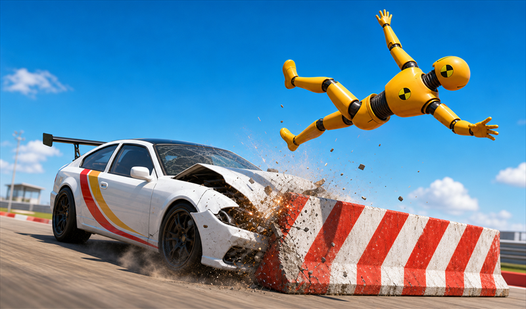
Car crash simulators are physics-based games where the goal is breaking things — specifically, vehicles. Unlike traditional racing games where crashing means failure, here it's the whole point. The more spectacular the collision, the better your session went.
These games use real physics engines under the hood. Soft-body physics, deformable metal panels, detachable parts, crumple zones — the aim is to simulate how a car behaves when it hits something at speed. Some titles aim for realism: glass shatters, axles bend, doors tear off cleanly. Others lean arcade, stacking explosions and ragdoll moments on top of exaggerated impacts just to keep things entertaining.
The genre has existed since the early days of PC gaming, but browser versions have exploded in popularity because the barrier to entry is essentially zero. Open a tab, pick a car, and start destroying.
Why people keep coming back:
- Pure stress relief — smashing things is genuinely satisfying
- No penalty for failure — crashing IS the objective
- Physics sandbox freedom — experiment with angles, speeds, obstacles
- Quick sessions — most games work in 5-10 minute bursts
- Better visuals than expected — modern browser engines handle detailed deformation well
Most crash simulators fall into one of four categories:
- Pure sandbox — no objectives, just set up crashes and observe the physics
- Challenge mode — hit damage thresholds, reach targets, or survive specific scenarios
- Arena battle — you vs. other vehicles in a destruction derby format
- Racing with destruction — standard race with crash mechanics actively rewarded
Knowing which type you're playing helps set expectations. Sandbox games reward patience and creativity. Challenge modes push your understanding of physics. Arena battles need quick reflexes. Racing-destruction hybrids need all three.
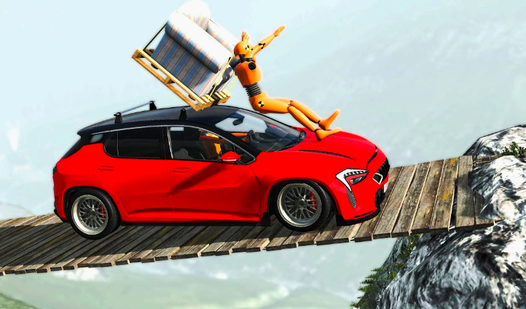
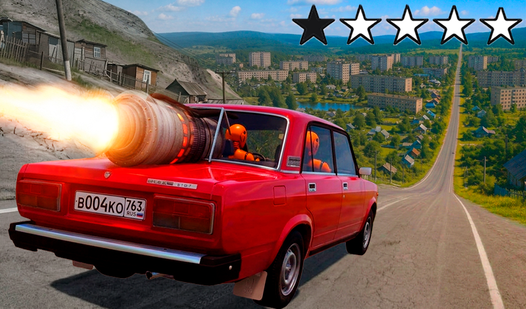
Bimka: Car Destruction and Accident Simulator is one of the standout titles in this space. It delivers a realistic car collision simulator with high-speed crashes and fully detachable parts — every panel, door, and wheel can separate on impact. The physics feel weighty without becoming frustrating, and the scenario setup gives you real control over what kind of crash you're engineering.
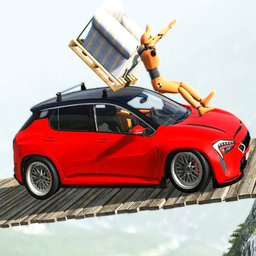
Bimka: Car Destruction and Accident Simulator
High-speed impacts offer a strange sense of catharsis that few other genres can replicate on screen. Bimka: Car Destruction and Accident Simulator pro...
▶ Play FreeWhat makes the genre genuinely interesting beyond the obvious spectacle is the physics literacy you develop over time. After enough sessions, you start to understand why certain angles are more destructive than others, why a heavier vehicle at lower speed sometimes causes more structural damage than a light car at high speed, and why side impacts to the door panels are often more catastrophic than direct bumper hits. It's an accidental education in crash dynamics, wrapped in something extremely fun.
The community around crash simulators is also creative in ways that surprise people. Players share specific scenario setups — exact speeds, precise angles, obstacle arrangements — that produce reliably spectacular results. There are community challenges, personal bests tracked in damage totals, and a surprising amount of experimentation with the physics engines. These aren't passive games. The best players treat them like a physics puzzle where the solution is the most dramatic possible outcome.
Basic Controls and How to Play Car Crash Simulator
How to play car crash simulator titles comes down to understanding a few universal controls, then adapting to each game's specific physics system. Controls vary between titles, but most browser crash simulators follow a consistent pattern that carries over once you've learned it once.
Standard keyboard controls:
- W / Up Arrow — accelerate
- S / Down Arrow — brake or reverse
- A / D or Left/Right Arrows — steer
- Space — handbrake (sharp turns, controlled slides, mid-air adjustments)
- R — reset car to starting position instantly
- C — cycle through camera angles
- F — flip an overturned vehicle back onto its wheels
Mouse controls (common in 3D titles):
- Click and drag to rotate the camera
- Scroll wheel to zoom in and out
- Some titles use mouse aim for launching projectiles or controlling weapons
Game-specific additions that come up often:
- Number keys (1–9) to switch vehicles or load preset scenarios
- Tab to access settings or vehicle menus
- Enter to confirm selections
- Shift to boost (in titles that have it)
The fastest way to learn is starting slow. Pick a low-speed scenario, observe how the car deforms on first impact, then gradually increase speed to see how damage patterns change. Most games reset instantly with R, so every experiment costs nothing.
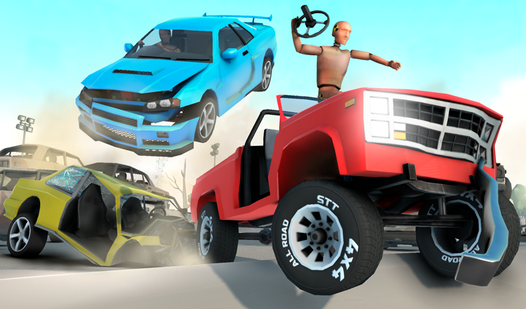
Car Crash hits that accessible sweet spot — realistic physics and excellent 3D graphics, but controls simple enough that you're running your first crash within 30 seconds of loading the page. No tutorial needed.
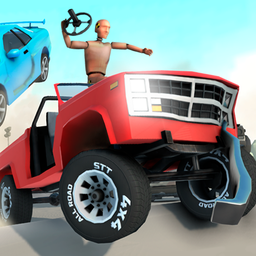
Car Crash
Stuck in a dull afternoon slump where the clock seems to be ticking backward? Car Crash is the ultimate stress buster that lets you unleash pure chaos...
▶ Play FreeCamera angle is something beginners consistently underestimate. Most people lock onto one view and miss a significant portion of the destruction detail. The different angles serve different purposes:
- Third-person wide — best for general driving and racing modes
- Bumper cam / hood cam — immersive for head-on collisions, shows impact from inside the vehicle
- Chase cam — ideal for multi-car scenarios, keeps everything visible
- Free camera — essential for setting up cinematic crashes and watching replays
If the game has a slow-motion feature (many do), use it liberally. Watching a crash at 25% speed shows the physics in real detail — how energy propagates through the chassis, which structural members fail first, how rotational forces interact with linear momentum. It's also just visually spectacular and worth doing for its own sake.
Understanding damage systems:
Different games model damage in fundamentally different ways. Simple hit-point systems are common in arcade titles — take X amount of impact and you're done. More sophisticated simulators model structural integrity, meaning a car that's absorbed side damage will respond differently to the next hit. A crumpled A-pillar changes how the roof behaves. A bent axle affects handling, which changes your approach mid-run.
For arena and challenge modes, this matters tactically. In sandbox modes, it just makes the destruction feel earned and real rather than arbitrary.
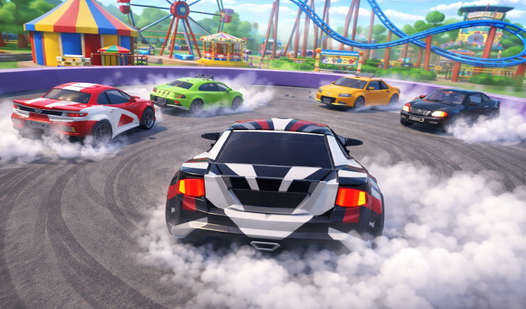
Epic Racing - Descent on Cars integrates crash mechanics directly into competitive racing. You're fighting for position while simultaneously trying to destroy competitors — the collision physics aren't separate from the race strategy, they're the race strategy. Every lap becomes a calculation between going fast and going destructive.
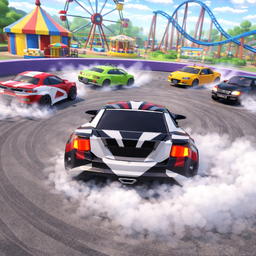
Epic Racing - Descent on Cars
Smash through barriers and execute wild stunts to cross the finish line before your rivals in Epic Racing - Descent on Cars. You will navigate treache...
▶ Play FreeOne underrated skill in crash simulators is learning each game's reset and scenario system. The ability to set up a specific scenario, run it, reset in under a second, and run it again with one variable changed — approach angle, speed, vehicle weight — is what separates players who get lucky occasionally from players who consistently produce spectacular results. Treat every session as iterative.
Best Free Car Crash Games in Browser
The browser crash game space has plenty of options, but quality varies significantly. Here are the titles worth your time, all free and playable right now without installing anything.
Beam-ka: Destroy the Car! stands out for depth. Detailed car models, multiple weapons you can attach to the vehicle, and a damage system that simulates structural failure rather than just denting textures. You arm the car with various destructive tools — explosives, blades, heavy-impact devices — then crash it into obstacles. The combination of weaponized destruction and physics-accurate damage creates sessions that last far longer than you'd expect, because there's always another weapon placement or another angle to try.
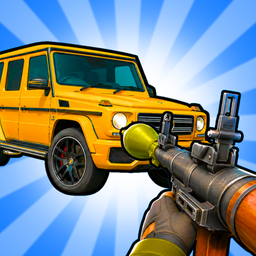
Beam-ka: Destroy the car!
Smashing vehicles into scrap metal has never been more satisfying than in Beam-ka: Destroy the car! You take control of an arsenal of heavy weaponry t...
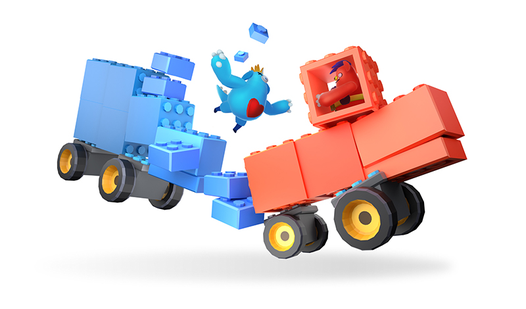
▶ Play FreeTOYS: Crash Arena takes a completely different approach. Instead of simulating real vehicles, you build your machine from constructor kits — modular parts that snap together into increasingly creative (and structurally questionable) contraptions — then take your creation into arena battles. The combat is chaotic in the best way: your custom-built vehicle against other players or AI in destruction derbies that reward smart building as much as driving. The meta of figuring out what configurations survive the longest adds genuine strategy depth.
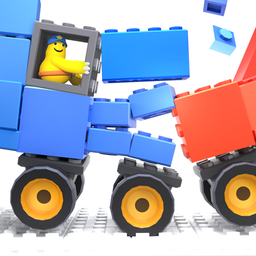
TOYS: Crash Arena
Building the ultimate combat vehicle from humble construction blocks is the ultimate childhood dream turned into high-stakes reality. TOYS: Crash Aren...
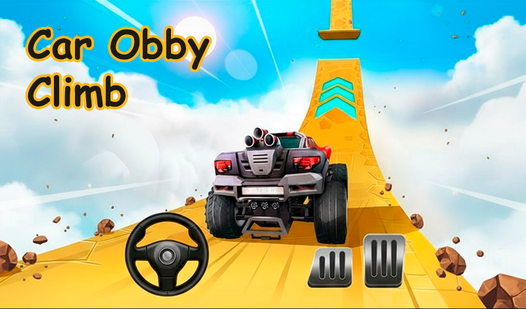
▶ Play FreeCar Obby Climb adds a platformer dimension — obstacle courses where crashes happen as the consequence of misjudged jumps and clipped obstacles. The fun comes from watching your vehicle tumble and deform when you overshoot a ramp or tag a wall at speed. Less pure destruction, more destruction as entertaining failure.
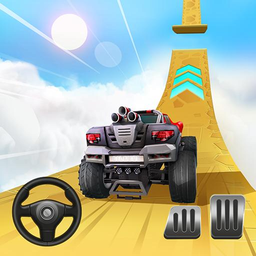
Car Obby Climb
Stuck in a dull moment and craving a quick adrenaline rush to clear your head? Car Obby Climb is the ultimate high-speed solution that turns your brow...
▶ Play FreeSmash the Car to Pieces! is exactly as literal as the name. The objective is total demolition — you're given a vehicle and various methods to take it completely apart. No racing, no arena combat. Focused, methodical destruction where the goal is zero intact panels remaining.
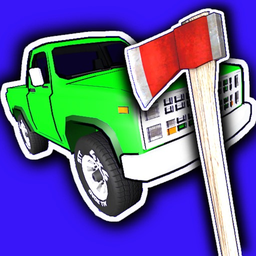
Smash the Car to Pieces!
Stress relief reaches a peak when you finally unleash total mayhem on a stationary vehicle without any real-world consequences. Smash the Car to Piece...
▶ Play FreeTurbo Car leans into speed as the primary mechanic, but the crash physics activate fully when you overshoot corners or collide with other vehicles at velocity. Good option if you want destruction as a consequence of racing rather than as the explicit goal — the crashes hit harder when they happen unexpectedly mid-race.
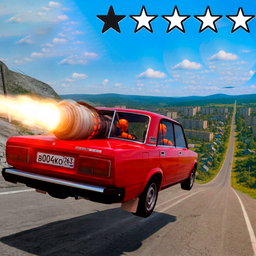
Turbo Car
High-octane car chases represent the ultimate adrenaline rush for anyone who loves high speed and total destruction. Turbo Car turns this fantasy into...
▶ Play FreeBimka 2.0: Online Crash Racing upgrades the original Bimka formula with online multiplayer. Racing against real players with crash mechanics active means every session is genuinely unpredictable — someone is always going to prioritize taking you out over clean racing, which keeps the competition interesting in ways AI opponents can't replicate.
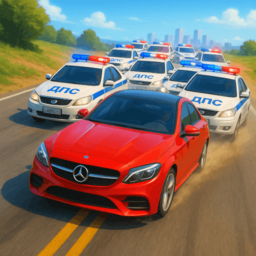
Bimka 2.0: Online Crash Racing
Staring at the clock and feeling that afternoon slump hit you hard? Bimka 2.0: Online Crash Racing is the perfect remedy when you need a high-octane e...
▶ Play FreeCar Destruction King scores you on destruction output, not speed or finishing position. The more damage you cause per run, the higher your rank climbs. This shifts your thinking from racing strategy to damage optimization — creative approaches to maximising destruction points often outperform raw speed.
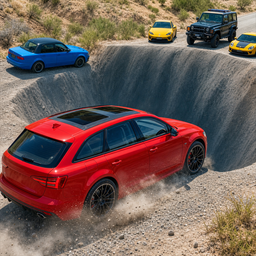
Car Destruction King
Staring at a blank screen during a coffee break is the ultimate productivity killer, so why not turn your afternoon into a high-octane frenzy instead?...
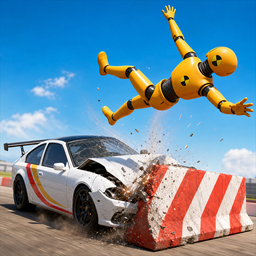
▶ Play FreeCar Crash and Destruction Simulator 3D offers a full 3D environment with multiple scenario options. The spatial depth adds real complexity — you can engineer multi-car crashes, roll vehicles down slopes, or use the environment creatively to multiply impact forces in ways a 2D title can't achieve.
Car Crash and Destruction Simulator 3D
Adrenaline junkies who live for high-speed impacts will find their new obsession in Car Crash and Destruction Simulator 3D. This intense experience tu...
▶ Play FreeQuick comparison of what each game does best:
| Game | Best for |
|---|---|
| Beam-ka: Destroy the Car! | Weapon-enhanced destruction, depth |
| TOYS: Crash Arena | Building + arena combat |
| Bimka 2.0 | Online multiplayer chaos |
| Car Destruction King | Score-based damage runs |
| Car Crash | Clean physics sandbox |
| Smash the Car to Pieces! | Pure focused demolition |
| Car Crash and Destruction 3D | Environmental 3D scenarios |
Tips for Maximum Destruction
Getting maximum damage in a crash simulator isn't just about speed. Angle, weight distribution, obstacle placement, and vehicle choice all contribute. Here's what actually produces results.
1. Aim for structural weak points
Cars aren't uniformly strong. The A-pillar (vertical bar at the windshield edge) is reinforced by design. Door panels are not. Side impacts at door-panel level cause disproportionate damage compared to bumper-to-bumper hits at the same speed. Study the geometry of whatever car you're using and identify where the structure is thin.
2. Use the environment to multiply force
Ramps, walls, drop-offs, narrow gaps — these multiply damage in ways that flat terrain can't. A car hitting a wall at 60 mph crumples. The same car launched off a ramp and landing inverted at 60 mph is destroyed far more completely, because the landing force concentrates through the roof structure rather than the reinforced bumper. Height and rotation multiply impact significantly.
3. Chain collisions for cumulative damage
Setting up chain reactions consistently outperforms single impacts. A first hit that sets the car spinning into a second obstacle adds the vehicle's rotational energy to the second impact's linear force. Three chained hits with medium force can exceed the damage of one high-force direct impact, because each subsequent hit finds an already-compromised structure.
4. Match vehicle weight to your goal
Heavy vehicles do more damage per impact but reach top speed slowly. Light vehicles can build speed rapidly in tight spaces but spread impact across a larger contact area. For maximum single-impact destruction, heavier is usually better. For multi-obstacle chain runs where sustained speed matters, lighter often wins. Know what you're optimising for before choosing your vehicle.
5. Off-center hits beat direct head-on every time
A 30-45 degree angle impact transfers more net energy to the chassis than a direct frontal hit. This is because the vehicle simultaneously absorbs and deflects the force, creating complex multi-directional stress on the structure. Off-center hits also generate rotation, which adds secondary collision energy. Experiment with approach angles — the most cinematic crashes rarely happen head-on.
6. Slow motion isn't just aesthetic
Use slow-motion mode to study which parts detach first and in what sequence. This directly informs better setup decisions. You'll start to understand the failure cascade — which component going first makes subsequent components more vulnerable — and use that knowledge to engineer crashes that sequence destructively rather than stopping at partial damage.
7. In arena modes, target already-damaged opponents
A car that's absorbed significant hits has compromised structural integrity. A minor side impact to a door that's already missing a panel will often cause catastrophic failure — far more damage than that hit would produce against an intact vehicle. In destruction derbies, tracking and following up on damaged opponents is consistently more effective than going after fresh targets.
8. Weapon placement matters more than weapon type
In games like Beam-ka where you can attach weapons to vehicles, proximity to specific systems determines the failure cascade. An explosive near the suspension creates a different damage sequence than one near the engine block. A weapon positioned at the centre of mass affects the vehicle differently than one at an extreme end. Test placement before committing to a run.
9. Camera low, slightly to the side
For the most visually satisfying crashes — and the best replays — position the free camera low and off-axis. High overhead cameras show the layout of the crash but lose the visceral impact detail. Low side angles capture debris trajectories, panel deformation, and the full energy transfer of the collision. If you're setting up something specific, spend 10 seconds positioning the camera before running it.
10. Reset constantly and change one variable at a time
The most effective way to improve damage output is systematic iteration. Run a crash, note what happened, reset, change exactly one variable (speed, angle, vehicle, obstacle), and run again. Players who try random approaches occasionally get lucky. Players who iterate methodically consistently produce better results. The R key is your most important tool.