How to Play Classic Poker: Rules, Tips & Strategy
Learning how to play classic poker is one of the best decisions you can make as a card game enthusiast. Poker has been a staple of game nights for over a century, and its core rules are surprisingly approachable — but the depth of strategy keeps players coming back for years. Whether you're picking up cards for the first time or refreshing your knowledge before a game with friends, this guide covers everything: the rules, hand rankings, betting rounds, and practical tips to start winning more often.
Let's get started.
Classic Poker Rules — The Basics
Classic poker, in its most widely played form, refers to Texas Hold'em — the version you'll see in casinos, on TV, and in most online platforms. But the fundamentals apply across nearly all variants, so mastering the basics here will carry you far.
The goal: Make the best five-card hand using any combination of your two private cards (hole cards) and five shared community cards placed face-up on the table.
Setup:
- 2 to 10 players can sit at a single table
- Each player is dealt 2 hole cards, face down
- Five community cards are revealed in stages: the flop (3 cards), the turn (1 card), and the river (1 card)
- Players bet after each stage, and the best hand at showdown wins the pot
The dealer button rotates clockwise after each hand. The two players to the left of the dealer post mandatory bets called the small blind and big blind to seed the pot before any cards are dealt.
Winning without a showdown: You don't always need the best hand to win. If all other players fold during betting, you take the pot regardless of what you were holding. That's where bluffing comes in — but more on that later.
Classic poker is a game of incomplete information. You can see the community cards, you know your own hole cards, but you're always guessing what your opponents have. That uncertainty is what makes every session feel different.
Other popular variants:
- Five-Card Draw — the simplest form; players get five cards and can exchange some for new ones
- Seven-Card Stud — no community cards; players build hands from their own seven dealt cards
- Omaha — like Texas Hold'em but with four hole cards, and you must use exactly two of them
For beginners, Texas Hold'em is the best starting point because of its wide availability and wealth of free learning resources.
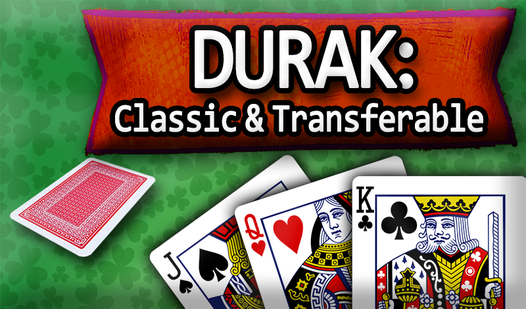
Speaking of classic card strategy, Durak: Classic & Transferable is another iconic card game that tests your hand management and risk calculation — skills that transfer directly to poker thinking. In Durak, you're constantly deciding whether to attack, defend, or pass. Sound familiar?
Durak: Classic & Transferable
Card games have a unique way of testing your memory and strategic foresight under pressure. Durak: Classic & Transferable brings this legendary challe...
▶ Play FreePoker Hand Rankings from Highest to Lowest
This is the one thing you have to memorize before sitting down at any table. Hand rankings determine who wins at showdown — there's no room for guessing here.
From strongest to weakest:
Royal Flush — A, K, Q, J, 10, all of the same suit. The unbeatable hand. You'll see it maybe once every few hundred sessions.
Straight Flush — Five consecutive cards of the same suit (e.g., 7♠ 8♠ 9♠ 10♠ J♠). Extremely rare and almost always wins.
Four of a Kind (Quads) — Four cards of the same rank (e.g., four Kings). A massive hand.
Full House — Three of a kind plus a pair (e.g., K-K-K-9-9). Strong and common enough to win many big pots.
Flush — Five cards of the same suit, not in sequence (e.g., 2♥ 5♥ 8♥ J♥ A♥). If two players have a flush, the higher cards decide the winner.
Straight — Five consecutive cards of different suits (e.g., 5-6-7-8-9). The ace can play low (A-2-3-4-5) or high (10-J-Q-K-A).
Three of a Kind (Trips or Set) — Three cards of the same rank plus two unrelated cards.
Two Pair — Two separate pairs (e.g., J-J-4-4-K).
One Pair — Two cards of the same rank. The most common winning hand in beginner games.
High Card — No pair, no straight, no flush. The highest card in your hand plays. Surprisingly, many pots are won with just this.
Quick tips for memorizing rankings:
- Group them mentally: the rarities (Royal Flush, Straight Flush, Quads), the solid hands (Full House, Flush, Straight), and the everyday hands (Trips, Two Pair, One Pair, High Card)
- Practice by dealing out random five-card hands and ranking them before you ever sit at a real table
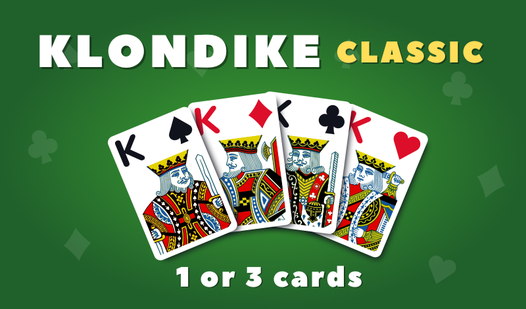
Solitaire card games like Klondike Classic are genuinely useful for building card intuition — recognizing suits, values, and sequences at a glance. That card-reading reflex pays off at a poker table too.
Klondike Classic (1 or 3 cards)
Stack cards in descending order by alternating colors to clear the board and master the art of Klondike Classic strategy. You organize the deck into f...
▶ Play FreeBetting Rounds Explained
Understanding the four betting rounds is crucial for how to play classic poker correctly. Each round has its own dynamics, and knowing when to act — and how much — separates comfortable players from confused ones.
Pre-Flop
After hole cards are dealt, the first betting round begins. Action starts with the player to the left of the big blind (called "under the gun") and moves clockwise.
Each player can:
- Call — match the big blind amount
- Raise — increase the bet (typically 2–3x the big blind as a standard opening raise)
- Fold — discard your hand and sit out this pot
The small and big blind also have the option to raise when action circles back to them, provided no one raised before.
Pre-flop strategy basics: Premium hands (A-A, K-K, Q-Q, A-K suited) are strong starters. Middle pairs and suited connectors (like 7♠ 8♠) can be playable in the right situations. Low, unconnected, off-suit cards (like 2-7) are almost always worth folding.
The Flop
Three community cards are dealt face-up. A new betting round begins, starting with the first active player to the left of the dealer button.
New option here: Check — pass action to the next player without betting, only available if no one has bet yet this round.
The flop dramatically changes hand values. You might go from a mediocre pre-flop hand to something very strong — or your strong starting hand might completely miss the board. Evaluating how the flop connects to your hole cards (and how it might connect to opponents' hands) is one of the core skills in the game.
The Turn
One more community card is added. Another betting round follows. Pots often grow significantly here as players with strong hands start building, and players with weak hands face difficult decisions.
The River
The fifth and final community card hits the board. One last betting round. If more than one player remains after all bets are resolved, there's a showdown — everyone reveals their hole cards, and the best five-card combination wins.
Pot splitting: If two players hold exactly equal hands using the community cards, the pot is divided evenly between them.
A concept to grow into — pot odds: As you improve, you'll start calculating whether a call is mathematically justified based on the pot size versus the cost of calling. For now, just know it exists — it's worth researching once you're comfortable with the basic flow of a hand.
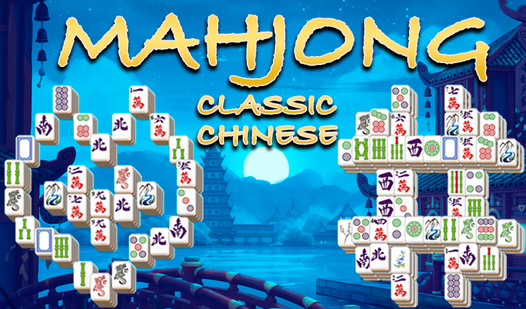
Tile puzzle games like Mahjong Classic Chinese develop the pattern-recognition and fast decision-making that poker also demands — reading the board quickly and finding the best available play under pressure.
Mahjong Classic Chinese
Puzzle enthusiasts who appreciate timeless logic challenges will find Mahjong Classic Chinese to be an essential addition to their daily routine. This...
▶ Play FreeBeginner Tips to Win More Often
Nobody becomes a strong poker player overnight. But concrete habits and mindset shifts make a significant difference right from the start.
1. Play fewer hands, play them stronger
New players almost always play too many hands. It feels boring to fold, but patience is a genuine edge. Stick to strong starting hands — medium to high pairs, face cards of the same suit, and connected high cards. Fold the junk and watch your results improve.
2. Don't overvalue one pair
One pair loses to nearly everything else at showdown. If the board has lots of connected or suited cards and there's heavy action, your pair of Kings might already be behind. Learning to fold a strong-looking hand is an advanced skill, but building that awareness early helps enormously.
3. Respect position
Position — where you sit relative to the dealer button — is one of poker's most important concepts. Acting last gives you massive information: you see what everyone else does before you decide. Playing "in position" (closer to the button) with a wider range of hands is correct; playing "out of position" (early seats) requires stronger cards to compensate.
4. Watch your opponents
Even without knowing their cards, you can learn a lot from how people bet. Do they only bet big when they have something? Do they call too much? Do they bluff constantly? Build mental notes and adjust your play accordingly.
5. Manage your bankroll
Never play with money you can't afford to lose. At real-money tables, a reasonable guideline is not to put more than 5% of your session funds into a single pot. At free online games, treat chips as if they were real — it builds better habits from day one.
6. Think away from the table
Review hands you played and why. Watch experienced players. Think through scenarios: what would you do if you held this hand in that position? Improvement in poker happens a lot outside of actual play.
7. Use logic games to sharpen your thinking
Strategic reasoning, pattern recognition, and steady patience — these mental habits carry directly into poker. Sudoku: Classic Puzzles is a great example: it demands structured logic and trains you to hold multiple possibilities in your head at once, which is exactly what you're doing every hand when you try to figure out what an opponent is holding.
Sudoku: Classic Puzzles
Place numbers from one to nine into the grid making sure every row and column holds each digit only once. Mastering Sudoku: Classic Puzzles requires s...
▶ Play Free8. Start at free tables
Skill develops fastest when you're not stressed about losing. Free online games let you experiment with strategy, practice reading betting rounds, and build confidence without any real cost.
Best Free Online Poker Games to Practice
The best way to cement your understanding of how to play classic poker is to actually play — as much as possible, with no money at stake. Free online games provide that practice space.
Beyond dedicated poker platforms, classic card and puzzle games are genuinely useful for building the mental toolkit poker requires. Here's a roundup of games available on FreeJoy that keep your strategic thinking sharp between sessions:
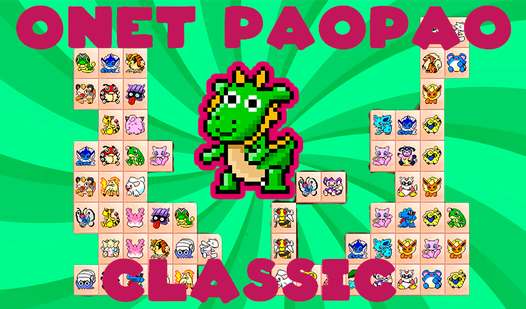
Onet PaoPao Classic
A deceptively approachable matching game that trains your visual scanning and pattern recognition. In poker, quickly reading how community cards connect — suits, pairs, sequences — becomes automatic with this kind of practice. The faster you can read a board, the less mental energy you waste on basics and the more focus you have on reading opponents.
Onet PaoPao Classic
Matching games remain the ultimate test of focus because they require a sharp eye to spot patterns hidden in plain sight. Onet PaoPao Classic brings t...
▶ Play FreeMahjong Classic
Mahjong is a tile-matching game with deep roots in Chinese strategic gaming. It demands careful planning, reading what's available versus what's hidden, and patience — three qualities directly applicable to poker. Every move matters, and you rarely get to take one back.

Mahjong Classic
Ancient board games have survived for centuries because they perfectly balance relaxation with intense mental stimulation. Mahjong Classic honors this...
▶ Play FreeClassic Solitaire
Pure single-player card game. Great for warming up, getting comfortable with card values and suits at a glance, and settling into a card-game mindset before any serious session.
Classic Solitaire
Patience is a virtue, but in the world of card games, it is also a legendary way to sharpen your mental focus. Classic Solitaire breathes new life int...
▶ Play FreeSolitaire Mahjong Classic
A hybrid of mahjong tile-matching and solitaire mechanics that requires genuine forward planning. You can't just play the obvious move — you have to think two or three steps ahead to avoid blocking yourself. That long-term thinking is exactly what separates good poker players from reactive ones.

Solitaire Mahjong Classic
Staring at the screen during a mid-day slump is the worst way to spend your break. Solitaire Mahjong Classic is the perfect remedy to sharpen your foc...
▶ Play FreeSea Battle Classic
The classic strategic guessing game. Reading your opponent's patterns, tracking what's been revealed, and narrowing down probabilities — these are the same cognitive skills that help you put opponents on a hand range in poker and make smarter decisions with limited information.
Sea Battle Classic
Tactical thinkers and fans of classic board games will find endless entertainment in Sea Battle Classic. This digital recreation perfectly captures th...
▶ Play FreeLines 98 Classic
A logic puzzle where you move colored balls to form lines of five. Requires planning several moves ahead, recognizing patterns under time pressure, and sometimes sacrificing a short-term option for long-term gain. Exactly the mindset you need when deciding whether to fast-play a strong hand or slow-play to trap an opponent.

Lines 98 Classic
Staring at a blank document while your brain feels like it is stalling is the ultimate afternoon slump. Lines 98 Classic provides the perfect mental r...
▶ Play FreeBubble Shooter Classic
Fast, reactive, and satisfying. While poker is slower-paced and deliberate, training your mental sharpness and staying focused helps during long sessions where fatigue causes costly mistakes. A quick bubble shooter session can reset your attention when you feel your concentration slipping.

Bubble Shooter Classic
Fans of addictive arcade puzzles will find their new obsession with Bubble Shooter Classic. This timeless test of precision challenges you to clear th...
▶ Play Free