House Designer Games Online Free — Build Your Dream Home
Whether your taste leans toward minimalist Scandinavian or maximalist Victorian, house designer games online free let you scratch that interior design itch without spending a dime — or touching a single paint roller. Play directly in your browser, rearrange furniture, pick color palettes, construct walls from scratch, and watch your dream home come to life pixel by pixel. No installs, no fees, just creativity on demand.
These games have exploded in popularity for a simple reason: everyone has an opinion about how a space should look. From hobbyists who spend weekends browsing furniture catalogs to people who have never held a hammer, house design games are universally appealing. They're relaxing, creative, and oddly satisfying — especially when you finally figure out where to put that weirdly shaped sofa.
This guide covers the best house designer games online free across every style: tower builders, cozy decorators, match-3 puzzles with design themes, and full-blown home renovation simulators. All of them are free to play, right in your browser.
What are house designer games
House designer games are a broad category of browser-based games focused on building, decorating, and managing living spaces. The genre spans several distinct playstyles, and understanding the differences helps you find what actually fits your mood on any given day.
Building games put you in charge of the structure itself. You place walls, roofs, foundations, and floors — the physical bones of a home. These games appeal to players who want to feel like an architect, making decisions about layout and space before a single piece of furniture shows up.
Decoration games skip the construction phase entirely. The walls are already up; your job is to furnish and style each room. You're choosing sofas, rugs, artwork, lighting, and paint colors. The creative satisfaction here is immediate because you're working in a finished space from the start.
Renovation games give you something broken or neglected and ask you to transform it. There's a strong before-and-after hook that makes these games uniquely satisfying — you're not just creating something from nothing, you're fixing something that was lost.
Hybrid puzzle games wrap design decisions inside match-3 or logic puzzles. Solve a level, earn currency, spend it on decor. The puzzle loop keeps you engaged between design sessions and gives you stakes for every move you make.
Tycoon games zoom out further — you're not just designing a single house, you're running a construction business, managing clients, and scaling an operation. Design decisions still matter, but they exist inside a larger strategic context.
What unites all of these is a central creative loop: pick a space, make decisions about how it should look and feel, and enjoy the result. There's no wrong answer — if you love a neon pink kitchen with exposed brick, that's your kitchen. The genre rewards imagination and patience over reflexes or competitive instincts.
The accessibility of house designer games online free is a huge part of their appeal. You don't need to download anything, create an account, or commit to a long tutorial. You open a browser tab, and within a minute, you're already placing furniture. That instant entry point brings in players who might never pick up a traditional simulation game.
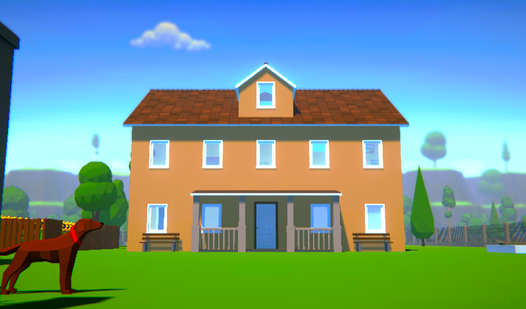
Sky-High House is a perfect first example of the building side of this genre. You're constructing a tower floor by floor, stacking rooms and managing space in a way that mirrors real architecture challenges — just with a satisfying arcade twist. Each level pushes you to think about structure and balance, asking: does this floor support what's above it? Does this layout make sense? It's abstract enough to feel like a game but grounded enough to feel like actual building.
Sky-High House
Casual gamers who love testing their precision will find Sky-High House incredibly addictive as they aim for the clouds. This tower building challenge...
▶ Play FreeThe variety within this genre is massive. On one end you have abstract building puzzles that don't look like a house at all; on the other, you have near-realistic home decoration sandboxes with hundreds of furniture items. Both extremes have devoted fans, and most players enjoy the full spectrum depending on their mood and how much brain power they have available.
Best house building games online
If construction is your thing — laying foundations, raising walls, designing floor plans — these are the house building games online that deliver that experience best. Each one approaches construction from a slightly different angle, which means there's something here for every type of builder.
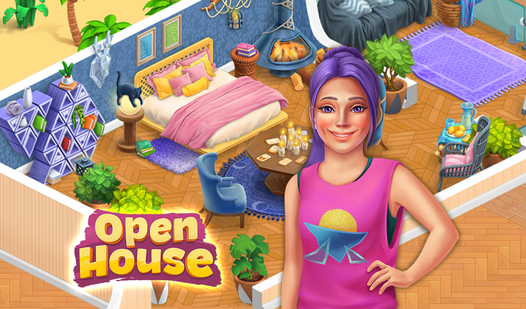
Open House is one of the most direct expressions of the renovation-to-dream-home fantasy that makes this entire genre tick. You take a run-down mansion and, room by room, transform it into something spectacular. The game gives you tools to repaint, refurnish, and reorganize every space. It's the kind of game where time disappears because there's always one more room to fix, one more wall color to try, one more piece of furniture that might work better in the corner. The satisfaction of the before-and-after comparison — seeing the sad, neglected room you started with versus the polished result — is genuinely hard to beat. If you've ever watched a home renovation show and thought "I'd do it differently," this is where you prove it.
Open House
Restore a dusty manor to its former glory by solving colorful tile puzzles that test your logic and speed. You will help Oscar transform his inherited...
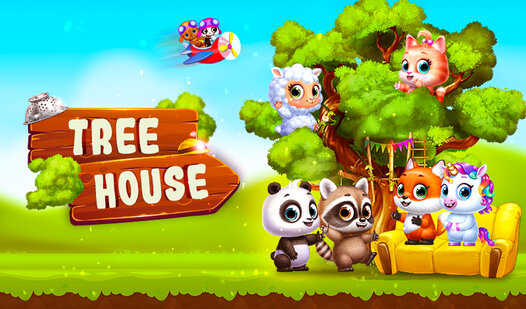
▶ Play FreeTree House offers a completely different flavor of building. You're constructing a cozy home for animals up in the branches, which means working with unusual shapes, organic constraints, and the specific visual language of treehouse design — platforms, rope bridges, windows that look out into a canopy. The building mechanics feel tactile and warm, and the end result is far more charming than anything you'd assemble on flat concrete. It's the kind of house building game that reminds you why people dream about treehouses in the first place.

Tree House
Building a custom sanctuary high above the forest floor taps into a primal desire for cozy, imaginative shelter. Tree House transforms this dream into...
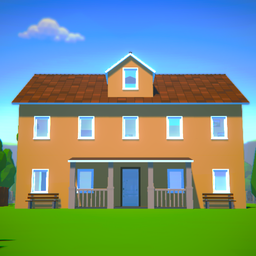
▶ Play FreeFor players who want strategy layered on top of their building, Giga House Tycoon scales the concept into a full business operation. You're not just building one house — you're running a construction empire. Resource management, client satisfaction, supply chains, and expanding your workforce all factor in. The design decisions still matter, but they exist inside a larger picture. When your building company finally completes a major project on time and under budget, the payoff hits differently than single-room decoration games.
Giga House Tycoon
Building a digital empire from scratch offers a unique rush that keeps players coming back for more. Giga House Tycoon transforms the simple concept o...
▶ Play FreeWhat makes online house building games work so well is the feedback loop. In real life, you commit to a paint color and live with it for years. In these games, you can repaint a room, hate it, undo it, and try seven other colors in the same sixty seconds. You can knock down a wall, rebuild it differently, and compare both versions side by side. That freedom is genuinely liberating — it lets you experiment without consequences, which is exactly how good taste develops.
There's also something deeply satisfying about the progression arc in building games. You start with an empty lot or a broken-down shell and you end with a real space, fully realized. The distance between start and finish is what makes the achievement feel earned. Decoration games give you instant results; building games make you work for them, which changes how the final product feels.
Interior design and decoration games
Decoration games shift the focus entirely to styling. The walls are up — now what do you do with the space? These are games about color schemes, furniture placement, textile choices, and lighting decisions that transform a bare room into a room with a personality.
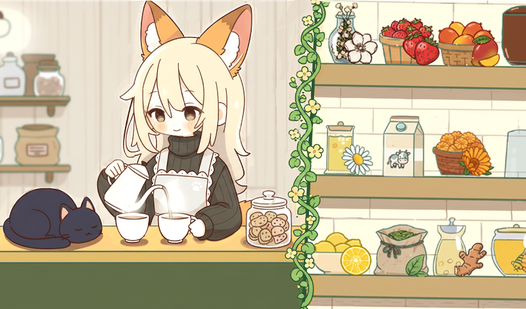
Kiki's Tea House: Animal Cafe is a delightful twist on the decoration formula. You're managing and designing a tea house populated by adorable animal customers, which means your design decisions have direct gameplay consequences. A well-arranged, attractively decorated space keeps customers happy and your business running. A cluttered or poorly organized room drives them away. The aesthetic is warm and charming, and the feedback loop between design choice and customer reaction makes every furniture placement feel meaningful. It's a great example of how house designer games online free can combine narrative with decoration mechanics without sacrificing either.

Kiki's Tea House: Animal Cafe
Mix exotic ingredients and master complex recipes to serve thirsty forest dwellers in Kiki's Tea House: Animal Cafe. Managing a bustling forest shop r...
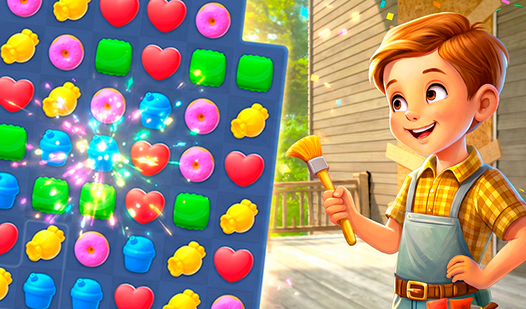
▶ Play FreeMom's Designer - Match 3 is a smart hybrid that pulls you in from two directions at once. Match-3 puzzle gameplay funds and unlocks home decoration options, so you solve puzzles to earn the resources that let you decorate. It's an excellent structure for players who want mental engagement alongside visual creativity. The match-3 mechanics are polished and satisfying on their own terms — you'd enjoy the puzzle layer even without the decoration payoff. Adding the home design element on top gives every match additional meaning.

Mom's Designer - Match 3
Renovating a dream home is the ultimate creative escape for anyone who loves transforming dull spaces into stunning masterpieces. Mom's Designer - Mat...
▶ Play FreeHouse Interior Design - Match 3 works on a similar puzzle-to-decoration pipeline but leans more heavily into realistic room aesthetics. The range of furniture and decor items available is impressive, and the variety holds up across many sessions. If you're someone who gravitates toward home renovation content — the kind of person who watches room reveals on YouTube or pins interior photos — this game has exactly the right energy. The puzzle difficulty scales naturally, and the decoration results feel genuinely impressive for a browser game.

House Interior Design - Match 3
Creative souls and fans of home renovation will fall in love with House Interior Design - Match 3 immediately. This vibrant experience blends addictiv...
▶ Play FreeThe Best Designer takes a more direct approach to professional interior design. You're styled as a working designer taking on client briefs, which means your choices aren't entirely free — clients have preferences, constraints, and expectations. You can't just do whatever you want; you have to balance your own aesthetic instincts with what the client actually asked for. This constraint is what separates The Best Designer from pure sandbox decoration games, and it makes the experience feel more like the real discipline of interior design. When you nail a brief — when the client loves what you've done — the satisfaction is specific and earned.

The Best Designer
Matching colorful chips in a row is the core of this addictive puzzle journey where you help Sophie transform a run-down retreat into a luxury destina...
▶ Play FreeDecoration games appeal to an enormous range of players precisely because they engage a different part of the brain than action or strategy games. Most of them have no fail state, no lives to lose, no timer counting down. Just choices and the immediate visual consequences of those choices. That relaxed structure makes them excellent for winding down, for playing in short sessions between tasks, or for anyone who wants a creative outlet that doesn't demand intense focus.
City building games with house design
Some of the most interesting house designer experiences online aren't about a single home at all — they're about neighborhoods, communities, and entire towns where every building is a design opportunity. Games that work at this scale give you a broader perspective: how does one house fit into a larger visual picture? What makes a street feel cohesive? What makes a neighborhood feel alive?
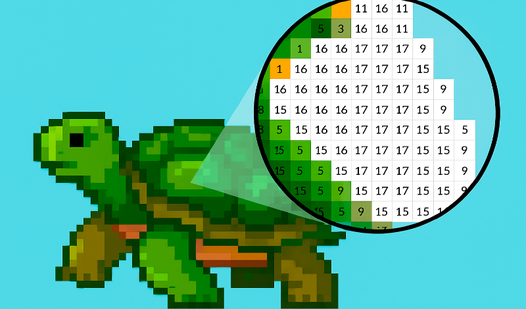
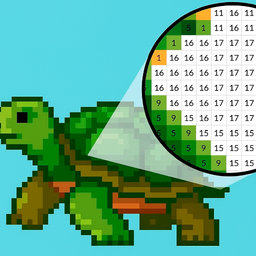
Coloring by Numbers: Pixel House takes an artistic interpretation of this idea. Rather than constructing buildings from scratch, you're recreating homes and architectural scenes through pixel art coloring. Each numbered region maps to a specific color, and as you fill in the grid, a charming house or neighborhood scene gradually emerges. It's meditative, precise, and surprisingly satisfying — the reveal of a completed image feels genuinely like finishing a small work of art. For players who enjoy the visual side of design without the decision fatigue that comes with full decoration games, this is a peaceful and rewarding alternative.
Coloring by Numbers. Pixel House
Fill empty pixel grids with vibrant shades by matching numbers to unlock stunning architectural masterpieces. Coloring by Numbers. Pixel House turns e...
▶ Play FreeThe community angle in broader building games matters more than it might initially seem. When you're designing a single room, every decision feels personal and self-contained. When you're designing a house that sits in a neighborhood — visible to other virtual residents, part of a shared streetscape — you start thinking about context. What fits here? What stands out in a good way versus a jarring way? How does this building relate to what's next to it? City-scale games teach this broader design thinking without making it feel academic.
Many players start with single-room decoration games and naturally migrate toward broader simulations as their design confidence develops. The progression feels organic: first you master a bedroom, then a whole house, then a street, then a town. Each scale introduces new variables and new sources of satisfaction.
There's also a density argument. A single well-designed room is pleasing in the way any good object is pleasing. A dozen coherent homes in a well-planned neighborhood is something else entirely — it feels like a world, and that world-building dimension gives city-scale house design games a staying power that smaller-scale games sometimes can't match.
Tips for creating the perfect virtual home
You don't need artistic training to make great spaces in house designer games online free. But a handful of principles — borrowed from real interior design — help enormously when you're staring at an empty room wondering where to start.
Start with a focal point. Every well-designed room has one — a fireplace, a statement sofa, an oversized piece of artwork, a dramatic window. In virtual design games, pick the element you want to notice first and build everything else around it. This prevents the "furniture soup" problem where rooms feel cluttered or directionless even though every individual piece is attractive.
Limit your color palette. The temptation in decoration games is to use every color available because you can. Restraint almost always looks better. Pick two or three main colors, treat everything else as a neutral, and your room reads as intentional rather than chaotic. One bold color, one warm neutral, one cool neutral — that combination works in virtually any style.
Think about flow. In house building games, flow means literal walkways — can you move through the space logically, or does the layout force awkward paths? In decoration games, it means visual flow — does your eye travel naturally around the room, or does it get trapped in one corner? Both types of flow matter, and good designers think about both simultaneously.
Don't neglect the floor and ceiling. New players obsess over walls and furniture but leave floors and ceilings as defaults. In games that let you customize these surfaces, they're enormous opportunities. A good rug grounds a seating area and defines space within a larger room. An interesting ceiling treatment makes a room feel finished and considered. These details separate competent virtual rooms from genuinely impressive ones.
Play with scale deliberately. Virtual design games often let you scale furniture relative to the room. Use this intentionally. One oversized piece of furniture creates drama and makes a room feel bold. Many smaller pieces clustered together create coziness and intimacy. Getting scale wrong is the most common reason a room feels off — get it right and everything else falls into place.
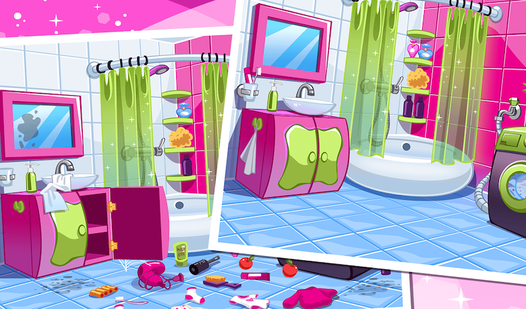
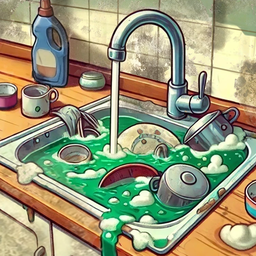
House Cleaning - Put Everything In Its Place is worth playing for a different reason: it trains your eye for organization as a design principle. Where does each object belong? What creates visual clutter, and what clears it? Cleaning and organizing might seem separate from design, but the underlying skill — deciding what stays, what goes, and where things live — is identical. Players who've spent time in this kind of game make noticeably better decisions in pure decoration games.

House Cleaning - Put Everything In Its Place
Maintaining a tidy living space is a surprisingly satisfying challenge that turns domestic chores into a relaxing virtual puzzle. House Cleaning - Put...
▶ Play FreeTest radically different styles. The best thing about house designer games online free is that experimentation costs nothing and happens instantly. Try a stark Scandinavian minimalist room — white walls, natural wood, negative space. Then try a maximalist Victorian parlor — patterned wallpaper, heavy furniture, layered textiles. Then try a futuristic apartment with cool lighting and geometric shapes. You'll quickly discover which direction you actually gravitate toward, which is genuinely useful self-knowledge whether you apply it inside the game or in your real home.
Save and compare whenever possible. Many games let you revisit completed rooms or compare design iterations. Use this feature aggressively. Design instincts develop through comparison — seeing what worked in one room, analyzing why it worked, and applying that reasoning to the next room is how taste actually compounds. Players who skip this step plateau; players who compare and reflect keep improving.
Set your lighting last. If a game gives you lighting controls — brightness, color temperature, lamp placement — always finalize them after everything else is in place. Good lighting can redeem a mediocre room and bad lighting can ruin an excellent one. This is the same principle professional interior photographers follow: the room doesn't truly exist until you see how light falls across it.