Board Games Online: A Complete Guide for Beginners
Board Games games are one of the oldest forms of human entertainment — and today you can play them for free, right in your browser, without installing anything. If you've ever wondered what exactly Board Games are, how they work, and which titles are worth your time, you're in the right place. This guide breaks it all down: the history, the subgenres, the best titles for newcomers, and answers to the most common questions people have about the genre.
What Are Board Games?
At their core, Board Games are structured games played on a defined surface — a board, a table, a grid — where players follow a set of rules to reach a goal. Unlike action games that test your reflexes or platformers that demand precise timing, Board Games put strategy, logic, and decision-making front and center.
The defining characteristic is that the game state is visible. You can see the board, the pieces, the cards. You know (or can deduce) what's happening. That visibility is what makes the genre so compelling: every loss teaches you something, and every win feels genuinely earned.
In the digital world, Board Games games online capture that same feeling but remove the logistics. No need to find opponents, set up pieces, or track score manually — the game handles all of it. You can play at 2 AM against an AI, or challenge a friend halfway across the world, all without leaving your chair.
The category is broad. "Board games" as a genre online includes:
- Card games — Solitaire, Rummy, Poker, and hundreds of others built around shuffled decks
- Abstract strategy games — Chess, Checkers, Go, and their many variants
- Tile-matching and puzzle hybrids — games where placing or connecting pieces creates cascading outcomes
- War and strategy games — turn-based battles with unit positioning and resource management
- Number and merge puzzles — games like 2048 where the board fills with numbers you combine toward a target
If a game has a board (or board-like surface) and a ruleset that rewards thinking, it probably belongs here.
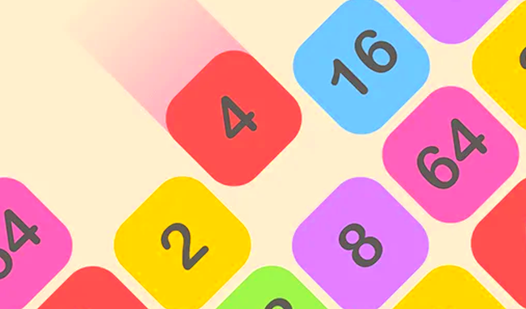
Board and card games
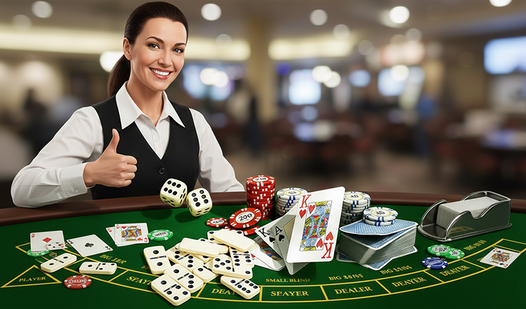
Board and card games enthusiasts craving a massive library of classics will find their new digital home here. This massive collection brings together ...
▶ Play FreeA Brief History of Board Games
The history of Board Games stretches back further than most people realize. Archaeological digs in Egypt and Mesopotamia have uncovered game boards dating to 3500 BCE — that's over 5,500 years of humans sitting down to play structured games with pieces on a surface.
The ancient era
The Royal Game of Ur, found in a Sumerian tomb, is one of the earliest known board games. Senet, played in ancient Egypt, was so culturally important that it was buried alongside pharaohs in their tombs. These weren't just pastimes — they were seen as mirrors of fate, ways to engage with the divine.
Chess emerged in India around the 6th century CE, spreading through Persia into the Islamic world and eventually into medieval Europe. By the 13th century, chess was the game of nobility — a training ground for military strategy. Go, developed in China around 500 BCE, followed a different path but reached similar cultural heights in East Asia.
Card games arrive
Playing cards appeared in China around the 9th century and arrived in Europe by the 14th century. By the 15th century, card games had spread through every level of society. Solitaire — the beloved single-player card game — became popular in France and Northern Europe in the 18th century. When Microsoft included it in Windows 3.0 in 1990, it introduced the concept of digital card games to an entire generation. Today, Solitaire remains one of the most-played games in human history across all platforms.
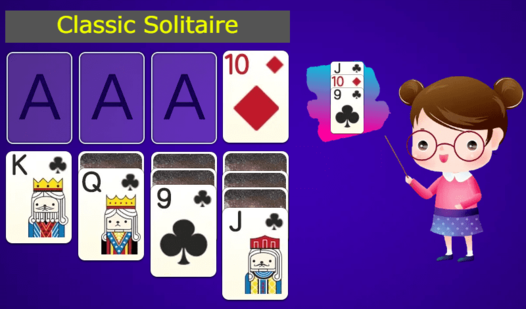
Classic Solitaire
Patience is a virtue, but in the world of card games, it is also a legendary way to sharpen your mental focus. Classic Solitaire breathes new life int...
▶ Play FreeThe modern board game renaissance
The late 20th and early 21st centuries saw an explosion of tabletop board game design. Titles like Catan (1995), Ticket to Ride (2004), and Pandemic (2008) built a massive hobbyist community. "Eurogames" — strategic, low-conflict games with elegant rules — became a distinct design tradition.
Simultaneously, digital adaptations multiplied. Every classic game found a browser or mobile version. New genres emerged that existed only in digital form — games that would be physically impossible to produce as real board games because of their complexity or piece count.
Where we are now
Today, Board Games games online represent one of the most diverse categories in gaming. Free browser games have democratized access: you don't need to buy a $60 box set to enjoy deep strategic gameplay. FreeJoy alone hosts dozens of titles spanning every subgenre, playable instantly with no downloads required.
Popular Subgenres of Board Games
The Board Games гайд wouldn't be complete without a closer look at the different types that exist within the genre. Here's a breakdown of the major subgenres and what makes each one tick.
Solitaire and Patience Games
Solitaire is the gateway drug of board games for a reason. The rules are simple, the games are short, and there's just enough randomness to keep things interesting without feeling unfair.
Classic Klondike Solitaire — the version most people know — involves sorting a shuffled deck into four foundation piles by suit and rank. But "solitaire" is actually a family of hundreds of games, each with different layouts and rules.
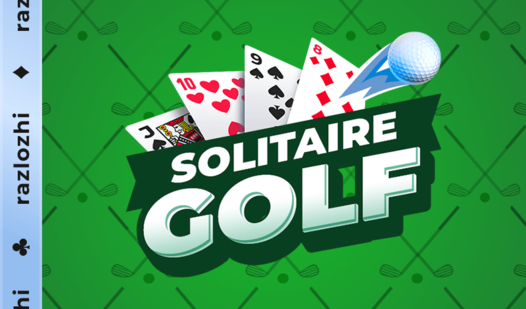
Solitaire Golf is a fascinating variant that plays more like mahjong in its structure: cards are arranged in a tableau and you work through them in sequence, clearing them from the board. With over twenty levels of increasing difficulty, it builds strategic thinking in a surprisingly deep way.
Solitaire Golf
Fans of strategic card games will find their new obsession with the relaxing pace of Solitaire Golf. This clever twist on the classic pasyans format c...
▶ Play FreeKlondike: idyutary solitaire takes the classic Klondike rules and adds its own twist — a great option once you've mastered the standard version and want something that pushes you harder.
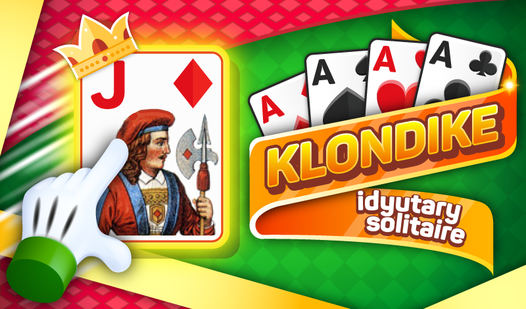
Klondike: idyutary solitaire
Staring at a blank screen during a lunch break often feels like a massive waste of time. Klondike: idyutary solitaire turns those idle moments into a ...
▶ Play FreeNumber Puzzles and Merge Games
Number puzzles are among the most addictive subgenres in Board Games games online. The concept is simple: a grid fills with numbers, and your goal is to combine them strategically to reach a target.
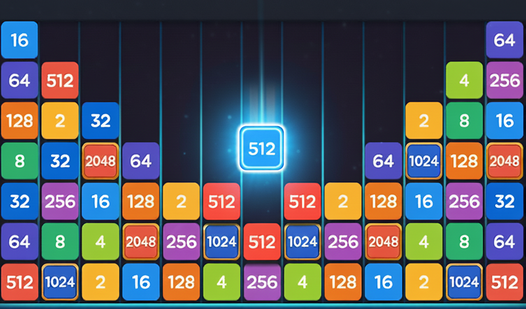
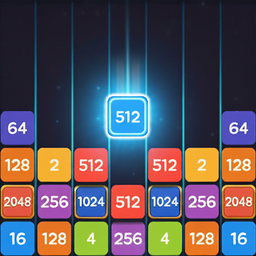
2048 Merge Blocks is perhaps the most famous example. The game places numbered tiles on a grid; slide them in any direction, and matching tiles merge. The catch is that a new tile appears after every move, slowly filling the board. The goal is to create a tile with the number 2048 before you run out of space. It sounds trivial. It isn't.
2048 Merge Blocks
Staring at a stagnant screen while waiting for your next meeting or commute can feel like an eternity. 2048 Merge Blocks provides the perfect mental e...
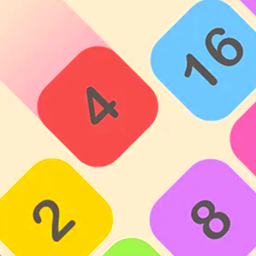
▶ Play FreeGrowing Numbers: Connect and Purify takes a different approach. Instead of sliding tiles, you draw connections between adjacent numbers to combine them into higher values. The puzzle element comes from choosing which connections to make: every choice ripples through the available moves, and a bad early decision can leave you stuck with no valid connections later.
Growing numbers: Connect and Purify
Fans of brain-teasing challenges will find Growing numbers: Connect and Purify the perfect way to sharpen their mental skills. This addictive puzzle t...
▶ Play FreeStrategy and War Games
For players who want more depth, strategy-based Board Games add unit management, terrain, and opponent modeling to the mix.
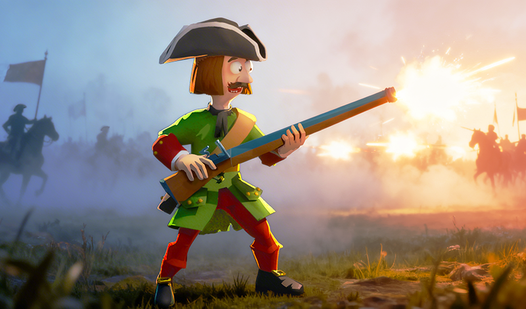
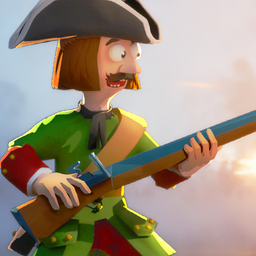
Funny Regiments transports you to 18th-century warfare — specifically the Northern War, a pivotal conflict that shaped the balance of power in Northern Europe. You command regiments of regular army troops, positioning them on the battlefield and issuing orders through a turn-based system. The visual style is lighthearted, but the tactical decisions are genuine: flanking, unit composition, and timing all matter.
Funny Regiments
Warfare in the 18th century was rarely this hilarious, blending high-stakes musket combat with absolute battlefield chaos. Funny Regiments drops you i...
▶ Play FreeStrategy board games in this vein reward players who can think several moves ahead and adapt their plans when the opponent surprises them.
Logic Puzzles and Pipe Games
Logic puzzle games often have the visual language of board games — grids, pieces, defined moves — but the goal is pure problem-solving.
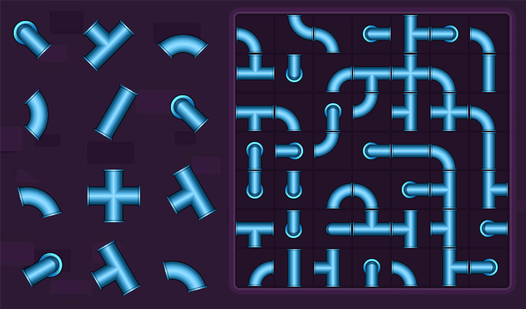
Connect Pipes: Pipeline is a clean example. The board presents a grid with pipe segments in various orientations; your task is to rotate and connect them so that fluid can flow from source to destination without leaks. Early levels are approachable. Later levels require holding complex spatial relationships in your head simultaneously.

Connect Pipes: Pipeline
Rotate scattered pipe segments across the grid to build a seamless flow from the starting source to the finish line. Every move counts as you refine y...
▶ Play FreeBest Board Games for Beginners
Board Games для новичков can feel overwhelming because the genre spans so many different types of thinking. The key is to start with games that have a short learning curve but enough depth to stay interesting after the first few plays.
Here's a practical breakdown based on what kind of player you are:
If you prefer relaxing solo play
Start with Classic Solitaire. It's familiar, the rules are intuitive, and a full game takes 5-10 minutes. Once you're comfortable, move to Solitaire Golf for a fresh challenge that reuses many of the same mental muscles but in a different structure.
If you like quick, satisfying puzzles
2048 Merge Blocks is ideal. A single session is short, there's no timer pressure, and the "just one more game" loop is strong. Once you've internalized the strategy (always work toward a corner), you'll find yourself chasing higher and higher scores.
Growing Numbers: Connect and Purify is another excellent choice here — it adds a spatial dimension that makes every level feel like a fresh puzzle rather than repetition.
If you want variety without commitment
Board and Card Games is a collection rather than a single game. It bundles multiple classic card and board games into one place, letting you sample different styles and discover what clicks before committing to a single title. Playing against the computer means you can go at your own pace.
If you want something with more narrative stakes
Funny Regiments gives your decisions more weight. You're not just matching tiles — you're maneuvering an army. The consequence of a mistake feels more tangible, which makes the wins more satisfying.
Tips for Getting Better at Board Games
The fastest way to improve isn't grinding the same game for hours. Here are approaches that actually accelerate learning across the genre:
Understand the win condition before you optimize
Before worrying about strategy, make sure you understand exactly what winning requires. In Solitaire, that means getting all cards to the foundations. In 2048, it means creating that target tile. Every other decision in the game should serve that end goal.
Play slowly in the beginning
Board games reward deliberate thinking. Beginners often rush and make moves without considering consequences. Slow down, especially early in a session. The game will teach you more if you pause to think about why each move makes sense.
Learn from losses
Unlike many action games where loss feels random, board game losses are almost always explainable. After you lose, take 30 seconds to ask: what went wrong? Where did the board state become unwinnable? Usually, you can trace it back to a specific decision a few moves earlier. That trace is worth more than ten additional games played without reflection.
Try different subgenres
Skills from one type of board game transfer surprisingly well to others. The spatial reasoning you develop in pipe puzzles helps with tile games. The probability intuition from card games applies to strategy games. Broad exposure makes you a more flexible thinker.
Use the AI as a teacher
Many of the games listed above let you play against a computer opponent. Don't just try to beat the AI — watch what it does. AI opponents in well-designed games make moves that reflect sound strategy. When the AI does something you wouldn't have done, stop and ask why it made that choice.
Why Play Board Games Online for Free?
There's a real case to be made for free browser board games beyond just the obvious cost benefit.
Instant access
No installation, no updates, no account required in most cases. You think of a game, you open a tab, you're playing within seconds. This frictionlessness makes it easy to play a quick game on a lunch break or while waiting for something else.
No stakes, pure learning
When you're playing for free, you can experiment without pressure. Try the risky strategy. Make the move you're not sure about. See what happens. This freedom accelerates skill development because it removes the psychological cost of failure.
Variety without commitment
Buying a physical board game is a $40-80 commitment. Playing online for free means you can try twenty different games and keep playing the three you actually enjoy — all without spending anything.
Play at your own pace
Online board games don't require scheduling. No need to find three friends who are all free on a Saturday afternoon. You play when you want, as long as you want, and you stop whenever.
Common Mistakes Beginners Make
Skipping the tutorial
Board games have rules, and those rules matter. Skipping the tutorial and trying to figure it out by playing often leads to frustration from playing wrong. Most games have short, painless tutorials — use them.
Focusing too much on offense
In strategy board games especially, beginners tend to focus on what they're trying to build and ignore what their opponent (or the board state) is forcing on them. Pay attention to threats. A good defensive move is often worth more than an offensive one.
Giving up after the first loss
Board games take more sessions to "click" than most other game genres. The first few games are often confusing. The fifth or sixth game is where the strategy starts to emerge. Don't judge a game after one play.
Playing only one game
Spending 500 hours on one solitaire game makes you good at that specific game but doesn't develop broader strategic thinking. Rotate between a few different titles to build a more well-rounded skill set.