TOP-28 Best Tiles Games: Play Free Online
Tile puzzles have a way of hooking you in the first five minutes and keeping you around for hours. The best Tiles games balance accessible rules with the kind of depth that makes you plan ahead, second-guess yourself, and feel genuinely smart when a board finally clears. Whether you're after a quick mental reset or a long session of strategic matching, there's a Tiles game on this list for you.
We've gathered the top 20 Tiles games you can play free online right now — no downloads, no accounts, no hassle. Just open your browser and go.
How We Chose the Top Tiles Games
Popularity matters, but it's not everything. Our Tiles rating was built around a few specific criteria: variety of gameplay mechanics, the quality of that "aha" moment when you find a key match, replayability across sessions, and how the difficulty curve feels over time. We also made sure each game covers genuinely different ground — so you're not just seeing the same mechanic twenty times with different wallpaper.
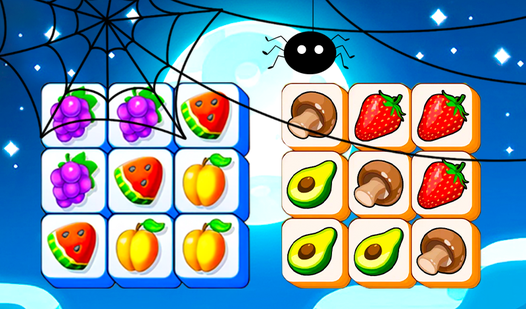
The list covers pair-matching classics, sorting challenges, hex-grid puzzles, 3D stacking, merge mechanics, and Mahjong-style games. Some are relaxing. Some are a little ruthless. All of them are free.
TOP-20 Best Tiles Games — Full Ranking
1. Cute Tiles: Puzzle
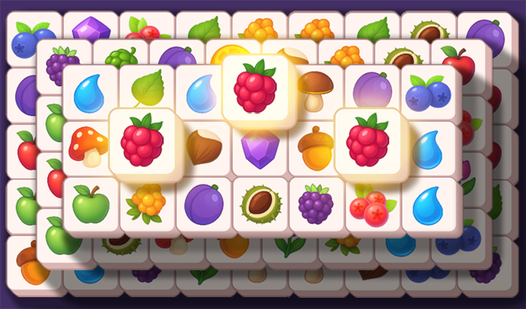
There's a lot of visual noise in mobile gaming these days, which is why Cute Tiles: Puzzle stands out immediately. The tile designs are clean, colorful, and friendly — pastel animals, fruit, and simple icons arranged on boards that start gentle and gradually ask more of you. The matching mechanic is easy to grasp: find three identical tiles, tap them in sequence, clear the board. But as levels progress, the layouts get denser, blocked tiles become more common, and you start needing to think about which tiles to clear first to keep pathways open. It's a genuinely satisfying experience that earns its "cute" label without sacrificing depth.
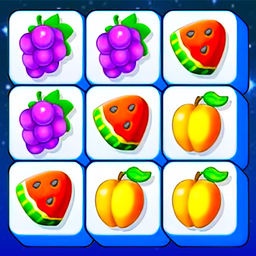
Cute Tiles: Puzzle
Feeling a bit bored and need a quick mental break? Cute Tiles: Puzzle is your cozy escape into a world of satisfying tile-matching and aesthetic charm...
▶ Play Free2. Tiles Slider: Combine
Most tile games ask you to find matches and tap them. Tiles Slider: Combine asks you to think about space, direction, and collision. You slide tiles across a grid, and when two tiles of equal value collide, they merge into a higher-value tile. The goal is to reach target values while keeping the grid from locking up. It's closer to a spatial planning puzzle than a matching game, which makes it a refreshing detour from the standard tap-and-clear formula. The satisfaction of setting up a multi-merge chain — sliding one tile that triggers two more collisions — is a genuine highlight.
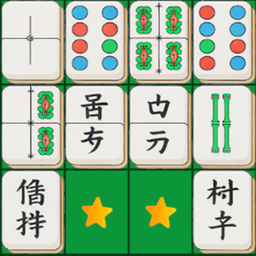
Tiles Slider: Combine
Match pairs on a bustling 6x7 board by sliding tiles into position to clear the screen. Tiles Slider: Combine challenges you to spot identical images ...
▶ Play Free3. Find the Pair of Tiles!
The pair-matching format is one of the oldest in puzzle gaming, and Find the Pair of Tiles! shows why it still works. A grid of face-down tiles is shuffled in front of you, and you flip and match identical pairs before you run out of time or moves. What keeps it engaging is the board design — tiles aren't always arranged in simple rows. Later layouts use irregular shapes, partial visibility, and tighter time limits that force you to rely on memory as much as pattern recognition. Simple on the surface, but sharper underneath than you'd expect.
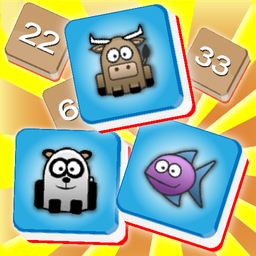
Find the pair of tiles!
Matching games offer a meditative way to sharpen your focus while unwinding after a long day. Find the pair of tiles! turns this simple concept into a...
▶ Play Free4. Tiles Match 3: Forest Journey
Not all tile games feel like they're going somewhere. Tiles Match 3: Forest Journey does. Each level advances a gentle narrative set across different forest environments — mossy clearings, autumn glades, sun-dappled riverbanks — and the tile sets reflect the setting with illustrated animals, plants, and seasonal imagery. The match-3 mechanic (collect three identical tiles from the board) is well-paced, with new obstacles introduced gradually so you're never overwhelmed. The ambient music ties everything together into a session that feels more like an experience than a game. One of the best Tiles online picks if atmosphere matters to you.
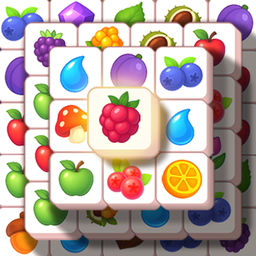
Tiles Match 3: Forest Journey
Fans of logic puzzles will adore the serene challenge found in Tiles Match 3: Forest Journey. This addictive experience blends the classic fun of a ma...
▶ Play Free5. The Three Tiles in the Halloween World
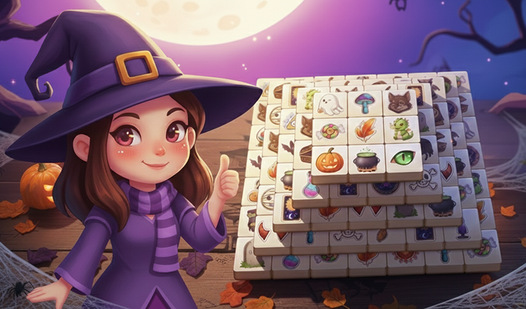
Halloween gives designers permission to get weird, and The Three Tiles in the Halloween World uses that permission well. The tile sets are packed with pumpkins, bats, skulls, potions, and other spooky imagery, all arranged in boards that challenge you to collect groups of three matching tiles. The art is detailed without being cluttered, and the difficulty steps up at a reasonable pace. It holds its own outside of the October season too — the mechanics are solid enough that the theme feels like a bonus rather than a gimmick.
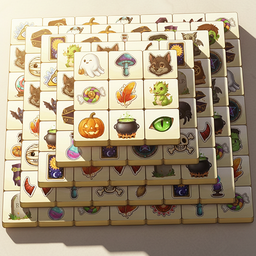
The Three Tiles in the Halloween World
Matching games remain the ultimate way to sharpen your logic while clearing your mind after a long day. The Three Tiles in the Halloween World takes t...
▶ Play Free6. Hexa Tiles: Sorting
Square grids are the default in tile games, but hexagonal layouts change the spatial logic in interesting ways. Each tile has six neighbors instead of four, which means more potential connections — and more ways for a board position to become complicated. Hexa Tiles: Sorting asks you to group matching colored tiles together, rearranging a hex board until same-color clusters are properly sorted. The angle-based relationships between hexagons train your brain to think differently about adjacency and chain effects. If you're after something that puts a new spin on familiar mechanics, this is a strong recommendation in the top Tiles games category.
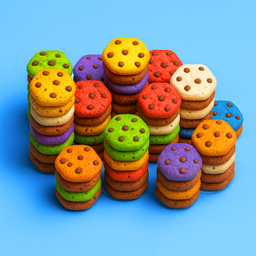
Hexa Tiles: Sorting
Sorting games have evolved into a masterclass of logic, and Hexa Tiles: Sorting takes this concept to a satisfying new level of complexity. You will f...
▶ Play Free7. Sort Tiles: Tap Away
The appeal of Sort Tiles: Tap Away is in how physical the tapping feels. Tiles are stacked in groups, and your goal is to select matching tiles in the right order so they "tap away" — disappearing once a matched set is collected. The challenge is that tiles are layered: some are blocked by others on top, and a wrong selection fills your limited holding tray with unmatched tiles you'll need to deal with later. Planning your tap sequence before you act is the key skill, and the game does an excellent job of making that planning feel rewarding rather than stressful.
8. Three Tiles: Match 3
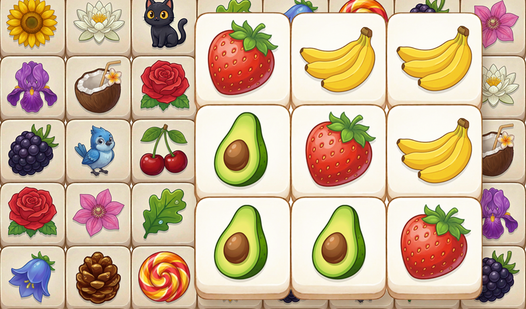
Three Tiles: Match 3 keeps its focus narrow and executes within that focus extremely well. Tiles from the board go into a tray at the bottom of the screen, and when three identical tiles are in the tray, they disappear. Let the tray fill with seven unmatched tiles and it's game over. The tension between "grab this useful tile now" and "wait until the tray clears" is constant, and the best runs come from finding a rhythm rather than playing reactively. Endlessly replayable, and just complex enough to feel skillful.
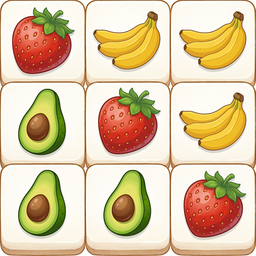
Three Tiles: Match 3
Logic puzzles that challenge your focus are the perfect remedy for a hectic day. Three Tiles: Match 3 takes the addictive soul of classic Mahjong and ...
▶ Play Free9. Tiles Match: Release Stress 3D
The three-dimensional format transforms a familiar genre. In Tiles Match: Release Stress 3D, tiles are arranged in layered 3D stacks that you can view from different angles, and accessibility changes as you clear tiles from the top. You can't grab a tile that's buried under others — you have to work downward, matching accessible tiles first to reveal what's beneath. This creates a puzzle logic that feels genuinely different from flat tile games. The visual satisfaction of watching a complex 3D structure slowly dissolve into a cleared board is the kind of thing that justifies the "release stress" label.
10. Find a Pair of Tiles: 2-5 Layers!
Pair-finding gets a vertical upgrade here. Find a Pair of Tiles: 2-5 Layers! stacks tiles up to five layers deep, and a tile is only matchable if it's visible on the current top layer. This means the board is constantly changing as you clear matches — tiles below become accessible, new pairs emerge, and the strategic picture shifts with every move. You're not just reading the visible board; you're modeling the layers underneath. Among the best Tiles online games for players who want their puzzles to reward sustained attention.
11. Mahjong: Collect Three Tiles in a Row
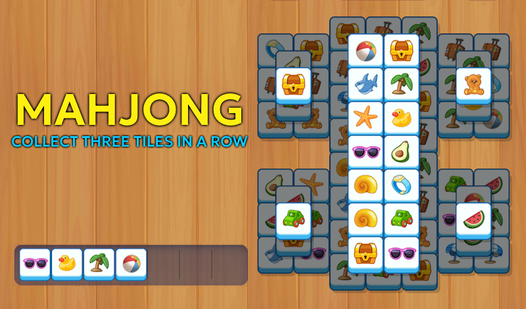
Traditional Mahjong matching gets a structural twist here. Instead of clearing pairs, you're collecting tiles into rows of three — which changes how you read the board and what moves you prioritize. A tile that's useful for a pair might not fit anywhere in a row sequence, and vice versa. The shift forces you to rethink habits built up from standard Mahjong play, which makes this feel genuinely fresh even if you've played hundreds of Mahjong sessions. The tile sets are detailed and traditional, keeping the visual atmosphere intact.
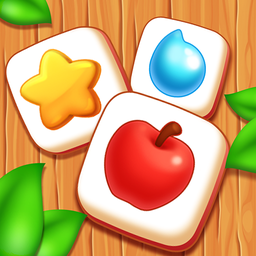
Mahjong: Collect three tiles in a row
Sorting through intricate patterns to find a matching плитка keeps your brain sharp and your competitive spirit high. Mahjong: Collect three tiles in ...
▶ Play Free12. Mahjong 2 Tiles
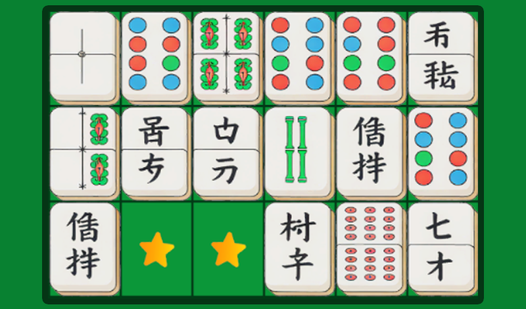
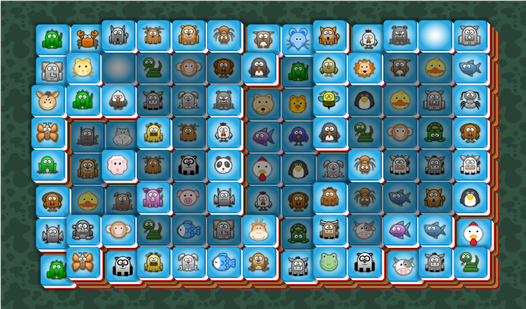
A leaner take on the Mahjong format, Mahjong 2 Tiles cuts away complexity to focus on the core pair-matching experience. Tiles are laid out in classic Mahjong stacks, and you clear the board by matching identical free tiles (those not blocked by others on the left, right, or above). The puzzle quality of each layout is high, with board shapes that create interesting strategic situations rather than just random piles. If you love Mahjong but prefer playing without variations or extra rule layers, this is the version to reach for.
13. Collect 3 Tiles
Fast, focused, and quietly addictive. Collect 3 Tiles presents a board of mixed tiles and asks you to collect matching groups of three by tapping. The complication is your collection slot — it holds a limited number of tiles at once, so if you pick up too many mismatched tiles without completing a group, you're stuck. Managing the slot while scanning the board for efficient matches is a balancing act that keeps every session feeling different. Once you start chaining groups efficiently, the flow state that kicks in is genuinely excellent.
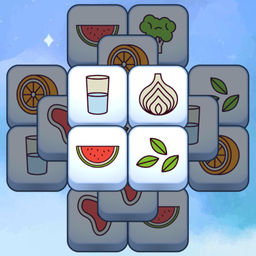
Collect 3 Tiles
Matching bright icons across the board requires sharp focus as you clear the screen piece by piece. You simply tap on a tile to move it into your tray...
▶ Play Free14. Hexa Sort Tiles
A second entry in the hex sorting category, Hexa Sort Tiles approaches the format from a slightly different angle. Rather than sorting existing tiles into groups, you're dropping tiles onto a hex board and aiming to fill complete color clusters. Tiles pour in from a queue, and you have to decide where to place each one to build toward complete groups without boxing yourself in. It's a hybrid of sorting puzzle and placement strategy, and the hex grid makes spatial planning feel uniquely satisfying. A standout in the Tiles rating for puzzle fans with a spatial reasoning bent.

Hexa Sort Tiles
Staring at the clock waiting for your next meeting or just needing a quick mental reset during a coffee break is a common struggle. Hexa Sort Tiles is...
▶ Play Free15. Sort Tiles Puzzle
Where many tile games generate levels procedurally, Sort Tiles Puzzle takes a more curated approach. Each level is a hand-crafted puzzle with a designed solution — you're presented with a specific scrambled state and need to reach the sorted target. The move limit keeps solutions tight, rewarding players who study the starting position before committing to anything. There's no randomness to blame or lean on, which means every failure teaches you something and every success feels earned. Among the best Tiles games on this list for players who prefer puzzles with clean answers.
Sort Tiles Puzzle
Drag and drop colorful pieces across your screen to master the art of sorting tiles in this addictive brain teaser. Your goal is to consolidate stacks...
▶ Play Free16. Falling Tiles: Match Three
The most kinetic game on the list. Falling Tiles: Match Three adds real-time pressure by having tiles drop from above in a continuous stream. You need to match groups of three before the stack reaches a critical height — and unlike slower puzzle games, hesitation is punished immediately. Quick pattern recognition matters as much as planning here. This isn't a game for players who want to sit and think — it's for players who want a tile game with genuine urgency. If you've found other Tiles games too slow, start here.
17. Little Tiles Mahjong Match 3
The mashup concept is well-executed here. Little Tiles Mahjong Match 3 uses small, ornate Mahjong-style tiles but applies a match-3 collection mechanic rather than the traditional pair-clearing approach. The result is a game that Mahjong veterans will recognize visually but approach differently strategically. Instead of scanning for free pairs, you're thinking about which tiles to collect to complete groups of three, and in what order. The smaller tile size allows for larger, more complex boards, which gives experienced players plenty to work with.
18. Tiles 2048
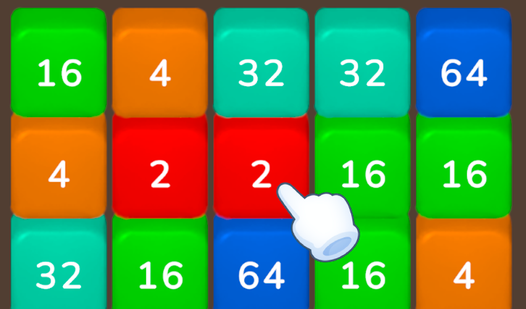
The 2048 number-merging mechanic has inspired countless variations, and Tiles 2048 is one of the more successful ones. The sliding grid familiar from the original is here, but the tile visual design makes the merging feel more tangible — you're not just pushing numbers around, you're combining physical objects. The strategy is identical to classic 2048 (keep your highest tile in a corner, build chains from there), but the format gives it fresh energy. Great for 2048 enthusiasts who want the same strategic challenge in a slightly different wrapping.
19. Pairs of Tiles
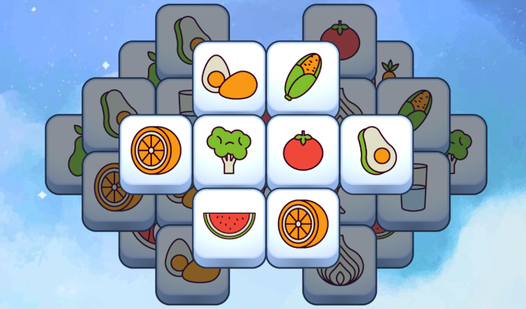
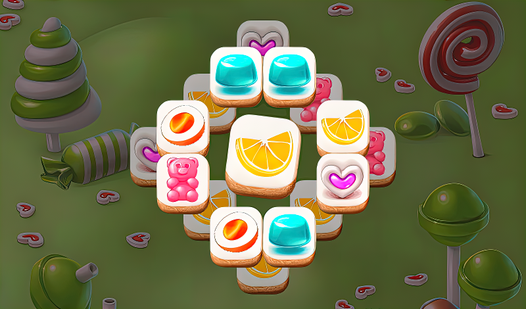
Reliable, clean, and very well made. Pairs of Tiles executes the pair-matching format without fuss — no gimmicks, no unnecessary complexity, just well-designed boards and a satisfying match-and-clear loop. What makes it consistently enjoyable is the variety of tile sets (geometric, illustrated, symbolic) and the range of board configurations, which keep sessions feeling visually fresh even when the core mechanic stays the same. This is the game to recommend to someone who says they don't really play puzzle games — it's approachable enough to win them over.
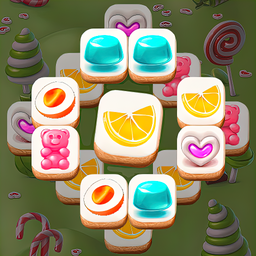
Pairs of tiles
Tap matching sweets to clear the board in Pairs of tiles, a vibrant puzzle experience that blends match-three mechanics with classic mahjong strategy....
▶ Play Free20. Find Your Way to the Tiles (Pairs)
The most distinctive entry on the list. Find Your Way to the Tiles introduces movement as a core mechanic — you navigate a character (or path) through the board to reach and collect matching tile pairs. You can't just tap any tile you see; you have to plan a route to it. This navigational layer turns a familiar matching game into something that feels like a hybrid between a puzzle and a light adventure. The board designs are clever, and the combinations of path-planning and pair-matching create problems that you won't find anywhere else in the best Tiles games catalog.
Best Tiles Games Tips for New Players
Getting comfortable with tile puzzles takes a bit of time, but a few consistent habits will speed up the process significantly.
Clear blocked tiles first. In most games, some tiles are pinned under others and can't be matched until the tiles above them are cleared. If you always grab the easiest visible matches, you can paint yourself into a corner quickly. Identify what's blocked and work toward freeing those tiles intentionally.
Read the full board before your first move. The starting position in a hand-crafted puzzle often hides the solution. Spend thirty seconds scanning before you tap anything — you'll spot setups you'd miss if you acted immediately.
Watch your tray or slot capacity. In games like Three Tiles: Match 3 or Sort Tiles: Tap Away, you have a limited holding area. Filling it with unmatched tiles is how games end prematurely. Always have a plan for what's in your tray before grabbing more.
Use hints as a learning tool, not a crutch. When a hint reveals a match you didn't see, stop and figure out why you missed it before continuing. Understanding your own blind spots makes you better at future boards.
Think in sequences, not single moves. The best Tiles games reward players who think ahead. Ask yourself: if I take this tile now, what does that open up? What does it block? A sequence of three planned moves will consistently outperform three reactive moves.
Switch games when you feel stuck. Tile puzzle thinking is transferable. If you're stuck on a sorting puzzle, playing a pair-matching game for ten minutes often resets your brain in a way that makes the original problem easier when you return to it.
More Tiles Games to Try
The 20 ranked games above cover the genre's best, but the collection runs deeper. Here are eight more free titles worth checking out:
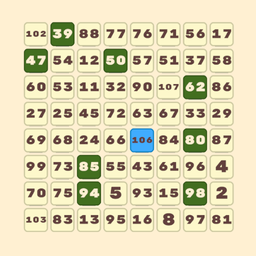
Numbers in ascending order : Tiles
Tap and swap tiles to organize digits from 1 to 108 in the correct ascending sequence. Numbers in ascending order : Tiles challenges your brain by ran...
▶ Play Free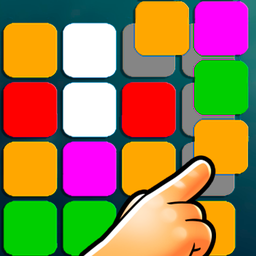
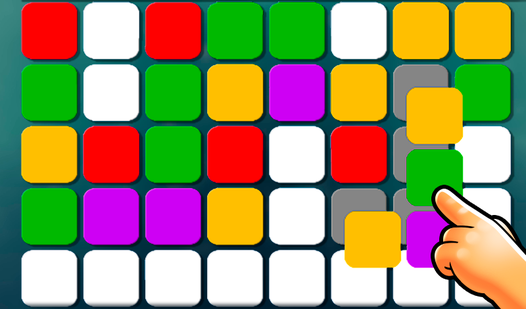
Color Block Blast
Matching games have a way of turning a dull afternoon into a high-stakes strategic showdown. Color Block Blast elevates this experience by forcing you...
▶ Play Free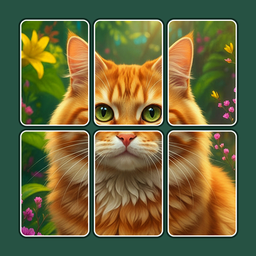
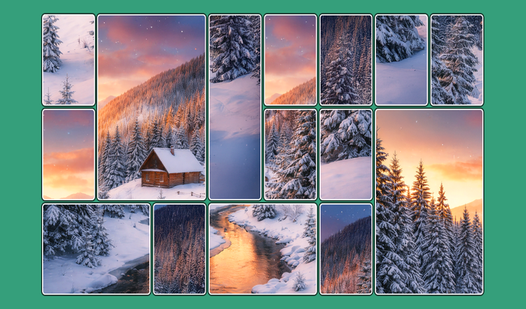
Jigsaw Solitaire
Fans of logic challenges and beautiful visuals will find Jigsaw Solitaire the ultimate way to decompress after a long day. This refreshing take on the...
▶ Play Free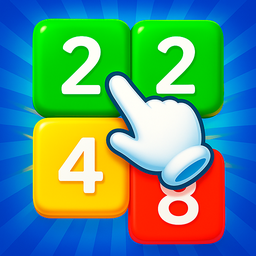
Merge and Blast + 2048
Staring at the clock and waiting for your next meeting to start is the ultimate boredom test. Merge and Blast + 2048 serves as the perfect digital esc...
▶ Play Free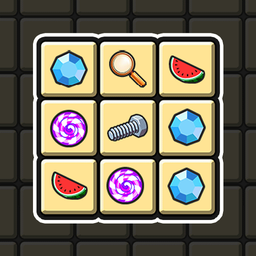
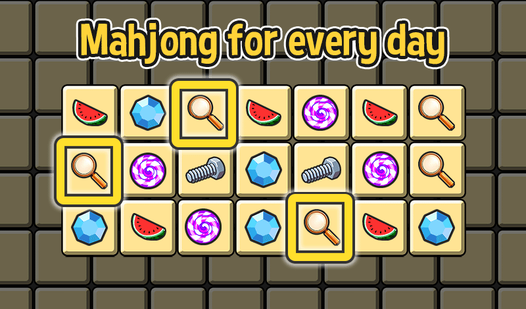
Mahjong for every day
Staring at the clock during a long work break is a recipe for frustration when you just need a quick mental reset. Mahjong for every day serves as the...
▶ Play Free
Mahjong Zodiac
Staring at a blank screen during a midday slump is the fastest way to lose your momentum. Mahjong Zodiac provides the perfect mental reset, blending s...
▶ Play Free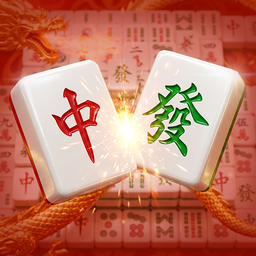
Mahjong Unlimited
Match identical tiles to clear the board in Mahjong Unlimited as you navigate through endless challenging layouts. This classic mahjong experience req...
▶ Play Free