Rolling Ball Games Online Free — TOP 15 Best Picks
If you've ever spent ten minutes rolling a virtual ball through a maze and completely lost track of time, you already know why rolling ball games online free have become one of the most addictive genres on the web. There's something deeply satisfying about physics-driven gameplay — the way a ball bounces, curves, and slides feels both unpredictable and controllable at the same time. Whether you're chasing high scores, solving spatial puzzles, or just need a few minutes of brain candy, ball games deliver every time.
This list pulls together the 10 best ball physics games you can play right now in your browser — no download, no signup, no hassle. Each one has something different to offer, from gravity-defying platformers to merge puzzles wrapped in rubbery physics. Let's get into it.
What Are Rolling Ball Games?
Rolling ball games are browser or mobile titles where the core mechanic revolves around a sphere — you're either controlling it directly (guiding it through levels, avoiding traps) or interacting with balls indirectly (shooting, dropping, or connecting them to trigger chain reactions).
The genre splits into a few distinct flavors:
- Physics platformers — You guide a ball through 3D or 2D levels, managing momentum and gravity. Think marble-run energy but with obstacles and enemies.
- Merge/puzzle games — Balls drop from above or roll across a surface, and you connect same-colored or same-numbered ones to merge and score.
- Shooter variants — You aim and launch balls to match and pop clusters, a style that leans into arc physics and trajectory planning.
- Rhythm & action hybrids — The ball reacts to music or timing prompts, adding an audio-visual layer on top of the motion mechanic.
What unites all of them is physics. The weight, bounce, and roll of the ball matters. That tactile feedback — even in a 2D pixel art game — is what keeps players coming back. Gravity feels real. Collisions feel satisfying. And mistakes feel fair because the physics are consistent.
Rolling ball games also scale well across skill levels. Beginners enjoy the forgiving nature of early levels; experienced players chase optimization and perfect runs. The genre is genuinely accessible without being shallow.
TOP 10 Best Rolling Ball Games Online
Here's the main event. These are the titles worth your time — ranked not by raw difficulty but by how much fun they pack into a browser tab.
1. Yellow Ball 4
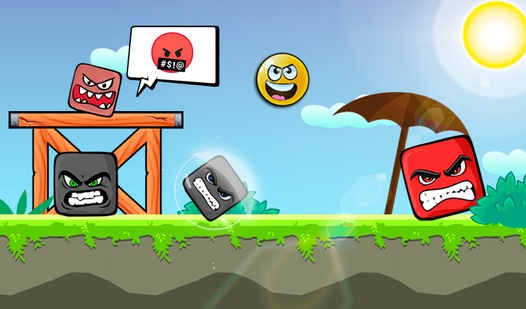
Yellow Ball 4 is the kind of platformer that looks simple on the surface and then immediately humbles you. You control a cheerful yellow sphere across hand-crafted puzzle levels, using momentum and environmental cues to reach the exit. The level design gets creative fast — expect moving platforms, rotating obstacles, and physics traps that require precise timing rather than brute force. It's one of the purest rolling ball games online free experiences available, and the difficulty curve is spot-on.

Yellow Ball 4
Navigate your bouncy hero through vibrant landscapes and dodge tricky obstacles in Yellow Ball 4. You will roll, jump, and weave past square enemies w...
▶ Play Free2. 3D Balls: Merge
3D Balls: Merge takes the merge-puzzle format and gives it a satisfying spatial twist. Balls roll into a container and your job is to connect identical ones before the space runs out. The 3D presentation adds real depth to collision prediction — you're not just thinking in a flat grid, you're eyeballing trajectories and stack dynamics. The progression system keeps unlocking new ball types, which subtly changes the physics behavior and keeps the puzzle fresh.

3D Balls: Merge
Merging shapes is the ultimate casual stress-buster that keeps your brain sharp while your hands stay busy. 3D Balls: Merge takes this satisfying mech...
▶ Play Free3. Ball Buster
Ball Buster does exactly what the name implies. You drop balls onto matching balls below, triggering merges that clear space and score points. The timing mechanic is tighter than most merge games — drop too fast and you'll create chaos; too slow and the stack climbs dangerously. There's a rhythm to good Ball Buster play that feels almost musical once you find it. The physics simulation makes every drop feel weighty and consequential, which is rarer than you'd think in this genre.
Ball Buster
Fans of addictive puzzle challenges will find endless entertainment in Ball Buster as they race to clear the screen. This colorful physics-based exper...
▶ Play Free4. Jump to the Rhythm of Songs! Musical Ball!
This one earns its exclamation points. Jump to the Rhythm of Songs is a rhythm-action game where your ball leaps and rolls in sync with music tracks. The gameplay is genuinely reactive — miss the beat, miss the platform. Hit the beat, and the ball flows beautifully through the level. It's a creative mashup that proves rolling ball mechanics don't have to be purely physics-silent. The audio-visual sync makes this one of the most unique entries on the list, and it's surprisingly replayable because different songs create completely different gameplay patterns.

Jump to the Rhythm of Songs! Musical Ball!
Control a bouncing sphere that syncs perfectly with the beat of the latest tracks to master every level. Jump to the Rhythm of Songs! Musical Ball! de...
▶ Play Free5. Shooting Balls: Connect in a Plate 3D
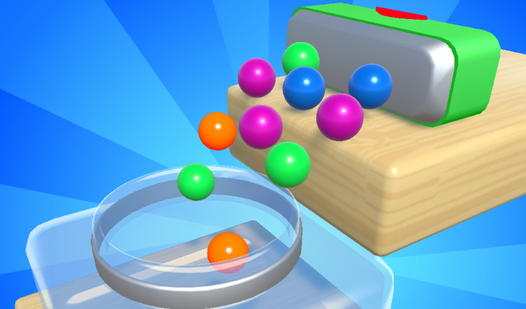
Shooting Balls: Connect in a Plate 3D is a 3D shooter-puzzle hybrid where you launch balls across a plate to connect same-type ones. The trajectory system has a satisfying arc to it — you can bank shots off edges, plan chain reactions, and clear multiple clusters in a single well-placed shot. The 3D view gives you more spatial information than a flat shooter, which rewards careful observation. This is one of those games that looks casual but rewards genuine strategy.

Shooting balls: Connect in a plate 3D
Fans of simple games will find endless enjoyment in the high-stakes precision required by Shooting balls: Connect in a plate 3D. Your primary goal inv...
▶ Play Free6. 2048 3D Balls
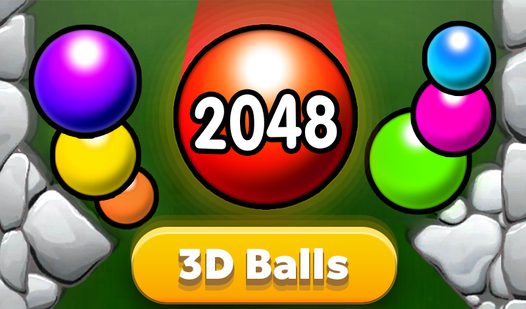
2048 is already an addictive number-merging puzzle — now imagine the tiles are physics-enabled 3D spheres that roll around a container. That's 2048 3D Balls. The numbers double when same-value balls collide, but because the balls are physical objects, they don't sit neatly in a grid. They pile up, roll around, and create unexpected merges. This adds a layer of chaos management that the original 2048 completely lacks. You're thinking mathematically and physically at the same time, which is a genuinely novel combination.
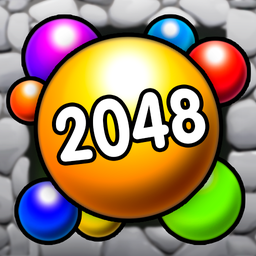
2048 3D Balls
Staring at the clock waiting for a meeting to end or just need a quick mental escape from a monotonous afternoon? 2048 3D Balls is the ultimate time k...
▶ Play Free7. Balls Bounce — Merge & Bounce!
Balls Bounce takes merge mechanics and adds a kinetic twist: the balls actually bounce. You drop them from above and they ricochet around before settling, which means the merge outcomes aren't always where you expected. This controlled unpredictability is the whole point — learning to predict bounce trajectories is the skill the game rewards. It's chaotic in a fun way, and the satisfying thwack of a well-executed multi-merge is genuinely rewarding.

Balls Bounce - Merge & Bounce!
Drop colorful spheres onto the grid to watch them collide and generate massive stacks of cash. Every bounce adds to your total earnings, allowing you ...
▶ Play FreeAlso worth checking out in this space:
2048 Ballz
Aim your shots carefully and release to drop numbered spheres into the playing area. 2048 Ballz challenges you to collide matching digits to merge the...
▶ Play Free
Balls GrandGames
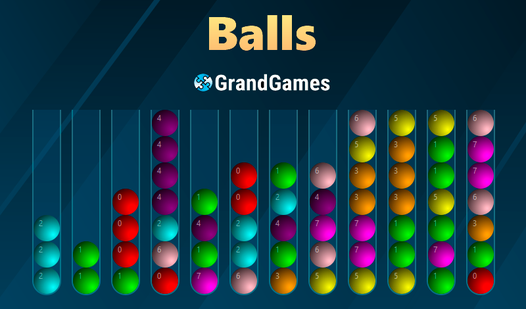
Organize colorful spheres into their matching glass vials until every container holds a single shade. Balls GrandGames challenges your brain by turnin...
▶ Play Free8. Push the Balls! Puzzle!
Push the Balls is a physics puzzle game with a deceptively clean concept: use limited moves to push balls into their target positions. The twist is that balls interact with each other — push one and it might nudge another off course. Every level is a spatial reasoning challenge that requires you to mentally simulate ball-to-ball physics before committing to a move. It's one of the more cerebral entries on this list, and the satisfaction of solving a tricky layout cleanly is hard to beat.
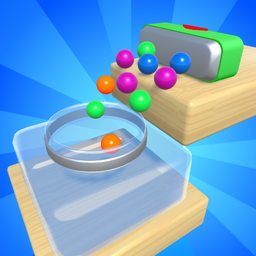
Push the balls! Puzzle!
Fans of brain training games will find Push the balls! Puzzle! to be an incredibly addictive challenge that puts your logic to the test. This physics-...
▶ Play Free9. Funny Balls
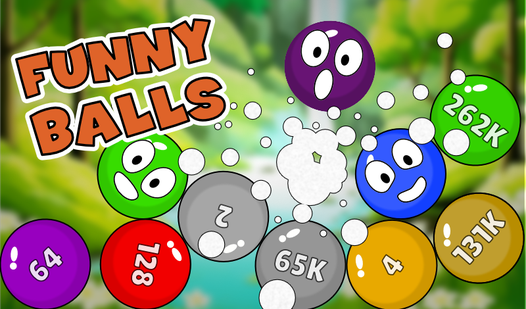
Funny Balls brings the 2048 formula into a more relaxed, playful package. Numbered balls drop into a well, collide with same-value neighbors, and merge upward. The "funny" part comes from the wobbly physics — balls squish slightly on impact, stack in improbable ways, and occasionally tumble out of configurations you thought were stable. It's a great low-pressure entry point for players new to merge-ball games, and the visual style keeps things light even when the stack gets dangerously tall.

Funny balls
Physics-based puzzle games turn simple mobile interactions into addictive sessions that test your spatial awareness and strategic planning. Funny ball...
▶ Play Free10. Merge the Balls: Candy
Merge the Balls: Candy closes out the list with a candy-coated aesthetic and a surprisingly deep merge system. Balls come in candy themes and connect when matched, triggering satisfying pop animations and chain reactions. The candy visual language (each ball looks like a different sweet) makes it instantly readable — you always know what you're working with. It's the most visually cheerful game on the list, but don't mistake that for a lack of depth. Late-game boards get genuinely complex.

Merge the balls: Candy
Matching similar objects is a timeless way to test your reflexes and strategy in a digital space. Merge the balls: Candy takes this classic concept an...
▶ Play FreeAdditional picks worth a spin:

Merge Balls: New Year!
Physics based puzzle games turn simple matching into a high stakes race against gravity and clutter. Merge Balls: New Year! takes this addictive conce...
▶ Play Free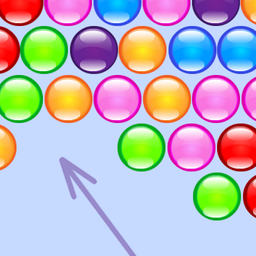
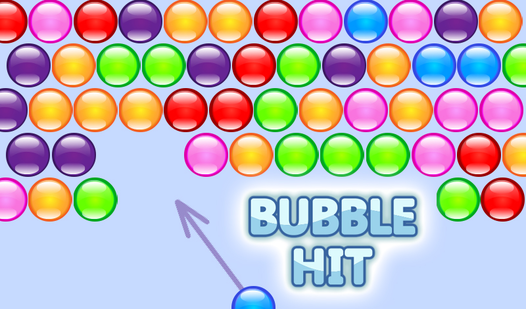
Bubble Hit
Classic bubble shooter games remain the ultimate test of patience and precision for anyone seeking a quick mental workout. Bubble Hit puts a refreshin...
▶ Play Free
Car Football
Sports fans and adrenaline junkies will love the high-octane spectacle of Car Football where speed meets precision. This addictive experience pits you...
▶ Play FreeBall Physics Games vs Platformers
A question that comes up a lot: what's actually different about a ball physics game compared to a standard platformer?
In a traditional platformer, the character moves in precise, grid-friendly ways. Jump height is fixed. Landing is always on a flat surface. The physics are largely predictable by design — the game wants you to succeed through timing, not through understanding force and momentum.
Ball physics games flip this. The ball has mass. It accelerates down slopes. It decelerates on friction surfaces. It bounces at angles that depend on velocity. When you collide with an obstacle, the result isn't scripted — it's simulated.
This creates a fundamentally different relationship between player and game. You're not memorizing jump arcs; you're developing an intuition for physics. That's why even simple ball games tend to have a higher skill ceiling than they appear — the gap between "completing a level" and "completing it optimally" is huge, because optimal play requires genuinely understanding the physics engine.
Platformers reward pattern recognition. Ball physics games reward physical intuition.
That said, many great games blend both. Yellow Ball 4, for example, has platformer-style level design built around physics-driven movement. The categories aren't mutually exclusive — they're more like axes on a spectrum.
The merge-puzzle variants (3D Balls: Merge, 2048 3D Balls, Funny Balls) sit at a different point on this spectrum. They're not platformers at all — they're puzzle games where physics determines outcome rather than a rule system. Same genre umbrella, completely different feel.
Tips for Mastering Ball Control
Whether you're playing a physics platformer or a merge puzzle, a few principles apply across almost all rolling ball games online free:
Respect momentum
In physics-based ball games, stopping is as important as moving. Beginners often focus entirely on reaching the goal and forget that overshooting is just as fatal as undershooting. Practice controlled deceleration — find the friction surfaces, use walls as brakes, and don't commit to full speed until you know what's ahead.
Read the surface before moving
Before rolling your ball into the unknown, observe the level geometry. Where are the slopes? Where do surfaces drop off? What objects can the ball interact with? One or two seconds of observation before each run saves you from repeated restarts.
Use walls strategically
In shooter and bounce variants, walls aren't obstacles — they're tools. A banked shot off a wall can hit clusters that a direct shot can't reach. Practiced players often specifically look for wall-bank opportunities because they unlock otherwise impossible clearing sequences.
In merge games, manage the stack height
The most common mistake in drop-merge ball games is filling the bottom layer too densely before triggering merges above. This creates a pressure situation where the stack grows faster than you can reduce it. Try to trigger chain merges early and often, even if they're not "optimal" — keeping the stack low gives you breathing room.
Prioritize chain reactions
One deliberate chain reaction that clears four balls is worth ten random drops. Before each placement in a merge game, ask: does this trigger a chain? If yes, does the chain benefit you? If no chain is available, place for future chain setup rather than short-term score.
Adjust to the game's specific physics
Every game in this list has slightly different physics behavior — different bounciness, different gravity, different friction. Spend the first two or three levels just feeling out how the ball behaves rather than trying to optimize your score. That calibration period pays off enormously in later levels.
Accept that some runs are learning runs
Physics games involve randomness and emergent outcomes. Sometimes you'll set up a perfect merge sequence and a ball lands sideways. That's not a failure — that's information. The best players treat bad runs as data, not punishment.