How to Play Point and Click Adventure Games Online
If you want to play point and click adventure games online, you've picked one of the most satisfying gaming genres available in a browser. No reflexes required, no controllers, no downloads — just your cursor, a mystery, and the quiet satisfaction of making things click into place. This guide walks you through everything from the basics of how the genre works to real strategies for solving puzzles that seem impossible. Let's get into it.
What are point and click adventure games?
Point and click adventure games are a genre built on three pillars: exploration, storytelling, and puzzle-solving. The player navigates through scenes by clicking, interacts with objects and characters by clicking, and builds up an inventory of items that eventually unlock new areas or crack puzzles wide open.
The genre has a long history. It started taking shape in the early 1980s as an evolution of text-based adventure games. Once graphics arrived, designers could build actual scenes — rooms, forests, pirate ships, haunted mansions — and let players click through them. Games like Maniac Mansion, Monkey Island, King's Quest, and later Myst defined the formula for an entire generation. These weren't games you blasted through. They were games you lived in for a while.
What separates this genre from most others is the pace. There's no countdown timer. No enemy barreling toward you. You think, you look carefully, you try things. When you finally solve a puzzle that had you completely stumped, the payoff lands differently than any action-game victory. It feels like you did something, not your reflexes.
The genre went quiet for a few years in the early 2000s when 3D action games dominated. But it never disappeared — it migrated to browsers and mobile, found a new indie scene, and came back stronger. Today you can play point and click adventure games online for free without installing anything. Classic titles have been preserved in browser form, and new ones ship constantly. The genre is in better shape than it's been in decades.
Basic mechanics — how pointing and clicking works
The controls are about as simple as it gets. You have a cursor. You move it around the screen. You click things. That's 90% of it. But there are layers worth understanding before you sit down with your first game:
Moving through the world In most games, clicking an empty area of the scene moves your character there. Some older games use a "direct control" cursor that always stays where you click. Either way, your first job in any new scene is to walk around and get a sense of the space — what's in the foreground, what's in the background, what looks interactive.
Cursor changes are your signal When the cursor shifts — from an arrow to a hand, a magnifying glass, a gear, or an eye — you've found a hotspot. Hotspots are interactive zones: objects, characters, doors, drawers, switches. Left-clicking usually triggers the default action (pick up, open, talk). Many games offer a right-click menu with additional options: Look, Use, Push, Pull, Talk To. Read those options. "Look" alone can give you critical clues even when you can't pick something up yet.
The inventory Everything you collect appears in an inventory, usually a bar at the bottom or side of the screen. This is your toolkit. To use an item on something in the environment, select the item from your inventory, then click on the target. To combine two items, drag one over the other in the inventory panel. Combinations often unlock entirely new items that were impossible to get otherwise.
Dialogue trees Characters talk. A lot. In most point and click games, conversations branch based on your choices — you click a dialogue option, the character responds, more options appear. Dialogue isn't filler. Characters drop hints constantly. Pay attention to what they say they need, what they're worried about, what they're missing. It's nearly always a puzzle pointer in disguise.
Hotspot hunting Every scene has clickable spots, and some are deliberately subtle. If you're stuck, the classic technique is to slowly drag your cursor across the entire scene — walls, floor, ceiling, corners — waiting for the cursor to change. Designers hide things on purpose. The exit to a new area might be tucked in a corner you never thought to check.
The interface takes about five minutes to internalize. The challenge isn't operating it — the challenge is the puzzles themselves.
Best free point and click adventures to play now
The browser is loaded with click-based games that scratch the same itch as classic adventure titles. While true point and click adventures build around narrative puzzles, there's a thriving world of free browser games that put satisfying clicking mechanics front and center — great entry points that build your instincts and give you that "one more session" pull.
Kitty's Clicker: The Evolution of Food is as charming as its name suggests. You click your way through a food evolution journey with a kitty as your guide, earning coins and combining items to unlock new stages. The progression loop is immediately addictive, the art style is genuinely cute, and the combination mechanic echoes the item-combination logic that adventure game veterans love.
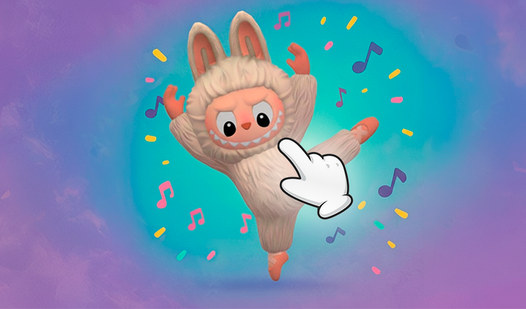
Labubu Toy Clicker wraps clicker mechanics in rhythm and music. You click in sync with a dancing Labubu toy and its soundtrack, racking up points as the beats drop. It's short-session gaming done well — the kind of thing you pick up for five minutes and find yourself still playing twenty minutes later.

Labubu Toy Clicker - Dancing, Memes, Songs, Rhythm
Rhythmic clickers turn simple tapping into a high-energy performance where every beat counts toward your ultimate success. Labubu Toy Clicker - Dancin...
▶ Play FreeGooJitZu Battle: Clicker takes a more action-forward approach. You're fighting off enemies using the power of Goo, clicking to build up combat power, and pushing deeper into escalating challenges. The combat framing gives it real staying power — progression feels earned rather than automatic.
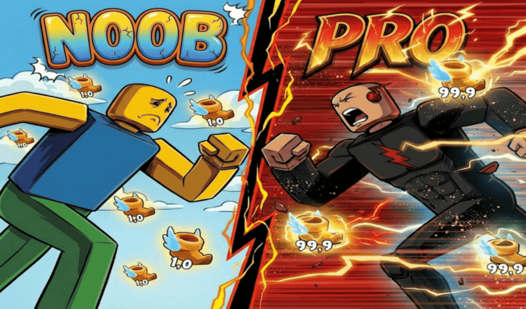
For something that rewards pure speed, Obby: Speed per Click 99,9 is intense in the best way. Every click accelerates your character through obstacle-filled levels — the faster you click, the faster you move. It's completely different energy from a slow-burn puzzle game, but it sharpens the kind of deliberate, focused clicking that adventure game veterans develop naturally over time.
Obby: Speed per Click 99,9
True speed addicts know that every millisecond counts when you are sprinting toward the finish line of a high-stakes obstacle course. Obby: Speed per ...
▶ Play FreeAnime fans should stop on Clicker "Bungou Stray Dogs" — built around the beloved anime series, with your clicks generating coins to summon characters from the show. The progression system is satisfying, the fan service is strong, and it has that one-more-click pull that's hard to put down once you're in.

Clicker "Bungou stray dogs"
Tap your way through the streets of Yokohama as you build a massive roster of powerful ability users in Clicker Bungou stray dogs. This addictive anim...
▶ Play FreeAll five of these games are free, browser-based, and need nothing installed. Open the tab, pick one, and you're playing.
Tips for solving adventure game puzzles
Puzzles are where point and click games either win you over or lose you completely. The good news: most puzzle frustration is fixable with better habits. Here's what actually helps:
Cover the whole scene before doing anything New players rush to interact with the first interesting thing they see. Experienced players do a full sweep first — click everything in the environment, read every description, note every locked door and every object they can't pick up yet. The full picture changes how individual clues read.
Read all the dialogue, even the boring parts Dialogue in these games is crafted carefully. A character who seems to be rambling about their garden is probably telling you exactly what item you need to find. Characters who refuse to talk about something usually have a reason — and making them comfortable enough to open up is its own sub-puzzle. If you skip lines, you skip clues.
Think about what the puzzle needs, not what you have If you can't get through a locked door, stop staring at the door. Ask: what would open a door like this? A key. Where would a key be? Maybe on a person. How do I get that person to hand it over? Now you have a direction, even if the answer is several steps away.
Lateral thinking beats literal thinking Adventure game logic runs on its own internal rules, and those rules aren't always real-world rules. A bucket might not carry water — it might carry sand. A fish might not be food — it might be a distraction. When the obvious interpretation fails, flip it. Ask yourself: what else could this possibly be used for?
Track unresolved threads Every locked area, every NPC who says "come back later," every object you couldn't pick up — these are all puzzle threads left hanging. Keep a mental (or actual) list of them. Every time you get a new item, run through that list. Adventure games are often about suddenly realizing what old clue connects to what new object.
Review your inventory regularly New players collect items and forget them. Check your inventory every time you enter a new scene. Items sometimes react to other items in ways that aren't obvious until you're looking at them side by side. And combining items you picked up twenty scenes ago with something new is one of the genre's oldest tricks.
Take the break seriously Walking away from a puzzle for ten minutes genuinely works. Your brain continues processing in the background. You'll often return with the answer already sitting in your head, fully formed, and wonder why it took so long to see. If you've been stuck for more than twenty minutes, step away.
Point and click vs other adventure game styles
Adventure games show up in multiple forms, and knowing the differences helps you pick what actually fits how you like to play:
Point and click vs action-adventure Action-adventure games like Zelda or Tomb Raider mix exploration with real-time combat, platforming, and timing windows. Reflexes matter. Point and click games strip all of that away — no enemies to dodge, no timing to nail, just you and the puzzle space. One is physical; the other is entirely mental.
Point and click vs visual novels Visual novels are story-heavy with minimal world interaction. You read, you make dialogue choices, you watch things unfold. Point and click adventure games give you a world to physically explore — you move through environments, manipulate objects, combine items. The story is there in both, but one lets you do things in the world and one mostly has you observe it.
Point and click vs escape rooms Browser escape rooms and point and click games share the same DNA: inventory systems, hotspot hunting, combination puzzles. The difference is scope. Escape rooms are tight, single-room challenges usually solvable in twenty to forty minutes. Point and click adventure games build across multiple scenes, have longer narratives, and often develop characters over hours.
Point and click vs walking simulators Walking simulators prioritize atmosphere and passive storytelling. You move through a world, find notes, absorb a story. There's no puzzle to crack — you're experiencing something, not solving something. Point and click games require active engagement. Both can be atmospheric and narrative-rich; they just ask different things of the player.
Point and click vs clicker games This one catches people off guard. Clicker games (sometimes called idle games or incremental games) share the click-heavy interface but operate on completely different logic. You click to accumulate a resource — coins, power, points — and spend those resources on upgrades that make you accumulate faster. The satisfaction is in watching numbers grow and unlock new multipliers. Adventure games use clicking for exploration and puzzle interaction; clicker games use clicking as the core economic engine.
Both genres have devoted audiences, and plenty of players love both. The fundamental feedback of "I clicked something and something happened" is satisfying across all of them.
More free click-based games worth having in your rotation:
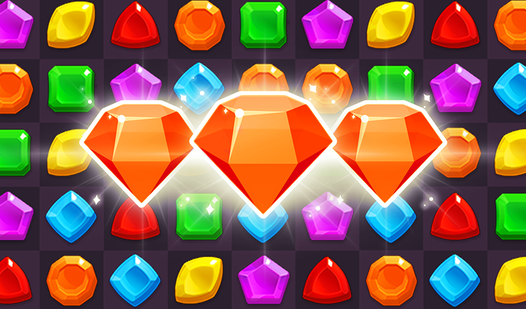
The Mystery of Jewels: Adventure blends match-3 puzzle mechanics with an adventure game framing — a combination that genuinely works for players who like layered puzzle types in the same session.
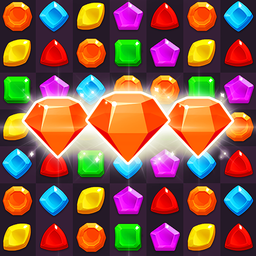
The Mystery of Jewels: Adventure - Match 3
Matching shimmering crystals is the ultimate way to sharpen your brain and satisfy the urge for rapid-fire puzzle action. The Mystery of Jewels: Adven...
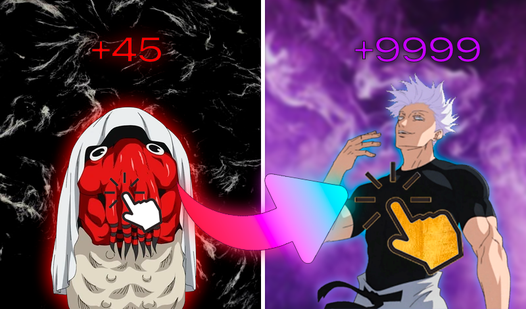
▶ Play FreeClicker: Jujutsu Kaisen Evolution builds up character power through the clicking loop, weaving in characters and progression from the Jujutsu Kaisen universe. Strong choice if you're an anime fan who also likes incremental gameplay.

Clicker: Jujutsu Kaisen Evolution
Tap your way to supremacy as you navigate the intense world of Clicker: Jujutsu Kaisen Evolution by unleashing powerful curses with every single click...
▶ Play FreeSimba Clicker is a softer, more casual experience — low-stakes and relaxing, great for shorter sessions when you want something chill rather than challenging.
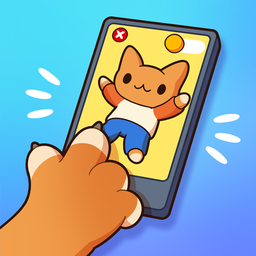
Simba Clicker
Tap the screen repeatedly to help a charming kitty manage his growing toy empire in Simba Clicker. Every single click fills the cash register, allowin...
▶ Play FreeBreak the Toy: Fun Pinata Clicker delivers on exactly what the name promises. Click the pinata, watch it break, collect what spills out. Simple, weirdly satisfying, and oddly therapeutic.
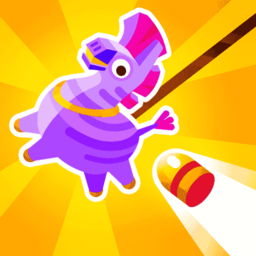
Break the Toy: Fun Pinata Clicker
Stuck in a dull meeting or waiting for your coffee to brew and need a quick mental escape? Break the Toy: Fun Pinata Clicker is the ultimate stress bu...
▶ Play FreePump Car Clicker! frames the incremental loop around vehicle progression — click to generate fuel, upgrade your car, unlock new stages. Good for idle-session play where you check in, click a bit, and let it run.
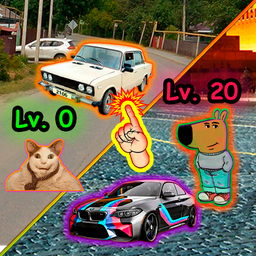
Pump Car Clicker!
The evolution of the clicker genre has reached new heights with Pump Car Clicker! which turns simple tapping into a high-octane automotive journey. Yo...
▶ Play Free