Ocean Escape Review: Tips, Tricks & How to Play
Ocean Escape has quietly built a loyal following among browser game fans, and if you're here for a genuine ocean escape review, you're in the right place. This guide covers the full picture — what the game actually is, how the controls work, what trips players up, and the best strategies for getting through the trickier sections. Plus a solid lineup of similar games to keep the fun going when you're done.
Ocean Escape Review
Let's start with the basics. Ocean Escape is a point-and-click puzzle escape game set against a distinctly aquatic backdrop. You play as a character who wakes up (or simply finds themselves) trapped inside a series of flooded chambers, underwater ruins, and submerged shipwrecks. Your goal each level is the same: find the exit. How you get there is a different story every time.
The first thing most players notice is the atmosphere. Ocean Escape commits fully to its underwater theme — and that commitment shows. Levels feature coral-covered walls, bioluminescent lighting effects, flooded chambers with slowly rising water, old nautical equipment, and plenty of environmental storytelling. It doesn't feel like a generic room with an ocean skin slapped on. The setting shapes the puzzles in meaningful ways, which is rarer than it should be in browser escape games.
The audio design holds up its end too. Ambient underwater sounds — soft currents, distant echoes, muffled movement — create a calm baseline that flips into tense, urgent music when a timer kicks in or a danger event triggers. It's a simple trick, but it works. You feel the switch from "exploring" mode to "move fast" mode before you even register what changed.
From a design standpoint, the ocean escape puzzle loop is clean: examine your environment, collect usable items, figure out what goes where, trigger the exit mechanism, move on. No combat, no complex progression systems, no currencies. It's a focused experience that respects your time. Most levels can be cleared in 5-15 minutes once you understand the logic, though a few in the back half of the game will test your patience.
Where Ocean Escape earns its reputation is in pacing. Most free browser escape games fall into one of two traps: either every puzzle is trivially easy (boring after five minutes) or the difficulty spikes randomly without warning (just frustrating). Ocean Escape sits comfortably in the middle for the majority of its runtime. The early levels genuinely teach you how the game thinks, and the harder levels extend those same ideas rather than introducing completely alien mechanics at the last minute.
There are some rough edges. A handful of puzzle solutions rely on logic that feels like a stretch — you'll solve them, look at the answer, and think "I would never have gotten there from where I was." This happens mostly in levels 12-16, and it's the main complaint that shows up repeatedly from players. It doesn't ruin the experience, but it's worth knowing that you'll almost certainly need external help at least once or twice on a full playthrough.
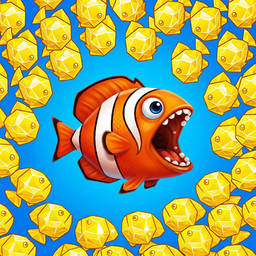
Oceanscapes - Secrets of the Lost Treasures
Swap shimmering underwater tiles to create explosive combinations and clear your path through mysterious ocean depths. Oceanscapes - Secrets of the Lo...
▶ Play FreeIf Ocean Escape's underwater aesthetic got your attention, Oceanscapes: Secrets of the Lost Treasures is the perfect companion game. It's a hidden object adventure set across stunning ocean environments, with a slower, more meditative pace. Where Ocean Escape gives you puzzles under pressure, Oceanscapes lets you breathe and explore. The two games make an excellent pair — tense escape sessions balanced out by relaxed treasure hunting.
Ocean Escape Gameplay and Controls
Ocean Escape is deliberately simple to pick up. The controls are designed to work in a browser window without any configuration, and the learning curve from "what do I do" to "I understand this game" is genuinely short.
Primary Controls
The mouse does almost all the work. You click objects to interact with them, pick up items, open drawers, push buttons, and navigate menus. When you hover over something interactive, a subtle highlight or cursor change usually signals that something's there. This keeps the experience intuitive — you're reading the environment, not hunting for invisible pixels.
Your collected items appear in an inventory panel, typically docked at the bottom of the screen. To use an item, click it to select it, then click where you want to apply it. Some versions of the game support drag-and-drop, but click-to-select is the reliable universal method.
In levels with light platforming — usually later-game sections — you'll use WASD or arrow keys for character movement. These sections are less common than the pure point-and-click puzzles, but they add variety and occasionally require timing as well as logic.
Some interactive objects also respond to the spacebar for specific triggered actions, particularly in levels with mechanism sequences. The game almost always gives you a visual cue when spacebar is the right input — a button prompt or a highlighted element.
Puzzle Types You'll Encounter
Ocean Escape doesn't rely on just one kind of puzzle. Over the course of a full playthrough, you'll encounter:
- Key and lock sequences — find the key, find the matching lock, open the path. Simple foundation, but often made complex by keys being hidden behind other puzzles.
- Color code panels — a colored sequence is displayed somewhere in the level, and you need to reproduce it on a panel elsewhere. Writing these down saves real time.
- Item combination — two separate objects in your inventory can sometimes be merged into a single compound tool. The game doesn't always announce when this is possible.
- Environmental triggers — pushing levers, activating pressure plates, or filling/draining water chambers in sequence.
- Logic puzzles — number sequences, symbol matching, directional codes. These tend to be the most isolating puzzles for players who aren't wired for that kind of thinking.
How Long Is the Game?
A relaxed first playthrough without guides runs 3-5 hours for most players. Experienced escape room fans who recognize common puzzle patterns can finish in closer to 2 hours. Players who hit walls on the harder levels might spend considerably longer — especially on the cryptic multi-step sequences in the later chapters.
There's automatic save progress, so you won't lose your place if you close the browser between sessions. Individual levels don't have mid-level checkpoints though, so closing mid-level means restarting that specific level.
Doodleman Escape! is worth playing alongside Ocean Escape for anyone who loves the escape room format. The aesthetic is completely different — rough, hand-drawn characters and chaotic hand-sketched environments — but the core puzzle logic is the same: find items, combine things, unlock the path forward. It's a great palate cleanser when you need a break from the underwater setting.
Tips and Tricks for Ocean Escape
This section is the practical core of the ocean escape review. These tips come directly from patterns that trip up players repeatedly — avoid these mistakes and you'll have a much smoother run.
Always Go Back
The most common mistake in Ocean Escape is treating explored areas as "done." The game frequently layers its puzzles: solving one thing changes the state of something you already clicked on. A drawer you emptied earlier might now have a second compartment. A panel you couldn't open before might respond to an item you just picked up elsewhere. Get into the habit of making a full circuit of the room every time you pick something up or solve a sub-puzzle.
Write Down Color and Number Codes
Ocean Escape uses color sequences and number codes regularly as locking mechanisms. These clues appear in the level environment — painted on walls, embedded in coral formations, displayed on broken monitors, or encoded in the positions of objects. The gap between finding a clue and finding the panel it unlocks is often several minutes of gameplay. Don't trust your memory. A quick note on paper or a phone photo of your screen will save you a lot of backtracking.
Combine Before You Cross the Room
Before walking to another section to try using an item, check your inventory first. Ocean Escape's combination system is quiet — there's no obvious "combine these" prompt most of the time. Try clicking items onto each other in your inventory whenever you pick something new up. A significant number of the game's solutions involve a combined tool that you build from two simpler items, and players often don't discover this until they've already wasted several minutes.
Flooded Sections: Speed Over Thoroughness
When a level activates a rising water mechanic, the rules change. During normal exploration, thoroughness wins. During a flood sequence, speed is the priority. Scan for the most obviously interactive element in the room — the panel that looks like it needs input, the lever that's clearly meant to be pulled — and work from there. You can explore after the water is drained or the timer resets. Don't inventory-hunt during a flood event.
The ability to stay calm and act quickly under pressure is useful in a lot of games, not just Ocean Escape. Super Arrow Go! is a fast-paced arcade game that builds those exact instincts — quick reads, fast reactions, and the composure to keep functioning when the pace picks up. If you like the tension of Ocean Escape's timed sections, Super Arrow Go's gameplay scratches a similar itch with a completely different format.
The Exit Is Hidden More Often Than You Think
Ocean Escape's level designers enjoy subverting expectations about what an exit looks like. In several levels, the "exit" you're looking for isn't a door at all — it's a hatch in the ceiling, a panel in the floor, a porthole, or a section of wall that slides aside after a mechanism is triggered. If you're confident you've solved the room's main puzzles but can't find the exit, look everywhere: up, down, behind objects, in corners. Some exits only appear after a final trigger is pulled.
Use the Hint System, But Save It
Most versions of Ocean Escape include a limited hint system — usually 3-5 uses per level, and the hints are genuinely useful (they tell you what to do, not vague directional nudges). The instinct for most players is either to use hints immediately when stuck or to never use them at all. Neither approach is optimal. Save hints for moments where you've genuinely been spinning for 5+ minutes. Using them too early wastes a resource; refusing to use them when genuinely stuck just creates frustration.
Audio Feedback Is Part of the Game
Play with sound on if you can. Ocean Escape uses distinct audio cues to signal success (correct item placement, mechanism triggered, puzzle solved) and failure (wrong item, wrong combination). Silence after an action isn't neutral — it usually means you're trying the wrong thing. Players who play muted often miss this feedback loop entirely and spend extra time second-guessing things that the audio would have instantly confirmed.
Obby: Boxer, Escape from the Island! is a great game to have queued up when you want to burn off the puzzle-game brain fog. It's an obstacle course escape experience — less about item logic, more about movement, timing, and physical challenges. The "escape" framing connects it to Ocean Escape, but the actual gameplay is completely different. Good for switching modes between sessions.
Similar Games
Finished Ocean Escape and looking for the next thing? Every game below shares something specific with what makes Ocean Escape good — whether that's the puzzle design, the escape room format, the atmospheric setting, or the satisfying "click" of a solution coming together.
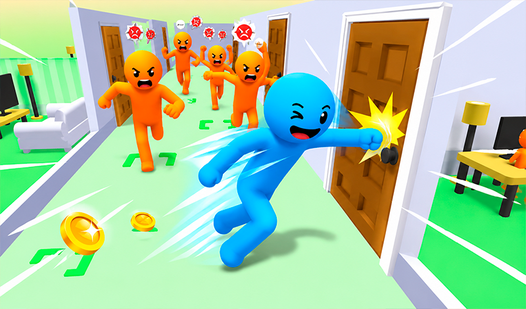
Knock and Run: 100 Doors Escape is one of the most ambitious escape room games on the platform. A hundred doors, each locked differently. Some need keys, some need number codes, some have completely unique mechanics. It's a long game with enormous variety, and if you liked Ocean Escape's puzzle diversity, 100 Doors will keep you busy for a long time.
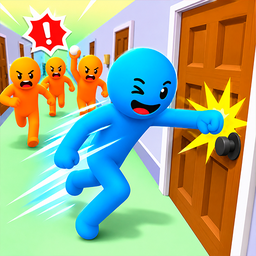
Knock and Run. 100 Doors Escape
Pranking unsuspecting residents in a sprawling hotel is the ultimate test of nerves and lightning-fast reflexes. Knock and Run. 100 Doors Escape turns...
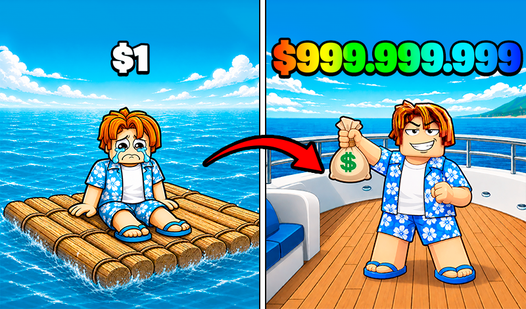
▶ Play FreeObby: Raft Tycoon — Ocean of Money! keeps the ocean setting but flips the genre entirely. Instead of escaping underwater ruins, you're building and expanding a floating raft empire. The idle/tycoon format gives it very different energy from Ocean Escape, but the ocean atmosphere and the "what should I prioritize next?" thinking give it some of the same exploratory satisfaction.

Obby: Raft Tycoon. Ocean of Money!
Navigate a modest platform across an endless blue horizon while gathering essential resources to transform your humble raft tycoon setup into a sprawl...
▶ Play FreeEvade: Escape from the Next Bots takes the escape concept in a tense, action-driven direction. You're not solving puzzles — you're running from AI bots through increasingly unpredictable environments. It's the kinetic, survival-instinct version of "escape." Great for when Ocean Escape's puzzle pace feels too slow.

Evade: Escape from the next bots!
The thrill of being chased by relentless pursuers creates an adrenaline rush that few genres can match. Evade: Escape from the next bots puts you in a...
▶ Play FreeSnake Escape is a brilliantly simple game that applies escape room logic to the classic snake formula. Getting out of the confined space is the goal, and every decision about which direction to move has downstream consequences. Short, replayable, and surprisingly clever.

Snake Escape
Staring at a blank screen during a midday slump is the worst, but finding the right mental spark can turn your mood around instantly. Snake Escape off...
▶ Play FreeObby Lumberjack: Escape from the Lava swaps underwater tension for volcanic tension. Rising lava instead of rising water, obstacle courses instead of point-and-click puzzles, but that same core urgency that Ocean Escape's flood sections create. Players who liked the timed pressure will feel right at home.
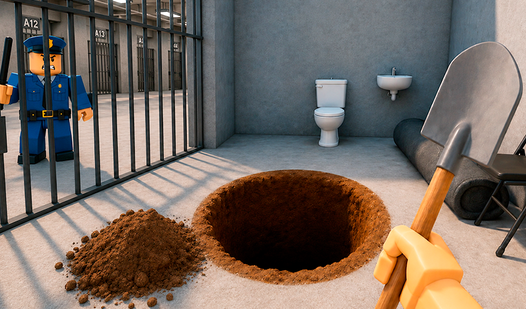
Prison Escape: Digger strips the escape room concept down to something raw and satisfying. You dig your way out. The puzzle layer comes from figuring out where to dig, what to avoid, and how to use limited resources. Very different mechanics from Ocean Escape, but the same fundamental tension of "I need to find a way out of here."

Prison escape: Digger
Stuck in a dull meeting or just waiting for your coffee to brew, you need a way to pass the time that rewards your persistence. Prison escape: Digger ...
▶ Play FreeEscape from the Portal is the most creative setting swap on this list. You're not escaping a room — you're escaping through malfunctioning interdimensional portals. The sci-fi mechanics introduce puzzle ideas that don't show up in any other escape game, and the visual design is genuinely inventive.

Escape from the Portal
Trapped between dimensions, the soul yearns for a way back through the rift that connects the living world to the void. Escape from the Portal is a ch...
▶ Play FreeSpeedBoy 3: Chase in Sochi is a total genre shift — arcade racing with chase mechanics — but it shares Ocean Escape's sense of sustained pressure. If you find yourself wanting kinetic energy after a long puzzle session, SpeedBoy's pace delivers that instantly.

SpeedBoy 3: Chase in Sochi
Stuck in a boring afternoon with nothing to do and a serious need for some digital chaos? SpeedBoy 3: Chase in Sochi is the ultimate antidote to bored...
▶ Play FreeMr. Dude: Online Multiverse Challenges brings variety that's hard to match. It's a rotating mix of minigames and challenges that keeps you from ever settling into a single mental groove. Perfect for players who loved Ocean Escape but want more unpredictability in what the next few minutes will demand.
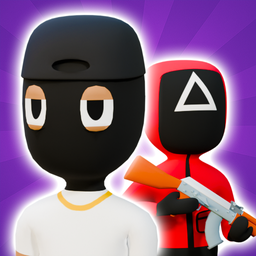
Mr. Dude: Online Multiverse Challenges
Stuck in a boring meeting or just need a brain break to reset your focus? Mr. Dude: Online Multiverse Challenges is the chaotic remedy you need to inj...
▶ Play FreeEscape from KCF is a comedic escape room set inside a fast food restaurant. The humor is genuinely good, the puzzles are cleverly designed around the absurd setting, and the tonal shift from Ocean Escape's serious atmosphere is a welcome breath of air. One of the most memorable free escape games on the platform.

Escape from KCF
Escape from KCF turns a frantic kitchen into a high-stakes arena where you either flee for your life or hunt for dinner. You take control of a nimble ...
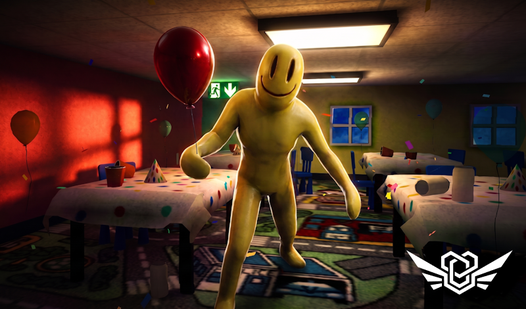
▶ Play FreeEscape the Backrooms: Level Fun! is for players who want something that gets under their skin. Based on the internet horror mythology of "the backrooms," this game uses familiar escape room mechanics but wraps them in genuinely unsettling liminal horror aesthetics. Fluorescent lighting, wrong-feeling geometry, and persistent unease replace Ocean Escape's underwater calm. Highly recommended if you can handle the mood.
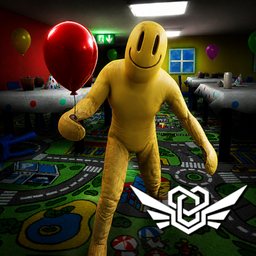
Escape the Backrooms: Level Fun!
Fans of psychological horror will find themselves trapped in a sinister deceptive trap where everything looks like a party but feels like death. Escap...
▶ Play Free