Best Music Games Online Free for Kids (2026)
If you've been searching for music games online free for kids, the selection in 2026 is genuinely better than ever. Browser-based music games have come a long way — from simple piano keyboards you click with a mouse to full rhythm experiences, character-based musical adventures, and creative sound-mixing playgrounds. No app stores, no downloads, no subscriptions. Just a browser tab and a curious kid.
This guide rounds up the very best free music games for kids available right now. We've organized them by type so you can find exactly what your child is in the mood for — whether that's competitive rhythm-tapping, laid-back creative play, or collecting cute animals that sing internet-famous songs.
What Are Music Games for Kids?
Music games online free for kids is a broad category, and that's actually a good thing. It means there's something here for every kind of child, from the hypercompetitive kid who wants to beat every level to the creative type who'd rather mess around with sounds and see what happens.
Here's how the main types break down:
Rhythm games put you in control of timing. Something comes at you — a note, a character, a falling object — and you have to respond at exactly the right moment. The satisfaction when you nail it is immediate and deeply rewarding. Kids who enjoy these games tend to develop a strong natural sense of beat.
Music mixing and creation games are less about precision and more about experimentation. You're given a set of sound elements — loops, melodies, character voices — and you combine them to make something that sounds good to you. There's no wrong answer, which makes these games especially good for kids who get frustrated by failure.
Musical adventure games wrap music inside a story or a character-based world. The music is there to enhance the experience, not as the central challenge. These tend to be more accessible for younger kids.
Creative games with musical themes might involve coloring, collecting, or pet-raising, but they have music woven throughout. They're calmer, often more open-ended, and great for kids who want screen time that doesn't feel frantic.
What unites all of them: they're free, they run in any modern browser, and they don't require any prior musical knowledge. A kid who's never touched an instrument in their life can pick these up in about 30 seconds.
Best Rhythm & Sound Games for Children
These are the games that put sound and beat at the center of the action. Great for play music games for kids sessions when your child wants something active and engaging.
Sprunki: Musical Hit. Merger
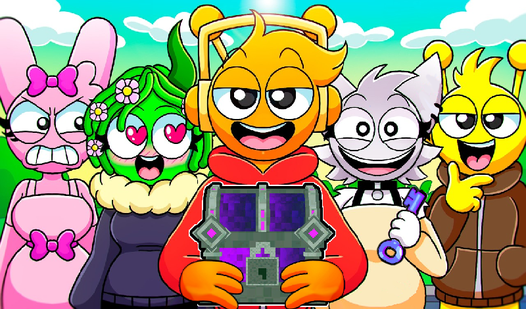
Sprunki has quietly become one of the most played kids' music games around, and this particular version explains why. The core mechanic is a merger — you combine musical elements together to unlock new sounds, new characters, and new combinations. It sounds simple, but the depth creeps up on you. Kids start by merging whatever is in front of them and end up carefully planning which sounds they want to combine next.
The visual presentation is colorful and energetic without being overwhelming. The characters bounce and react to the music in ways that feel satisfying. And the audio quality is genuinely good for a browser game — the musical hits actually sound like hits. Whether a child plays for five minutes or fifty, there's always a next combination to discover.
Breinroth: A Musical Legend
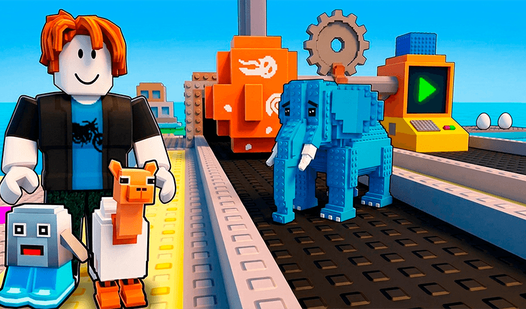
Breinroth sounds strange on paper — you're hatching a funny character and catching eggs along a conveyor belt — but in practice it comes together beautifully. Every action your child takes is tied to a sound, which means they're building a rhythm without even realizing it. The longer they play, the more the sounds layer on top of each other.
This one is particularly good for kids who haven't played many rhythm games before. The timing requirements are forgiving enough that a 5-year-old can have a great time, while the musical complexity grows in a way that keeps older kids interested. The character designs are genuinely funny — there's a lot of giggling involved.
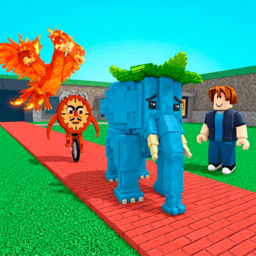
Breinroth: A Musical Legend
Staring at the clock waiting for your shift to end or just need a mental escape from the daily grind? Breinroth: A Musical Legend turns those mundane ...
▶ Play FreeMine Music 2! Lololoshka, Vladus, Kompot!
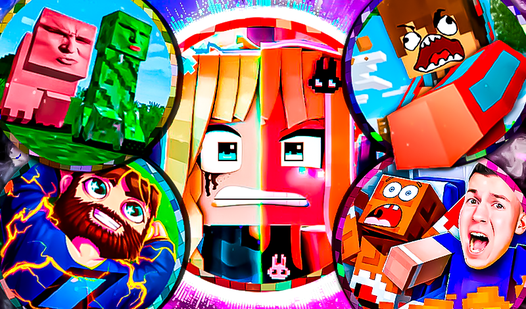
If your child has even a passing interest in Minecraft culture or popular gaming YouTubers, Mine Music 2 is going to land differently than most music games. The game features characters and songs from a well-loved creator universe, which means kids aren't just playing a music game — they're spending time with personalities they already follow and like.
The gameplay lets kids play their favorite Mine-inspired songs and adjust playback speed, which sounds deceptively simple but becomes a genuine experiment in sound as kids crank things up and laugh at the results. It's the kind of game that works great as a shared activity — kids tend to want to show each other what the songs sound like at maximum speed.

Mine Music 2! Lololoshka, Vladus, Kompot!
Tap your way to stardom by spinning your favorite characters to the rhythm of high-energy beats in Mine Music 2! Lololoshka, Vladus, Kompot!. This rhy...
▶ Play FreeMusic Craft! Vladus, Kompot, Tumka, Yuni!
Music Craft extends the Mine-universe music experience with even more characters and more ways to interact with their signature sounds. Each character — Vladus, Kompot, Tumka, Yuni — brings their own musical flavor to the table. Kids can combine elements tied to different characters to create hybrid tracks that feel personally constructed.
The interface is clean and kid-friendly, with large, easy-to-click elements that younger players can navigate without help. Older kids will appreciate that there's genuine depth here — the combinations you can put together are varied enough that it doesn't get repetitive quickly. For kids who are fans of the characters, this is basically interactive fan content that also teaches music fundamentals.

Music Craft! Vladus, Kompot, Tumka, Yuni!
Fans of Minecraft melodies and popular YouTube personalities will find endless entertainment in Music Craft! Vladus, Kompot, Tumka, Yuni!. This rhythm...
▶ Play FreeSteve, Nubik, Lenya, Enderman and Music!
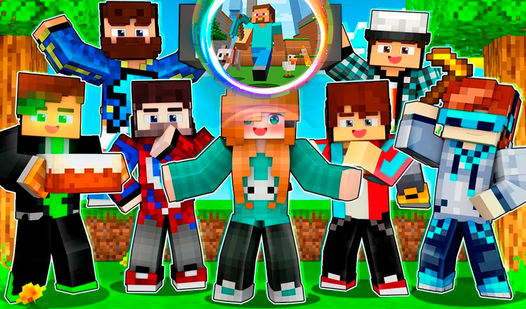
Another gem from the Mine-music world, this one brings together a slightly different cast of beloved blocky characters. Steve, Nubik, Lenya, and Enderman each have their own musical identity, and the game lets kids interact with tracks tied to each of them.
What makes this one stand out is its pacing. It's designed for shorter sessions — around 10 to 15 minutes — which makes it perfect for kids who lose interest quickly or for parents who need to enforce screen time limits without battles. The audio is catchy enough that kids come back to it willingly, and the familiar character faces make it immediately welcoming.

Steve, Nubik, Lenya, Enderman and music!
Tap on your favorite characters to kick off rhythmic beats and earn points in this vibrant musical adventure. Steve, Nubik, Lenya, and Enderman are wa...
▶ Play FreeVladus and Music
Sometimes simpler is better. Vladus and Music strips things back to the essentials: one beloved character, and music. There are no competing mechanics, no complicated interfaces, no learning curve. Kids can focus entirely on the musical experience, which makes this one of the most accessible games on the entire list.
It's a particularly good pick for younger children (think 4 to 6 years old) who find multi-element games confusing but want to feel like they're part of the popular Mine-creator universe. The straightforward nature is also a plus for parents who want a music game experience without having to explain anything first.
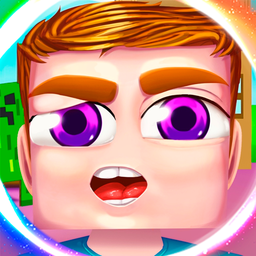
Vladus and music
Staring at the clock waiting for a quick break to pass by can feel like an eternity. Vladus and music turns those dull moments into a high-energy rhyt...
▶ Play FreeSprunki 3D: Cases and Music!
The Sprunki formula gets a full 3D upgrade in this version, and the result is noticeably more impressive than the typical browser game. Kids can open cases to unlock new sounds and musical elements, then use them in gameplay that feels richer thanks to the three-dimensional presentation.
Kids who've already played flat Sprunki games will find the jump to 3D exciting. New players will be struck by how polished it looks and feels for something that runs straight in a browser with no install needed. The case-opening mechanic taps into the same appeal as unboxing videos — every case is a small moment of anticipation and surprise.
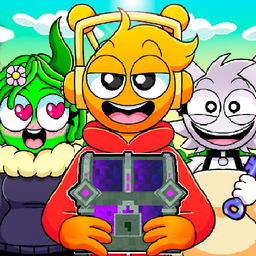
Sprunki 3D: Cases and Music!
Fans of rhythm-based character collecting will find Sprunki 3D: Cases and Music! absolutely addictive. This vibrant title combines the excitement of g...
▶ Play FreeCreative Art & Music Games
These games are calmer, more open-ended, and perfect for play music games for kids sessions when your child wants to create rather than compete. They're also great for mixed-age groups, since there's no pressure to "win."
Lilo & Stitch: Coloring Book for Kids
Few animated movies have stayed in kids' hearts quite like Lilo & Stitch, and this coloring game captures everything that makes the film special. Kids color scenes featuring Lilo, Stitch, and friends while a warm, Hawaiian-flavored musical soundtrack plays in the background. It's calm, it's creative, and it feels like quality time with beloved characters.
The coloring tools are intuitive enough for young children — even 3 and 4-year-olds can fill in color with confidence — while offering enough variety that older kids don't feel patronized. Parents often end up sitting alongside their kids for this one, because the combination of familiar characters and relaxing music is appealing to everyone. It's exactly the kind of screen time that doesn't feel like screen time.

Lilo & Stitch: Coloring Book for Kids
Unleash your inner artist with Lilo & Stitch: Coloring Book for Kids, a delightful browser game where you bring your favorite Disney characters to lif...
▶ Play FreeCat Farm — Meme Music
Cat Farm is an absolute joy. The setup is simple: you collect kittens, and each kitten plays a different meme-inspired musical track. As your farm grows, so does your personal orchestra of feline musicians, all performing their distinctive (and often hilarious) sounds simultaneously.
The appeal is surprisingly wide. Young kids love the cute cats and the chaos of many sounds at once. Older kids recognize the meme tracks and lose it laughing. Parents have been known to forget what age they are while playing it. The game rewards patience and collection — keep adding cats, keep discovering new tracks — which gives it excellent replay value without requiring any skill progression.

Cat Farm - Meme Music
Internet culture has reached peak cute with the bongo cat phenomenon, and now you have the chance to run your own musical sanctuary. Cat Farm - Meme M...
▶ Play FreeMusical Pets! Cute Singing Cats
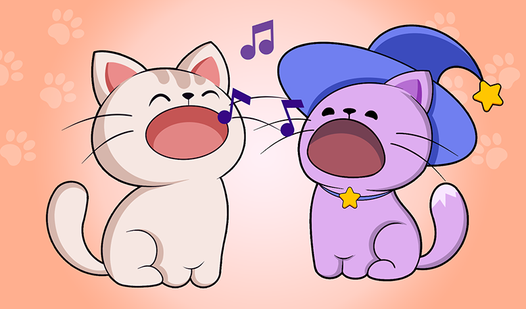
Musical Pets takes the singing animal concept and goes deep on it. Each pet has a distinct musical personality — a different style, a different range of sounds, a different animation style that matches their music. Kids can trigger sounds by interacting with their pets, and the combinations that emerge feel genuinely musical rather than random.
The art direction here is particularly strong. Big expressive eyes, pastel color palettes, satisfying animations when a pet "performs" — it's the kind of visual quality that kids respond to immediately. For children who are already into virtual pet games (Tamagotchi-style or otherwise), Musical Pets feels like a natural upgrade: all the pet care appeal, plus actual music.

Musical Pets! Cute Singing Cats
Rhythm games have a unique way of turning simple melodies into an addictive challenge that keeps you tapping along for hours. Musical Pets! Cute Singi...
▶ Play FreeHow Music Games Help Kids Learn
Parents sometimes wonder whether their child's screen time is doing anything useful. With music games specifically, the answer is a definite yes — and the science behind it is genuinely interesting.
Rhythm and timing. Even casual rhythm games require children to internalize a beat and respond to it. This trains timing awareness that carries over into physical activities like sports, dance, and martial arts — and of course, learning a real instrument later becomes much easier when a child already has a feel for rhythm.
Pattern recognition. Music is fundamentally built on patterns: recurring phrases, predictable chord progressions, verse-chorus structures. Kids who engage with music games regularly get a huge amount of low-pressure practice at identifying and anticipating patterns. This skill generalizes surprisingly well to math and reading.
Fine motor control. Clicking, tapping, and timing interactions in rhythm games is excellent fine motor practice. For younger kids especially, the coordination required to hit the right target at the right moment builds the kind of hand-eye control that also helps with writing, drawing, and other physical tasks.
Listening skills. Active listening — actually paying attention to what you're hearing rather than treating it as background noise — is a skill that doesn't develop automatically. Music games require kids to listen carefully to anticipate what comes next, which builds genuine auditory attention.
Creative confidence. Games that let kids mix sounds, build virtual orchestras, or create their own musical combinations give them a creative outlet that's especially valuable. There's no wrong answer in Cat Farm or Musical Pets — whatever combination of sounds your child produces is their creation, and that sense of authorship matters.
Emotional processing. Music has always been one of the most direct routes to emotional experience. Kids who play music games regularly develop a relationship with sound and its emotional impact. That's a genuinely useful thing to have as they grow up and encounter music in more complex contexts.
None of this means music games are a substitute for lessons or listening to music together as a family. But as a complement to those experiences — and as a first exposure to music for kids who haven't had many — they're remarkably effective.
Tips for Parents — Safe Gaming
Free browser games are a genuine gift, but a few simple habits make the experience smoother for everyone involved.
Check the platform's curation. FreeJoy.games specifically curates its catalog with families in mind. You won't find violent or age-inappropriate content mixed into the music game section. That said, spending a minute on any new game yourself before introducing it to a young child is always a smart move.
Agree on time limits before play starts. The best music games are designed to be engaging — that's literally their job. A clear, agreed-upon time limit established before the session starts (not after your child is already deeply invested in their cat farm) avoids most arguments. For most age groups, 30 to 45 minutes per session is a reasonable baseline.
Play together sometimes. You don't need to be any good at the game. Sitting next to your child, asking questions about what they're doing, laughing at the meme music, and cheering when they unlock something new — that's enough. Kids genuinely love being the expert who shows an adult how something works.
No accounts required. Every game on this list plays without registration. No email addresses, no personal details, no usernames. If a free game ever asks your child for personal information before they can play, skip it.
Headphones make a difference. This is practical as much as anything: headphones improve the game experience (especially for rhythm games where timing details matter) while also keeping the household from being subjected to meme cat music at full volume for 45 minutes.
Look for open-ended games when stress levels are already high. After a long school day or before bed, competitive games with win/loss outcomes can be a poor fit. Cat Farm, Musical Pets, and Lilo & Stitch Coloring Book are all low-pressure, open-ended experiences that work well in calm-down situations.
Keep your browser current. Modern browser games perform best on recent versions of Chrome, Firefox, or Edge. If games load slowly or look glitchy, a browser update often fixes it immediately.