How to Play Zuma: Rules, Strategies & Free Games
Searching for tips on как играть в Zuma? You're in the right place. Millions of players worldwide have gotten completely hooked on this deceptively simple ball-matching puzzle — and for good reason. The concept takes about two minutes to learn, but mastering it can take considerably longer.
Zuma-style games have a very specific pull: colorful chains of balls creep along a path toward a doom point, and you're the only thing standing between them and disaster. Shoot, match, combo, repeat. Miss too often and the chain beats you. Get a chain reaction going and you feel like a genius.
This guide covers everything — the rules, the mechanics, proven strategies for clearing tough levels, and the best free Zuma games you can play directly in your browser right now.
What Is Zuma and Why Is It So Addictive?
Zuma was created by PopCap Games and released in 2003. The original game featured an Aztec-themed stone frog idol that shoots colored balls along spiraling paths, trying to eliminate chains of matching colors before they fall into a stone skull. It was among the first casual games to hit mainstream success, and the mechanic it introduced became a template copied by hundreds of games since.
What makes it so sticky? A few things work together:
- The creeping threat: Unlike games where you have all the time in the world, the chain moves. There's always pressure building.
- The combo rush: Triggering three consecutive chain reactions in one shot produces a genuine rush.
- The close calls: Getting the chain to within one ball of the skull before pulling off a massive clear is pure tension.
- Accessible difficulty: You can enjoy a few casual levels or grind for high scores. Both are satisfying in completely different ways.
The formula has proven so durable that new Zuma-style games are still being released today — across every theme and visual style imaginable, from ancient temples to anime worlds.
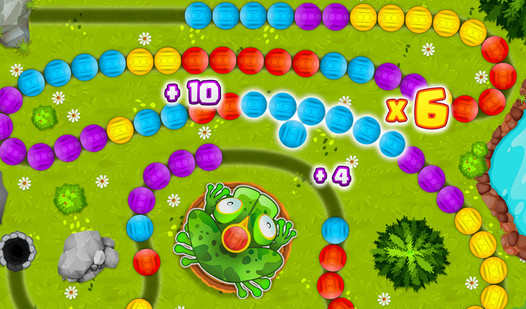
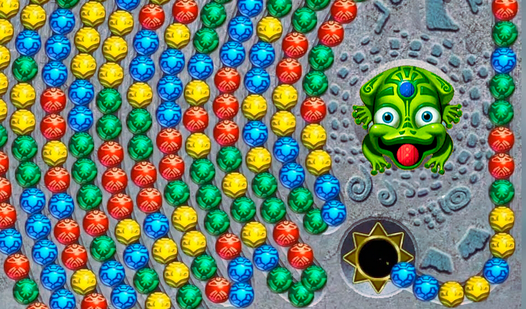
Zuma Deluxe is the classic that started it all for most players. You control a stone frog shooting colored marbles along Aztec paths through increasingly complex spiral levels. The mechanics are pure, the level design is thoughtful, and it remains the benchmark everything else gets measured against.
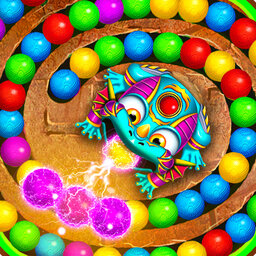
Zuma Deluxe
Fans of logic challenges will find Zuma Deluxe absolutely mesmerizing as they race to clear the screen before the rolling path reaches its end. You co...
▶ Play FreeКак играть в Zuma: Core Rules and Mechanics
Understanding the basics means getting comfortable with a handful of systems that interact with each other in clever ways.
The Setup
Every Zuma game shares the same three fundamental components:
- The Chain: A line of colored balls moving along a fixed path toward a danger zone. It moves continuously and generally accelerates as levels progress.
- The Shooter: Your controllable launcher — usually positioned at the center of a spiral or at a fixed map point. It rotates to aim.
- The Death Zone: A skull, pit, hole, or portal at the end of the path. If the chain reaches it, the level ends.
How Shooting Works
You aim the shooter with your mouse or touch input, then click or tap to fire. Your ball travels in a straight line and inserts itself into the chain wherever it lands.
If the inserted ball matches two or more same-colored balls adjacent to where it lands — including balls from both sides of the insertion point — those balls all disappear together. The chain collapses inward to fill the gap.
Three-ball clears are the minimum. But when the chain collapses after a clear, newly adjacent balls of the same color can also match and disappear — a chain reaction, and this is where the big points come from.
The Preview Ball
Most Zuma games show you both your current ball AND the next one coming. This is crucial for planning. If your current ball doesn't match anything useful in the chain, you can swap — usually right-click on desktop or a dedicated button on mobile — to get the next ball instead.
Don't ignore the preview. Planning even one move ahead dramatically improves your results.
Power-Up Balls
Special balls appear occasionally in the chain or as bonuses:
- Explosion: Destroys a cluster of nearby balls on contact
- Slow: Temporarily reduces chain movement speed
- Reverse: Pushes the chain backward momentarily
- Wildcard/Rainbow: Matches any color
These are lifesavers in tight spots — use them proactively, not desperately.
Zuma Pool takes the core Zuma shooting mechanic and wraps it in a pool-table setting, where the trajectory of your shots bounces off cushioned edges. Precise angle play matters more here than in standard Zuma variants — understanding bank shots and reading the cushion bounce is the difference between beginner and advanced play.
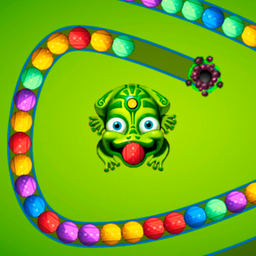
Zuma Pool
Marble shooter games are the ultimate test of reflexes and precision that keep millions of players coming back for just one more round. Zuma Pool take...
▶ Play FreeZuma Strategies: How to Actually Win
The rules get you started. These strategies take you further.
Think in Combos, Not Singles
Single three-ball clears keep you alive but won't clear levels efficiently. Always look for shots that set up chain reactions. When you clear a group, the gap causes the chain to collapse — watch the colors on either side. If they'll combine when the gap closes, you've set up a free chain reaction.
Train yourself to think two moves ahead. Ask: "If I hit this cluster, what happens when the chain collapses on both sides?"
Aim at the Back
When a chain is long and unbroken, clearing the back end is almost always more productive than working on the front. Eliminating balls from the rear shortens the overall chain length. Even if the front creeps dangerously close to the skull, a few well-placed back-of-chain shots can pull the situation back faster than picking away at individual front clusters.
Reserve front-of-chain focus for genuine emergencies only.
Create and Exploit Gaps
When you clear a section, a gap appears briefly. Sometimes you can fire another ball through that gap to land further back in the chain — this is called an angle shot or gap shot. Threading a ball through a narrow opening to hit a specific deeper spot is advanced technique, but it becomes second nature with practice.
Deliberately creating a gap, then watching where the collapse will bring same-colored balls together, is also valid strategy. It often triggers chain reactions you didn't have to directly engineer.
Use Power-Ups Immediately
The most common mistake with the Slow power-up is holding onto it too long. If you have it loaded and the chain is pushing into the danger zone, use it now. A few extra seconds of reduced speed lets you take several precise, high-value shots. Waiting for a "better moment" usually means the chain beats you before that moment arrives.
Same logic applies to Explosion balls — most valuable when clearing a cluster that would otherwise reach the skull, not when things are already comfortable.
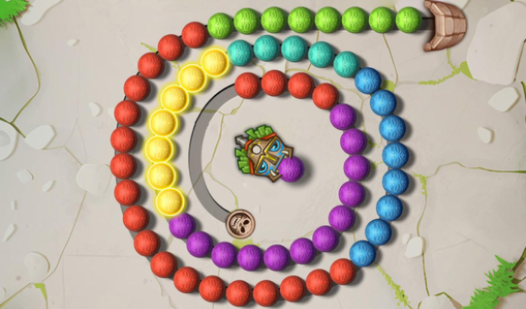
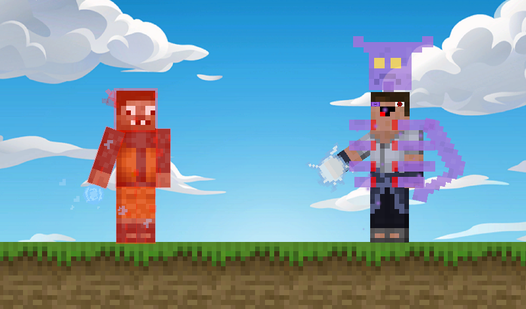
Noob and Pro: Uchiha vs Uzumaki is an anime-inspired Zuma variant where you travel through a game world collecting randomly generated chakra flasks. The randomized element adds genuine replayability — each run of the same level can play out differently. A fresh take that keeps the core Zuma loop intact while adding layers of its own.
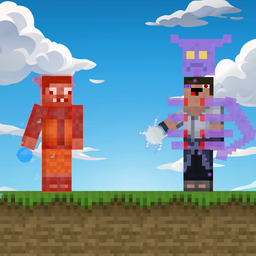
Noob and Pro: Uchiha vs Uzumaki
Stuck in a boring meeting or just need a quick escape from your daily routine, Noob and Pro: Uchiha vs Uzumaki is the perfect remedy for your boredom....
▶ Play FreeTrack Color Distribution
In each level, there are usually only 4–6 colors in play. When you clear large groups of one color, the remaining chain becomes more manageable because there are fewer variants to match. Prioritize the most abundant colors first — reducing color variety makes the endgame significantly cleaner.
Switch Balls Constantly
The swap mechanic is underused by beginners. If your current ball doesn't match anything useful, swap immediately. Don't fire into the chain randomly just to do something — a purposeless shot can break up a cluster you'll need later.
Check the preview before every shot. It takes a session or two to build the habit, but it becomes automatic.
Manage the Danger Zone Actively
Almost every Zuma game highlights the final portion of the path — usually in red or orange — to signal maximum danger. The moment any ball enters that zone, shift full focus to the front of the chain. No combo-building in the middle. Front priority only.
This sounds obvious, but in the middle of a satisfying combo streak, it's surprisingly easy to ignore a ball that's crept into the red zone. One lapse and the level is gone.
Как играть в Zuma: Advanced Techniques
Once the basics are locked in, these techniques separate solid players from great ones.
Reading the Chain Ahead
Experienced players scan the upcoming balls three to five positions ahead rather than just reacting to whatever's at the front. This lets you plan insertions that will trigger chain reactions several seconds after the shot — setting traps in the chain that go off automatically as the balls move along the path.
The Deliberate Miss
Sometimes the right play is to fire a ball at a spot where it won't match, specifically to divide the chain into two shorter segments with a gap between them. A shorter front segment moves faster but is much easier to eliminate entirely. Splitting the chain deliberately is mostly an emergency technique, but it can pull off saves that seem impossible.
Color Priority Shifts
At the start of a level, prioritize abundance — clear the colors that appear most often to reduce chain complexity. In the final phase when only a short tail remains, priority shifts to whatever colors are at the very back of that tail. Clear back to front to avoid orphan balls getting left behind.
Exploit Level Geometry
Spiral and curved paths offer advantages if you read them well. On a spiral path, the center shooter can often hit the chain at multiple different points by adjusting aim slightly. On long linear paths, identifying natural intersection points where the chain doubles back near itself creates opportunities to clear two sections with one well-aimed shot.
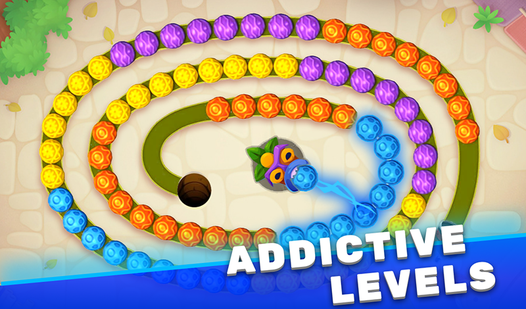
Frogtastic Marble Adventure goes back to frog-shooter roots with vibrant jungle visuals and satisfying marble physics. The levels reward careful, deliberate aiming over rapid fire, and the difficulty curve keeps things engaging well into later stages. One of those games that's genuinely hard to put down once you get started.
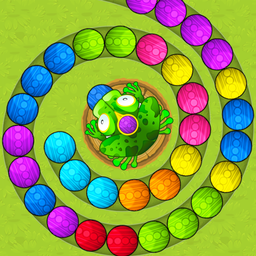
Frogtastic Marble Adventure
Fans of fast-paced arcade challenges will find their new obsession in Frogtastic Marble Adventure. This vibrant puzzle game tasks you with clearing wi...
▶ Play FreeThe Best Free Zuma Games to Play Online
Strategy knowledge needs somewhere to go. Here are the top free Zuma-style games available right now, all playable instantly in your browser with no download required.
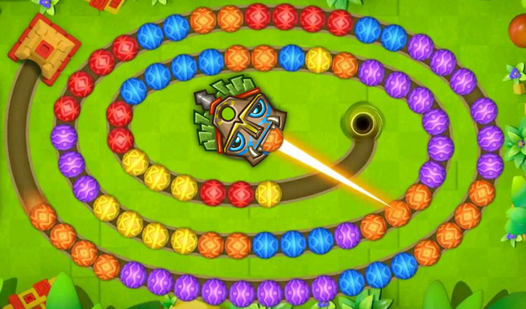
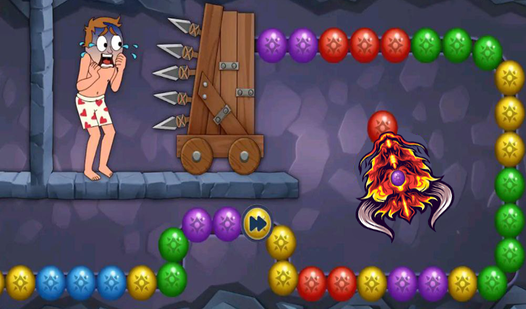
Zuma Way of the Dragon is among the most visually striking Zuma variants, with multi-level progression and richly designed mystical graphics. The dragon theme gives path layouts a fantastical quality — winding through temples and ancient ruins — while keeping the core marble-matching gameplay tight and responsive.

Zuma way of the dragon
Fans of fast-paced arcade challenges will find their new obsession in Zuma way of the dragon. This marble shooter puts your reflexes to the test as yo...
▶ Play FreeZumbla Classic brings clean, no-frills Zuma gameplay with tight mechanics and a solid variety of level layouts. Perfect for players who want the marble-shooting experience without extra complexity or distracting features.
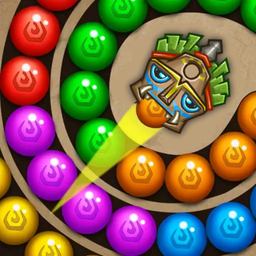
Zumbla classic
Aim your launcher with precision to blast matching colored spheres before the winding chain reaches the golden skull. Every shot counts in Zumbla clas...
▶ Play FreeZumbly is a polished modern take on the formula — smoother animations, well-balanced difficulty, and sound design that makes every combo feel satisfying.
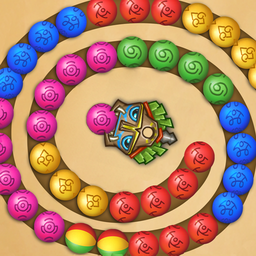
Zumbly
Staring at the clock and feeling that afternoon slump hit harder than usual is the worst part of any workday. Zumbly is the perfect escape when you ne...
▶ Play FreeZumbly 2 builds directly on its predecessor with more levels, tighter controls, and expanded power-up variety. If you enjoyed the first one, this delivers more of what made it click.
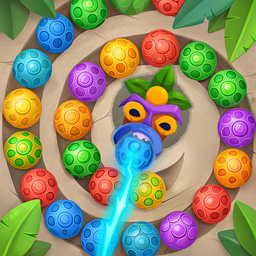
Zumbly 2
Staring at the clock while your coffee brews or feeling that familiar midday slump hit hard? Zumbly 2 is the perfect mental reset that turns your down...
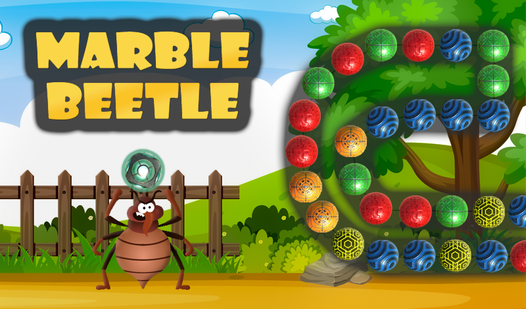
▶ Play FreeMarble Beetle puts you in an insect-themed world with beetles rolling through natural environments. Chain paths take unusual organic shapes — curved and irregular rather than geometric spirals — which keeps the gameplay feeling fresh even for experienced Zuma players.
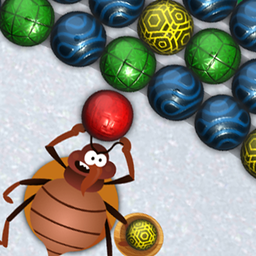
Marble Beetle
Marble games have a unique way of turning a simple objective into a frantic race against the clock that keeps you glued to the screen. Marble Beetle e...
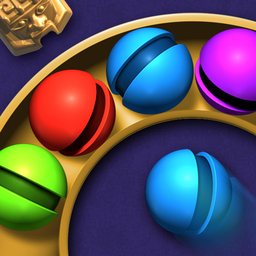
▶ Play FreeMaya takes the ancient civilization aesthetic seriously with detailed Mayan artwork and atmospheric audio. Ball physics feel slightly heavier and more deliberate here, which rewards precision-focused players who like to plan each shot carefully.
Maya
Fans of fast-paced arcade challenges will find Maya to be the ultimate test of precision and reflexes. This vibrant zuma style adventure keeps you glu...
▶ Play FreeCommon Mistakes to Avoid
Even experienced players fall into these traps under pressure:
Panic-shooting: When the chain gets close to the death zone, the natural instinct is to shoot faster. This almost always backfires. Slower, targeted shots clear more balls than rapid random firing that misses matches entirely.
Ignoring the swap: Never checking whether the next ball is better than your current one. One swap can open up a combo that the current ball simply can't create.
Front bias: Focusing only on front clusters while the back half of the chain grows untouched. The back always catches up. Shorten it first.
Hoarding power-ups: Holding onto an Explosion ball while the chain rolls into the red zone. Use it.
Combo tunnel vision: Getting locked into engineering a specific chain reaction while the chain's front slides past a danger point. Survival comes first, high scores come second.