How to Play Text Adventure Games: Beginner's Guide
So you've heard about text adventure games and you're wondering what all the fuss is about. Maybe someone mentioned Zork. Maybe you stumbled across a browser-based game with no graphics whatsoever, just walls of text — and instead of closing the tab, you found yourself genuinely curious. Learning how to play text adventure games is one of those skills that opens up a whole corner of gaming history you probably never knew existed. This guide will walk you through everything: what these games are, how to play text adventure titles from scratch, and how to actually enjoy them instead of staring at a blinking cursor in confusion.
What Is a Text Adventure Game
Text adventure games — sometimes called interactive fiction — are games where everything happens through words. There are no sprites, no 3D environments, no health bars in the corner of the screen. Instead, the game describes a scene in text, you type a command, and the game responds. That's the entire loop. It sounds simple, but the depth hiding inside that loop is remarkable.
The genre was born in the 1970s. Colossal Cave Adventure, often just called Adventure, is widely credited as the first. It ran on a mainframe computer and described a cave system you could explore purely through typed commands. Players passed around printed maps, shared notes, and spent weeks solving puzzles. Zork followed in the late 70s and became a cultural touchstone. By the 1980s, companies like Infocom were selling text adventures commercially, and these games competed directly with early graphical titles.
The appeal was (and still is) the imagination. When a game says "You are in a dimly lit cellar. A stone staircase leads up. Something moves in the shadows to the north," your brain fills in every visual detail. No renderer can match what a reader conjures in their own mind. Text adventures trust the player's imagination completely, which is both their greatest strength and the reason some modern players bounce off them at first.
Modern interactive fiction has expanded well beyond the mainframe era. Browser-based games, Twitch-style narrative experiences, and hybrid puzzle games all carry the spirit of the original text adventures. Even games that don't use a text parser — games that give you choices to click rather than commands to type — belong to the same family tree.
One genre that captures the essence of text-based puzzle thinking beautifully is the cryptogram, where you decode hidden messages one letter at a time. The mental process is identical to working through a text adventure: you have a mystery, limited information, and you have to deduce your way forward.
Cryptogram: Words and Codes
Cracking secret codes is one of the most intellectually satisfying ways to sharpen your focus during a quick break. Cryptogram: Words and Codes turns ...
▶ Play FreeBasic Commands and How to Play Text Adventures
The hardest part of learning how to play text adventure games is the first five minutes. The game gives you a scene description and a prompt, and most new players type something completely reasonable — "look around" or "what do I do?" — and get a parser error. Then they assume the game is broken. It's not broken. You just need to learn the language.
The parser is the engine that reads your commands. Classic text adventures use a two-word command structure: verb + noun. The verb is usually a simple action word, and the noun is an object in the scene.
Here are the core commands that work in almost every text adventure:
- LOOK — re-reads the description of your current location
- INVENTORY (or I) — lists everything you're carrying
- EXAMINE [object] — gives you a closer description of something
- GO NORTH / GO SOUTH / NORTH / N — moves you in a direction
- TAKE [object] — picks something up
- DROP [object] — puts something down
- OPEN [object] / CLOSE [object] — works on doors, boxes, containers
- READ [object] — reads text on signs, books, notes
- USE [object] or USE [object] WITH [object] — interacts with the environment
- TALK TO [character] — starts a conversation
The directions are usually the cardinal compass points: NORTH, SOUTH, EAST, WEST, plus UP and DOWN. Some games use IN and OUT for entering buildings or containers. You'll also see abbreviations used constantly: N, S, E, W, U, D.
When the parser rejects your command, don't panic. Try rephrasing. If "put the key in the box" fails, try "insert key in box" or "place key box." The parser is matching your words against a vocabulary list. The object is real — you just need to describe the action in a way the game recognizes.
Save constantly. Most text adventures have a SAVE command, and you should use it at every decision point. The genre has a long tradition of unwinnable states — situations where you did something ten rooms ago that makes the game impossible to finish, but you won't find out until much later. Save before experimenting. Save before talking to characters. Save before touching anything you don't fully understand.
Keep notes. A simple text file or even a paper notepad transforms the experience. Write down room names, objects you found, things you couldn't figure out. Draw a rough map as you explore. The players who struggled through Zork in 1980 were drawing maps on graph paper. The habit is just as useful today.
Read the room description carefully. Text adventures hide clues in plain sight. If the description mentions a painting on the wall, that painting probably matters. If it says the floor is dusty except for a clear path to the east, something went that way recently. Every word in a well-written text adventure is intentional.
Decision-making under pressure, with incomplete information, is a skill text adventures build over time. Games that put you in the role of a leader or commander — where every choice has consequences — share a lot of that same mental tension.
War Simulator: 1985
History is written by those who survive the toughest choices on the battlefield. War Simulator: 1985 places you in the command chair of Gradnar where ...
▶ Play FreeBest Free Text Adventures to Start With
The classic Infocom catalog is the gold standard, but most of those titles assume some familiarity with the genre. For complete beginners, the best starting point is usually a game that's either very short (so failure doesn't cost much), very forgiving (saves generously, has clear hints), or modern enough to include some quality-of-life features.
Online parser games — Most modern browser-based interactive fiction runs through Twine, Ink, or dedicated platforms like Itch.io. These games often use a choice-based format rather than a pure parser, which means instead of typing commands you click on highlighted options. This is far more accessible and a great on-ramp to the genre.
Twine games are particularly beginner-friendly. The format gives you a story and presents options at each decision point. You build narrative momentum quickly without ever touching a keyboard for input. Hundreds of these are free online, covering every genre from horror to romance to sci-fi.
Classic parser games online — The original Zork, as well as many Infocom titles, have been made freely available through the Internet Archive. You can play them directly in a browser. Start with Zork I and use a walkthrough liberally. The goal isn't to prove yourself — the goal is to learn the feel of the parser.
The detective story is another genre that maps perfectly onto text adventure thinking. You have a crime, you have suspects, you have clues scattered through a location. Your job is to gather evidence, ask the right questions, and reach a conclusion through pure logic. That process — systematic investigation, hypothesis testing, elimination — is exactly how you solve hard text adventure puzzles.
Detective - Logic Puzzles
Staring at a blank screen during your lunch break is the perfect sign that you need a bit of mental stimulation. Detective - Logic Puzzles turns your ...
▶ Play FreeFor players who enjoy the word-puzzle side of text adventures — the vocabulary challenges, the decoding, the moment when a cryptic clue suddenly makes sense — crossword-style games are a natural companion.
Express Crosswords
Solving clever clues and filling in grids provides a satisfying mental workout that keeps your brain sharp and engaged. Express Crosswords brings a mo...
▶ Play FreeText adventures are also, fundamentally, about conversation. The best ones have characters with depth: NPCs who know things you need to find out, who respond differently based on what you've said or done, who can become allies or obstacles. Learning to read a character, to figure out what they respond to, is a skill. Games that center communication and relationship-building give you practice in exactly that.

Chatting with the Maid
Building a meaningful connection through text can be just as intense as meeting someone in person. Chatting with the Maid turns simple digital interac...
▶ Play FreeWhere to find free text adventures:
- Itch.io — massive catalog of free indie interactive fiction, updated constantly
- Interactive Fiction Database (IFDB) — a community-curated database of thousands of games, many free, with ratings and reviews
- Internet Archive — the original Infocom library and many other classic titles playable in-browser
- Choice of Games — high-quality choice-based narratives, many free to start
- Twine community — creator-published games across every imaginable genre
Tips for Solving Text Adventure Puzzles
The puzzles in text adventures range from trivially obvious to infuriatingly obscure. Over decades, players and designers have developed a shared vocabulary of puzzle types, and knowing the common patterns helps enormously.
The inventory puzzle is the most common type. You have an object. Somewhere in the game, there's a problem that object solves. The challenge is recognizing the connection. When you're stuck, go through your inventory item by item and ask: what could this do here? The answer is often hiding in a description you skimmed past.
The locked door puzzle is another classic: you need a key, a code, or a combination to proceed. Text adventures love layering these — you need item A to get item B, which unlocks access to item C, which finally lets you open the door. The trick is not to brute-force it but to map the dependencies. What do you have? What do you need? What haven't you examined thoroughly?
The NPC knowledge puzzle requires you to get information from a character. The character won't just tell you what you need — you have to ask the right question, or do something first that makes them willing to talk. TALK TO [character] is your starting point, but then try ASK [character] ABOUT [topic]. Many text adventures use this syntax to unlock different conversation threads.
The timing puzzle requires actions in a specific order or at a specific moment. These are notoriously frustrating in classic text adventures, because failure isn't always obvious — you just end up in an unwinnable state. The counter to this is aggressive saving and a willingness to restore and experiment.
When you're completely stuck:
- Re-read every room description you've visited. Out loud if necessary.
- Examine everything. EXAMINE is your best friend.
- Try every item in your inventory in the current room.
- Go back to rooms you passed through quickly.
- Talk to every NPC about every topic you know.
- If you've done all of that — look up a hint. There's no shame in it. The game doesn't benefit from your frustration.
Word puzzle games — searching for hidden words, finding connections between letters — sharpen the lateral thinking that text adventures demand.
Search Words With Hint
Word game enthusiasts will immediately fall in love with the endless lexical challenges found in Search Words With Hint. This addictive brain teaser t...
▶ Play FreeThink like the writer, not like yourself. Text adventures are designed by a person. That person had a specific solution in mind. When you're stuck, ask: what is this puzzle trying to test? Is it about reading carefully? About combining two unlikely objects? About talking to someone you ignored? The answer usually lives in the question.
Don't overlook the obvious. New players often over-complicate puzzles. A dark room might just need a light source. A locked door might open with a key you picked up two rooms ago. Before you start theorizing about elaborate solutions, make sure you've tried the simple ones.
Manage your mental state. Text adventures reward patience. If you've been staring at the same puzzle for half an hour, step away. Come back fresh. Solutions that seemed invisible often become obvious after a break.
Some text adventures have combat systems that function more like tactical decision trees — you choose actions, the game resolves outcomes, and the story branches based on results. This bridges the gap between classic interactive fiction and modern narrative games.

Facing Demons: Chara Battle
Dodging relentless waves of attacks while standing your ground against Chara is the heartbeat of this intense boss rush challenge. You navigate a smal...
▶ Play FreeThe exploration-and-discovery loop in text adventures is also present in simulation games — open environments where you have freedom to move through a world and figure out how it works through direct interaction, one action at a time.
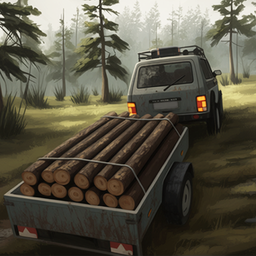
Forest Roads Niva
Staring at a blank screen while your motivation slowly drains away is the ultimate afternoon slump. Forest Roads Niva provides the perfect high-octane...
▶ Play FreePractice makes the parser intuitive. The first few text adventure sessions feel awkward because you're learning a new language. After a few hours across different games, the common verbs become automatic. You stop thinking about how to command the game and start thinking only about what you want to do. That's when the genre opens up completely.