How to Play Sword: Rules, Strategies & Free Games
Sword games are everywhere online, and if you've been wondering how to play Sword games on platforms like Roblox or browser-based arcades, you're in the right place. Whether your goal is to slash through monster waves, climb arena leaderboards, or just enjoy the satisfying crunch of blade meeting obstacle, this guide covers everything: the core rules that apply across the entire genre, winning strategies that actually hold up in practice, and the best free Sword games you can open right now without any download.
By the end of this article, you'll have a solid framework for approaching any Sword title — not just a list of tips that only apply to one game.
What Are Sword Games?
Sword games are action titles where a bladed weapon is your primary tool. The category is broader than it sounds. It includes:
- Obstacle course games (obbies) — platforms, traps, and checkpoints where the sword helps you break through walls, defeat enemies, or collect power-ups.
- Arena brawlers — wave-based or PvP combat where surviving and racking up kills is the whole point.
- Clicker and idle RPGs — games where you tap or click to swing, gradually building a more powerful character over time.
- Simulators — structured progression systems where you watch stats climb and your character evolve from zero to sword legend.
What ties all of these together is the sword itself as an interaction point. Unlike shooters where range and cover dominate, sword games put you in close quarters. That changes how you think about positioning, timing, and resource management in ways that are worth understanding before you start.
Why People Love This Genre
The core appeal is immediate feedback. Every swing either connects or misses, and there's almost no gap between action and consequence. Compare that to strategy games where the results of a decision take minutes to show up — here, you know in half a second whether your timing was right. That tight loop keeps sessions engaging and makes improvement feel tangible fast.
There's also a satisfying skill ceiling. The basics are accessible in minutes, but mastering attack timing, combo chains, upgrade sequencing, and arena positioning takes real effort. Players who put in the time genuinely perform better — and can feel it.
How to Play Sword Games: The Basic Rules
Learning how to play Sword games starts with fundamentals that transfer across every title in the genre. These aren't platform-specific tips — they're principles you'll use whether you're running an obby or fighting through monster waves.
Movement and Positioning
In sword games, positioning is at least half the battle. Stay too close to a group of enemies and you'll take hits from multiple directions simultaneously. Stay too far and your attacks miss entirely or leave you chasing rather than fighting.
The standard approach to positioning:
- Close the gap deliberately — don't run straight at enemies. Angle in from the side to reduce the chance of eating a head-on attack.
- Circle-strafe around single targets — many games allow movement while attacking. Orbiting one enemy while swinging keeps others from flanking you as easily.
- Use terrain as a tool — walls create chokepoints that limit how many enemies can reach you at once. Platforms give you height advantage. Narrow corridors prevent surrounds. Actively look for these features when entering a new level.
Attack Timing
Every sword swing has three distinct phases: windup (the wind-back before the strike), active (the brief window where the hit actually registers), and recovery (the frames after the swing where you're temporarily exposed). New players spam attacks without understanding this cycle, which leaves them constantly in recovery frames — exactly when enemies hit hardest.
The habit to build: only commit to a swing when you're confident the active frame will connect. Patience here eliminates most of the avoidable damage beginners take.
Health Management
Running directly at enemies without thinking about sustainability is the fastest way to end a run. Most Sword games include some form of health regeneration, healing drops, or safe zones. Learn them early. Backing off at low health to recover is almost always correct — the few seconds spent retreating cost far less than restarting from scratch.
Progression Logic
Upgrade systems in Sword games usually offer damage, attack speed, health, and mobility improvements. The general priority for new players: attack speed early, then damage, then survivability. Attack speed shortens your recovery window and raises damage output simultaneously, making it the most efficient early investment in the majority of titles.
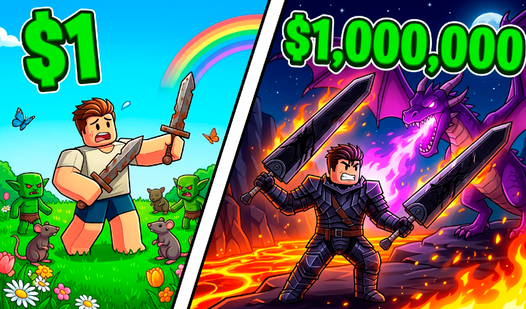
Obby: Master of the Sword puts all of these fundamentals front and center. The game's entire objective is to train your blade skills and defeat a dragon — a structure that forces players to engage with movement, timing, and progression simultaneously.
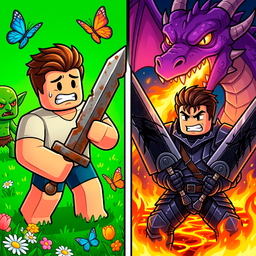
Obby: Master of the Sword
Slash through hordes of enemies and collect powerful blades to carve your path toward the legendary dragon. Obby: Master of the Sword puts you in cont...
▶ Play FreeHow to Play Sword in Arena Combat
Arena Sword games add layers of complexity beyond the basics. You're no longer dealing with one enemy at a time — waves escalate, enemies spawn from multiple directions, and split-second decisions determine whether you survive.
Wave Management
The most common mistake in wave-based Sword games is tunnel-visioning on one enemy while ignoring incoming threats from other directions. A better system:
- Prioritize by speed — fast enemies reach you first and disrupt your attacks. Take them out before slower, tankier enemies.
- Move as you kill — don't stand still after a kill. Reposition toward the next threat immediately.
- Watch spawn points — most arena games reuse spawn locations. After two or three waves, you can start anticipating where the next group will appear.
Chain Kills and Combo Multipliers
Many arena Sword games reward consecutive kills with score multipliers or visual effects. The setup for chain kills is about positioning: instead of chasing individual enemies across the arena, group them by circling the perimeter and funneling them together before sweeping through in one pass.
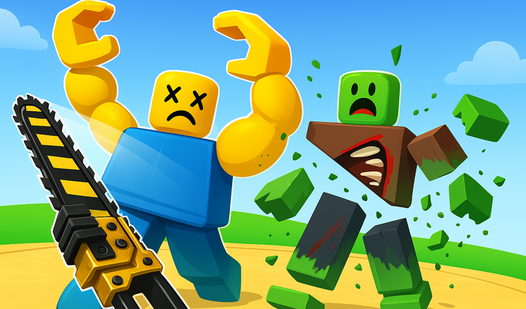
Obby Sword! Cut Enemies at Blocks Arena! is built specifically around this challenge. Players swing through enemy groups on block-based platforms, and maintaining momentum through consecutive hits is the central skill the game teaches.
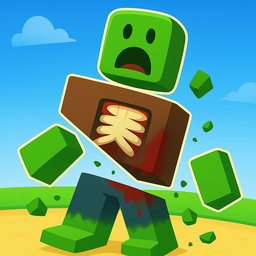
Obby Sword! Cut Enemies at Blocks Arena!
Fans of high-octane action games will find their new obsession with the fast-paced combat of Obby Sword! Cut Enemies at Blocks Arena!. This title plac...
▶ Play FreeBoss Fight Fundamentals
Bosses in Sword games usually follow predictable patterns once you know what to look for. The cycle is almost always: boss telegraphs an attack (pre-attack animation), attack executes, brief recovery window where the boss is vulnerable, repeat.
Key habits for bosses:
- Watch first, attack second — spend the first 10-15 seconds of a boss fight observing attack patterns before committing to offense.
- Don't get greedy — landing two hits and backing off beats landing five hits and catching a counter.
- Track your position constantly — boss arenas often have hazards or edges that become dangerous when you're focused on the fight.
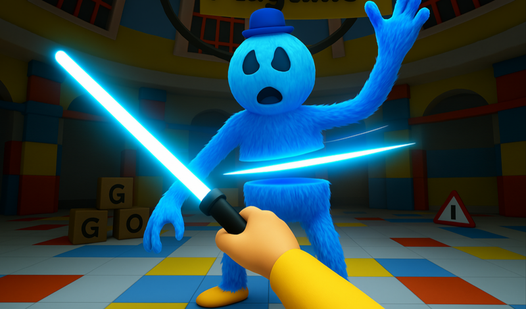
Poppy 4! Cut Monsters with Sword in Arena! puts these lessons under real pressure. Monster types scale up in difficulty, introducing new attack patterns that force players to adapt timing and aggression level.
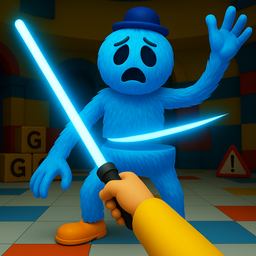
Poppy 4! Cut Monsters with Sword in Arena!
Swing your blade with precision to slice through waves of incoming creatures in Poppy 4! Cut Monsters with Sword in Arena!. This intense action experi...
▶ Play FreeSword Strategies That Actually Work
These are the approaches that separate players who clear hard content from those who grind the same levels repeatedly.
Map the Hit Arc Before You Need It
Every sword has a specific swing arc — the angle and radius where damage registers. Learn it in the first few minutes of any new game by swinging at static targets or weak enemies. Knowing exactly where your sword reaches removes guesswork in heated moments.
Upgrade Attack Speed First, Damage Second
Between the two main combat upgrades, attack speed typically produces better early-game results. More swings per second means more damage output per time window and shorter recovery exposure between hits. Switch to damage upgrades once your attack speed feels responsive.
Master the Clicker Rhythm
Clicker-style Sword games reward consistent rhythm over burst effort. Frantic clicking produces diminishing returns and fatigue. A steady, controlled pace — taps or clicks at a comfortable cadence — generates more consistent output over a full session.
Swing the Sword | Knight Clicker demonstrates this perfectly. The game blends clicker mechanics with RPG progression, and players who maintain steady rhythm consistently outpace those who click in frantic bursts. The sword-swinging knight you build through this game becomes a genuinely powerful character with enough patience.
Prioritize Objectives Over Grinding
In objective-based Sword games, completing quests, collecting items, or unlocking gates almost always generates more rewards per minute than free combat grinding. Objectives usually give bonus resources and open better gear faster. Pure grinding is the fallback when no objectives are available — not the default strategy.
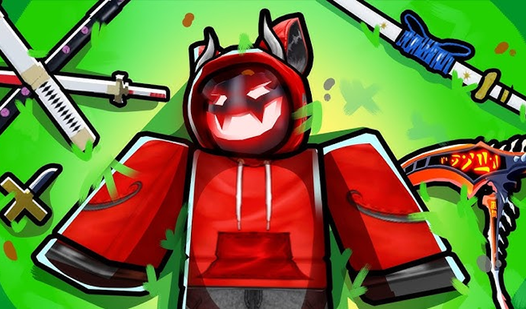
Obby: Get the Swords is designed around this principle entirely. Players complete training challenges and specific objectives to unlock stronger swords rather than grinding weak enemies indefinitely. The game's structure actively teaches players to think ahead rather than grind in place.
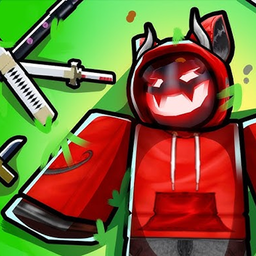
Obby: Get the Swords
Staring at a blank screen during a coffee break is the worst way to spend your free time. Obby: Get the Swords turns those dull moments into a high-st...
▶ Play FreeKnow When Resetting Makes Sense
In run-based Sword games, a poor start isn't always worth grinding through. If you're several levels in with bad upgrades, low resources, and minimal health remaining, restarting often produces a better outcome faster than struggling on. This feels wrong early on, but experienced players use selective resets as a deliberate tool.
The mental shift: a reset isn't a failure, it's a decision to spend your time more efficiently.
Full Arena Awareness
It's easy to focus entirely on the enemy in front of you and forget about the rest of the screen. Enemies approaching from off-screen or spawning in corners end runs in seconds if you're not watching for them. Develop the habit of glancing at the screen edges and mini-map every few seconds, even during active combat.
The Best Free Sword Games on FreeJoy
With strategies in place, here are the top free titles to practice with — covering every major subgenre in the Sword category.
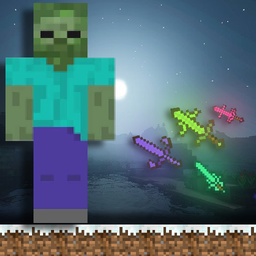
Upgrade Your Sword - Mine Mod!
A mining and upgrade hybrid that adds a crafting layer to sword progression. You dig for resources, then funnel them into weapon improvements that show visible results. The loop is satisfying because you watch your sword evolve in real time. Great entry point for players who enjoy building systems alongside combat.
Upgrade your sword - Mine Mod!
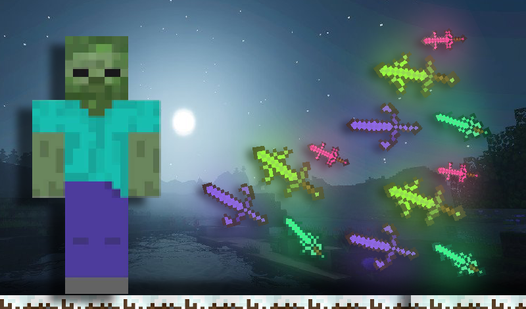
Swing your blade to slice through waves of relentless enemies in Upgrade your sword - Mine Mod! You start as a lone warrior with a basic weapon and mu...
▶ Play FreeHero Blocks Arena! Ragdoll Sword Fight!
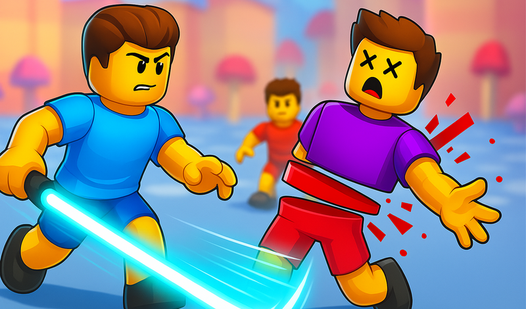
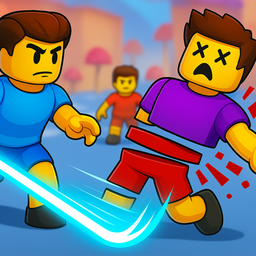
Pure arena chaos with ragdoll physics that makes every fight unpredictable. The physics system means enemy behavior changes with each collision — you can't rely on memorized patterns here, only adaptability. Perfect for players who want something lively alongside their sword action.
Hero Blocks Arena! Ragdoll Sword Fight!
Stuck in a boring meeting or just waiting for your coffee to brew, you deserve a chaotic escape that challenges your reflexes. Hero Blocks Arena! Ragd...
▶ Play FreeSword Master: Slice Your Enemies!
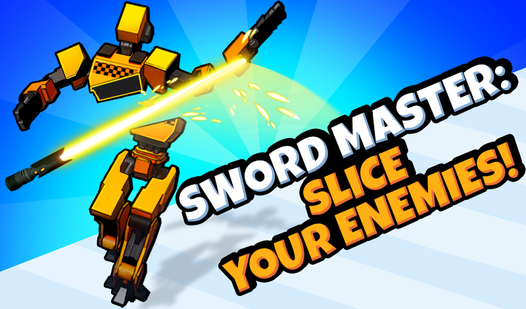
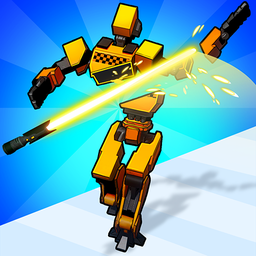
A precision title where enemy slicing is the primary mechanic. The skill loop is about timing cuts to hit multiple enemies in a single motion — the satisfaction of landing a clean multi-slice keeps the game engaging session after session.
Sword Master: Slice Your Enemies!
Mastering the blade is an ancient art form that feels incredibly satisfying when you turn your foes into confetti with a single flick of your wrist. S...
▶ Play FreeHero of Sword
A more deliberate, story-driven experience compared to pure arcade entries. Hero of Sword guides players through increasingly tough encounters with measured pacing that rewards reading enemy patterns before committing. Better suited to players who prefer strategic play over reflex-heavy twitch action.
Swordsman Simulator
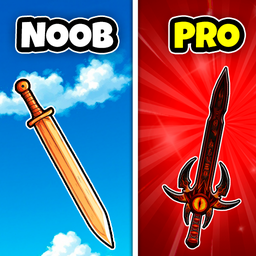
If watching a character grow from beginner to elite swordsman is the experience you're after, this simulator delivers. Progress is explicit and rewarding — stats climb, the character visibly improves, and enemies that challenged you early become manageable with the right upgrades. Classic simulator progression done right.
Swordsman Simulator
Training your character to reach peak physical form is the ultimate goal for any aspiring warrior in a top-tier simulation game. Swordsman Simulator c...
▶ Play FreeCommon Mistakes New Players Make
Even with strategy knowledge fresh in your mind, specific habits trip up most beginners. Knowing them upfront saves significant frustration.
Over-committing to attacks — swinging repeatedly when an enemy is about to counter leaves you exposed during recovery. One solid hit followed by a quick sidestep beats a flurry that ends with you taking counter damage.
Ignoring the environment — falling off platforms, running into hazards, or missing environmental hazards are surprisingly common causes of failed runs. A few seconds scanning the arena at the start of each wave is always worth it.
Skipping tutorials — many Sword games include short tutorials that explain mechanics unique to that specific title. Skipping them saves maybe 90 seconds and often costs 20 minutes of confusion later.
Hoarding upgrade resources — holding resources "just in case" consistently means arriving at hard content under-geared. Spend progressively as you earn.
Staying with the starting weapon — if a game offers multiple sword types, experimenting early reveals which suits your playstyle. Players who try alternatives before settling in usually find a stronger fit than those who default to the starting blade indefinitely.
Mobile vs. Desktop for Sword Games
Most Sword games on FreeJoy are playable on both platforms, but the experience differs in meaningful ways.
Desktop gives more precise control — keyboard movement combined with mouse interaction makes positioning and target selection cleaner in fast-paced arena games. Complex upgrade menus are also significantly easier to manage with a cursor.
Mobile works well for clicker-style titles, since the core mechanic (tapping) maps naturally to touchscreen input. For arena games with lots of enemies moving simultaneously, desktop gives a real control advantage.
As a rough guide: clicker and idle Sword games like Swing the Sword | Knight Clicker work great on phone. Fast arena games like Hero Blocks Arena! Ragdoll Sword Fight! feel better on desktop.
Where to Start if You're New
A simple progression path through the Sword category on FreeJoy:
Start with an obby — obstacle course sword games teach movement and timing in a forgiving, low-pressure environment. Obby: Master of the Sword and Obby: Get the Swords are both strong starting points.
Move to an arena — once basic movement feels comfortable, arena games test combat under real pressure. Poppy 4! Cut Monsters with Sword in Arena! and Sword Master: Slice Your Enemies! scale difficulty at a manageable pace.
Add a progression game — with action mechanics down, idle or simulator games like Swordsman Simulator or Swing the Sword | Knight Clicker offer a different kind of depth through long-form character building.
This path covers all major Sword subgenres and builds skills that transfer across titles rather than locking you into one game's specific mechanics.