How to Play Stickman Escape Games: Beginner's Guide
Stickman escape games have a way of pulling you in and refusing to let go. If you're just figuring out how to play stickman escape games for the first time, expect puzzles that make your brain work, moments of pure tension, and that deeply satisfying click when a solution finally falls into place. These games look simple on the outside — stick figures, minimal graphics — but beneath the surface lies a genuinely clever genre with decades of design history behind it.
This guide covers everything: what stickman escape games actually are, how the controls work, practical tips for getting through tough levels, and a roundup of the best games to start playing today. Bookmark it, because you'll want to come back.
What Are Stickman Escape Games
At their core, stickman escape games are about freedom. You control a stick figure who is trapped — in a cell, a vault, a forest full of monsters, or a locked building — and your job is to find a way out. The path to escape usually involves exploring the environment, collecting items, solving puzzles, outwitting guards, or fighting your way through obstacles.
The stick figure aesthetic isn't just a visual style — it's a practical choice. Minimalist characters and environments load fast in browsers, keep the screen readable at a glance, and put the focus entirely on gameplay rather than spectacle. That's a big part of why the genre has stayed popular for so long. When the art doesn't distract you, the puzzle does all the work.
The main categories
Not every stickman escape game works the same way. There are a few distinct flavors within the genre, and knowing which type you're playing helps you approach it with the right mindset:
Classic puzzle escape — You're locked in a room (or series of rooms) and need to find hidden objects, combine items, and solve logic puzzles to get out. These are slow-burn, brain-first experiences where observation matters more than reflexes.
Action escape — Your stickman needs to physically run, fight, or sneak past enemies. Think platformer meets stealth. Timing and quick reactions take over here, though puzzles still appear regularly.
RPG-lite escape — Some games layer in skill trees, inventory management, and character progression. You're not just solving a single puzzle; you're building a character strong enough to survive an entire escape sequence.
Speed and timed escape — The clock is ticking. You need to complete objectives as fast as possible, often racing against personal records or structured time limits that force quick decision-making.
Most of the best stickman escape games blend two or more of these styles together, which is what keeps them fresh over many sessions.
A great example of how ambitious the genre can get: Doodleman Escape! drops you into a mysterious monster-filled forest where survival means more than just finding a door. You're fighting creatures, collecting items scattered through the environment, and upgrading your stickman's skills as you push deeper toward safety. The escape here is a journey with real stakes, not just a single clever trick.
The variety within escape games is genuinely massive. Some sessions last five minutes; others will have you plotting routes and managing resources for an hour. Whatever pace you prefer, the genre has something for you.
How to Play Stickman Escape: Basic Controls and Mechanics
Getting the controls down is the foundation of knowing how to play stickman escape games with any confidence. The good news: the genre is built for accessibility. You don't need specialized hardware or years of gaming experience. Most games run on keyboard and mouse alone, with controls you can learn in under two minutes.
Standard controls
Platformer-style escape games:
- Arrow keys or WASD — move left, right, jump, crouch
- Space bar — jump, attack, or interact (varies by game)
- E or F — use an item or interact with objects in the environment
- Mouse — aim attacks, navigate menus, click interactive hotspots
Point-and-click escape games:
- Mouse only — everything happens through clicks
- Left click — examine objects, pick them up, trigger events
- Right click — occasionally used for context menus or inspecting items more closely
Some games mix both approaches: you move with the keyboard but solve puzzles by clicking on environmental hotspots. Always read the brief tutorial screen that appears at the start of a new game — even a few lines of instruction tell you everything essential about that game's specific control scheme.
Inventory management
One of the most underestimated skills in escape games is how you handle your inventory. You'll collect dozens of objects across a typical level, and knowing how to use them separates players who cruise through from players who get stuck.
Specific habits that help:
- Check every corner and background detail. Stickman escape games love hiding key items in spots you'd normally walk past — behind furniture, in dark edges of the screen, blending into patterned backgrounds.
- Many items are useless on their own. A bent wire, a cloth, a glass bottle — none of these seem important until you combine them. A wire picks a lock; a cloth soaked in a bottle becomes a tool. Always try combining items that seem thematically related.
- Never discard anything you don't understand yet. Inventory space is rarely a concern in these games, so hold onto every object until the level ends. That mystery item from five screens ago will matter eventually.
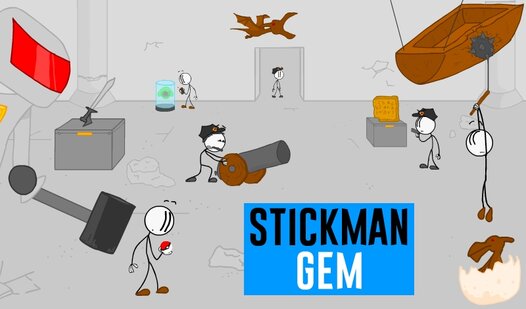
Stickman Gem is a perfect training ground for this kind of thinking. Your stickman is trying to steal a precious stone from a heavily secured museum — every camera angle, guard patrol route, and locked display case is a puzzle waiting to be unraveled. Getting through requires reading the environment carefully and using your collected items in precisely the right sequence.

Stickman Gem
Fans of wacky point and click challenges will absolutely love Stickman Gem and its hilarious quest for fortune. You control our notorious hero as he a...
▶ Play FreeHealth, lives, and detection
Not all escape games are pure puzzles. Action-oriented entries give you a health bar and enemies that fight back. A few principles apply almost universally:
- In stealth sections, getting spotted often triggers an instant fail state rather than draining health. These sections reward patience over speed — one careful minute beats ten impatient restarts.
- In combat sections, learn enemy attack patterns before committing to an aggressive approach. Rushing in blind wastes health fast.
- Watch for environmental hazards: spikes, electrified floors, crumbling platforms. They drain health faster than most enemies.
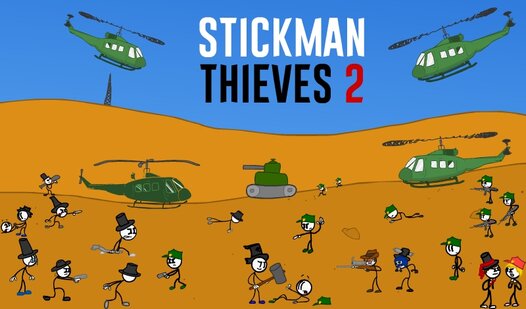
For a more action-heavy take on the formula, Stickman Thieves 2 escalates things considerably. You're a government-recruited stickman operative infiltrating a moving airship — the game layers careful planning with real-time action in a way that challenges both your puzzle instincts and your reflexes simultaneously.

Stickman Thieves 2
Navigate a high-stakes mission as you infiltrate a massive airship in Stickman Thieves 2. Your core objective involves solving clever point-and-click ...
▶ Play FreeCheckpoints and saving progress
Most browser escape games track progress automatically through checkpoints. Dying mid-level usually sends you back a short distance rather than to the very beginning. However, closing the browser tab will often reset your progress to the start of the session — so try to complete sections in one sitting whenever you can. If a game has a manual save option, use it every time you clear a difficult section.
How to Play Stickman Escape: Tips for Solving Puzzles
Puzzle-solving is the heart of the genre. Getting stuck is completely normal; the tips below work across almost every stickman escape game and will get you unstuck faster.
1. Observe before acting
The single best habit you can develop: pause and scan the environment before you start clicking or running. Note where guards patrol, where items are placed, which doors are locked, and what environmental details seem out of place. Information gathered before your first move often solves problems that would take ten frustrated attempts to crack by trial and error alone.
2. Work backward from the goal
If you know where you need to go but not how to get there, trace the logic in reverse. "I need to get through this door. What opens doors? A key or a code. Where would a key be hidden in this kind of environment?" Starting at the solution and working backward toward your current position reveals the exact steps you need to take in the correct order.
3. Interact with everything at least once
Stickman escape games are carefully designed spaces. If something in the environment looks interactive — a crack in the wall, a loose floor tile, a blinking panel — it almost certainly matters. Click on or interact with everything you can, even if the result seems pointless at first. Many puzzles require triggering objects in a specific sequence, and you won't know the sequence until you've explored all the available options.
4. Plan physical paths before committing
Some escape games give you literal spatial puzzles: dig in the right direction, pick the right path through a maze, avoid obstacles in a confined tunnel. These require a combination of advance planning and precision execution.
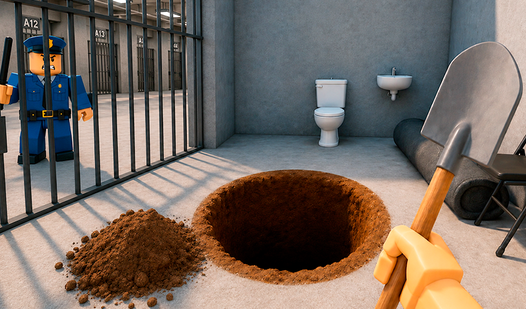
Prison escape: Digger takes this idea to its extreme. You start in a jail cell with one option: dig straight down through the earth beneath your feet. The deeper you go, the more complex the underground maze becomes. Plotting your route before you commit to a direction prevents dead ends that cost you time and resources.
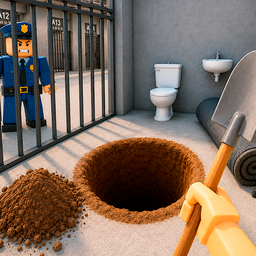
Prison escape: Digger
Stuck in a dull meeting or just waiting for your coffee to brew, you need a way to pass the time that rewards your persistence. Prison escape: Digger ...
▶ Play Free5. Use speed at the right moments, not constantly
In timed escape games or fast-moving stealth sequences, the natural instinct is to rush everywhere. Resist it. Speed matters between safe zones; slow down when precision is needed. Mistimed speed causes mistakes that lose far more time than a measured approach would have.
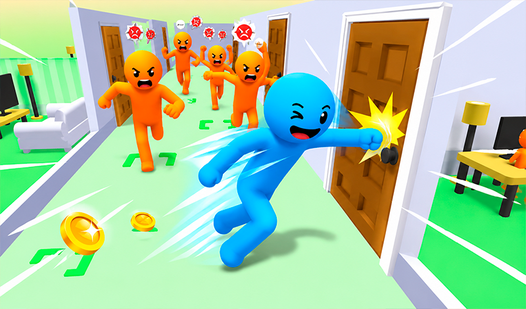
Knock and Run. 100 Doors Escape builds this principle into its entire design. You're racing through hotel corridors as fast as possible, arranging pranks and outmaneuvering everyone who tries to stop you. The challenge isn't raw speed — it's reading each new situation quickly enough to make the right call before the opportunity closes.
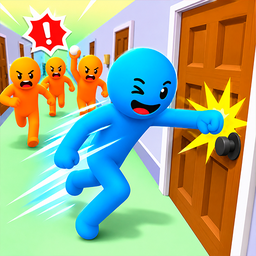
Knock and Run. 100 Doors Escape
Pranking unsuspecting residents in a sprawling hotel is the ultimate test of nerves and lightning-fast reflexes. Knock and Run. 100 Doors Escape turns...
▶ Play Free6. Step away when genuinely stuck
This sounds too simple, but it's genuinely effective. After fifteen minutes on the same puzzle, your brain locks into specific assumptions that block you from seeing alternatives. Step away for five minutes, come back fresh, and the solution often becomes obvious almost immediately. Your brain keeps processing problems in the background even when you're focused on something else.
7. Read visual cues — color, shape, pattern
Many puzzles encode their solutions visually. Colored locks match colored keys. Blinking sequences encode combinations. Arrow patterns indicate directions. Train yourself to notice these cues automatically and you'll cruise through sections that stop other players completely. When you're stuck on a puzzle with no obvious solution, look for anything that repeats, flashes, or contrasts visually with its surroundings.
Best Stickman Escape Games to Start With
If you want to jump straight into playing, here are the games that give you the most satisfying introduction to what the genre can do. Each one teaches you something different about how stickman escape games work at their best.
Stick Kombat 2D
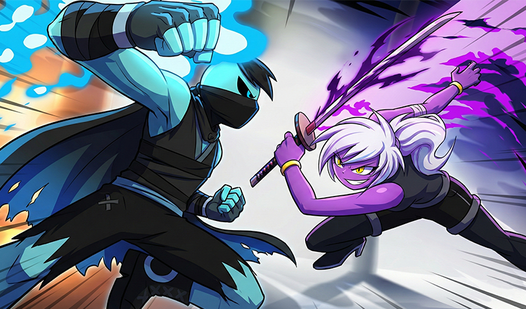
A great entry point if you lean toward action over pure puzzles. Stick Kombat 2D drops you into fast-paced combat scenarios where the goal is defeating opponents and advancing through increasingly tough stages. The combat mechanics are tight and responsive, making it an excellent place to develop the reflexes and timing that action-oriented escape games demand.

Stick Kombat 2D
Stickman brawlers bring a unique brand of chaotic energy that turns simple arenas into high-stakes battlegrounds. Stick Kombat 2D perfectly captures t...
▶ Play FreePixel Playground: Ragdoll Noob
This one leans fully into the physics-based side of stickman games. Ragdoll mechanics make every action unpredictable in ways that are both hilarious and genuinely challenging. There's real skill in controlling your character effectively when the physics are fighting you. If you want to understand how stickman games handle ragdoll physics — a mechanic that shows up everywhere in the genre — this is a fun place to start.
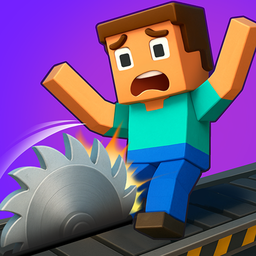
Pixel Playground: Ragdoll Noob
Toss the stickman through complex obstacle courses to rack up massive damage scores in Pixel Playground: Ragdoll Noob. This physics-based challenge ta...
▶ Play FreeSpeedBoy 3: Chase in Sochi
For players who want their escape experience fast and intense, SpeedBoy 3 is a chase-based game set across varied terrain in Sochi. You're running, dodging, and outmaneuvering pursuers through rapidly changing environments. It teaches you how movement and timing interact under real pressure — the combination of skills that separates competent stickman players from great ones.

SpeedBoy 3: Chase in Sochi
Stuck in a boring afternoon with nothing to do and a serious need for some digital chaos? SpeedBoy 3: Chase in Sochi is the ultimate antidote to bored...
▶ Play FreeRagdoll Arena! Fun Spear Battle!
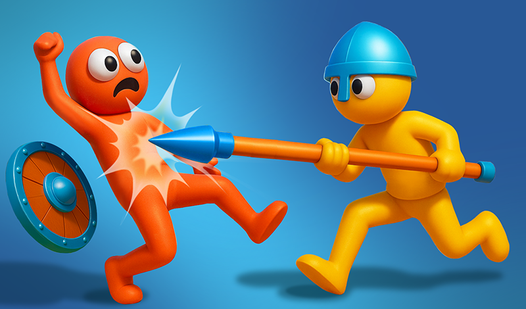
Physics-heavy and competitive, Ragdoll Arena pits you against opponents in a spear-throwing battle arena. The chaotic ragdoll system forces you to adapt constantly — nothing ever goes exactly as planned, and that unpredictability is the point. Playing this before tackling complex escape puzzles teaches you to stay composed when environments stop cooperating. That skill carries over everywhere.
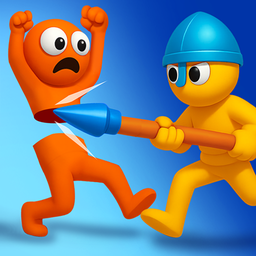
Ragdoll Arena! Fun Spear Battle!
Stuck in a boring meeting or just need a quick escape from reality? Ragdoll Arena! Fun Spear Battle! is the ultimate distraction that turns your scree...
▶ Play FreeOffice Brawl - Room Smash
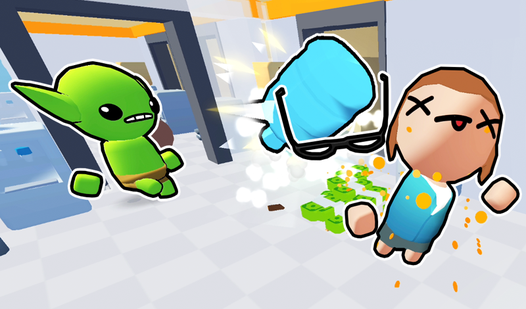
Office Brawl packages escape-style room-clearing objectives inside an office brawl format. You're clearing rooms, defeating obstacles, and pushing toward an exit as the environments grow increasingly complex. It's a strong bridge between casual stickman games and the more intricate multi-stage escape experiences — and it's genuinely entertaining to play for its own sake, not just as training.

Office Brawl - Room Smash
Stuck in a mind-numbing meeting with your eyes glazing over at a spreadsheet, you suddenly crave a way to vent that pent-up tension. Office Brawl - Ro...
▶ Play FreeA simple progression path
If you're brand new to the genre and want a structured starting point, here's a route that builds skills naturally:
- Pure puzzle escape first — Games like Stickman Gem teach item-based logic without combat or timer pressure. Start here to understand how the core puzzle loop works.
- Stealth-action hybrids next — Games like Stickman Thieves 2 add real-time pressure to the puzzle foundation. You'll already have the inventory skills; now add the timing layer.
- RPG-lite escape for depth — Games like Doodleman Escape! introduce skill progression and longer sessions. Good when you want more complexity and replayability.
- Speed and combat last — SpeedBoy 3, Knock and Run, and the arena games push reflexes hard. By this point you'll have all the tools to handle everything the genre can throw at you.
Each stage builds on the previous one. There's no obligation to follow this order — jump in wherever something looks interesting — but if a game feels too hard early on, this path gives you a clear route to getting ready for it.
One final note: don't be too proud to look up a walkthrough for a puzzle that's had you stuck for a long time. Seeing a solution you missed teaches you what to look for next time. The goal is to enjoy the escape, not to suffer through it.