Как играть в Small Kingdom: Rules, Strategies & Free Games
Как играть в Small Kingdom — this question keeps popping up among browser game fans who've stumbled onto this charming genre and want to figure out the best approach. Small Kingdom-style games center around one deeply satisfying loop: start with a tiny, underdeveloped realm, make smart choices about resources and expansion, and watch your miniature empire grow tile by tile. Simple to pick up, surprisingly deep once you get going.
This guide covers the core rules, practical strategies that genuinely work, and a curated list of the best free Small Kingdom games you can play right now, no installation needed.
What Is Small Kingdom?
"Small Kingdom" describes a genre of browser and mobile games where you manage a compact realm — placing buildings, collecting resources, completing quests, and gradually expanding your territory. The magic of the genre is in the scale: you're not managing a sprawling empire with thousands of units. You're working with a small, focused space where every tile placement and building decision has real weight.
The genre overlaps with several familiar styles:
- City-builders: place and arrange buildings, optimize production layouts
- Match-3 games: some variants blend matching puzzles directly into the kingdom loop
- Idle games: resources accumulate over time, rewarding regular check-ins
- Merge games: combining identical items to create upgraded versions
- Light strategy: meaningful decisions with consequences that compound over time
What makes Small Kingdom games particularly well-suited to browser play is session flexibility. You can drop in for five minutes, make a few decisions, collect some resources, and log off. Come back later and your kingdom has progressed. There's no pressure to commit to long play sessions, but the depth is there if you want it.
The visual feedback loop also plays a huge role. You can literally see your progress — a cluster of primitive huts gradually transforming into a proper settlement with markets, barracks, and towers. That visible transformation is genuinely rewarding in a way that many more abstract games struggle to achieve.
Rules and Basics: Как играть в Small Kingdom
Understanding как играть в Small Kingdom starts with the core loop that almost every game in this genre shares. Get these fundamentals right and everything else follows naturally.
Start Small, Plan the Progression Tree
You always begin with minimal resources and a limited map. The temptation is to build everything at once — resist this. Most Small Kingdom games have soft dependency chains: certain buildings unlock others, certain resources enable upgrades. Before placing anything, spend a minute understanding the progression tree. What unlocks what? What do you need before you can build the things you actually want? Knowing this saves enormous amounts of backtracking later.
Resource Management Is the Core Skill
Resources in Small Kingdom games typically fall into a few categories:
- Primary resources: gold, wood, stone — the fundamental building blocks
- Secondary resources: food, gems, mana, crystals — used for upgrades and special actions
- Population and workers: you need people to staff buildings; an unstaffed building produces nothing
The most important metric to watch is your production-to-consumption ratio. A common beginner mistake is overbuilding production facilities before you have enough workers to operate them. More farms than workers is just wasted map space.
Quests Are Your Roadmap, Not Background Noise
Almost every Small Kingdom game includes a quest system. These aren't optional tasks you can ignore — they're the progression engine. Completing quests unlocks new buildings, new abilities, and new map areas. If you feel stuck or like momentum has stalled, the quest log is always the first place to check. Nine times out of ten, there's a triggered next step waiting there.
Expansion vs. Consolidation: Know Which Phase You're In
You'll regularly face a choice between pushing outward into new territory or solidifying what you already have. New territory often brings new resources, but also more complexity and a larger area to manage. Early game: consolidate. Make sure your foundation is generating steady income before expanding. Mid-game: expand strategically, targeting territories with resources you need. Late game: push aggressively once your economy can support it.
Build Timers Are Part of the Gameplay
Many Small Kingdom games have construction and upgrade timers. A building might take 20 minutes to construct, or two hours for a major upgrade. This isn't a flaw — it's how the game structures your engagement. The skill is queuing actions efficiently. Before logging off, always start your longest-duration builds. When you return, they'll be finished and you can immediately take the next step rather than waiting around.
Mergest Kingdom is a brilliant example of how the merge mechanic transforms these fundamentals — instead of just building, you're constantly combining objects to create upgraded versions, which then unlock new quest chains and new areas of the map.
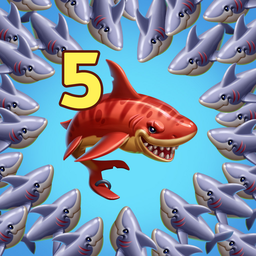
Mergest Kingdom
Fans of strategic puzzle games will find their new obsession within the enchanting lands of Mergest Kingdom. This addictive experience challenges you ...
▶ Play FreeStrategies That Separate Good Players from Great Ones
Once the basics are solid, Small Kingdom стратегии transform your gameplay. Here's what actually works.
Upgrade Your Core Structure First
Whatever the central command building is — a town hall, castle, throne room — upgrade it as soon as you meet the resource requirements. This almost always unlocks higher-tier buildings, increases your population cap, and triggers new quest lines. It's consistently the single highest-leverage action in any Small Kingdom game. Players who chase peripheral upgrades first find themselves bottlenecked while others surge ahead.
Maintain a Resource Buffer
Don't spend resources the moment you earn them. Build up a reserve — roughly two to three times your current daily production — before undertaking major construction projects. This protects you from getting stuck mid-build because you ran out of a critical material. It also gives you flexibility to respond to unexpected events (raids, special quests, limited-time offers) without derailing your main plans.
Master the Merge Chains Early
If your game has a merge mechanic, understanding the full chain of upgrades before you start is enormously valuable. Knowing that two basic huts merge into a proper house, which merges into a cottage, which eventually becomes a manor — that knowledge lets you plan your placement strategically. Random merging leads to cluttered layouts where you've boxed in important items. Planned merging keeps your map clean and efficient.
Kingdom Match demonstrates how match-3 mechanics can power a kingdom-building loop — solving puzzles generates the resources that build your realm, creating an active, puzzle-solving experience rather than a purely passive one.
Specialize Rather Than Generalize
Don't try to do everything equally well. Pick two or three resource types or production chains to focus on, and build your economy around them. Most Small Kingdom games reward specialization — a focused economy that produces one thing really well tends to outperform a generalist economy that produces everything mediocrely. You can trade or purchase the resources you're not producing.
Pay Attention to Adjacency Bonuses
Many games give bonuses when specific buildings are placed next to each other. A farm adjacent to a mill might boost grain output. A barracks beside a watchtower might speed up troop training. These bonuses often aren't prominently advertised — check tooltips and building descriptions carefully. Over the course of a long session, adjacency bonuses can add up to a significant production advantage.
Manage Your Workers Like a Real Economy
Workers are your most constrained resource in many Small Kingdom games. You can have excellent buildings everywhere, but if you don't have workers to staff them, they sit idle. Prioritize housing and population growth in parallel with building expansion. Every new worker slot you unlock is another unit of production capacity.
Cookingdom: Cook and Relax! takes a lighter approach to kingdom management — you're running a restaurant in a cozy kingdom setting, managing ingredients and cooking workflows. It's a gentler take on the resource management loop, ideal if you want the satisfaction without heavy strategic pressure.
Save Premium Currency for Permanent Value
If your game has a premium currency — gems, crystals, diamonds — treat it as precious. The worst value is spending premium currency on time skips. A 30-minute skip that cost you 50 gems will feel terrible in hindsight when you realize those gems could have bought a permanent production multiplier or an extra building slot. Patient players who save premium currency for permanent upgrades compound their advantage over time.
Как играть в Small Kingdom: Genre Variations
Not every Small Kingdom game plays identically. Understanding the main variants helps you find the style that suits you.
City-Builder Kingdom Games
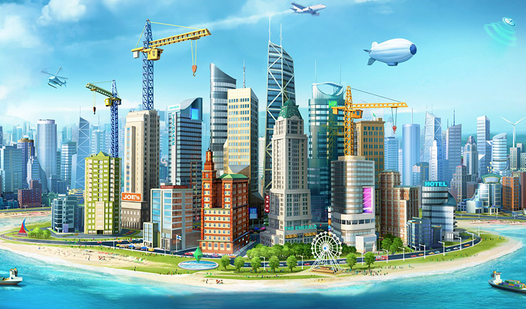
These focus on architectural planning and logistical optimization — laying out roads, managing worker flow, maximizing production from limited space. Sim City: Island Building Simulator applies city-builder mechanics to a compact island format, giving you the planning depth of SimCity in a more manageable scope.

Sim City: Island Building Simulator
Staring at a blank screen while your coffee gets cold is the perfect sign that you need a creative escape. Sim City: Island Building Simulator turns t...
▶ Play FreeHero-Led Kingdom Games
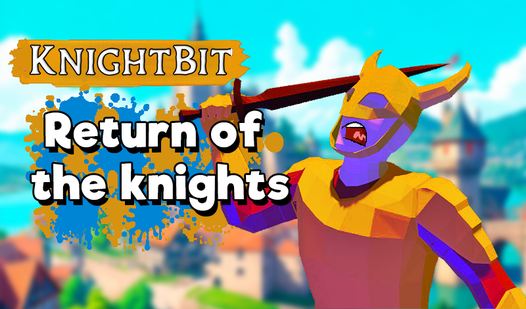
Here you control a hero character who develops alongside the kingdom. Your personal progression (skills, equipment, abilities) intertwines with your kingdom's growth. KnightBit: Return of the Knights puts you in command of knights reclaiming and rebuilding a lost realm, blending RPG character progression with the kingdom-building loop.
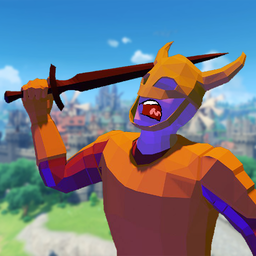
KnightBit: Return of the knights
Capture flags and outscore the opposition in KnightBit: Return of the knights to prove your dominance on the battlefield. You control a valiant warrio...
▶ Play FreeSettler and Island Games
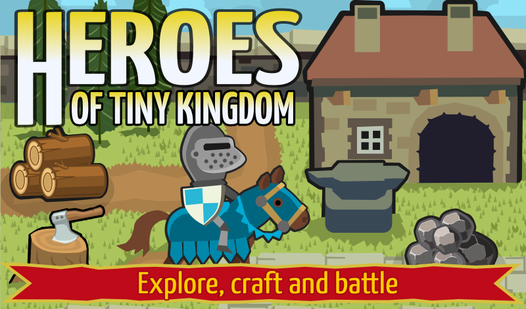
These games focus on building civilization from scratch on uninhabited or underdeveloped land. Heroes of Tiny Kingdom exemplifies the formula perfectly — you're a knight transforming a small, empty island into a bustling settlement, one building at a time.
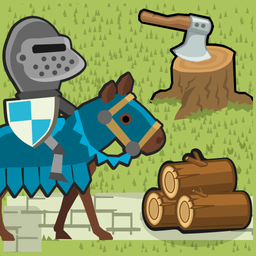
Heroes of Tiny Kingdom
Building a thriving civilization from a single empty island satisfies the inner architect in every player. Heroes of Tiny Kingdom taps into that satis...
▶ Play FreeDecision-Based Kingdom Games
These lean hardest into strategic thinking and consequences. Cool Kingdom gives you the throne and confronts you with meaningful choices — decisions that directly affect whether your kingdom flourishes or fails. Less resource accumulation, more judgment-based gameplay.
Best Free Small Kingdom Games Online Right Now
These are the top picks for Small Kingdom онлайн — all free, all browser-based, all playable without any downloads or registration.
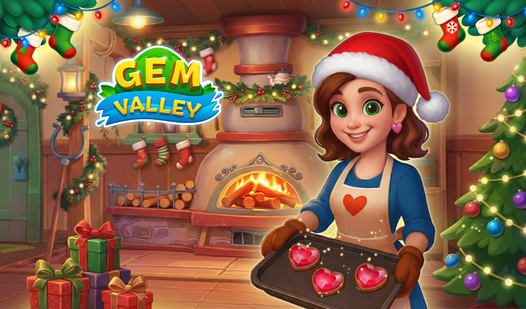
Gem Valley
A relaxing merge-and-build experience set in a cozy kingdom environment. Gem Valley focuses on the satisfying loop of collecting gems, merging resources, and constructing new structures as your valley slowly fills with life. The pacing is gentle and the visual progression is lovely — excellent for players who want steady, stress-free advancement.
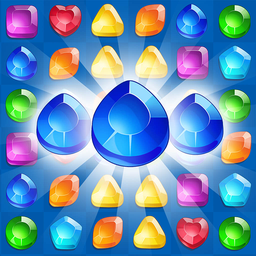
Gem Valley
Align vibrant gems to clear challenging boards and watch your sleepy town transform into a thriving paradise. Each level in Gem Valley forces you to t...
▶ Play FreeVikings and Dragon Island Farm
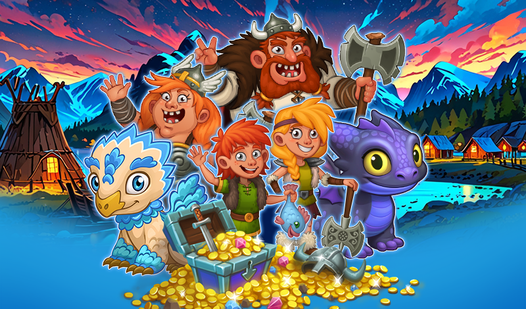
The Small Kingdom formula wrapped in Viking mythology. You're building and managing a Norse island settlement, dealing with farming, crafting, raids, and the occasional dragon problem. The Norse setting gives it a distinct identity — mead halls instead of taverns, longboats instead of docks. If you want your kingdom to have a bit more edge and lore, this is a strong pick.
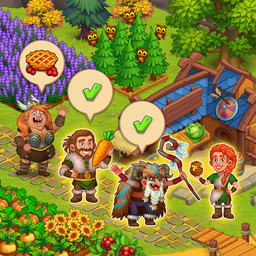
Vikings and Dragon Island Farm
Cultivate your own flourishing settlement in Vikings and Dragon Island Farm while balancing the needs of your growing mythical creatures. Managing a t...
▶ Play FreeRoyal Mahjong Castle Build
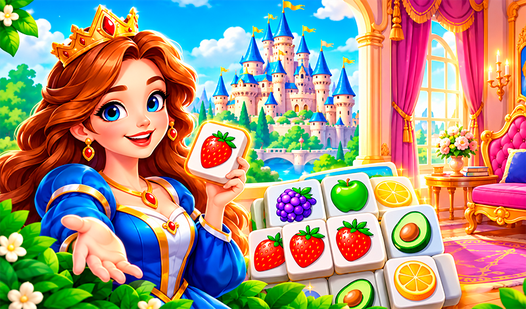
An unusual combination that works better than it has any right to. Mahjong puzzle mechanics are tied to a castle-building progression system — clear mahjong boards to earn building materials, use those materials to construct and upgrade your royal castle. The puzzle element gives each session an active engagement hook that pure idle kingdom games lack. Perfect if you want your hands busy while your kingdom grows.
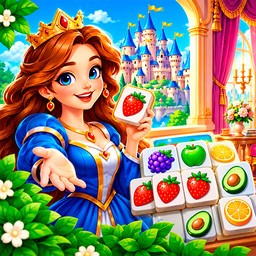
Royal Mahjong Castle Build
Matching identical tiles unlocks the path to restoring a fallen kingdom in Royal Mahjong Castle Build. Every successful board clear grants precious st...
▶ Play FreeMerge Islanders
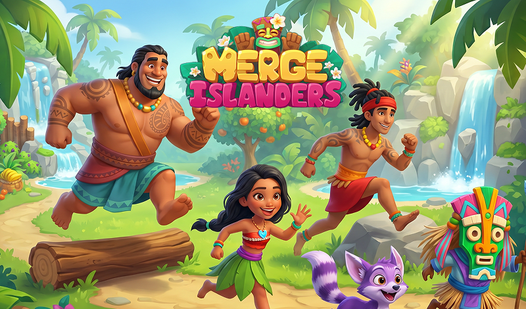
One of the cleanest implementations of merge-based kingdom building available in a browser. You're working with a small island, merging resources and buildings to produce increasingly powerful structures. The island scope keeps everything tight and legible — you always know what you have, what you need, and what your next move should be. That clarity is a real strength in a genre where things can get cluttered fast.

Merge Islanders
Fans of logic games and brain challenges will find their new obsession in this sunny tropical escape. Merge Islanders brings you to the beautiful isla...
▶ Play FreeCommon Mistakes That Slow Your Progress
Before jumping in, here are the traps that catch most beginners:
Overbuilding production before you have workers. More farms than workers is wasted space. Always keep population growth in sync with your building expansion.
Neglecting the main quest line. The main quests are almost always the most efficient path through the progression system. Chasing side objectives first often leads to dead ends where you lack key unlocks.
Spending premium resources on impatience. Gems and crystals spent on time skips are almost always regrettable. Save them for upgrades with ongoing value.
Not exploring the map. Many players tunnel-vision on their starting area and miss adjacent territories with valuable resources, hidden bonuses, or quest triggers that would accelerate progress significantly.
Building without a plan. Small Kingdom games reward spatial thinking. Placing buildings randomly creates gridlocked layouts you'll eventually need to demolish. Before placing anything, know why it's going there and what it enables next.
Trying to be self-sufficient too early. Attempting to produce every resource yourself when you're just starting out spreads your build effort too thin. Focus on a few production chains, hit efficiency there, then branch out.
Why the Genre Has Real Staying Power
The appeal of Small Kingdom games isn't accidental or shallow. These games address several genuine gaming instincts at once:
Authorship and ownership. Your kingdom is yours. The layout, the priorities, the strategic choices — they reflect your decision-making over dozens of sessions. That sense of building something that's personally yours is more satisfying than it might sound.
Visible, tangible progress. Unlike many games where progress is abstract or numerical, Small Kingdom games show you exactly how far you've come. A handful of rough huts becomes a proper town. The visual transformation is its own reward.
Genuine flexibility. A five-minute check-in to collect resources and queue builds is useful. A two-hour deep session is equally rewarding. The genre accommodates both without penalizing either. This is rarer than it should be in gaming.
Low ceiling of entry, high ceiling of depth. You can be productive in your first session without reading a manual. But the strategic depth — adjacency optimization, resource chain management, merge planning — reveals itself gradually for players who want it. You never feel forced into complexity before you're ready.
If you've been wondering как играть в Small Kingdom, the answer is this: start deliberately, protect your resource base before expanding, always follow the quest line, and let the merge or build systems do what they're designed to do. All the games in this guide are free, browser-ready, and waiting. Pick the style that appeals most and start your first kingdom today.