How to Play Runner Games: Rules, Tips & Free Games
Runner games are one of those genres that hooks you instantly. The premise is always clean: keep moving, dodge obstacles, rack up points. But knowing how to play Runner games well — really well — takes more than button-mashing. This guide covers everything: the rules, sharp strategies, and a handpicked list of free Runner games you can start playing right now, no account required.
What Is a Runner Game?
At its core, a Runner game is an action game where your character moves through a level — sometimes endlessly, sometimes toward a goal — and you must keep them alive. The character typically moves forward on their own (or at a set speed), and you control jumps, slides, direction changes, and special moves.
The genre has roots in classic arcade platformers, but it found its identity in the touchscreen era. Today, runner games come in dozens of flavors: endless runners, level-based runners, parkour runners, combat runners, and hybrid genres where running pairs with RPG progression or puzzle mechanics.
What makes runners addictive is the feedback loop: every run teaches you the layout a bit better, every death feels fair (mostly), and every new high score delivers a very satisfying dopamine hit.
One of the best ways to understand the Runner genre is to jump straight in. Smashing Runner 3D is a great starting point — an endless runner set in a wild obstacle course where you're constantly navigating barriers, jumps, and tight corridors. The 3D perspective adds a spatial challenge that flat runners simply don't offer.

Smashing Runner 3D
Fans of arcade runners will find Smashing Runner 3D to be the perfect test of their reflexes. This addictive smash runner challenges you to navigate a...
▶ Play FreeRunner Rules: Core Mechanics You Need to Know
Before getting into strategy, here are the fundamental rules that apply to almost every Runner game:
Movement — Your character usually moves automatically. You control jumps, crouches, and lane switches. Some runners give full directional control; most limit you to vertical or lateral inputs.
Obstacles — The primary threat in any runner. These can be static (walls, gaps) or dynamic (moving barriers, enemies). Colliding with an obstacle typically ends your run or costs a life.
Collectibles — Coins, gems, power-ups — these appear throughout the level and often drive progression systems. Collect them when you can, but never at the cost of surviving.
Distance and score — Your score is usually a function of distance traveled, coins collected, or enemies defeated. Each game weights these differently, so check the scoring screen before you start optimizing.
Lives and continues — Some runners give multiple lives or let you revive with power-ups. Others are one-strike games. Know your game's rules before getting frustrated at what might be intentional design.
Checkpoints — Level-based runners often have checkpoints; endless runners usually don't. Plan your risk-taking accordingly.
For a parkour-focused take on runner mechanics, Obby World: Parkour Runner pushes the movement system further. You're not just running — you're wall-jumping, flipping, and threading through Obby-style gauntlets. The controls stay snappy even when the levels get complex.
How to Play Runner Games: Strategies That Actually Work
Knowing the rules is one thing. Playing well is another. Here are the strategies that separate good runner players from great ones.
1. Watch ahead, not at your feet
The most common beginner mistake in any runner is focusing on where your character is right now instead of what's coming next. Runners move fast, and your reaction window is small. Train your eyes to look 2–3 obstacles ahead so you're never caught off guard.
2. Learn the pattern
Most runner games — even endless ones — use procedural generation with a fixed set of chunk patterns. After a few runs, you'll start recognizing these sequences. When you spot a familiar opening, your muscle memory kicks in and you react faster than if you're reading each obstacle fresh.
3. Don't over-commit to collectibles
That coin is tempting. That gem is shiny. But experienced runners know that collectibles are bait — they're placed near risks specifically to test your discipline. In early runs, ignore them entirely and focus on surviving. Once you're consistently reaching further distances, start incorporating collect-and-dodge timing.
4. Use power-ups tactically
If your runner has active power-ups (shields, magnets, speed boosts), don't pop them the moment you pick them up. Save shields for sections you know are hard. Save speed boosts for open stretches where you can profit from extra distance without extra risk.
5. Adjust your mental pace
One of the sneakiest design tricks in runner games is that the world speeds up as you progress. Your brain needs to adapt its processing speed too. If you find yourself dying in the late game more often, you're probably still thinking at early-game pace. Take a few seconds before each run to mentally gear up.
Coffee Runner is a great example of how the genre can take an unexpected theme and still nail the core runner tension. You're managing a coffee shop on-the-go, but the runner mechanics keep the energy high and the stakes real.
6. Master jump timing
In most runners, jumps have a fixed arc — but the timing of when you jump changes everything. Jumping a fraction too early can send you into an obstacle you were trying to clear. Practice jumping "into" the obstacle gap rather than before it.
7. Use sound as a cue
Many runner games telegraph incoming obstacles with audio cues: a whoosh, a warning beep, a mechanical click. Play with headphones and learn what each sound means. This gives you a fraction of a second of extra reaction time — at high speeds, that fraction can be everything.
8. Run in sessions, not marathons
Runner games are designed for short bursts. After 20–30 minutes of continuous play, your reaction time starts to degrade and you'll die to obstacles you'd normally handle cleanly. Take breaks. Come back fresh. Your scores will improve.
Level Up Runner adds an RPG layer to the formula — your character grows stronger with each run, which means your strategies evolve over time. Early runs are survival-focused; later runs open up aggressive, high-risk lines that weren't possible before.
Best Free Runner Games Online
The Runner genre is massive, which makes choosing where to start tricky. Here's a breakdown of standout free games across different styles.
Action-Focused Runners
Blade Runner: History of Events takes the runner formula somewhere unusual — you're moving through historical events, with the running mechanic serving as both gameplay engine and narrative thread. It's a surprisingly engaging hybrid for players who want a bit of story with their sprinting.
Gun Runner amps up the combat angle significantly. You're not just avoiding enemies — you're shooting through them. The runner pacing is preserved, but every run adds tactical decisions about when to fire and when to maneuver.
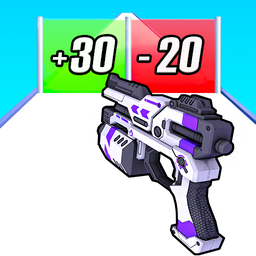
Gun Runner
Staring at the screen during a boring afternoon is the worst, but finding an instant distraction just became effortless. Gun Runner acts as the perfec...
▶ Play FreeNeon Gear Runner goes full cyberpunk aesthetic with tight controls and a visual style that makes every run feel cinematic. The neon glow against dark backgrounds is genuinely satisfying to watch in motion, and the speed ramp feels perfectly calibrated.
Character-Based Runners
Blob Runner is built around a squishy blob character that transforms as it collects power-ups. The physics are bouncy and forgiving, and the visual feedback on mistakes is friendly enough that it suits all ages.
Skibidi: Runner leans into internet meme culture hard, but beneath the absurdity is a solid runner with good level design and responsive controls. Great for a quick session when you want something low-stakes and funny.
Shoe Runner is exactly what it sounds like — you're a shoe, and you're running. The concept sounds absurd, but the execution is genuinely fun, with obstacles designed around the character's unique hitbox shape.
Seasonal and Themed Runners
Runner ball: winter game swaps the traditional runner character for a physics-based ball in a winter setting. The icy surfaces change how momentum works, adding a layer of physics skill on top of standard runner timing. If you've been playing regular runners for a while, the slippery controls offer a fresh challenge.
Hybrid Runners
Some of the most interesting runner games blur genre lines entirely.
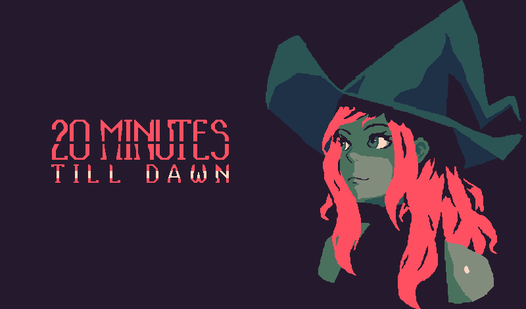
20 Minutes Till Dawn combines runner-style movement with top-down shooting and roguelike progression. Each run feels different thanks to upgrade choices and enemy variation — and the 20-minute clock creates genuine tension toward the end.

20 Minutes Till Dawn
Surviving the night against waves of Lovecraftian nightmares requires more than just quick reflexes and a steady trigger finger. 20 Minutes Till Dawn ...
▶ Play FreePew Pew Dose mixes bullet-hell patterns with runner movement mechanics. If you've ever wanted a runner where the obstacles shoot back, this delivers that experience with style.
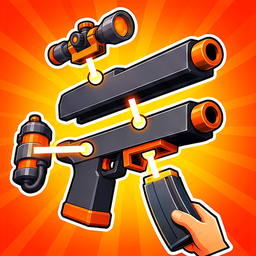
Pew Pew Dose
Stuck in a boring meeting or just need a quick mental escape from the daily grind? Pew Pew Dose is the ultimate arcade 3D shooter that turns your bore...
▶ Play FreeCommon Mistakes New Runner Players Make
Even experienced gamers trip up when they first approach runner games. Here are the most common errors and how to correct them:
Panic-jumping — When an obstacle appears suddenly, the instinct is to jam the jump button repeatedly. This almost always makes things worse. A second jump while mid-air (if the game doesn't support double-jump) will delay your landing and leave you in a worse position. One clean jump beats ten panicked ones.
Ignoring the warm-up phase — Most endless runners start slow and ramp up speed over time. New players treat the slow opening as boring filler. Veteran players use it to calibrate their timing. Don't switch to autopilot just because it's easy at the start.
Chasing the previous score immediately — After a great run, you want to beat it right away. But runner games reward a clear head, and the pressure of immediately topping your personal best often leads to sloppy decisions. Run one casual round first to reset your focus.
Not learning from deaths — Runs happen so fast that you don't always absorb the lesson. The moment you die, mentally replay the last 2–3 seconds. What was the obstacle? What would you need to do differently? This micro-debrief habit accelerates improvement dramatically.
Neglecting sound — Playing runner games with music on your phone while the game audio is off removes one of your best information channels. Audio cues are deliberately designed to help you react. Use them.
Mobile vs. Browser: Where to Play Runner Games
Runner games were built on mobile, and touch controls are still excellent for the genre — especially games that require only taps to jump. But browser-based runners have their own edge.
On mobile, you get intuitive swipe-based controls that feel natural for lane-switching runners. The screen size is limiting for detail, but for pure reaction gameplay it works well.
In the browser, keyboard input offers precision advantages in games with complex timing requirements. The larger screen makes it easier to spot obstacles earlier — which benefits players who have learned to read ahead rather than react at the last moment.
For casual play, the platform rarely matters. But if you're serious about improving, browser play tends to build better habits because the wider field of view forces proper visual scanning rather than reactive tunnel-vision.
Which Runner Game Should You Start With?
With the genre spanning pure infinite-distance games to story-driven hybrids, the right starting point depends on what you're after:
- For pure speed and reactions: Smashing Runner 3D, Neon Gear Runner
- For casual, lighthearted runs: Blob Runner, Skibidi: Runner, Shoe Runner
- For deeper progression: Level Up Runner, 20 Minutes Till Dawn
- For unusual themes: Coffee Runner, Blade Runner: History of Events
- For a real challenge: Pew Pew Dose, Gun Runner
Start with whatever theme grabs you first. The mechanics transfer across games — if you build good jumping and reading habits in one runner, those habits apply everywhere else in the genre.