How to Play Rolling: Rules, Strategies & Free Games
Rolling games have been captivating players for decades — and honestly, there's a good reason for that. The moment you start learning how to play Rolling, something clicks. A ball rolls, bounces, merges, or knocks things over, and suddenly ten minutes have become an hour. Whether you're new to the genre or looking to sharpen your edge, this guide covers everything: the rules of Rolling, core strategies, and the best free games to play right now without downloading anything.
What Exactly Is a Rolling Game?
Before getting into how to play Rolling mechanics, it helps to understand what the genre actually covers. Rolling games are a broad family of titles built around one central physics concept: momentum. A ball (or multiple balls) moves through a space, and the player's job is to guide, time, or manipulate that motion to reach a goal.
The goal varies wildly. In some games you're clearing colored bubbles. In others you're guiding a ball through an obstacle course, merging numbered spheres for high scores, or sinking balls into pockets like in billiards. What unites them is that satisfying feeling of watching circular objects move through space with weight and purpose.
Rolling games tend to fall into a few broad sub-genres:
- Physics platformers — control a rolling ball through levels, avoid hazards
- Merge/number games — balls combine when they share the same value
- Bubble shooters — aim and launch balls to match colors
- Billiards-style games — bank shots, angles, and spin
- Ball sorting puzzles — arrange colored balls in the correct containers
Each sub-genre has its own ruleset and strategy layer, but the underlying intuition you build in one transfers surprisingly well to the others.
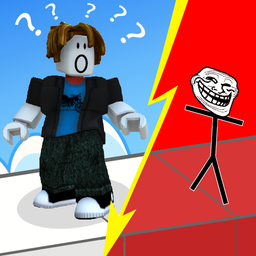
One game that sits in an interesting crossover space is Obby, But He's Trolling You! — an obstacle course platformer where the level design keeps subverting your expectations. Rolling and running through a world that actively fights back trains your reaction timing better than almost anything else.
Obby, But He's Trolling You!
Platforming games are notorious for being unforgiving, but few turn the frustration of failure into a hilarious comedy routine quite like this one. Ob...
▶ Play FreeHow Rolling Rules Actually Work
Learning how to play Rolling properly starts with understanding the physics model each game uses. Real-world physics are simplified into a handful of core rules that repeat across the genre:
Momentum and Speed
Balls accelerate downhill and slow uphill. This sounds obvious, but most beginners don't account for it when planning their path. If you need to clear a gap, you need enough speed before you reach the edge. If you need precise placement, you need to be moving slowly. Speed management is the first skill to develop.
Collision and Bounce
When a ball hits a surface, it bounces according to the angle of impact. A ball hitting a flat surface straight on bounces straight back. A ball hitting at a 45-degree angle bounces at 45 degrees in the other direction. Internalizing this geometry is what separates average players from good ones — especially in bubble shooter and billiards variants where you need to bank shots off walls.
Gravity and Arcs
In aerial rolling games, balls follow a parabolic arc. The longer you hold before releasing, the steeper the arc. Understanding this lets you aim precisely at targets without needing a visible trajectory line.
Color and Value Matching
In merge and bubble games, matching is the core mechanic. Balls with the same color or number combine when they touch, often creating chain reactions. The rule is deceptively simple: plan your matches two or three moves ahead, because random matching leads to a cluttered board with no winning moves.
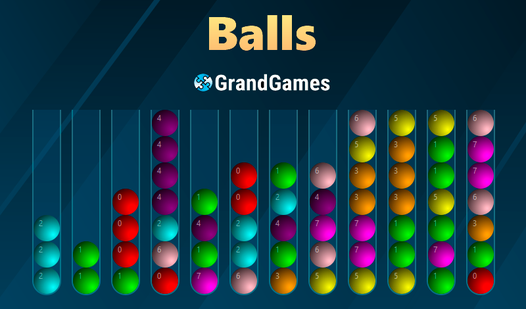
Balls GrandGames is a perfect game to practice the sorting side of these rules. You get a set of containers and a mix of colored balls — sort them correctly with limited moves, and you'll feel the satisfaction of a well-executed plan clicking into place.

Balls GrandGames
Organize colorful spheres into their matching glass vials until every container holds a single shade. Balls GrandGames challenges your brain by turnin...
▶ Play FreeCore Strategies for Rolling Games
Once you know the rules, strategy is where the real depth lives. Here's what actually works across the different types of Rolling games.
Always Look Ahead, Not at the Ball
New players watch the ball. Good players watch where the ball is going. Shift your focus two or three positions ahead — at the landing spot, the next obstacle, the target zone. Your inputs happen before the ball arrives, not after.
Control Your Entry Angle
In physics-based rolling, how you enter a surface matters more than where you aim from. A steep entry angle on a slope sends you flying. A shallow entry hugs the surface. Learn to approach slopes and ramps from the side rather than head-on when you need to maintain control.
Chain Reactions Are Your Best Friend
In merge games, single matches are fine. Chain reactions are where the points multiply. To set up chains, try to cluster matching values together rather than spreading them across the board. When one match triggers a cascade of merges, your score can jump by 5-10x in a single move.
Ball Run 2048: merge number is built entirely around this principle. Balls roll down a lane and merge when they're equal — the strategy is in choosing which path to send each ball so merges cascade rather than stall. One smart chain can clear half the board.
Bank Shots Save Difficult Positions
In billiards and bubble shooter variants, direct shots often aren't possible. When a straight line to your target is blocked, use the wall. Calculate the reflection angle (angle in = angle out), aim at the wall instead of the target, and let the bounce do the work. This is the single most underused technique among casual players.
Prioritize Clearance Over Score
Especially in later levels of sorting and merge games, the board getting crowded is more dangerous than a low score. When the board fills up, you lose flexibility and run out of options. Clear space first, chase big combos second. The score will come from a clean board.
Save Your Power-Ups
Almost every Rolling game gives you some kind of special ability — a bomb, a wildcard ball, a speed boost, an extra move. Beginners use these the moment they're available. Intermediate players use them when stuck. Advanced players save them for the moment right before they'd have lost, which ironically often never comes because the saved option changes how they play conservatively.
Red Ball - Bouncy Adventure rewards this kind of resource thinking. The platformer sections offer shortcuts and secrets that you'll only find if you approach each area methodically rather than charging through.

Red Ball - Bouncy Adventure
Staring at the same spreadsheet for hours can make anyone crave a quick brain-teasing escape. Red Ball - Bouncy Adventure provides the perfect remedy ...
▶ Play FreeHow to Play Rolling Games: Specific Sub-Genre Tips
For Bubble Shooters
- Always check the next ball coming into your shooter. Plan your current shot around what's next, not just what's in front of you.
- Color islands kill you. If a cluster of one color becomes isolated from matching balls, it's stuck. Eliminate isolated clusters early.
- Bank off the top wall when you have no clean angle. A lob into the top corner bounces out to almost anywhere on the board.
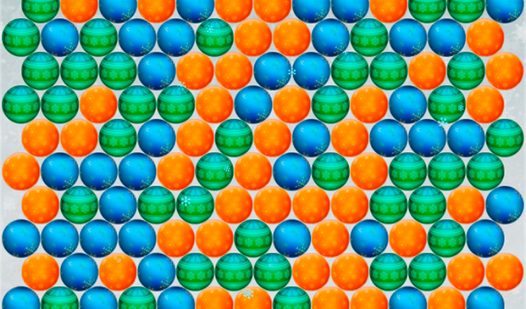
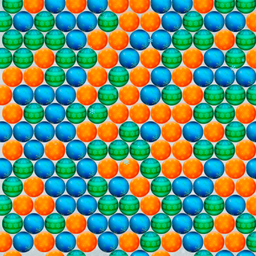
Winter Bubble is a great place to practice bubble strategy. The winter theme adds visual clarity to the ball colors, making it easier to track clusters.
Winter Bubble
Matching colorful ornaments is the ultimate way to sharpen your focus while celebrating the festive season. Winter Bubble transforms the classic bubbl...
▶ Play FreeFor Billiards-Style Games
- Control the cue ball. Where the cue ends up after a shot determines your options on the next shot. Skilled billiards players think two shots ahead at minimum.
- Use spin (English). Most billiards games let you apply topspin, backspin, or sidespin to the cue ball by clicking off-center. Backspin stops the cue in place after impact. Topspin follows through. Sidespin changes the bank angle.
- Long shots are low percentage. The longer the distance, the more small errors compound. When possible, position the cue ball close to your target.
Russian billiard uses larger pockets and a distinctive ball set — excellent for learning angle play without the pressure of tight pockets.
Russian billiard
Staring at a blank screen during a midday slump is the worst, but a quick round of Russian billiard is the perfect remedy to sharpen your focus. This ...
▶ Play FreeFor Merge and Number Rolling Games
- Cluster your values. Keep 16s near other 16s, 32s near 32s. When new balls roll in, guide them toward their matching cluster.
- Don't neglect the low values. A pile of 2s and 4s at the front blocks everything behind it. Clear small values before they build up.
- Watch the preview. Most merge games show you the next ball before you place it. Use that information to prepare.
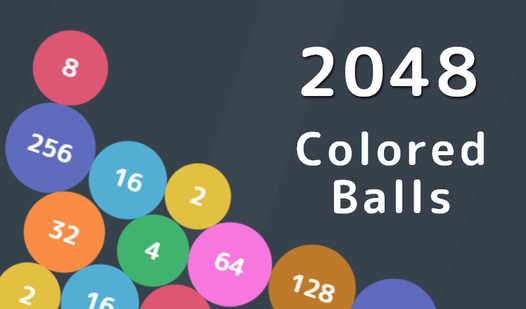
2048 Colored Balls takes the classic 2048 concept and wraps it in a rolling ball format. The combination of color and number matching creates a surprisingly rich decision space.

2048 Colored Balls
Merging mechanics turn simple physics puzzles into addictive brain training sessions that keep your logic skills sharp. 2048 Colored Balls takes the c...
▶ Play FreeBest Free Rolling Games to Play Right Now
If you've absorbed the strategies above and want to put them to use, here are more great options available free on FreeJoy.
A New Year's miracle! Connect the balls! brings a festive take on the ball connection mechanic — draw paths between matching colors to clear the board. Timing and spatial planning matter more than speed.
A New Year's miracle! Connect the balls!
Fans of 2048 style logic challenges will find their new holiday obsession right here. A New Year's miracle! Connect the balls! turns simple physics in...
▶ Play FreeEasy Bubble Shooter lives up to its name in the early levels, making it an ideal entry point if you've never touched the genre. The mechanics are clean, the learning curve is forgiving, and the mid-game challenge ramps up naturally.
Easy Bubble Shooter
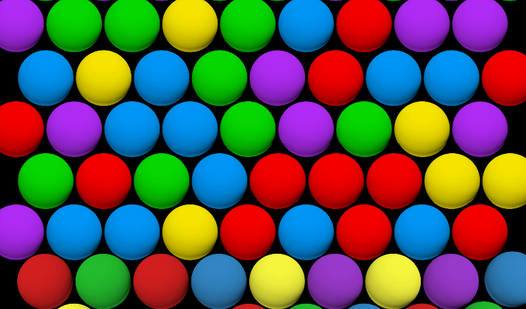
Aim your cannon and pop clusters of colorful orbs before they cross the danger zone on your screen. Easy Bubble Shooter puts a refreshing spin on the ...
▶ Play FreeTower of Colors 3D Island adds a vertical dimension to color-matching. Balls stack on a tower, and you're rotating and launching to match layers. The 3D perspective requires a small mental adjustment but quickly becomes intuitive.
Tower of Colors 3D Island
Physics puzzles satisfy a unique itch when you watch a massive structure crumble into the sea with a single well-placed shot. Tower of Colors 3D Islan...
▶ Play FreeAll of these are playable in your browser, no account required. If you want to try Rolling games without any commitment, this is the easiest way to start.
Common Mistakes to Avoid
Even players who understand the rules make these errors consistently:
Moving too fast. Rolling games reward patience. A rushed shot in billiards, a hasty merge decision, a poorly timed jump — speed punishes more than slowness does. Take an extra half-second before each move.
Ignoring the board edges. In bubble and merge games, balls or bubbles near the edges tend to get ignored. They pile up quietly and then suddenly cost you the game. Check the corners and edges regularly.
Playing for the flashy shot. The 5-ball chain combo looks great but requires setup you might not have. The boring 2-ball merge keeps the board clean. Pick the reliable play, especially when you're close to losing.
Forgetting that failure teaches. Rolling games have some of the best failure feedback loops in gaming. When you lose, you usually know exactly what went wrong — the board got too full, you missed the angle, you didn't plan the merge sequence. Use that information on the next run.
Why Rolling Games Are So Addictive
There's a reason "just one more round" happens so reliably with this genre. Rolling games sit at an intersection of skill and unpredictability — you get better through practice, but the random elements (which ball comes next, how the physics plays out on a tricky surface) keep each run feeling fresh.
The feedback loop is tight. Actions have immediate, visible consequences. The ball lands, the bubbles pop, the numbers merge — and you know immediately whether you made the right call. That instant clarity is rare, and it's what makes learning how to play Rolling feel rewarding rather than frustrating.
The genre also scales beautifully. Easy Bubble Shooter and 2048 Colored Balls are approachable on day one. Russian Billiard and Ball Run 2048 have genuine strategic depth that holds up over hundreds of sessions. You can engage as casually or as seriously as you want.