How to Play Professional: Rules, Strategies & Free Games
If you've been searching for how to play Professional games online, you're in the right place. The "Professional" tag on FreeJoy covers a wide spectrum of titles that reward skill, focus, and smart decision-making — from tower defense to puzzle solving, from shooters to fishing simulators. These aren't throwaway casual experiences. They're games that pull you in, make you think, and keep you coming back until you genuinely get good at them.
This guide breaks down what makes a game "Professional" quality, walks you through the core rules and mechanics you'll encounter, and shares strategies that actually work. Plus, you'll find the best free Professional games to play right now — no downloads, no registration, straight from your browser.
What Does "Professional" Mean in Online Gaming?
The Professional tag doesn't mean you need to be a trained esports athlete to enjoy these games. It means the game has a skill ceiling — a point where casual button-mashing stops working and thoughtful play begins to matter. Professional games share a few common traits:
Depth over simplicity. There's always something new to learn. A puzzle that seemed impossible becomes obvious once you grasp one hidden mechanic. A shooter level that felt chaotic makes sense once you learn the map.
Skill progression. Your performance visibly improves the more you play. You stop losing lives in the same spots. Your reaction time sharpens. Your resource management gets tighter.
Replayability. Professional games rarely feel "done" after one run. There's always a faster time, a higher score, or a harder difficulty mode waiting.
Strategy matters. Pure reflexes won't save you. You need to plan — whether that's positioning units in a tower defense, managing tiles in a puzzle, or controlling angles in a shooter.
The games you'll find under this tag on FreeJoy range from action-heavy to puzzle-focused, but all of them respect your intelligence and reward your effort.
How to Play Professional Games: Core Rules
The rules that apply to Professional how to play situations vary by genre, but some fundamentals cross every category.
Read the Tutorial — Then Ignore It
Almost every Professional-tier game has a tutorial. Read it. Absorb the basics. But then go off-script and start experimenting. Tutorials teach mechanics, not strategy. The moment you start applying the tutorial knowledge creatively — that's when you start playing professionally.
Understand Resource Economy
Whether it's sun in a plant-defense game, bullets in a shooter, or tile positions in a puzzle — every Professional game has a resource you're managing. The single biggest gap between beginner and intermediate players is resource waste. Beginners spend everything the moment they get it. Better players save, accumulate, and deploy at the right moment.
Learn the Loss Patterns
When you fail, don't just restart. Ask why you lost. Was it positioning? Did you run out of a resource too early? Did you miss a pattern? Professional play is largely about recognizing loss patterns and adjusting. If you died in the same spot twice, that spot is telling you something.
Prioritize Consistency Over Speed
This applies especially to puzzle and strategy games. A slower, consistent approach almost always beats a fast, chaotic one. Get one area working well before expanding. Secure one lane before opening another front.
Plants vs. Zombies Fusion Legend: Tower Defense Done Right
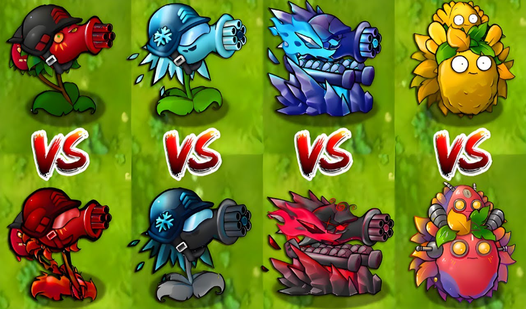
Plants vs. Zombies Fusion Legend takes the classic formula and pushes it further. If you know how to play Professional tower defense, this game fits that mold perfectly. Zombie waves get harder, your plant lineup gets more complex, and the margin for bad decisions shrinks as you advance.
Key rules:
- Place sun-producing plants early — income first, defense second
- Fill lanes before waves hit; an empty lane is a dead lane
- Fusion mechanics let you combine plants for upgraded abilities — experiment with combinations before committing to a full board layout
Strategic tips:
- Don't spend all your sun on expensive plants in round one. Build an economy first
- Watch for zombie type patterns — armored zombies need different counters than fast zombies
- Keep a "reserve" slot in each lane for emergency plants when a wave breaks through

Plants vs Zombies Fusion Legend
Defending your lawn against relentless undead waves takes on a fresh twist in Plants vs Zombies Fusion Legend. You will strategically place your botan...
▶ Play FreeNoob and Herobrine vs Hacker: Adventure Mechanics
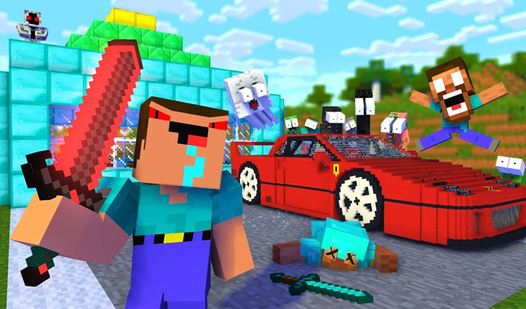
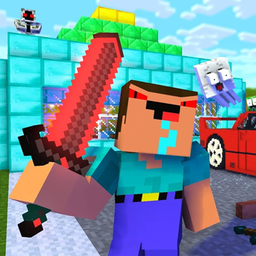
Adventure games in the Professional category test your spatial awareness and timing. Noob and Herobrine vs Hacker drops you into a blocky world where the challenge escalates fast — hackers throw increasingly tricky obstacles at you, and you need to adapt on the fly.
How to play Professional adventure games:
- Always explore before committing to a path. Rushing into unknown terrain is how you fail
- Learn the timing windows for obstacles — most hazards have a rhythm you can read
- Use your character's specific abilities strategically; each character in this game has a role
Strategic tips:
- If you're stuck on a section, slow down and watch the obstacle pattern before attempting
- Cooperative mechanics in duo-character games mean you should alternate who takes risks
- Check for secret areas — Professional-tier adventure games often reward exploration
Noob and Herobrine vs Hacker: Adventure
Fans of iconic blocky adventures will absolutely adore the chaos that unfolds when an unlikely duo takes on a digital villain. Noob and Herobrine vs H...
▶ Play FreeProfessional Strategies for FPS Games
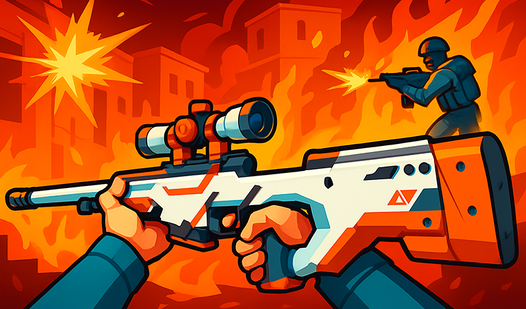
CS – DeathMatch is exactly what the name suggests: fast, brutal, and deeply skill-dependent. This is where Professional strategies really separate players from beginners. First-person shooters are mechanically demanding — aim, positioning, game sense, and resource management all have to come together simultaneously.
How to play Professional FPS:
Crosshair placement — Keep your crosshair at head level at all times, even when no enemies are visible. Most beginners aim at the floor and then jerk upward when a target appears, costing them crucial milliseconds.
Angle control — Don't peek wide angles unnecessarily. Slice corners carefully. The player who controls the angle controls the engagement.
Sound cues — In DeathMatch format, audio tells you where action is. Learn which sounds indicate reloading (vulnerability), footsteps (position), and impacts (direction of engagement).
Recoil control — Almost every weapon has a spray pattern. Instead of spraying randomly, pull your aim downward to compensate for upward kick. Practice this against walls before live matches.
Strategic tips for CS – DeathMatch:
- In DeathMatch specifically, positioning matters more than most players realize — spawn in a defensible area, not an open one
- Track your kill/death flow; if you're dying repeatedly, change your route entirely
- Head shots. Always head shots. It's the single highest-impact mechanical improvement you can make

CS - DeathMatch
Fans of fast-paced tactical action will find their new obsession in CS - DeathMatch. This high-octane fps delivers the adrenaline of a classic shooter...
▶ Play FreePuzzle Mastery: How to Play Professional Puzzle Games
Puzzle games are deceptive. They look simple, but the Professional versions have layers of complexity that catch players off guard. The rules of how to play Professional puzzles are less about reflexes and more about pattern recognition and forward planning.
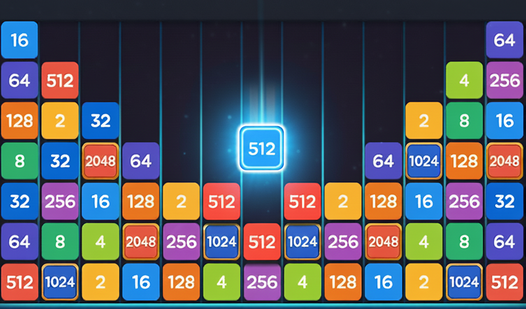
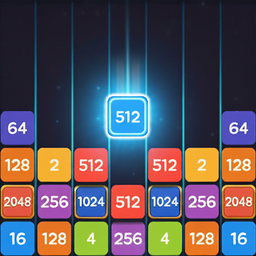
2048 Merge Blocks is a perfect example. The premise is elegantly simple: slide tiles to merge identical numbers, working toward 2048. But the depth is enormous. Bad tile placement in round three comes back to haunt you in round twenty.
Core rules for 2048 and merge puzzles:
- Choose a corner and build toward it. Pick one corner — top-right, bottom-left, wherever — and always aim to keep your highest tile there
- Work in two directions only. Sliding all four directions without a plan fragments your board. Pick two primary swipe directions and only deviate when necessary
- Never move your corner tile. Once your highest value is anchored, protect that position relentlessly
- Build chains, not islands. Merge tiles in sequences, not scattered pairs
Professional strategies:
- Think three moves ahead, not one. Each slide sets up the next, so visualize the consequence before swiping
- When the board starts filling, prioritize clearing space over chasing merges
- High tiles trapped in a corner means your swipe direction needs immediate correction
- The "U-shape" strategy — filling the board in a U-pattern from your anchor corner — is the most consistent approach for reaching high scores
2048 Merge Blocks
Staring at a stagnant screen while waiting for your next meeting or commute can feel like an eternity. 2048 Merge Blocks provides the perfect mental e...
▶ Play FreeCasual But Skilled: Magnetic Fishing
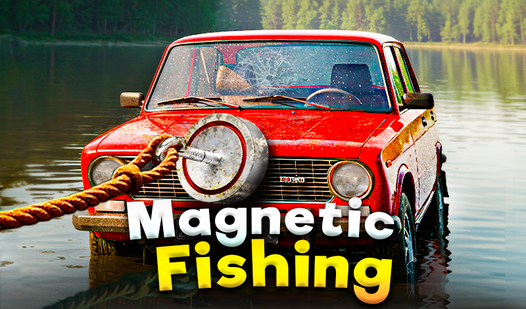
Not every Professional game is about combat or competition. Magnetic Fishing represents a category of Professional games built around patience, observation, and precision — skills that are genuinely hard to develop but immensely satisfying when they click.
The game rewards players who take time to understand what's in the water before fishing frantically. Each object raised has its own story, and the gameplay loop rewards curiosity as much as speed.
How to play Professional casual games:
- Don't rush the reel. Patience in fishing games is a core mechanic, not a character flaw
- Study object weight and magnetic pull — heavier objects require different timing
- Go for rare items in each session; they affect both score and narrative unlocks
Strategic tips:
- Learn which zones hold which object types — professional-level fishing is about reading the environment
- Don't dismiss "boring" finds; they often chain into more interesting discoveries
- Magnetic strength management is its own mini-game — conserve pull for valuable targets
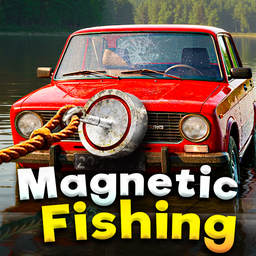
Magnetic Fishing
Staring at the clock and waiting for your shift to end feels like an eternity when you need a quick mental escape. Magnetic Fishing transforms those d...
▶ Play FreeMore Free Professional Games to Play Right Now
Beyond the featured titles, FreeJoy has a solid lineup of Professional games across every genre. Here are five more worth your time:
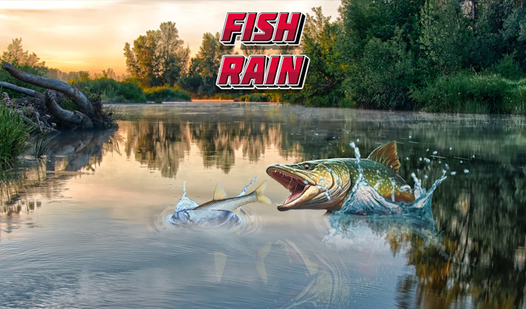
Fish Rain brings chaos physics into an arcade setting — the rain of fish means constant decision-making about which targets to prioritize. A deceptively skill-heavy game hidden behind bright visuals.

Fish rain
Casual gamers and outdoor enthusiasts will lose track of time while testing their patience in Fish rain. This authentic fishing simulator transforms y...
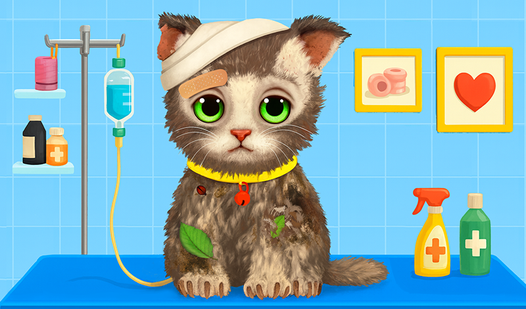
▶ Play FreeCat Makeover ASMR might sound relaxing, but its precision-based styling mechanics and creative constraints make it a genuinely skilled experience. The Professional angle here is spatial awareness and aesthetic decision-making under creative rules.

Cat Makeover ASMR
Animal lovers who enjoy heartwarming stories will fall in love with Cat Makeover ASMR instantly. This charming title lets you play the role of a kind-...
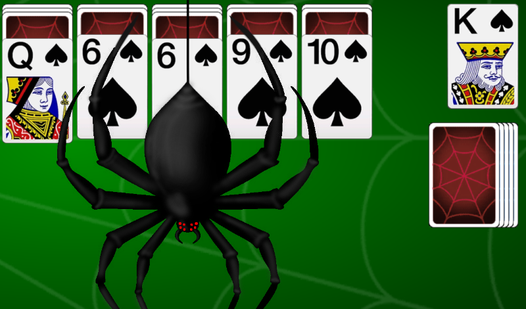
▶ Play FreeSolitaire Spider 2025 is one of the most demanding card games available online. Spider Solitaire with modern production values — multiple suit variants, increasing difficulty, and the kind of forward planning that makes chess players feel at home.
Solitaire Spider 2025
Stuck in a long meeting or just need a mental refresh between tasks? Solitaire Spider 2025 provides the perfect digital escape to clear your mind and ...
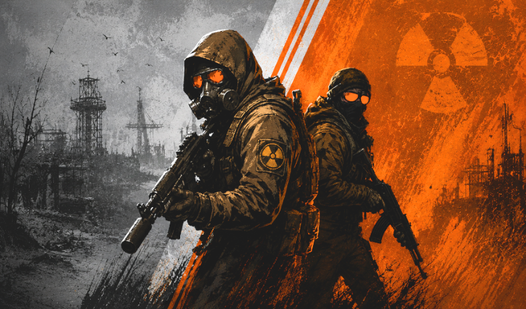
▶ Play FreeSTALKER-Strike brings survival-shooter tension into a browser format. The Professional strategies that apply to CS – DeathMatch carry over here, but with additional survival mechanics that demand resource awareness alongside combat skill.
STALKER-Strike
Tactical shooters define the peak of competitive gaming by demanding lightning-fast reflexes and flawless team coordination. STALKER-Strike elevates t...
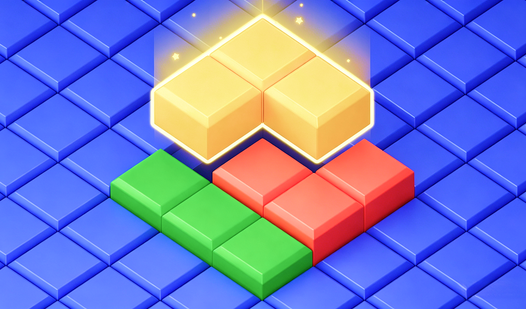
▶ Play FreeSuper Blocks: Stack & Connect is a spatial puzzle that demands three-dimensional thinking. Stacking, connecting, and balancing blocks under physics constraints makes this one of the most satisfying puzzle experiences in the Professional category.
Super Blocks: Stack & Connect
Spatial reasoning is the ultimate workout for the human brain, and few genres master that challenge quite like a good puzzle. Super Blocks: Stack & Co...
▶ Play FreeHow to Get Better at Professional Games: General Principles
Regardless of which genre you gravitate toward, a few universal principles accelerate improvement across all Professional games.
Play in Focused Sessions
Grinding the same game for five hours straight usually produces diminishing returns after the first two. Your brain stops processing new information and starts running on autopilot. Shorter, focused sessions with deliberate practice are more effective than marathon runs.
Watch Better Players
On YouTube, Twitch, or even recorded replays within the game — watching someone who's better than you is one of the fastest ways to understand what "correct" play looks like. Pay attention not just to what they do, but when and why.
Set Micro-Goals
Instead of "I want to get better at CS," aim for "This session, I'm going to keep crosshair placement at head level for every single engagement." Specific, measurable micro-goals produce specific, measurable improvement.
Accept the Plateau
Every skill has a plateau — a period where you feel stuck despite continued practice. This is normal and universal. It usually means you've automated the basics and your brain is now building new frameworks. Keep going. The plateau always breaks eventually.
Play Offline Practice Modes
Many Professional games have practice modes, sandbox settings, or low-stakes versions where you can experiment without penalty. Use these liberally. Trying a new strategy in a high-stakes match is how you lose; trying it in practice mode is how you learn.
Analyze Your Losses More Than Your Wins
Winning feels good, but losses teach more. After a bad run in any Professional game, spend thirty seconds reviewing: What was the decision that broke things? Where did the resource run out? What pattern did you miss? This habit compounds over time into genuine game sense.
Playing Professional Games on FreeJoy: What to Know
All the games in the Professional category on FreeJoy.games are browser-based and completely free — no downloads, no sign-up walls. That means you can jump from a 2048 session to a round of CS – DeathMatch to some Magnetic Fishing without any friction.
The games load fast on modern browsers (Chrome, Firefox, Edge, Safari all work well). Mobile play is supported on many titles, though for precision-heavy games like CS – DeathMatch or Spider Solitaire, a desktop with mouse input gives you a real advantage.
Progress is often session-based, so if you want to track personal bests, keep notes manually or use in-game leaderboards where available.