How to Play Parking Games: Rules, Tips & Free Fun
If you've ever wondered how to play Parking games properly — or why you keep getting stuck on level 7 with zero options left — you're in the right place. Parking games look deceptively simple: park the car, done. But they pack genuine strategic depth once you understand their mechanics, and the skill ceiling is higher than most players expect. This guide covers everything from core rules to advanced strategies, plus a full breakdown of the best free parking games you can play right now, no download or registration needed.
What Are Parking Games?
Parking games split into two distinct flavors, and understanding which type you're playing changes everything about your approach.
Puzzle parking games are logic challenges disguised as parking lots. You're presented with a gridlocked space full of cars, and your job is to figure out the correct sequence of moves to free a specific vehicle. Think of it like a sliding block puzzle — except with cars honking and a satisfying thunk when everything resolves perfectly. The satisfaction of clearing a 15-car gridlock in exactly the minimum number of moves is genuinely addictive.
Driving simulator parking games focus on real car control. You steer, accelerate, brake, and reverse a vehicle into a marked space — tight garages, rooftop lots, downtown parallel parking slots, all of it. The challenge is partly mechanical (controlling the car smoothly) and partly spatial (reading angles and clearances correctly before committing to a maneuver).
Both types share a common foundation: spatial awareness and forward planning are your most important tools. The player who looks ahead two or three moves consistently beats the player reacting to each new obstacle in isolation.
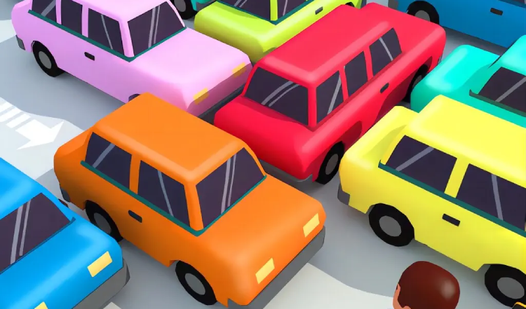
Parking Car: Parking Jam is a perfect entry point for puzzle parking. Clear a packed lot by moving cars in the right sequence — one wrong move and the whole thing jams up again. It introduces the core logic cleanly before layering on harder variations.
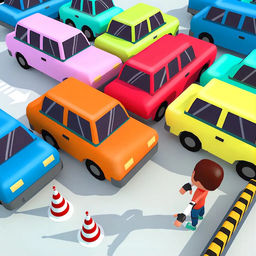
Parking Car: Parking Jam
Navigate tight spaces and clear the grid by carefully moving vehicles in the correct sequence to solve every tricky traffic jam. Every move requires p...
▶ Play FreeHow to Play Parking: Rules and Basics
Before you can master parking games, you need to internalize the rules that apply across almost every title in the genre. The basics are simple; the application under pressure is what takes practice.
Puzzle Parking Rules
Movement is axis-locked. A horizontal car can only move left or right. A vertical car only moves up or down. You cannot rotate vehicles. This constraint is what creates all the interesting puzzles — every path to the exit has to work within these limits.
One car moves at a time. You can't move two cars simultaneously. Every decision you make affects the available space for every other car. This is why planning ahead matters so much.
Your goal is always the exit. Get the target car — usually highlighted in red or a distinct color — to the exit point. Everything else in the puzzle exists to either block that path or provide the key to clearing it.
Fewer moves = higher score. Most puzzle parking games rate performance on efficiency. Solving a puzzle is the baseline; solving it in the minimum number of moves is the real achievement.
Undo is a learning tool. Every puzzle game offers an undo function. Use it liberally while learning — it lets you experiment without restarting and trains your pattern recognition faster than pure trial and error.
Simulator Parking Rules
Stay within the lines. Park crooked, clip a curb, or touch another car and you fail. The lines aren't suggestions.
Approach speed matters. Coming in too fast means you can't correct your trajectory before hitting something. Slow down before you start your final approach, not during it.
Use all your cameras. 3D parking games simulate rear and side views. Players who ignore the reverse camera consistently misjudge rear clearance. That's where most crashes happen.
Reverse with intention. Most players struggle most with parallel parking and reverse-into-space maneuvers. These require pre-turning the wheel before moving, not while moving. Master this one habit and reverse parking becomes dramatically easier.
Parking Pro gives you both driving experience and puzzle-adjacent challenges across multiple vehicle types and diverse parking environments. It's a strong game for developing fundamentals across the full range of parking scenarios.
Parking Pro
Stuck in a long meeting or just need a mental refresh between tasks, you probably crave a quick burst of high-stakes precision. Parking Pro is the ult...
▶ Play FreeHow to Play Parking Strategically: Tips That Actually Work
Rules tell you what you can do. Strategy tells you what you should do. Here's what actually separates players who clear levels first try from those who restart fifteen times.
Puzzle Parking Strategies
Think from the exit backward. This is the single most important mental shift in puzzle parking. Instead of staring at your target car and asking "what's blocking it?", ask "what's the last thing that needs to move before the path is clear?" Work backward from the exit to your car. This flips the problem into a much simpler form.
Identify fixed cars before touching anything. Scan the entire grid first. Some cars have zero available space to move — they're completely boxed in. These are your anchor points. Any solution has to work around them, so find them first and build your plan accordingly.
Count free cells. Each car needs at least one empty cell to begin moving. Before committing to a sequence, count available space in each row and column. If a row has no free cells, nothing in that row can move until you create space there first.
Sit with mistakes before undoing. When you make an unexpected move, pause before hitting undo. Sometimes what looks like a mistake opened a path you hadn't seen. Spend five seconds assessing the new position before reverting it.
Clear sections, not just paths. On large grids, trying to clear one continuous path from your car to the exit is usually impossible. Instead, think about clearing quadrants — get the top-left section clear, then the middle, then the right side. Sectional thinking handles complexity better than linear thinking.
Parking Jam 3D applies all of this in a 3D environment, which adds the challenge of reading depth. The 3D perspective initially makes the grid harder to parse, but experienced players find it actually helps with visualizing car trajectories once your eye adjusts.
Simulator Parking Strategies
Master the reference point system. Before turning into any parking space, line up a visual reference on your car — usually the front hood corner or a side mirror — with a landmark in the environment. A lamppost, a white line, the edge of another car. Using consistent reference points makes parking repeatable rather than guesswork every time.
Pre-turn, then move. Turn the wheel to the angle you need before you start moving. Beginners simultaneously steer and accelerate, which leads to oversteering and messy arcs. Turn first, then move — you'll get cleaner entries every time.
The parallel parking formula. Pull up alongside the car in front of your target space. Reverse at roughly 45 degrees until your rear is about one-third into the space. Straighten the wheel. Continue reversing. Counter-steer to align the front. That's it. Works in nearly every simulator that features parallel parking.
Reduce speed by half when you're unsure. Players consistently crash because they approach at full speed and can't correct in time. If you're struggling with a particular stage, cut your approach speed in half first. Speed can always come back; the instinct for angles develops faster at slower speeds.
Parking Master: Urban Challenges delivers exactly these real-world scenarios in a detailed 3D city environment with traffic, tight alleys, and multi-level garages. It's the most realistic parking simulator in the browser game space, and it rewards proper technique noticeably.
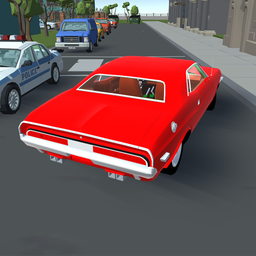
Parking Master: Urban Challenges
Driving enthusiasts will appreciate the intense precision required to navigate tight spots in Parking Master: Urban Challenges. This realistic parking...
▶ Play FreeUniversal Strategies for All Parking Games
Replay completed levels immediately. After clearing a puzzle or parking successfully, run it again right away. Your second attempt will be significantly faster and cleaner, and that efficiency carries directly into the next harder level.
Restart faster. Stuck for more than two minutes? Restart. A fresh look almost always reveals the solution instantly. Staring at a locked position just reinforces incorrect assumptions.
Learn the camera before the controls. In 3D parking games especially, camera angle is half the battle. Spend the first thirty seconds of any new level finding the camera angle that gives you the clearest view of your approach and target space, then lock it in.
Perfect Parking - Draw a Path takes an entirely different approach — you draw a line and the car follows it, rather than directly controlling steering. This mechanic forces you to think about path curvature, momentum, and physics rather than discrete inputs. It's a genuinely fresh challenge that builds spatial reasoning from a completely different angle.
Best Free Parking Games to Play Right Now
You don't need to spend anything to access excellent parking games. Here's the full breakdown, organized by what kind of experience you're after.
For Puzzle Players
Parking Car: Parking Jam is the go-to recommendation for anyone starting with puzzle parking. Clean interface, a difficulty curve that doesn't spike, and a deeply satisfying resolution when a complex gridlock unravels in four perfectly chosen moves. New mechanics — larger grids, timed variants, diagonal-adjacent cars — get introduced gradually so you're always progressing.
Parking Car: Parking Jam
Navigate tight spaces and clear the grid by carefully moving vehicles in the correct sequence to solve every tricky traffic jam. Every move requires p...
▶ Play FreeParking Jam 3D takes the sliding puzzle format into three dimensions. The visual complexity is higher initially, but the added depth perception actually helps experienced players read car trajectories more naturally once they're comfortable with the view.
Perfect Parking - Draw a Path is for puzzle players who want something that doesn't feel like any other parking game. Drawing paths creates a fundamentally different mental model — you're planning smooth arcs and thinking about gradient angles rather than working within a grid.
For Driving and Simulation Fans
Parking Pro gives you the widest variety across vehicle types and parking scenarios without locking you into a single style. One level you're squeezing a compact car into a tight downtown spot; the next you're threading a larger vehicle through a narrow spiral garage. Good range for players who want variety.
Parking Pro
Stuck in a long meeting or just need a mental refresh between tasks, you probably crave a quick burst of high-stakes precision. Parking Pro is the ult...
▶ Play FreeParking Master: Urban Challenges is the pick for anyone who wants the most realistic feel. The 3D environments are detailed and convincing, car physics are solid, and the urban challenges genuinely simulate the kinds of parking situations that stress new drivers out in real life.
Parking Master: Urban Challenges
Driving enthusiasts will appreciate the intense precision required to navigate tight spots in Parking Master: Urban Challenges. This realistic parking...
▶ Play FreeReal Car Parking Sim 3D takes simulation accuracy seriously — tight hitboxes, realistic vehicle dimensions, and stages that demand precision rather than rewarding sloppy near-misses. This is the choice for players who find other parking simulators too forgiving.
Extreme Parking 3D cranks the difficulty with unusual vehicles, steep inclines, and obstacle-heavy environments. Once you're comfortable with standard challenges, this is the natural next step.
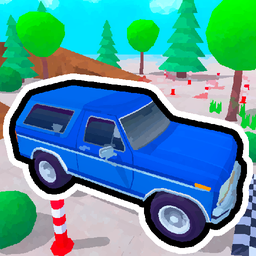
Extreme parking 3D
Mastering the art of precision driving turns a simple maneuver into a high-stakes challenge that tests your spatial awareness to the limit. Extreme Pa...
▶ Play FreeFor Quick Sessions and Unique Formats
Parking Now keeps things quick and clean with overhead 2D parking. Each level takes 30 to 90 seconds, making it great for short sessions, but completing them without a scratch requires real precision. The 2D perspective makes angles easier to read, so it's also a smart option for players building confidence before moving to 3D.
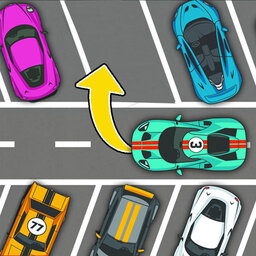
Parking Now
Maneuver your vehicle into tight spots with precision in this addictive 2d parking challenge. You must navigate complex city layouts while avoiding ob...
▶ Play FreeSchool Bus Parking replaces the standard car with a full-length bus, which completely rewrites the physics of every maneuver. Turning radius, swing-out on corners, reversing angles, rear overhang clearance — everything becomes harder and, frankly, more satisfying when you nail a tight reverse park with a vehicle that long.
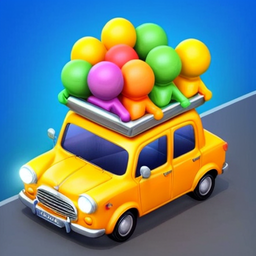
School Bus parking
Staring at the clock and waiting for your shift to end feels like an eternity when you need a quick mental escape. School Bus parking is the perfect b...
▶ Play FreeMega Parking on Cobalt stands apart with a distinctive visual style and a fresh take on the parking formula that fans of stylized aesthetics will appreciate immediately. It offers enough mechanical substance to keep experienced players engaged while looking unlike anything else in the genre.
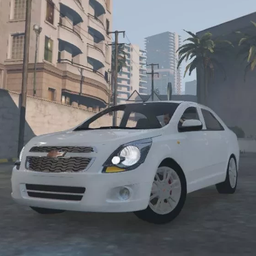
Mega Parking on Cobalt
Drivers who crave realistic handling will find Mega Parking on Cobalt to be the ultimate test of their spatial awareness and patience. This simulator ...
▶ Play FreeCommon Mistakes and How to Fix Them
Even experienced players hit the same walls. Recognize these patterns early and skip a lot of unnecessary frustration.
Spending too long on the first move. In puzzle games, players agonize most over move one. The first move is usually the least critical — it just opens a small amount of space. Commit quickly and focus your mental energy on the middle of the sequence, where the real complexity lives.
Ignoring the exit area. Most players stare at their target car and the cars immediately in front of it. But the last two or three cells before the exit are often the actual bottleneck. Scan the exit area first, identify what needs to clear from there, and work backward.
Overcorrecting while reversing. In simulator games, new players zigzag toward the parking space because they're constantly reacting to drift with big steering corrections. Use small, deliberate inputs. Move the wheel, pause, assess, then adjust. Smooth inputs produce straight lines.
Only checking the front clearance. Plenty of crashes happen at the rear bumper, not the front. Before committing to the final reverse, check the rear camera and count your distance from the obstacle behind you.
Playing the same failed level identically. If you've failed three times in a row, stop before attempt four. Analyze each failure specifically: was it the approach angle? A specific car you keep moving too early in the sequence? The turning point? Identify the exact failure point, address that specifically, then retry.
Parking Now is actually a great game for training against overcorrection — the overhead 2D perspective makes it easy to see exactly what your car is doing and where each input is taking you, which builds cleaner instincts that carry into 3D games.
Why Parking Games Are Worth the Time
People underestimate how well parking games train real cognitive skills. Puzzle variants build pattern recognition, working memory, and multi-step planning — the same mental tools behind chess and logic puzzles, packaged in something much more accessible. Driving simulators build spatial reasoning and the kind of hazard anticipation that nervous new drivers spend months developing behind the wheel. Parking specifically — the most anxiety-inducing part of driving for most people learning — turns out to be highly trainable through simulation.
Beyond any practical benefit, these games hit a specific reward center that puzzle and precision games have always been good at. The moment a 20-car gridlock resolves cleanly, or a sports car slots into a space that looked one inch too tight — that feeling is genuinely satisfying, and it doesn't get old as the puzzles get harder.
All ten games in this guide are free on FreeJoy, no account required. Start with whatever type sounds most appealing — puzzle or simulator — work through the suggestions for that category, and you'll have a much clearer sense of where you want to go from there within a few sessions.