How to Play Painting Games: Rules & Strategies
So you want to know how to play Painting games — and honestly, you've picked one of the most varied and rewarding categories in online gaming. Painting games aren't just one thing. Some ask you to fill cells with the right color by following a number grid. Others quiz your knowledge of art history, challenge you to spot differences between two near-identical canvases, or hand you a spray gun and say "go nuts on that race car." The genre is wide open, but the core skills — patience, color sense, attention to detail — carry across all of them. This guide walks you through the rules, the smartest strategies, and five handpicked free games you can start playing today.
How to Play Painting: Understanding the Genre
At its core, a painting game is any game that revolves around visual art as a mechanic, theme, or creative outlet. That's a broad definition, and intentionally so, because the category genuinely includes a lot of ground.
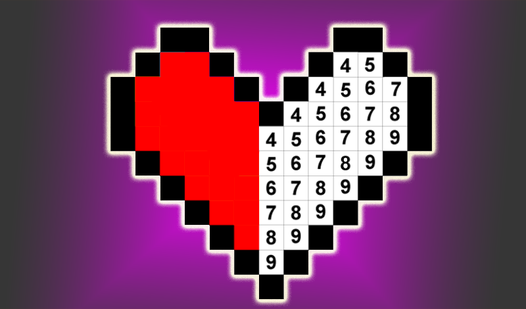
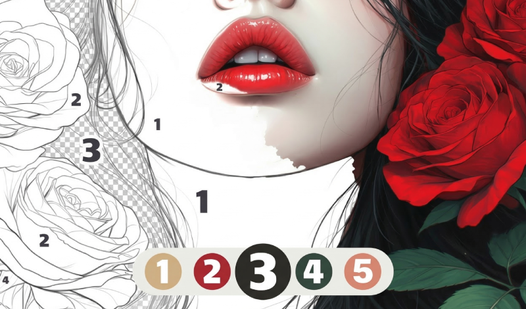
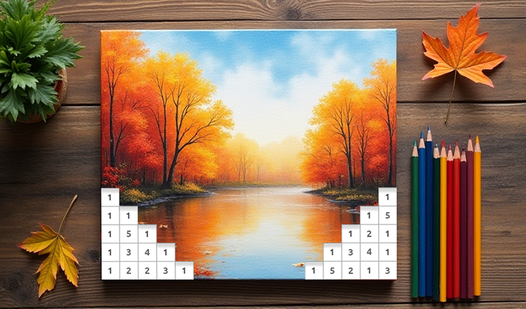
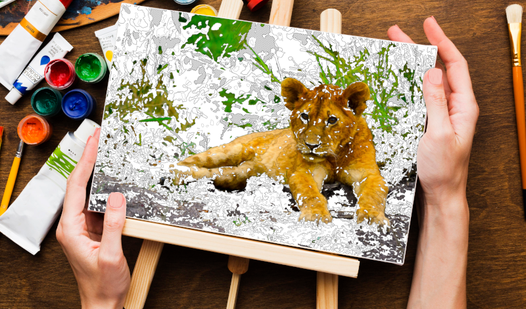
Color-by-number games are the most popular subtype. You get a canvas divided into numbered zones, and each number maps to a specific color. Your job is to fill every zone correctly until the full picture reveals itself. The challenge sounds simple — and for the first few cells it is — but larger, more detailed images can have hundreds of zones packed into tight spaces. Getting them all right without misclicking requires real focus.
Art trivia games flip the experience entirely. Instead of creating, you're analyzing. You look at a famous painting, then answer questions: Who painted it? What year? What style? What's hidden in the background? These games are fantastic if you want to build actual knowledge about art history while having fun.
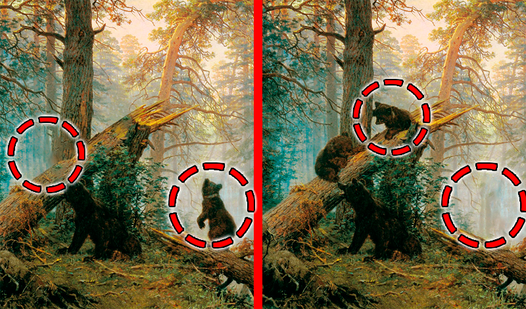
Spot-the-difference games use paintings (often famous ones) as canvases for the classic "find what changed" mechanic. Two nearly identical images sit side by side; your job is to identify every deliberate discrepancy. The art connection makes these feel more elegant than the cheap photo versions — and the differences are often more subtle.
Creative and customization painting games give you tools and a blank slate. Want to repaint a car? Decorate a character? Design a mosaic from scratch? These games lean into personal expression and reward experimentation over rule-following.
Understanding which type you're playing is the first step, because how to play Painting changes significantly depending on the subtype.
Rules and Basics of Painting Games
The rules vary by subtype, but a few principles apply everywhere.
Color-by-Number Basics
- Read the legend first. Every color-by-number game has a palette legend somewhere on screen — usually along the side or bottom. Familiarize yourself with it before you start clicking.
- Work from large areas to small. Big zones of solid color are faster to complete and give you a satisfying structural foundation. Save the fine detail cells for later.
- Zoom in on dense sections. Most games let you zoom. Use it. Tiny numbered zones are almost impossible to click accurately at full view.
- Don't guess on ambiguous numbers. If you're unsure whether a cell says "3" or "8," zoom in until you're certain. Wrong fills usually cost you — either through a penalty counter or by simply looking bad on the finished image.
- Complete one color at a time when possible. Many games let you select a color from the palette and then click every zone of that color across the canvas. This "sweep" method is much faster than reading and matching each cell individually.
Art Trivia Basics
- Pay attention to distinctive style markers. Impressionism uses visible brushstrokes and soft light. Baroque is dramatic with heavy shadow. Abstract expressionism looks chaotic on purpose. Recognizing style helps you narrow down answers even when you don't know the specific painting.
- Use process of elimination. Multiple-choice trivia almost always has one obviously wrong answer. Cross it out mentally and focus on the remaining options.
- Time matters. Most art trivia games are timed. Don't overthink early questions — quick correct answers build streaks that often multiply your score.
Spot-the-Difference Basics
- Scan systematically, not randomly. Start from one corner and move in rows. Random eye wandering misses things.
- Look for edges and transitions. Differences are most often placed at the boundaries of objects — where color meets color — because they're harder to spot there.
- Trust your instincts on "something feels off." Your visual system is surprisingly good at detecting mismatch before your conscious mind identifies it. If an area bothers you, click there.
Strategies That Actually Work
Once you know the rules, the gap between a frustrated player and a high-scorer comes down to a handful of strategic habits.
For color-by-number games:
- Prioritize rare colors early. If a color appears in only three cells scattered across the canvas, find and fill those first. It removes them from your mental checklist and reduces error risk later when you're tired.
- Use the "completed" highlight feature. Many games shade or remove already-completed zones from the number display. Keep this on — it makes the remaining work obvious at a glance.
- Take breaks on complex images. Color fatigue is real. After staring at 200+ numbered cells, everything starts to blur together. A two-minute break resets your eyes and reduces errors in the final stretch.
For art trivia games:
- Study a few key artists deeply rather than many shallowly. Games tend to feature Monet, Picasso, Rembrandt, Van Gogh, and Klimt heavily. If you know ten works from each, you'll cover most questions.
- Learn to read signatures. Many trivia games zoom into a painting's lower corner. Recognizing handwriting styles of famous painters is a genuine shortcut.
For spot-the-difference:
- Use a soft focus. Instead of staring hard at one point, relax your eyes and look at both images simultaneously with a softer gaze. Your peripheral vision catches motion-like differences that direct focus misses.
- Mark found differences immediately. Most games let you click to mark. Do it the moment you spot something — before you move on — because revisiting the image fresh can make you second-guess confirmed finds.
Best Free Painting Games to Play Right Now
Diamond Painting by Number
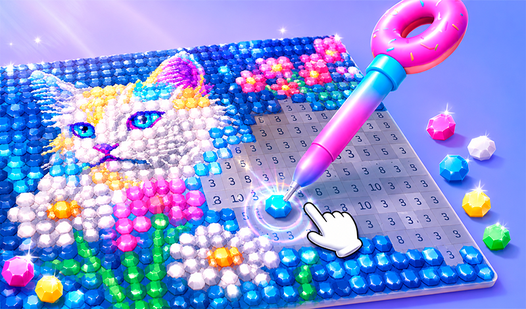
This game is the purest form of digital color-by-number. You get a large canvas covered in tiny diamond-shaped cells, each marked with a color code. The goal is to fill them all correctly to reveal a detailed, jewel-toned artwork. The diamond format makes the finished image look stunning — edges catch light differently from standard pixel fills — and the sheer size of some canvases means a single session can keep you busy for a long time.
The learning curve is gentle. The first few images use simple patterns with large zones and a limited palette. As you progress, the images grow more complex, the zones shrink, and the palettes expand. It's a genuinely meditative experience if you let it be — repetitive in a good way, with the constant reward of watching a picture emerge.
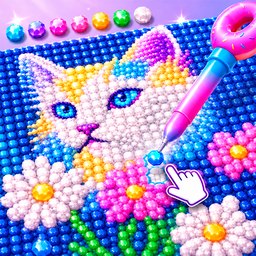
Diamond Painting by Number
Digital art therapy turns simple screens into canvases of sparkling creativity through the therapeutic practice of filling pixels with color. Diamond ...
▶ Play FreeTrivia Quiz: Paintings
If you'd rather test your knowledge than fill in cells, this art trivia game is the right fit. You're shown paintings — sometimes full images, sometimes crops or details — and asked questions about them. Who painted this? What period? What's the hidden element in the background? The difficulty scales naturally: early rounds feature the most famous works in Western art history, while later stages go deeper into specific movements and lesser-known masters.
The best strategy here is to read all four options before answering. The phrasing of wrong answers often gives away subtle clues — two options that are nearly identical usually mean the real answer is the one that differs in a key detail.
Find the Difference of the Painting
Two famous paintings sit side by side. They look identical. They are not. Your job is to find every deliberate alteration — a removed brushstroke, a recolored shadow, a shifted object in the background. This game uses real artworks as its base images, which adds an extra layer: the more you know about the original painting, the easier you spot what's been changed.
This is also a fantastic game for sharpening general observation skills. The habit of slow, systematic scanning that you build here transfers to everyday tasks — reading fine print, reviewing designs, catching errors in code or documents. It sounds like a stretch, but players consistently report improved attention to detail after extended play.

Find the difference of the Painting
Art enthusiasts who enjoy a sharpen-your-mind challenge will find themselves glued to Find the difference of the Painting for hours. This addictive br...
▶ Play FreeRacing and Tuning: Car Painting
This one sits at the creative end of the spectrum. You're given a race car and a full set of painting tools — spray cans, rollers, detailed brushes, stencils — and you design the livery from scratch. There are no numbered zones or trivia questions. Just you, a blank vehicle, and a color palette.
The creative freedom is the main draw, but there's real craft involved if you want a polished result. Layering colors, using stencils for geometric patterns, and knowing when to stop (the single hardest skill in any creative medium) all come into play. The best approach is to pick a color scheme first — two or three colors maximum — and build your design around them before adding detail.
Color by Numbers: PixPix
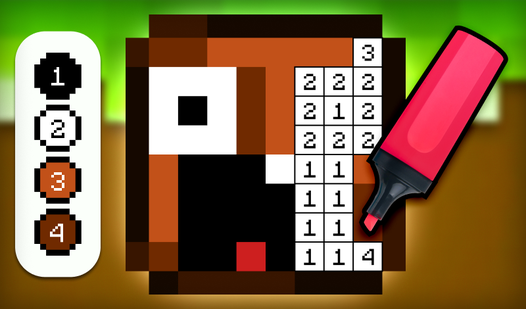
PixPix takes the color-by-number format and compresses it into a pixel-art style, which means each "cell" is a clean square pixel rather than an organic shape. The result is images that feel retro and satisfying — you're essentially building pixel art from scratch, one color at a time.
The pixel format makes this an excellent introduction to color theory. Because every element is reduced to flat, distinct squares, you see clearly how colors interact at their boundaries, how complementary colors pop, and how value contrast defines shape. It's genuinely educational without feeling like a lesson.
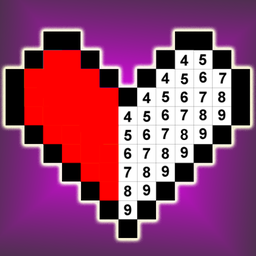
Color by numbers: PixPix
Tap numbered blocks to transform blank canvases into vibrant masterpieces in Color by numbers: PixPix. This relaxing paint by number experience turns ...
▶ Play FreeMore Free Painting Games Worth Your Time
The five featured games above cover the main styles, but the catalog goes deeper. Here are five more titles for when you've worked through the first batch.
Numicolor adds a numerical twist to standard color-by-number, where the numbers themselves carry meaning beyond just color identification. It's a good next step after you've mastered basic fill mechanics.
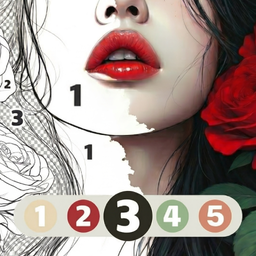
Numicolor
Creative souls seeking a moment of calm will find their sanctuary in Numicolor, a refreshing take on the classic digital art experience. This delightf...
▶ Play FreeBloggers: Color by Number wraps the color-fill mechanic in a lighter, social-media-themed visual style. The canvases feature characters and scenes from the influencer world, which gives the images a modern, stylized look distinct from the landscape and portrait art you'll find in most other games.
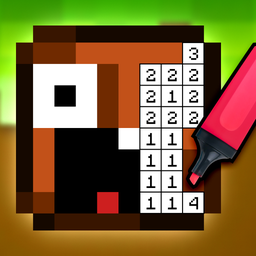
Bloggers: Color by Number
Fans of creative pixel art will find their new obsession with Bloggers: Color by Number as they bring iconic gaming personalities to life. This engagi...
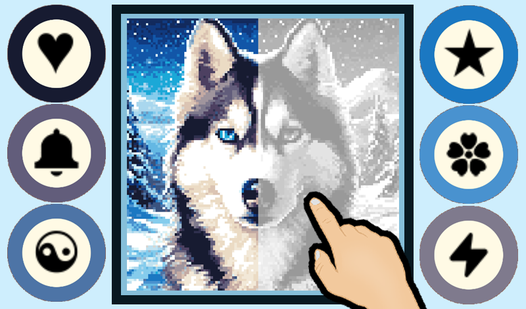
▶ Play FreeColoring: Mosaic by Symbols replaces numbers with symbols as your fill guide. The shift sounds minor but actually forces a different part of your brain to engage — you're matching shapes instead of reading digits, which some players find faster and more intuitive.

Coloring: Mosaic by Symbols
Fill intricate canvases with vibrant hues by matching symbols to their designated color slots. Coloring: Mosaic by Symbols transforms your screen into...
▶ Play FreePixely - Color by Number is another pixel-art oriented game with a strong community element. Completed images can be shared, and the game includes a gallery of user-created designs for inspiration before you start your own.
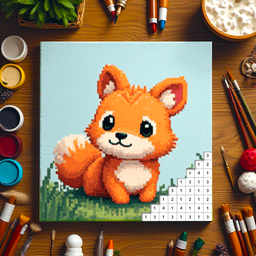
Pixely - Color by number
Staring at a blank screen during your lunch break can feel draining when you just need a moment of zen. Pixely - Color by number serves as the perfect...
▶ Play FreeColoring Unlimited lives up to its name by offering an enormous library of canvases across dozens of themes — animals, cityscapes, abstract patterns, seasonal images — with no paywall on content. If variety is what you're after, this is the one to bookmark.
Coloring Unlimited
Staring at a blank screen during a midday slump is the fastest way to kill your productivity, but a creative escape can flip your mood instantly. Colo...
▶ Play FreeBuilding a Routine: How to Get Better Over Time
If you're playing casually, none of this matters — pick a game, enjoy it, close it when you're done. But if you want to actually improve — complete harder canvases faster, score higher on trivia, spot differences more consistently — a light routine helps.
Play one game type per session. Switching between trivia and color-fill in the same session splits your focus. Your brain needs time to settle into the specific observational mode each type requires.
Increase difficulty deliberately. Most painting games have multiple difficulty tiers. Don't stay on Easy because it feels comfortable. Move up when you complete a canvas or round without any errors. The growth only happens at the edge of your current skill level.
Review your mistakes. After an art trivia round, look at every wrong answer and understand why the correct option was right. After a color-fill session, zoom into any zones you filled incorrectly and figure out whether it was a reading error or a clicking error. Both have different fixes: reading errors are solved by slowing down and zooming in; clicking errors are solved by calibrating your device sensitivity.
Play regularly but briefly. Twenty focused minutes every day is more effective than two hours on a Sunday. Painting games reward the kind of quiet attention that builds up over consistent repetition rather than marathon sessions.