How to Play Mouse: Rules, Strategies & Free Games
Whether you're curious about board games featuring mice, browser games with mouse characters, or interactive apps for your actual cat to bat at — knowing how to play Mouse opens the door to a surprisingly wide genre. Mouse-themed games span decades of gaming history, from classic arcade cheese-collectors to modern co-op hunters and tactical card crawlers. This guide breaks it all down: what these games are, how the core rules work, what strategies actually pay off, and where you can play the best free Mouse games online right now.
What Is a Mouse Game?
The term "Mouse game" covers quite a lot of ground. At its core, a Mouse game is any title where:
- A mouse (or rat) character is the protagonist — navigating levels, collecting items, or fighting enemies
- You control a cat hunting mice — the predator-prey dynamic flipped into gameplay
- Stealth and evasion drive the mechanics — sneaking past traps, outsmarting guards, or avoiding a bigger threat
The genre stretches from family-friendly puzzle platformers to surprisingly deep tactical games. What connects them is shared design DNA: small creature, big world, lots of obstacles. The mouse is usually nimble but fragile, which forces players to think before they act.
Mouse games carry a long pop-culture lineage — from Tom & Jerry cartoons to Danger Mouse, Stuart Little, and Ratatouille. That cultural familiarity makes them approachable for new players while giving veterans a nostalgic hook.
How to Play Mouse: Core Rules and Basics
Regardless of the specific title, how to play Mouse games usually comes down to a handful of shared mechanics. Get these down and you'll pick up any new mouse game in minutes.
Movement and Navigation
Mouse characters are typically fast and agile. Expect to use:
- Arrow keys or WASD for movement in most browser games
- Tap or swipe controls in mobile versions
- Precise platforming inputs — mouse games love tight jumps and narrow ledges
The small size of the protagonist is intentional. It lets designers create dense, maze-like levels where every corner might hide either a power-up or a trap.
Collecting and Objectives
Most mouse games are built around collection loops:
- Cheese (or food) is the universal currency — grab it to score points or unlock paths
- Keys and switches open new areas
- Stars or gems mark optional challenges for completionists
The objective is almost always to reach an exit point — a hole in the wall, a door, or a goal zone — while grabbing as much loot as possible along the way.
Enemies and Hazards
Here's where mouse games earn their tension:
- Cats are the classic enemy — they patrol routes, and touching one usually ends your run
- Traps (mousetraps, electric floors, spiked walls) are everywhere and mostly instant-kill
- Other predators — owls, snakes, dogs — appear in more elaborate games
Many games use a "one-hit death" rule, keeping stakes high and encouraging careful play over reckless rushing.
Lives and Continues
Retro-style mouse games typically give you 3 lives, old-arcade fashion. Modern browser games often use checkpoint systems instead — die and restart from the last safe zone rather than the level beginning. Either way, your character's fragility is a central design choice, not an afterthought.
Multiplayer Variants
Some mouse games add a human-vs-human layer: one player controls the mouse, another controls the cat. This asymmetric setup completely changes the dynamic. Suddenly you're not reading AI patrol patterns but reacting to unpredictable human decision-making. Communication — or its absence — becomes a mechanic in itself.
A Closer Look at Specific Mouse Game Types
Let's break down the main sub-genres and their specific rules.
Arcade Mouse Games
Classic arcade-style mouse games follow a simple loop:
- Start on level 1
- Collect all cheese pieces or reach a score threshold
- Avoid enemies or eliminate them with power-ups
- Proceed to the next level, which is faster and harder
The skill here is route optimization — figuring out the most efficient path through each level before enemies can intercept you.
Puzzle Mouse Games
These slow things down and replace reflex challenges with logic challenges:
- Boxes to push
- Switches to trigger in the right sequence
- Doors that require specific items
- Physics-based obstacles
You won't be mashing buttons. You'll be standing still, staring at the screen, working out how to get from A to B.
Co-op Mouse Games
Co-op adds coordination requirements. Both players need to cover each other's blind spots, time movements so they don't block each other, and communicate about enemy positions.
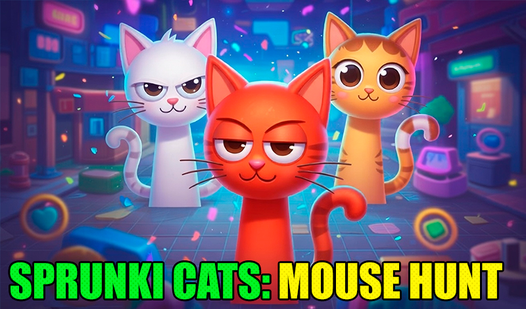
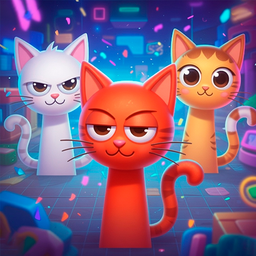
Sprunki Cats: Mouse Hunt is a sharp example — you play as cats working together to catch mice, which flips the usual perspective entirely. It's chaotic, fun, and much harder than it looks when a second player who doesn't communicate joins your session. The co-op design rewards instinct AND planning, which means sessions tend to be either perfectly smooth or hilariously chaotic.
Sprunki Cats: Mouse Hunt
Fans of chaotic multiplayer fun and adorable kitties will find their new obsession in Sprunki Cats: Mouse Hunt. This fast-paced game challenges you to...
▶ Play FreeCard and RPG Mouse Games
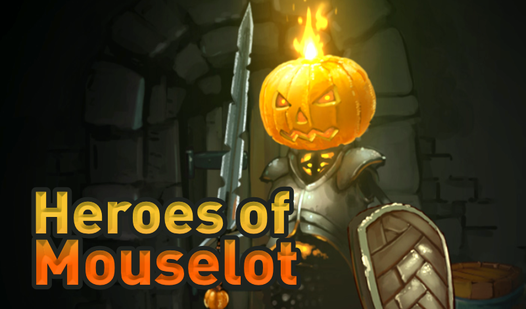
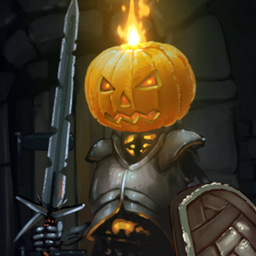
The least obvious sub-genre but arguably the deepest. Heroes of Mouselot takes the mouse character into dungeon-crawling territory — you build a deck, fight monsters, and manage resources across multiple runs. The small-hero-in-a-big-dangerous-world vibe translates perfectly to roguelike design. Each run teaches you something new about the card interactions, and the mouse theme keeps the whole thing charming rather than grim.
Heroes of Mouselot
Navigate your brave mouse through treacherous dungeons by tapping adjacent cards to reveal loot, deadly traps, and fierce monsters. Heroes of Mouselot...
▶ Play FreeMouse Стратегии: Tips That Actually Work
Now for the part that separates casual players from people who actually finish these games. Here are strategies that work across mouse game sub-genres.
1. Learn Enemy Patrol Patterns First
Before going for any cheese, watch the enemies for one full cycle. Most games use fixed patrol routes. If you know the route, you know exactly when a gap appears — and that gap is your window to move.
This is especially true in arcade-style games where the same enemy types repeat across similar levels. Once you've seen a specific enemy a few times, you can predict it reliably.
2. Prioritize the Exit Over Maximum Score
First-time players often get caught trying to grab every piece of cheese, then run into a cat on the way back and lose everything. Get to the exit first on a new level — especially when lives are limited. Once you know the layout, optimize on the next run.
3. Use the Walls
Mouse characters are small. Most games are designed so that walls and corners create natural cover from enemy detection. Hug walls whenever possible. It limits the angles from which enemies can spot you and gives more reaction time when something unexpected appears.
4. Master the Pause
Many browser mouse games can be paused mid-action. Use it. Pause, look at the full screen, plan your next three moves. This matters most in puzzle variants where the solution isn't obvious under pressure — a few seconds of calm thinking beats thirty seconds of frantic dying.
5. In Co-op, Talk More Than You Think You Need To
Mouse-cat co-op games fall apart without communication. Call out enemy positions, tell your partner when you're going for a pick-up, and establish who covers which section of the map. It sounds over-engineered for a casual game — but the sessions where it's done right feel genuinely satisfying.
6. Don't Rush Power-Up Collection
Power-ups are tempting, but the routes to them are usually guarded for a reason. Sometimes skipping a speed boost or invincibility star is smarter than dying three times trying to reach it. Only go for power-ups when the path is already clear.
7. In Card/RPG Games, Build Around One Strategy
In games like Heroes of Mouselot, trying to build a "balanced" deck usually means being mediocre at everything. Pick a direction — aggression, defense, or resource starvation — and build cards that reinforce it. A focused deck wins more consistently than a flexible but scattered one.
8. Replay Early Levels for Mechanics Practice
Mouse games often introduce mechanics gradually across their level progression. If a later level is stumping you, go back to an early stage where the same mechanic appeared in a simpler context. Practice it there, then return to the hard level with the concept already locked in.
Best Free Mouse Games Online
Here's a curated set of the best free mouse games available right now — no registration required, playable directly in your browser.
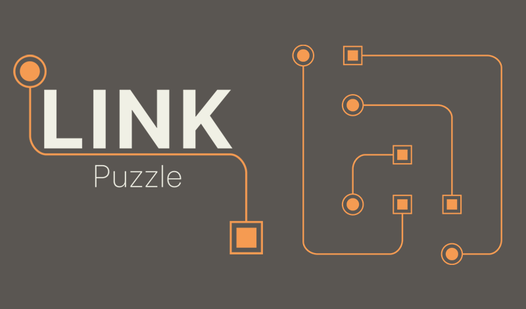
Link Puzzle takes mouse-navigation instincts and puts them to work in a pure logic context. Chain connections, solve the grid, move forward. It's minimal and genuinely addictive once the patterns start clicking.

Link Puzzle
Connect matching dots by rotating segments on the grid to create a seamless path across the board. Every move brings you closer to completing the circ...
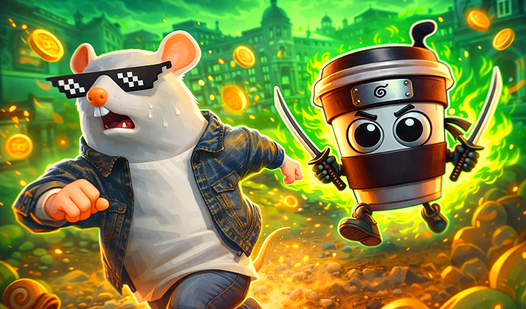
▶ Play FreeRat Dance: Escape from Memes is exactly what it sounds like — chaotic, funny, and surprisingly replayable. The meme-based obstacle course format keeps levels feeling fresh even when you're replaying sections. It commits fully to its absurd premise, which makes it work.

Rat Dance: Escape from Memes
Scavenge every corner of a chaotic world while dodging bloodthirsty creatures in Rat Dance: Escape from Memes. You must collect specific components to...
▶ Play FreeDragons.ro moves into multiplayer browser MMO territory, where positioning and map awareness matter far more than raw power. The small-creature-in-a-big-world dynamic carries over naturally from single-player mouse games into the competitive format.

Dragons.ro
Soar through the hidden sky kingdom as a powerful dragon fighting to defend your home among the fluffy clouds. Every player takes control of a majesti...
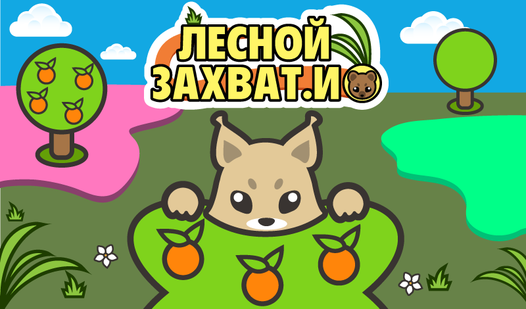
▶ Play FreeForest capture.io is a competitive multiplayer game where the survival dynamic becomes you-versus-many-players. Territory control replaces cheese collection, and staying alive depends on reading opponent movements rather than AI patrol patterns. The shift from single-player caution to multiplayer aggression is interesting.

Forest capture.io
Fans of strategic territory games will fall in love with the competitive nature of Forest capture.io. This vibrant arena challenges you to carve out y...
▶ Play FreeHow to Choose the Right Mouse Game for You
With this many options, picking a starting point can feel like its own puzzle. Here's a simple framework:
If you want quick sessions (5-10 minutes): Go with arcade-style games. Lucky Mouse 2 is a clean starting point — well-designed levels, clear objectives, no learning curve required.
If you prefer thinking over reacting: Puzzle mouse games like Jumpimg Mouse or Link Puzzle reward patience and planning. No enemy reaction time necessary — just brainpower.
If you want to play with a friend: Sprunki Cats: Mouse Hunt is the clearest co-op choice. The cat-hunts-mice premise is immediately intuitive, and the co-op mechanics are designed to work for players with different skill levels.
If you want depth over many sessions: Heroes of Mouselot. Card-based roguelikes have the highest skill ceiling of anything on this list. You'll be learning new synergies for hours.
If you want pure chaos and laughs: Rat Dance: Escape from Memes or Mouse May Cry. Both lean hard into their absurdity, and are better for it.
Common Mistakes New Players Make
Even experienced gamers stumble on mouse game conventions. Here's what to avoid:
Moving too fast. Agility is a strength, but speed without direction kills more mice than any cat ever does. Slow down, read the room, then move.
Ignoring tutorials. Mouse games look simple. They often aren't. The tutorial usually teaches the one mechanic that will kill you most on level 8.
Trying to fight everything. In most mouse games, your character isn't built to win combat. Evasion is almost always better than confrontation. If the game gives you a combat option, use it sparingly and deliberately.
Forgetting to check checkpoints. Browser games auto-save less reliably than console titles. Pause, confirm your progress is recorded, and don't close that tab without checking first.
Rushing the first clear. Your first run through any level is research, not execution. Observe, die if necessary, learn the layout, then play properly on the second attempt.