How to Play Memory Match: Rules, Tips & Brain Guide
So you've clicked on a memory match game and you're staring at a grid of face-down cards wondering what to do next. Don't worry — the rules are simple enough to pick up in sixty seconds, but the strategy and skill behind playing well can keep you hooked for years. This guide covers how to play memory match from scratch, walks through the step-by-step mechanics, explains why these games are genuinely good for your brain, and points you toward the best free options you can play right now in your browser.
Memory Match Rules — How It Works
At its core, the memory match game has one basic goal: find all matching pairs of cards before time runs out (or in as few moves as possible). That's it. The ruleset is one of the cleanest in all of casual gaming, which is exactly why it has survived for decades — from physical card decks on kitchen tables to polished browser games you can play on any device.
Here's how a standard round works:
The setup. A grid of cards is placed face-down in front of you. The number of cards depends on the difficulty: beginners might start with a 4×4 grid (16 cards, 8 pairs), while harder versions can go up to 6×6, 8×8, or even larger. Every card in the deck has exactly one matching partner hidden somewhere in the grid.
Taking a turn. On your turn, you flip over any two cards by clicking or tapping them. If the two cards match — congratulations, that pair is removed from the board (or stays face-up, depending on the game). If they don't match, both cards flip back face-down and it's the next turn, either for you or your opponent in multiplayer.
Winning. The game ends when all pairs have been found. In solo play, your score is typically based on the number of moves taken or the time elapsed. Fewer moves and faster completion equals a better score.
Variations. Modern memory match games online free up the formula in creative ways. Some use shapes instead of identical images — matching a picture to its shadow or outline. Others chain sequences rather than pairs (like matching the order of colored squares). A few go fully 3D, adding a spatial dimension to the challenge. The core flip-and-match mechanic stays the same, but the presentation keeps things fresh.
Sharp memory: Connect the pairs
Puzzle lovers and brain training enthusiasts, get ready for a sharp challenge! Sharp Memory: Connect the Pairs offers a delightful test of your recall...
▶ Play FreeThe rules described above apply whether you're playing a physical card game at home or a digital version online. The digital format just adds speed, visual polish, and often a timer or scoring system that makes every second count.
Step-by-Step Guide to Playing Memory Match
Ready to actually sit down and play? Here's a practical walkthrough that covers everything from your first click to clearing the board efficiently.
Step 1: Scan the board before you start
When the game begins, some memory match versions give you a brief preview window — a few seconds where all the cards are face-up before they flip down. Use every millisecond of this. Don't just stare; actively try to anchor specific pairs in your mental map. Pick out two or three pairs you're confident you remember and note their positions relative to corners or edges.
If there's no preview, that's fine. Your mental map builds naturally as you play.
Step 2: Start from the edges
This is a small trick experienced players use: flip cards along the edges and corners first. Why? Edge positions are spatially easier to remember because they have fewer neighbors. Your brain can attach the card's identity to its position more reliably when that position has a clear anchor point like "top-left corner" versus "somewhere in the middle."
Step 3: Flip deliberately, not randomly
Beginners tend to click cards at random hoping to stumble onto matches. That works — eventually — but it's inefficient. Instead, always flip a card you haven't seen yet first, register what it is, and then flip your second card based on what you remember. If you already know where a match is, go get it. If you don't, use the second flip to gather new information.
Step 4: Build a spatial memory map
As cards reveal themselves and flip back over, you're constructing an internal map of the board. The key is to anchor each card to its grid position using a visual or spatial cue. "The cat is in row 3, second from the right" is more reliable than just "I saw a cat somewhere." Treat the board like a city map and each card like a landmark.
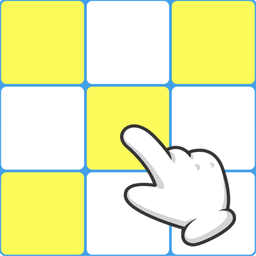
Memory Game: Square Challenge
Human memory is a muscle that thrives on consistent stimulation and rapid pattern recognition. Memory Game: Square Challenge pushes your cognitive lim...
▶ Play FreeStep 5: Prioritize cards you've seen twice
Every time you flip a card you've already seen before, that's a wasted move if you don't immediately go for its match. Build the habit of asking yourself before every click: "Do I already know where this card's match is?" If yes, flip the match. If no, flip an unseen card to gather new data.
Step 6: Manage your working memory
Memory match isn't just testing your long-term memory — it's hammering your working memory, the short-term system that holds information you're actively using. If the board is large, your working memory will fill up. Prioritize clearing pairs that you're confident about to shrink the board and reduce the cognitive load. A smaller board is easier to track.
Step 7: Adapt to sequence-based variants
Some memory games don't use pairs at all — they show you a sequence of colors, shapes, or positions and ask you to reproduce it. The strategy here shifts from spatial memory to sequence recall. Chunking helps: instead of memorizing "red, blue, green, yellow, red, blue," try to hear it as two groups of three. Your brain handles chunks far better than long single strings.
Step 8: Track your score trends
After a few rounds, look at your move count or time score. Is it improving? Plateauing? The path to getting better is intentional practice — pushing the grid size up when the current level feels comfortable, reducing the preview time, or switching to a harder variant. Gradual progression is what actually trains your memory over time.
Brain Training Benefits of Memory Games
Here's the thing about memory match games that often gets overlooked: they're not just fun. There's solid reasoning behind why they're used in classrooms, rehabilitation centers, and cognitive training programs around the world.
Working memory gets a real workout
Every time you flip a card and try to hold its identity and position in mind while scanning the rest of the board, you're actively exercising working memory. Repeated training like this has been linked to improved capacity — you can hold more information in your head at once, which pays dividends in everyday tasks like following multi-step instructions, doing mental math, or keeping track of a conversation.
Attention and focus sharpen up
Distractibility is one of the most common complaints people have about their own minds. Memory match games require focused, sustained attention. You can't zone out and still play well — every missed card is a wasted move. Regular play builds the habit of paying deliberate attention, and that habit carries over.
Pattern recognition improves
As you play more, you start recognizing the structure of grids, anticipating where duplicate positions tend to cluster, and reading board layouts more efficiently. Pattern recognition is a foundational cognitive skill that underlies reading, mathematics, and problem-solving.
It's genuinely calming
There's a reason memory games appeal to people across age groups. The game structure is predictable and safe — no sudden enemies, no punishing fail states, just a quiet challenge between you and a grid of cards. Many players describe a flow state that kicks in after a few minutes, similar to doing a puzzle or reading. That calm, focused state has measurable benefits for stress and anxiety levels.
Educational variants add extra layers
Memory match games that pair images with text, sounds, or symbols teach content while training memory. Matching Russian letters to their sounds, connecting animal images to their names, or pairing emoji to their meanings turns passive memorization into active recall practice. You're not just improving memory — you're learning something at the same time.
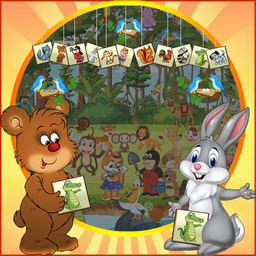
Animals memory
Matching pairs of adorable creatures is the ultimate trick to sharpen your focus while having fun. Animals memory turns simple card flipping into a hi...
▶ Play FreeAge doesn't matter
Memory match is one of the few genuinely universal games. Young children benefit from the basic mechanics of focus and recall. Adults keep their minds sharp through regular practice. Older players use memory games as a cognitive maintenance tool. The adjustable difficulty (grid size, number of pairs, time limits) makes it accessible at every stage of life.
Best Free Memory Match Games to Play Online
You know how to play memory match, and you understand why it's worth your time. Now here's where the fun begins. These are the best free options available right now on FreeJoy, each with a slightly different take on the formula.
Sharp Memory: Connect the Pairs
This is the classic version done right. A clean grid of face-down cards, a timer ticking, and the challenge of finding identical cards as fast as possible. No gimmicks, no distractions — just pure flip-and-match in its most refined form. Perfect for players who want to train without any extra complexity in the way.
Sharp memory: Connect the pairs
Puzzle lovers and brain training enthusiasts, get ready for a sharp challenge! Sharp Memory: Connect the Pairs offers a delightful test of your recall...
▶ Play FreeMemory Game: Square Challenge
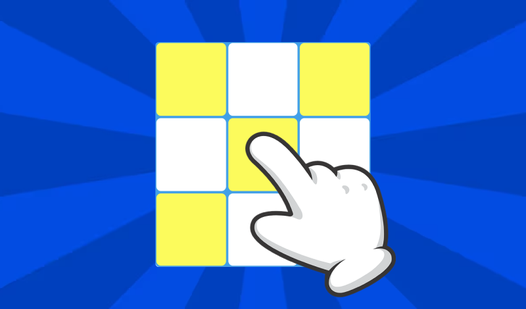
This one breaks from the standard pairs format and asks you to memorize and reproduce sequences of colorful squares. It's a different kind of memory challenge — less spatial, more temporal. You need to remember order, not just position. If you've plateaued on standard memory match and want something that pushes a different cognitive muscle, this is the one to try.
Memory Game: Square Challenge
Human memory is a muscle that thrives on consistent stimulation and rapid pattern recognition. Memory Game: Square Challenge pushes your cognitive lim...
▶ Play FreeMemory: Russian Letters
An educational twist that pairs memory training with language learning. You're matching Russian letters while the game quietly builds your familiarity with the Cyrillic alphabet. Even if learning Russian isn't your goal, the extra cognitive layer of matching an unfamiliar symbol to its pair makes this harder and more stimulating than a standard image-match game.
Animals Memory
Bright, cheerful animal illustrations make this one a great entry point for younger players — but don't let the friendly visuals fool you. The grid sizes get challenging, and the playful animal pictures are actually harder to distinguish at a glance than geometric shapes, which makes the memory task more demanding than it looks.
Animals memory
Matching pairs of adorable creatures is the ultimate trick to sharpen your focus while having fun. Animals memory turns simple card flipping into a hi...
▶ Play FreeDevelop Your Memory!
Exactly what the title promises. This game is built around the idea of progressive memory training — it scales with your performance, keeping the challenge just ahead of your comfort zone. It's the kind of game that works well as a daily practice tool because it adapts rather than staying static.
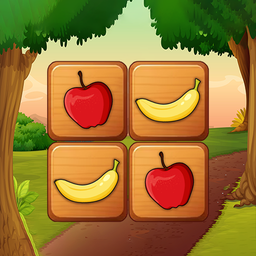
Develop your memory!
Improving your cognitive sharpness is best achieved through interactive brain training exercises that challenge your focus. Develop your memory! turns...
▶ Play FreeMore to Explore
If you want variety beyond the traditional card-flip format, these games expand the match mechanic in interesting directions:
Match Junk: 3D takes the matching concept into three dimensions, requiring you to rotate and identify objects spatially rather than working from a flat grid.

Match Junk: 3D
Mahjong enthusiasts and fans of casual sorting challenges will find hours of satisfaction in this engaging 3D experience. Players navigate cluttered s...
▶ Play FreeMemoMatch strips the game down to its purest competitive form with clean visuals and fast-paced rounds that test raw recall speed.
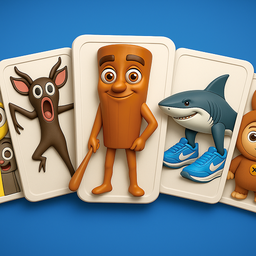
MemoMatch
Flipping over colorful cards to uncover hidden pairs is the core challenge that keeps your brain firing in MemoMatch. You will test your concentration...
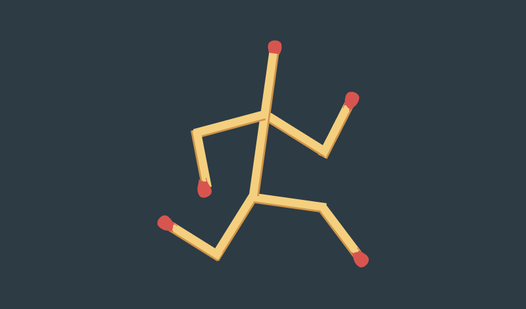
▶ Play FreeMatchstick Puzzle blends logical reasoning with pattern matching — you're arranging matchsticks to form correct shapes, which requires a different kind of visual-spatial thinking.

Matchstick Puzzle
Logic enthusiasts and fans of classic brain teasers will find Matchstick Puzzle to be the ultimate mental workout for their daily routine. You engage ...
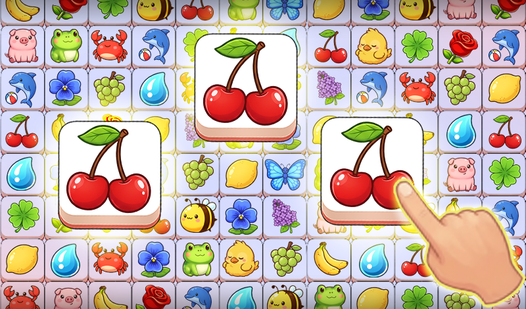
▶ Play FreeTile Match: Around the World wraps the matching mechanic in a travel theme, pairing tiles from global landmarks and cultural imagery. It's more relaxed in pace and great if you want the cognitive workout without a ticking clock adding pressure.

Tile Match: Around the World
Matching games remain the ultimate way to sharpen your cognitive focus while unwinding after a long day. Tile Match: Around the World elevates this ex...
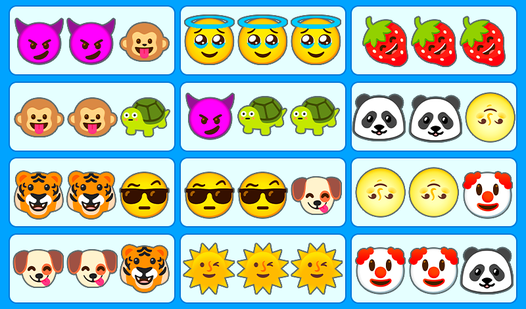
▶ Play FreePut in Place: Emoji Sorting uses emoji matching in a sorting format — fun, quick, and surprisingly tricky once the emoji pool gets larger and the visual differences between them get subtle.
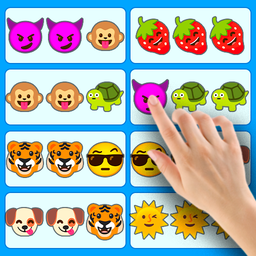
Put in place: Emoji Sorting
Fans of brain-teasing challenges will find their new obsession in Put in place: Emoji Sorting. This addictive puzzle experience tasks you with organiz...
▶ Play FreeTips to Actually Get Better
A few practical habits that separate good memory match players from great ones:
Practice at the edge of your ability. The grids you can already clear easily aren't training your brain — they're just confirming what you already know. Push to the next grid size or reduce your move count target by two every session.
Rest between sessions. Memory consolidation happens during rest and sleep. A twenty-minute session followed by a break will do more for your actual memory improvement than a two-hour grind. Spaced practice beats massed practice every time.
Narrate positions aloud (or mentally). Saying "star, top-right" quietly to yourself as you flip a card engages verbal memory alongside visual memory, giving you two encoding channels instead of one. It sounds odd but it genuinely helps with retention.
Switch between variants. Playing only one type of memory game can lead to specific skill without general improvement. Mixing spatial pair-matching with sequence-recall games exercises a broader range of memory systems.
Track your personal bests. Knowing your best score creates a concrete target and makes improvement visible. Progress is motivating. Without benchmarks, it's hard to notice how much better you've gotten.