How to Play Mario: Rules, Tips & Free Games Online
If you've ever asked yourself how to play Mario and where to start, you're in good company. Mario is one of the most iconic platformer franchises in gaming history, and the core mechanics are simple enough for anyone to pick up in minutes. You can go from complete beginner to confident player within a single afternoon — and the skills you build transfer directly to dozens of free online platformers available right now. This guide covers the rules, smart strategies, and the best free Mario-style games you can play without spending a cent.
What Is Mario?
Mario began as a humble carpenter in Donkey Kong back in 1981, then leaped into his own franchise with Super Mario Bros. in 1985. The premise is straightforward: guide Mario through side-scrolling levels packed with enemies, obstacles, and hidden secrets to rescue Princess Peach from Bowser.
Over four decades later, the formula still works. You run, jump, collect coins, power up with mushrooms and fire flowers, and reach the flagpole at the end of each level. Simple to explain, endlessly satisfying to master.
The games are built around a few unchanging truths:
- Timing is everything. A jump half a second too late means a hit.
- Exploration pays off. Hidden blocks, secret passages, and bonus worlds reward curiosity.
- Enemies follow patterns. Once you know them, you control the pace.
How to Play Mario: Core Rules and Basics
Learning how to play Mario starts with understanding the fundamental rules every game in the series shares.
Movement and Jumping
Mario moves left and right, crouches, and jumps. In most games, holding the run button while pressing jump gives you a longer, higher leap — essential for crossing wide gaps and reaching elevated platforms. Releasing jump early cuts the arc short, letting you avoid low ceilings. This variable jump height mechanic is what separates Mario from simpler platformers where every jump feels identical.
Power-Ups
- Super Mushroom — grows Mario to double size, letting him take one hit without dying.
- Fire Flower — turns Mario into Fire Mario, who throws bouncing fireballs at enemies.
- Super Star — brief invincibility with a recognizable jingle.
- 1-Up Mushroom — grants an extra life.
The hierarchy matters: small Mario → Super Mario → Fire Mario. A hit drops you one level. Take a hit as small Mario and you lose a life.
Enemies
- Goombas — stomp once (jump on top) to defeat.
- Koopa Troopas — stomp to knock into shell, then kick the shell to clear rows of enemies.
- Piranha Plants — wait for them to retreat into their pipe before running past.
- Bowser — reach the axe at the far end of his bridge to drop him into the lava, or fire enough fireballs to take him down directly.
Lives and Coins
You start with a set number of lives. Collecting 100 coins in classic games grants a 1-Up. Most modern interpretations offer checkpoints or unlimited continues, but in older titles, life management is a real skill.
If you want to practice these mechanics right now on a game that feels genuinely close to the Mario formula, try this:

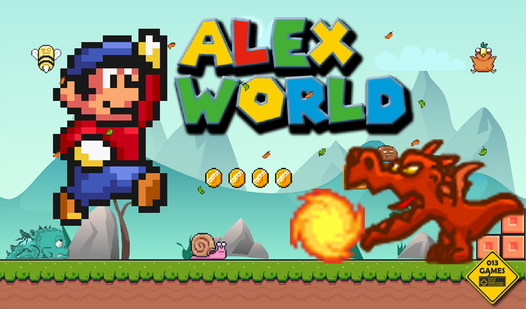
Alex World
Staring at a blank screen during your lunch break is a recipe for boredom when you could be embarking on a grand quest instead. Alex World serves up t...
▶ Play FreeAlex World has well-designed levels with multiple enemy types that reward exactly the kind of pattern recognition described above. Play a few levels and you'll notice your platformer instincts developing immediately.
How to Play Mario: Strategies That Work
Knowing the rules is one thing. Playing well is another. Here are the strategies that make a real difference.
Learn Enemy Patterns Before Moving
Never rush a new screen. Watch for a moment to see how enemies move. Goombas walk in straight lines and turn at edges. Koopa Troopas do the same. Lakitus loop above, throwing Spinies downward. Recognizing the pattern means you choose when to engage rather than reacting to surprises.
Use Running Speed Wisely
Mario needs a full running start to clear the widest gaps. Get into the habit of starting your approach from further back than you think necessary. Many failed jumps aren't about timing — they're about entering the gap too slowly.
Stomp Chains for Points and Lives
Stomping multiple enemies mid-air in sequence multiplies points exponentially. In classic games, eight consecutive stomps grant a 1-Up. Set up shell kicks through enemy clusters to chain stomps without touching the ground.
Find Secret Warp Zones and Hidden Rooms
Most Mario games hide accelerators — warp zones that let you skip worlds, invisible 1-Up blocks, and bonus rooms stuffed with coins. Look for:
- Invisible blocks above gaps between platforms.
- Vines hidden in specific question mark blocks.
- Gaps in ceilings that lead to rooms above the visible level.
Running along the top of a stage rather than the bottom often reveals these secrets.
Manage Your Power-Up Status
Going into a boss fight as small Mario is a serious handicap. Spend time finding a power-up before the castle level. A fire flower before Bowser turns a tense sprint into a comfortable fireballing session.

Fire Ball and Water Ball: Parkour Love Balls
Fans of platforming adventures will instantly fall for the dynamic duo featured in Fire Ball and Water Ball: Parkour Love Balls. This charming experie...
▶ Play FreeFire Ball and Water Ball: Parkour Love Balls puts you in the middle of a running parkour challenge that sharpens the quick-reaction timing Mario constantly demands. Two balls, one course, escalating obstacles — it's a great warm-up before tackling a difficult platformer section.
Playing Smart Across Worlds
Don't Skip Coins
Coins aren't decoration. In classic titles, every 100 coins means an extra life. In harder worlds, your life count becomes a real resource. Collecting coins along the way also naturally forces you into cleaner routes — you avoid reckless jumps because you're tracking collectibles rather than rushing forward blindly.
Use Moving Platforms as Tools, Not Obstacles
Platforms move, rotate, and disappear. A moving platform you're dreading can carry you over a gap you'd never clear with a standard jump if you time your mount correctly. Stop seeing environmental hazards as problems and start seeing them as tools.
Replay Early Levels for Lives Before Hard Sections
Stuck on a tough world? Go back to an easy level and farm 1-Ups. World 1-1 in Super Mario Bros. has a famous Goomba stomp chain spot near the end. Ten minutes there can fill your life count before a difficult boss run.
Fire Mario Changes Everything
Once you have the fire flower, aggressive play becomes viable. Instead of routing around enemies, fire them down before you reach them. This removes the timing pressure entirely. Fire Mario is especially useful against Hammer Bros, who are otherwise among the most dangerous enemies in the game — their unpredictable hammer arcs punish players who try to stomp their way through.

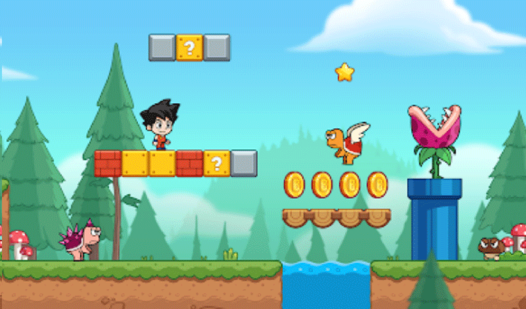
Super Onion Boy 2
Fans of classic platformer titles will instantly fall for the charm of Super Onion Boy 2 and its vibrant world. You take control of a brave bulbous he...
▶ Play FreeSuper Onion Boy 2 captures the retro feel of early Mario titles with genuine care. You're rescuing your friend through escalating levels where enemies are varied, obstacles increase sensibly, and the pixel art earns its charm. If you grew up with 8-bit platformers, this one hits exactly the right notes.
Best Free Mario-Style Games to Play Right Now
The official Mario franchise requires Nintendo hardware, but the platformer genre it defined is thriving free online. These games capture the same spirit — tight controls, escalating challenge, collectibles, and secrets.
Jim's World: Adventure
Classic adventure platforming stripped to the core loop: avoid obstacles, collect gold, reach the end. Jim's World: Adventure does what Mario always did best — it trusts the mechanics to carry the experience without layering on unnecessary complexity. Straightforward, satisfying, and properly challenging when the difficulty ramps up.

Jim's World: Adventure
Retro platformer fans will instantly fall for the nostalgic vibes of Jim's World: Adventure. This classic adventure title captures the magic of side-s...
▶ Play FreeCrimson and Pink Ball: Parkour Adventure
Two balls, one goal, and a race to the portal. Crimson and Pink Ball: Parkour Adventure is a competitive arcade platformer that rewards the kind of precise movement control Mario demands at its highest levels. Getting to the portal faster than the pink ball requires the same economy of motion that separates good players from great ones — no wasted inputs, no hesitation on tight jumps.

Crimson and Pink ball - parkour adventure
Staring at a blank screen during a coffee break is the worst, but you can turn that boredom into a high-speed adrenaline rush instantly. Crimson and P...
▶ Play FreeAdvanced Tips for Veteran Players
If you've got the basics down and want to push further, these ideas give you an edge.
Frame-Perfect Flagpole Jumps
Hitting the top of the flagpole in classic Mario grants maximum points and, in some games, a 1-Up. The jump needs to be timed so Mario's apex exactly meets the top of the pole. Practice the approach speed from a fixed point in the level until the timing becomes muscle memory.
Enemy Manipulation
Certain enemies can be herded — you position yourself to reset their patrol cycle, then slip past during the resulting gap. Hammer Bros in particular respond to your horizontal position. Move left and they often shift left; move right and they step right. Use this to create safe lanes through their hammer arcs rather than reacting to their throws.
Shell Surfing for Lives
In World 3-1 of Super Mario Bros., stomp the last Koopa Troopa near the staircase before the flagpole, then ride the shell as it bounces on the steps. The game awards 1-Ups for each additional hit after a certain chain count. Many players farm dozens of lives here before attempting World 8.
Hidden Coin Ceilings
Levels often have coin ceilings — rows of invisible coins accessible only by jumping into the ceiling at a specific point. These appear in levels where the visible design seems to have a suspiciously low overhang. If a ceiling feels oddly positioned, jump into it. The payoff is often a full row of coins or a hidden 1-Up.
Speed vs. Caution Tradeoffs
Fast play is exciting but expensive in terms of lives. Slow play is safe but lets you study layouts. The best approach shifts between them: rush sections you've memorized, slow down for new terrain. Never rush new screens until you've identified the hazard pattern.
More Free Games to Try
Once you've worked through the featured platformers above, these three picks bring different flavors to keep things interesting:

Pirates and Puzzles 2
Match identical tiles to launch devastating cannons and swords against your opponents in this addictive online sea battle. Pirates and Puzzles 2 turns...
▶ Play FreePirates and Puzzles 2 brings strategic thinking to the genre mix — a great palate cleanser between intense platforming sessions that exercises a completely different kind of problem-solving.

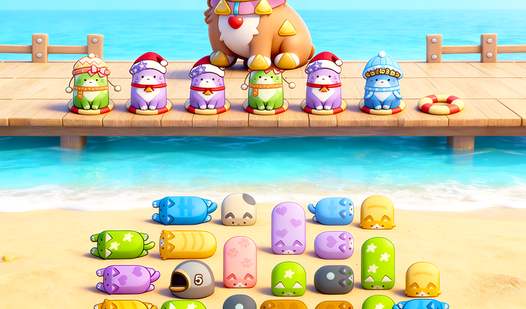
Help the Cats: Unblock the Jam
Fans of adorable animal puzzles will find their new obsession in Help the Cats: Unblock the Jam. This clever brain teaser challenges you to clear traf...
▶ Play FreeHelp the Cats: Unblock the Jam challenges your spatial reasoning in a puzzle format. The skills aren't unrelated to platforming — planning a route through a blocked path is exactly the thinking you apply when scouting a difficult Mario level before committing.

Merge Mushrooms: Forest Connect 2048
Fans of 2048 puzzles will find their new addiction beneath the canopy of this enchanted woodland. Merge Mushrooms: Forest Connect 2048 challenges you ...
▶ Play FreeMerge Mushrooms: Forest Connect 2048 brings the satisfying merge mechanic into a forest setting — perfect for a relaxed session when you want to step back from the intensity of precision platforming and let your reflexes recover.
Why Mario's Design Holds Up
The reason people still discuss how to play Mario decades after the original is that the design is genuinely sophisticated under its simple surface.
Every mechanic serves multiple purposes. Coins reward exploration and punish carelessness — you have to go slightly off the direct path to collect them. Power-ups provide both advantage and risk, since you can lose them. Enemies teach pattern recognition through low-stakes early encounters before the difficulty escalates. Warp zones reward curiosity with shortcuts. Lives create meaningful stakes without being punishing enough to stop casual players from progressing.
This philosophy — teach through play, reward attention, layer complexity gradually — is why Mario remains the benchmark for platformer design. Every game in the genre owes something to it, which is why all the free games listed here feel instinctively familiar even if you've never played them before.
The best way to sharpen your skills is to play. Start with the simpler levels in any of the free games above, apply the strategies from this guide, and pay attention to what the level design is trying to tell you. Mario's levels are handcrafted conversations between designer and player — learning to read them is half the game.