How to Play Logic Games: Rules, Strategies & Free Games
Logic games have a way of grabbing you by the brain and refusing to let go. Whether you're working through a grid puzzle at midnight or challenging yourself with a tricky deduction chain, the appeal is universal — these games reward patience, clear thinking, and the satisfying click of everything falling into place. This guide covers how to play logic games, the core rules that underpin most of them, strategies that actually work, and the best free options you can jump into right now.
What Are Logic Games?
At their core, logic games are puzzles that require you to use reasoning — not luck, not reflexes — to reach a solution. The genre is broad. Some logic games are pure math, some involve deduction and elimination, some layer in storytelling, and others challenge spatial thinking. But they all share one thing: there is always a correct answer, and you can find it by thinking carefully.
The word "logic" here isn't just marketing. These games train genuine cognitive skills — pattern recognition, systematic elimination, working memory, and structured problem-solving. That's why teachers use them, brain training apps are built around them, and millions of people return to them daily.
A few types you'll encounter most often:
- Deduction puzzles — you're given a set of clues and must figure out which items match which categories (think Einstein's riddle)
- Number logic — Sudoku, Kakuro, and similar puzzles where math meets grid thinking
- Visual logic — spatial puzzles, pattern matching, sequence completion
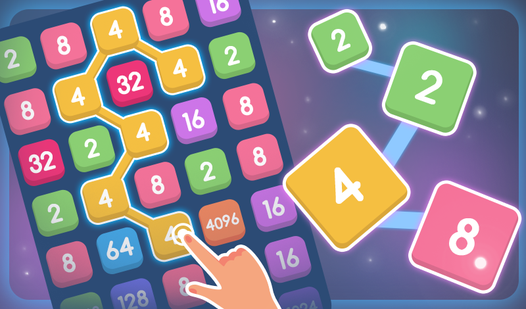
- Tile/merge logic — combining numbers or shapes by rules until you reach a goal
Rules and Basics of Logic Games
Как играть в Logic — this question gets a different answer depending on the specific game, but certain principles apply almost everywhere.
Start With What You Know for Certain
Every logic puzzle gives you some fixed information. Before anything else, identify what is definitely true. In Sudoku, it's the pre-filled numbers. In a detective puzzle, it might be a confirmed alibi. In a grid deduction game, it's the explicit clues. These anchors are your starting points.
Never guess when you can deduce. Guessing in a logic game is a trap — it can lead to contradictions five moves later, and you'll waste time backtracking.
Use Elimination
If a number can't go in a certain cell, mark it out. If a suspect couldn't have been in two places at once, eliminate one location. The logic of elimination is powerful: sometimes you don't know what is true, but you can systematically rule out what isn't true until only one option remains.
This is the backbone of правила Logic — the rules of logic — across almost every game in the genre.
Work in Passes
Don't try to solve the whole puzzle in one sweep. Make a first pass with easy, obvious deductions. Then make a second pass using what you learned from the first. Then a third. Each pass gives you more information to work with, and hard puzzles often only open up after several rounds of this.
Track Your Reasoning
In pen-and-paper puzzles, use pencil marks. In digital games, most platforms let you note candidates. Don't hold multiple possibilities in your head — write them down (or mark them on screen). Cognitive load is the enemy of clear thinking.

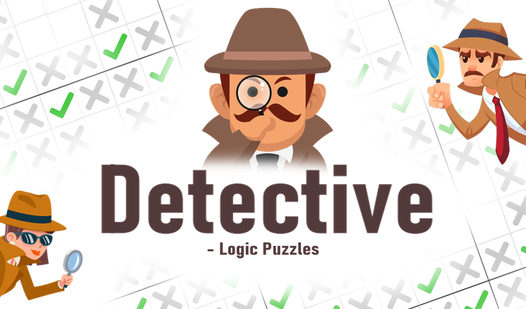
Detective - Logic Puzzles
Staring at a blank screen during your lunch break is the perfect sign that you need a bit of mental stimulation. Detective - Logic Puzzles turns your ...
▶ Play FreeCore Strategies for Logic Games
Getting better at logic games isn't about being "smart" — it's about having the right approach. Here are the strategies that separate efficient solvers from those who get stuck.
The Cross-Reference Method
Used heavily in grid-based games, this involves checking each row, column, and region simultaneously. When you know a value must exist somewhere in a row, and you also know it's blocked in all but one cell of that row, you've found your answer. The same logic applies to columns and boxes.
In Sudoku specifically, this is called "naked singles" and "hidden singles." It sounds technical, but after a few games it becomes instinctive.
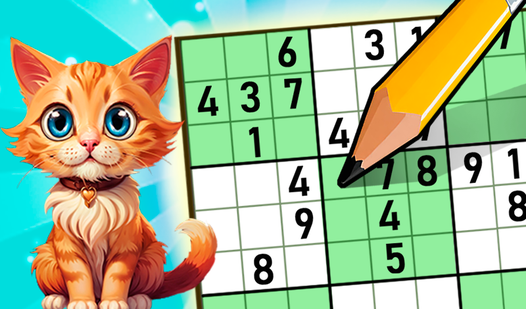
Sudoku - logic game
Staring at a blank screen while your brain feels like mush is the ultimate mid-day struggle. Solving Sudoku - logic game provides an instant mental re...
▶ Play FreeWork Backwards From Constraints
The most constrained parts of a puzzle are the easiest to solve first. If one row has seven numbers filled in, start there — not with the empty row. If one clue in a deduction puzzle is extremely specific, use that as your anchor.
This is a Logic стратегии principle worth internalizing: always go where the most information is.
Merge Smartly, Not Desperately
In number-merge games like 2048-style puzzles, the instinct is to keep combining whatever's available. Resist it. Keep your highest value tile in a corner, build toward it in a chain, and don't merge away tiles you'll need as stepping stones. Patience wins these games.
2248 Logic Puzzle
Fans of brain-teasing challenges will find their new addiction in 2248 Logic Puzzle. This addictive math puzzle game takes the familiar concepts of cl...
▶ Play FreeLook for Cascades
In tile and merge games, a single good move can trigger a chain reaction. Train yourself to spot two or three moves ahead — not just "what does this merge make?" but "what does that new tile enable next?"
Verbal Logic: Convert Words to Structure
For deduction puzzles with clues written in text, immediately convert every clue into a structured format. "The red house is directly to the left of the white house" becomes: Red = White - 1. Work with symbols and positions, not words. Language is ambiguous; structured notation is clear.
Arithmetic Fluency Pays Off
Many logic games involve mental arithmetic under pressure — adding up scores, checking sums in Kakuro, tracking number combinations. The faster and more accurate your mental math, the more brain space you have for actual strategy.
The Logic Puzzle 3D Challenge

Logic Puzzle 3D
Staring at a blank screen during a coffee break is the ultimate productivity killer when you need a mental refresh. Logic Puzzle 3D turns those idle m...
▶ Play FreeThree-dimensional logic puzzles add an extra layer to traditional grid thinking — instead of just rows and columns, you're reasoning across depth as well. The approach stays the same: anchor on certainties, eliminate possibilities, work in systematic passes. But your spatial awareness needs to level up. It helps to mentally "flatten" the 3D grid into separate 2D layers and solve each layer, then check consistency across them.
Logic Where and Positional Reasoning
Logic Where
Group words into thematic sets of four to master the complex web of associations waiting for you in Logic Where. You will carefully analyze rows of sh...
▶ Play FreePositional logic puzzles are a fascinating subtype where the core challenge is figuring out where something goes rather than what it is. These games train directional and relational reasoning — above, below, adjacent, opposite. The key strategy is to build a map and place each confirmed fact on it immediately, rather than holding relationships in your head.
Logic Dice: Probability Meets Deduction
Dice-based logic games introduce a probabilistic element that pure deduction puzzles lack. The challenge shifts slightly — you're working with what outcomes are more or less likely, not just what's definitely true or false. Strategy here involves expected value thinking: given all possible dice states, which move minimizes your worst-case scenario? Risk management becomes part of the puzzle.
Testing Your Intelligence Comprehensively
True logic skill isn't just about spatial grids and number chains — it encompasses verbal reasoning, general knowledge application, and abstract thinking. Как играть в Logic tests isn't something you prepare for differently than any other logic puzzle: accuracy, careful reading, and resisting the urge to rush.
The Best Free Logic Games Online
Logic онлайн has exploded in variety. Here's a look at the top free options worth your time, playable without registration.
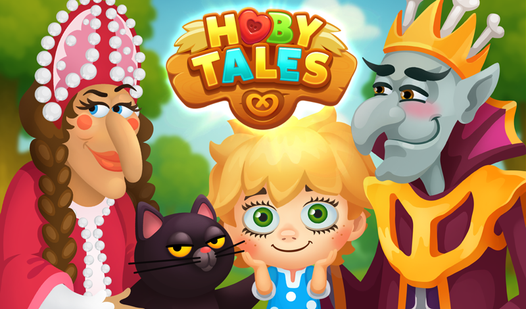
Hoby Tales

Hoby Tales
Stuck in a meeting that's dragging on, or just need a quick mental escape during a busy day? Hoby Tales is your perfect antidote for those moments whe...
▶ Play FreeA narrative-driven logic experience where the puzzle-solving is woven into a story. Perfect if you like your brain training with some character and atmosphere. The game layers deduction into its progression — every decision follows logically from what you've learned.
Lamplighter

Lamplighter
Puzzle lovers and fans of cozy town restoration games are going to adore Lamplighter! A creeping darkness has engulfed Lantern Town, and only you, th...
▶ Play FreeA spatial logic puzzle where you need to illuminate areas correctly. The challenge lies in chaining light sources and understanding how each placement affects the whole board. It's the kind of game that feels simple at first and quietly becomes very demanding.
TropicVille

TropicVille
Did you know that merge games are renowned for their ability to provide both a relaxing escape and a satisfying challenge? In TropicVille, you'll get ...
▶ Play FreeA city-building puzzle with strong logic elements. You're not just placing buildings anywhere — you're solving constraints about which structures can be adjacent, which need certain resources, and how to maximize space efficiently. It's logic game thinking applied to a satisfying construction context.
Blocks and That's It
Blocks and that's it
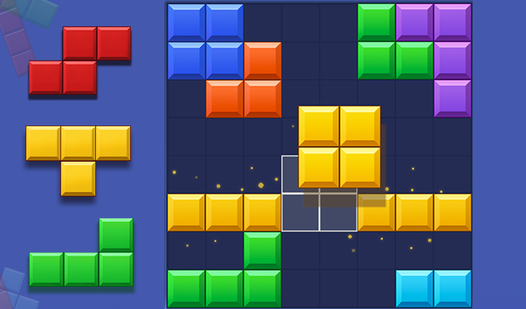
Feeling that midday slump or need a quick mental refresh? Blocks and that's it is your perfect escape, offering a delightful challenge that sharpens y...
▶ Play FreeA pure, clean block puzzle. No narrative, no extras — just you, a grid, and pieces that need to fit together. Highly satisfying for players who want logic without decoration. The puzzles escalate steadily, so it works for beginners and experienced solvers alike.
How to Get Better Fast
If you want to improve at logic games specifically, here's what actually works:
Play daily, even briefly. Consistency beats long marathon sessions. Twenty minutes a day builds pattern recognition faster than four hours on a weekend.
Review your mistakes. After finishing (or failing) a puzzle, trace back where your reasoning went wrong. Was it a wrong assumption early on? A missed elimination? Find the error, understand it, and you're less likely to repeat it.
Play different types. Sudoku makes you better at grid logic; deduction puzzles make you better at verbal reasoning; merge games train forward planning. Cross-training across subtypes builds a more flexible logical mind.
Don't use hints immediately. Hints are fine, but exhaust your own thinking first. Struggle is productive — it's when real learning happens. If you're stuck, walk away for ten minutes. Fresh eyes catch things that tunnel vision misses.
Increase difficulty gradually. Jumping from easy to expert in one step is frustrating and unproductive. Move up difficulty levels when easy mode has become genuinely boring, not just manageable.
Why Logic Games Are Worth Your Time
Beyond entertainment, logic games have real, documented cognitive benefits. Regular players tend to show improved working memory, stronger abstract reasoning, and better performance on problem-solving tasks. The transfer isn't perfect — no game turns you into a genius — but the pattern of disciplined, structured thinking that these games reinforce is genuinely useful in daily life.
They're also one of the few gaming genres that has no age ceiling. A ten-year-old and a seventy-year-old can both find an appropriate challenge in logic games, and both will benefit from playing.