Как играть в Lines: Rules & Free Games Online
If you've ever asked yourself как играть в Lines, you're in good company. Lines games have been one of the most enduring puzzle formats in gaming history — simple enough to pick up in a minute, deep enough to keep you hooked for years. The formula hasn't changed much since 1992, and that's precisely the point: it doesn't need to.
This guide is for anyone who wants to understand how Lines works from the ground up. We'll walk through the rules (правила Lines), break down the strategies that separate good players from great ones (Lines стратегии), and point you toward the best free games you can play as Lines онлайн right now, with no sign-up required.
What Is a Lines Game?
The Lines genre was born in Russia in 1992. Developer Gennady Denisov created the original Color Lines for Windows 3.1, and the game spread rapidly through Eastern Europe before finding fans worldwide. The premise was — and still is — gloriously straightforward: a grid of colored balls, and your job is to line up five of the same color in a row.
That's it. No story. No timer (in most versions). Just you, the grid, and the quiet pressure of watching it fill up one move at a time.
What makes Lines so enduring is its hidden complexity. On the surface, it looks like a casual distraction. But underneath, it's a combinatorial puzzle that rewards planning, spatial awareness, and the ability to think several moves ahead. Good players don't just react to what's on the board — they read the board like a chess player, weighing tradeoffs and anticipating how each move reshapes the landscape.
The genre has spawned dozens of variants over the years. Some add timers or obstacles. Some swap balls for blocks or tiles. Some twist the concept entirely, asking you to untangle lines rather than form them. But the heart of the genre — lines, colors, strategy — stays constant across every version.
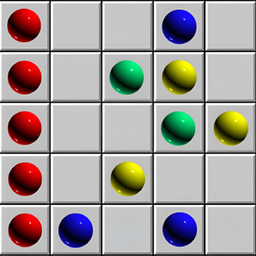
Lines 98
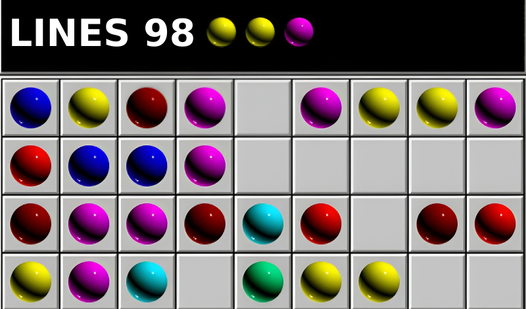
Strategic puzzle games often trick the brain into thinking they are simple until the grid starts filling up with chaotic patterns. Lines 98 turns this...
▶ Play FreeThe правила Lines: How the Game Works
Understanding the правила Lines is essential before anything else. The rules are simple, but the details matter — and missing even one of them can cost you the game.
The Grid
A standard Lines game uses a 9×9 grid — 81 cells in total. At the start, the board is seeded with a handful of colored balls (usually 3–5), scattered randomly. Your job is to manage this grid for as long as possible without letting it fill completely.
Some variants use larger grids (10×10 or 12×12) for more breathing room, while others use smaller ones for extra difficulty. The core mechanics remain the same regardless of size.
Moving Balls
On each turn, you select one ball and move it to any empty cell — as long as there's a clear path. This is the key constraint. Balls can't jump over each other or teleport. The path from point A to point B must run entirely through empty cells.
This path-finding mechanic is what makes Lines genuinely strategic. You're not just thinking about where you want a ball to go — you're also thinking about whether it can get there, and whether moving it will open up or block routes for other pieces elsewhere on the board.
Forming Lines and Scoring
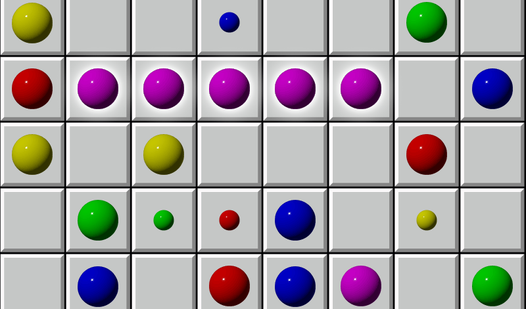
When five or more balls of the same color line up — horizontally, vertically, or diagonally — they disappear and you earn points. Base score increases with line length: five balls scores a fixed amount, six scores more, seven even more. Some implementations award bonus multipliers for clearing multiple lines simultaneously.
Crucially: if your move creates a line, no new balls appear. This is your reward for a smart move — you get to act again without the board getting more crowded.
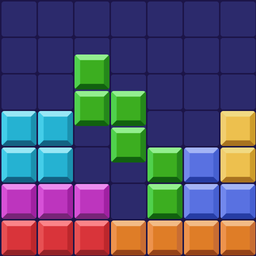
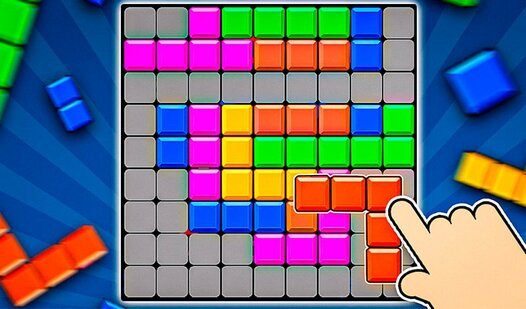
Block Puzzle: Lines of Blocks
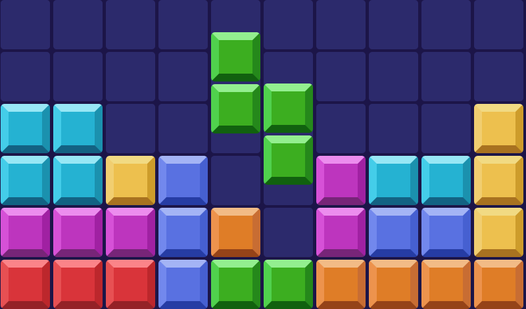
Fans of retro arcade challenges will find their new obsession with Block Puzzle: Lines of Blocks today. This addictive game tests your ability to stac...
▶ Play FreeNew Ball Spawning
Here's where the pressure builds. After any move that doesn't clear a line, three new balls appear on random empty cells. They don't announce themselves until they land — though most games show a preview of which colors are coming next. That preview is among the most important pieces of information in the entire game.
As the board fills, your options narrow. Paths get cut off. Balls that were reachable become stranded. The urgency is real, even without a literal countdown clock.
Game Over
The game ends when the board is completely full — no empty cells remain. There's no way to "win" Lines in a traditional sense; the goal is to last as long as possible and rack up the highest score you can.
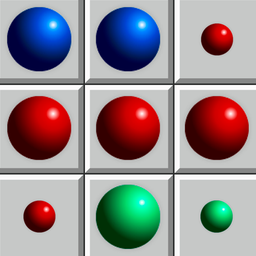
Lines 98 Classic
Staring at a blank document while your brain feels like it is stalling is the ultimate afternoon slump. Lines 98 Classic provides the perfect mental r...
▶ Play FreeThe Preview System
Most classic Lines implementations show you the next three balls before they spawn — as small colored indicators along the edge of the board or above the grid. Ignoring this preview is one of the most common beginner mistakes.
The preview tells you which colors are about to arrive (though not where they'll land). If the incoming balls are a color you're already working with, you can position yourself to capitalize. If they're scattered mismatches, you'll want to play conservatively and focus on keeping the board tidy.
Как играть в Lines: Strategies That Actually Work
Knowing the rules is the foundation. But if you want to get genuinely good, you need Lines стратегии that hold up under pressure. Here are the approaches that matter most.
1. Keep the Center Open
This is the single most important habit to build early. The center of a 9×9 grid has the highest connectivity — a ball in the middle can move in all directions across a wide range of cells. A ball stuck in a corner has far fewer options.
Experienced players treat the central 3×3 area almost like a traffic hub: it's there to provide routes, not to store balls. Whenever possible, push pieces you're not actively working with toward the edges, keeping the middle free for maneuvering.
2. Read the Preview on Every Turn
Before you move anything, check the preview. Which three colors are coming? Do you have matching balls on the board? Is there a position where those incoming balls could complete a line — or seriously disrupt one you're already building?
The preview should change your move roughly 30–40% of the time. If you're never adjusting your plans based on incoming colors, you're leaving serious points behind.
3. Think in Chains, Not Just Lines
Beginners focus on one line at a time. Experienced players think in parallel chains: "I'm building a red line and a blue diagonal and a green cluster simultaneously." Having multiple partial lines in progress at once means more opportunities to score without triggering new ball spawns.
Don't over-commit, though. Two or three parallel chains is usually the sweet spot — more than that spreads your pieces too thin to complete any of them.

Tangled lines
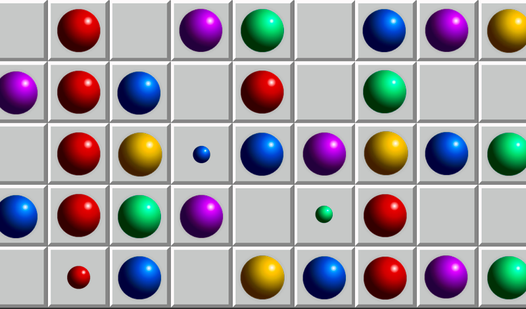
Spatial reasoning puzzles offer a satisfying mental workout that keeps your logic skills sharp every single day. Tangled lines takes this classic conc...
▶ Play Free4. Diagonals Are Your Secret Weapon
Most new players focus on horizontal and vertical lines because they're visually obvious. But diagonal lines cut across the board in ways that can save you when space is tight. A diagonal clear might free up two or three key cells that allow a complete board reorganization.
Train yourself to scan for diagonals. Your eyes naturally track rows and columns — fighting that instinct takes practice, but once you develop the habit, you'll spot lines you were consistently missing before.
5. Play Defensively When the Board Gets Crowded
When free space drops below 30–35 cells (roughly 40% of the board), switch mindsets. Stop chasing big combos and start playing defensively:
- Prioritize moves that clear any line, even short ones
- Look for moves that reopen blocked paths for future turns
- Avoid risky moves that might fail and spawn more balls unless the upside is very high
Defensive play isn't exciting, but it's what separates players who survive to 500 points from those who hit a wall at 200.
6. Control Where You Clear
Here's a nuance most players miss: when multiple lines could be cleared simultaneously, you have some influence over which cells become empty. Clearing a horizontal line in the top row opens very different routing options than clearing a vertical line through the center.
Think about where you clear, not just whether you clear. The right freed cells can set up your next two or three moves beautifully.
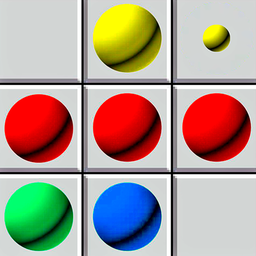
Lines Balls 98 match 5
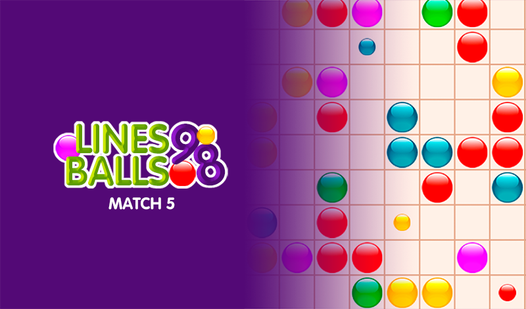
Puzzle enthusiasts who crave a minimalist challenge will find their new obsession in Lines Balls 98 match 5. This addictive experience tests your spat...
▶ Play Free7. Consolidate Colors Actively
With five or six colors on the board, isolated balls of one color can end up stranded far from their matches. Whenever you have an efficient path, move isolated balls toward their same-color clusters. This reduces chaos on the board and gives you more controlled, predictable scenarios to work with in later turns.
Best Free Lines Games to Play Online
Enough theory — here are the actual games you can play right now. All of them are free, browser-based, and require zero registration.
Lines 98
The gold standard. If you're learning как играть в Lines, this is the version to start with. Lines 98 offers the classic 9×9 grid, five colors, and an uncluttered interface that made the genre famous in the 90s. The difficulty scales naturally as the board fills, the preview system rewards attentive play, and hundreds of sessions in, it still feels fresh because of randomized spawning.
Block Puzzle: Lines of Blocks
A block-based variation that teaches line-clearing fundamentals from a different angle. Instead of moving balls, you place rows and columns of blocks to form complete horizontal lines. It bridges the gap between Tetris-style dropping games and Lines-style strategic thinking — a great entry point if you're coming from block puzzlers.
Lines 98 Classic
Even more disciplined than the standard version. No animations, no extra features — just the grid, the balls, and your decision-making. High-score chasers gravitate here because everything in the interface is stripped to the essentials. If you want to practice pure strategic thinking without visual noise, this is your arena.
Tangled Lines
A structural inversion of the Lines concept: instead of forming lines, you untangle them. Nodes are connected by overlapping lines, and your job is to rearrange the nodes until no lines cross each other. It builds spatial reasoning and route-finding instincts that translate directly to better play in classic Lines.
Lines Balls 98 Match 5
This variant focuses on clustering identical balls into groups of five rather than straight lines, requiring you to scan the board in all directions simultaneously. It's a great challenge for players who've mastered the basic game and want something that demands finer attentiveness.
More Lines Games Worth Your Time

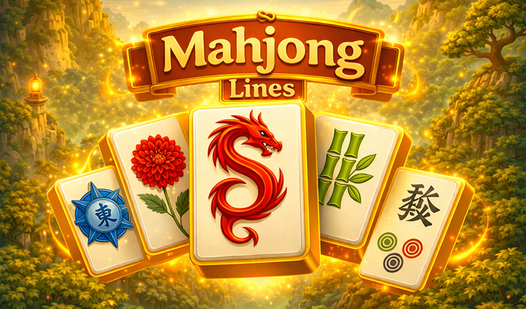
Mahjong Lines
Connect identical tiles in Mahjong Lines to clear the board by drawing paths that bend no more than twice. This classic mahjong connect experience cha...
▶ Play FreeMahjong Lines is a clever hybrid that layers Mahjong tile-matching logic onto a Lines-style board. If you've played classic Mahjong, the mental model will feel familiar — but the execution is genuinely fresh. Choosing which tiles to remove in which order mirrors the same type of sequencing decisions that define top-level Lines play.

Untangle the Lines
Untangle the Lines tests your spatial reasoning as you move floating nodes across a digital canvas to clear messy webs. You must drag each point strat...
▶ Play FreeUntangle the Lines strips spatial reasoning to its most abstract form: a set of connected points whose lines cross each other, and your goal is to rearrange the points until all connections are intersection-free. It's a pure mental workout that sharpens the path-finding instincts you need in every Lines variant.
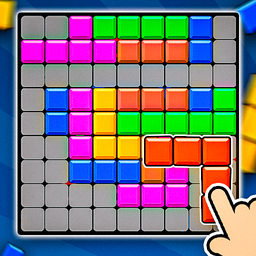
Best Blocks: Lines
Arrange falling shapes across the board to complete rows and clear the screen in Best Blocks: Lines. This challenge keeps you on your toes as you stra...
▶ Play FreeBest Blocks: Lines pushes the block-puzzle format further with more complex shapes and tighter grids. If you've finished Block Puzzle: Lines of Blocks and want a harder challenge that demands tighter planning, this is the natural next step.
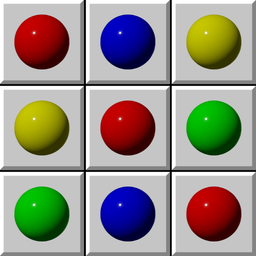
Balls Lines 98 Classic
Logic puzzles like Balls Lines 98 Classic have a unique way of occupying your mind for hours on end with their deceptive simplicity. This timeless cha...
▶ Play FreeBalls Lines 98 Classic returns to the traditional ball-and-grid formula with its own scoring system and visual style. A solid alternative for players who've topped out their Lines 98 score and want a fresh leaderboard to compete on without learning a fundamentally different game.
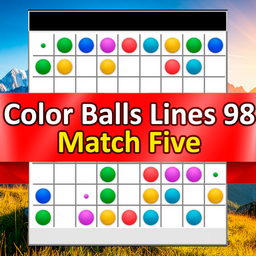
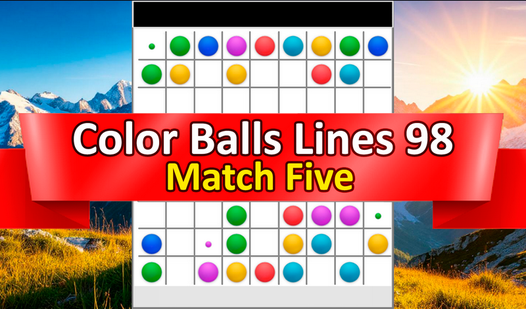
Color Balls Lines 98 - Match Five
Strategic thinkers who love a good brain teaser will find Color Balls Lines 98 - Match Five absolutely addictive. This vibrant puzzle challenges you t...
▶ Play FreeColor Balls Lines 98 — Match Five rounds out the lineup with smooth animations and a clean, high-contrast color palette. It's among the more polished visual implementations of the match-five formula and handles equally well on desktop and mobile browsers.
Why Lines Games Stay Relevant
Three decades after the original Color Lines launched, the genre keeps finding new players. That's not nostalgia — it's a structural advantage built into the design itself.
Lines hits a rare balance: learnable in 90 seconds, genuinely difficult to master. Every session is different because ball placement is randomized. The feedback loop is immediate — you see the consequences of your decisions with no delay. And the game respects your schedule: a session can last five minutes or two hours, and both feel complete.
For players discovering как играть в Lines today, browser-based versions offer one critical advantage: instant access. No installation, no waiting, no paywalls. You open a tab and you're playing. That accessibility has brought the genre to generations of players who might never have encountered the 1992 original — and it's exactly why the concept keeps spreading.
The puzzle genre is crowded with match-three games, block puzzlers, sliding tiles, and everything in between. Lines survives because it's hard to fake. There's no lucky combo that bails you out of a bad position. Every high score reflects genuine strategic thinking — and that, more than anything else, is what keeps players coming back.