How to Play Launch Games: Rules and Strategies
If you've ever wondered how to play Launch games and why they're so addictive, you're in the right place. Launch games are a beloved browser gaming genre built around a simple but endlessly satisfying premise: fling something — a character, a bird, a projectile — as far or as accurately as possible, then watch the chaos unfold. Whether you're new to the genre or just looking to sharpen your skills, this guide covers everything from the basic rules to advanced strategies you can start using right now.
What Is a Launch Game?
Launch games are physics-based games where the core mechanic revolves around propelling an object or character through the air. The goal varies by title: sometimes it's distance (fly as far as possible), sometimes it's precision (hit a specific target), and sometimes it's pure destruction (knock down structures or enemies). What ties them all together is momentum, trajectory, and the satisfying crunch of a perfect launch.
The genre traces its roots back to classic flash games and was popularized massively by titles like Angry Birds — but the concept is much older. Trebuchet simulators, baseball pitching games, and even early Flash titles from the 2000s all fall into this family. Today, Launch games are alive and thriving in the browser gaming space, with hundreds of free titles available online.
What makes Launch games so compelling is their accessibility. You don't need to learn complex controls or memorize combo systems. The mechanics are intuitive: aim, adjust power, fire. But underneath that simplicity lies a surprising amount of depth once you start optimizing for distance, score, or efficiency.
Spin Launch
Staring at the clock waiting for your shift to end or just need a quick mental escape from a monotonous afternoon? Spin Launch is the perfect high-ene...
▶ Play FreeHow to Play Launch Games: Core Rules and Basics
Understanding how to play Launch games means understanding a few universal mechanics that appear across almost every title in the genre.
The Launch Mechanic
Most Launch games use one of these input styles:
- Click and drag: You pull back like a slingshot. The direction and distance of your drag determines the angle and power.
- Power meter: A bar fills up while you hold a button. Release at the right moment for the desired power level.
- Two-stage input: First click sets the angle, second click sets the power — or vice versa.
Regardless of input style, the underlying physics is the same. A steeper angle sends your projectile higher but shorter. A shallower angle creates a longer, flatter arc. The sweet spot for maximum distance is typically around 45 degrees — this is basic projectile physics, and it applies surprisingly well even in arcade-style games.
Physics and Trajectory
Here's what actually governs your launch:
- Gravity pulls everything downward constantly. Higher initial velocity fights gravity longer.
- Air resistance (in games that model it) slows objects over time, especially lighter ones.
- Bounce and roll mechanics extend distance after landing. Some games let your character or projectile keep going after hitting the ground — maximize these opportunities.
- Obstacles and boosts are scattered through many Launch games. Hitting a boost pad mid-air can dramatically extend your run.
In most Launch games, the first few seconds of flight determine 80% of your outcome. Getting the angle and power right at the moment of launch matters more than anything else.
Upgrade Systems
Many Launch games include an upgrade loop. You earn currency through each run (usually tied to distance or score) and spend it on improvements like:
- Stronger launchers (more initial power)
- Better aerodynamics (reduced drag)
- Bouncier materials (more roll distance)
- Mid-air abilities (rockets, wings, or double-jumps)
Early upgrades usually give the biggest returns, so prioritize the ones that directly increase launch power and initial velocity before spending on refinements.
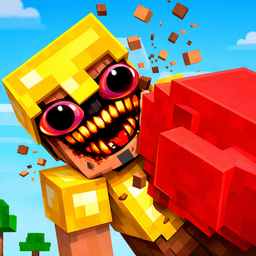
Break the Noob Completely!
Fans of chaotic physics games will find endless entertainment launching their favorite blocky character into the sky. Break the Noob Completely! turns...
▶ Play FreeLaunch Strategies: How to Maximize Every Run
Once you understand the basics, the real question is how to squeeze every extra meter or point out of each attempt. These Launch strategies apply broadly across the genre.
Optimize Your Launch Angle First
Before worrying about power, nail your angle. Most players instinctively aim too high. A 35–45 degree angle is almost always more efficient than a 60–70 degree one. Test different angles on your first few runs to find what the specific game rewards — some titles have hidden sweetspots that deviate from the physics norm due to game design choices.
Time Your In-Air Actions
Many Launch games give you some control mid-flight. This might be activating a rocket boost, flapping wings, or angling your character's body. Save these for the moment your trajectory starts dropping. Using a boost at the apex of your arc wastes its potential — wait until you're losing altitude and then fire, converting the boost directly into forward distance.
Study the Terrain
Launch games with level-based designs (rather than endless runners) reward careful observation. Look for:
- Gaps you can fly through to avoid losing speed
- Bounce surfaces that redirect momentum forward rather than upward
- Enemy or obstacle positions that, when hit correctly, act as extra boosts
In Angry Birds-style launchers, understanding the structural weaknesses of each level is everything. Wood, stone, and glass all have different durability. A single well-placed shot can cascade into a full demolition if you target the right load-bearing element.
Chain Bounces and Collisions
In distance-based games, landing is not the end. Many titles have generous bounce physics that keep your run alive after the first impact. The key is landing at a shallow angle — coming in nearly horizontal extends your roll and bounce sequence far more than a steep vertical impact. Think of landing like you're skipping a stone: flat and fast beats steep and hard.
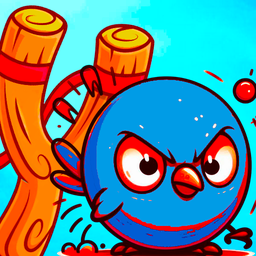
Harmful Birds
Launch colorful projectiles across the screen to knock pesky rivals off their high-perch platforms. Harmful Birds demands sharp focus as you pull back...
▶ Play FreeUpgrade Efficiently
If you're playing a game with an upgrade tree, here's a general priority order:
- Launch power / initial velocity — biggest impact on distance
- Bounce coefficient — extends every landing
- Mid-air control — adds skill-ceiling rewards
- Passive abilities — usually the smallest gains per currency spent
Avoid spreading upgrades evenly. Maxing one category before moving to the next usually produces better results because upgrades often have multiplicative interactions.
Learn the Reset Point
In endless or run-based Launch games, there's usually a point in each run where your velocity drops below the threshold needed for further progress. Recognize this point quickly — trying to eke out a few extra meters by using all your boosters at once near the end is less efficient than saving them for mid-flight optimization on the next attempt. Know when a run is over and reset.
Best Free Launch Games to Play Online
Here's a closer look at some of the best Launch games you can play right now, completely free, directly in your browser.
Spin Launch
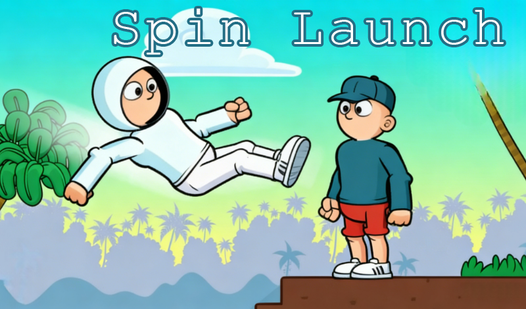
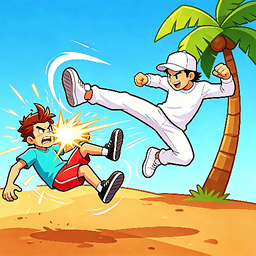
Spin Launch is a fast-paced platformer with a twist on the standard launch formula. Instead of firing from a cannon or slingshot, you defeat enemies by launching yourself at them. The control scheme is snappy and responsive, making it great for players who want action-forward gameplay rather than a pure physics simulation. The challenge ramps up quickly as enemies get smarter and more numerous, forcing you to think about your launch direction mid-combat rather than just before it.
Spin Launch
Staring at the clock waiting for your shift to end or just need a quick mental escape from a monotonous afternoon? Spin Launch is the perfect high-ene...
▶ Play FreeBreak the Noob Completely!
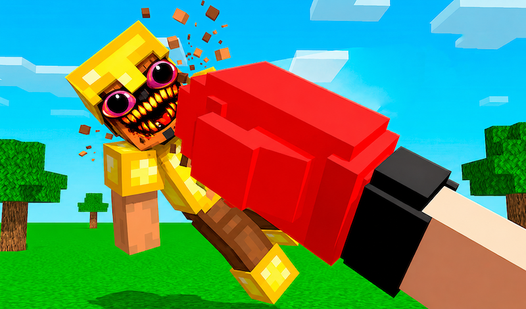
This one is a distance-based launch game with a comedic edge. You launch the Noob character and then actively control him during the flight to travel as far as possible. The mid-flight control element adds a layer of skill that separates it from purely passive launchers — you're not just watching; you're managing the character's body position to optimize every bounce and roll. It's endlessly replayable as you chase higher and higher distances, and the upgrade system gives you clear milestones to work toward.
Break the Noob Completely!
Fans of chaotic physics games will find endless entertainment launching their favorite blocky character into the sky. Break the Noob Completely! turns...
▶ Play FreeHarmful Birds
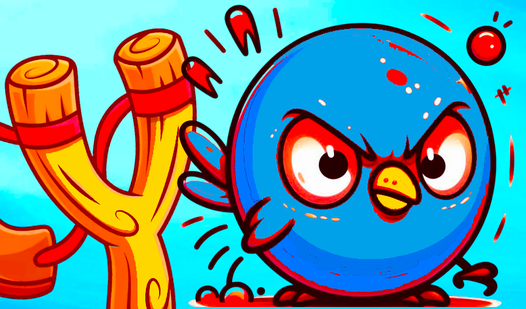
Harmful Birds is a direct love letter to the Angry Birds formula. You launch birds from a slingshot at pig-filled structures, aiming to wipe out all targets with the fewest shots possible. Each bird type has a different ability — some split mid-air, some accelerate on tap, some create explosions on impact. Mastering when and where to activate each ability is the key skill. The structures are designed to be satisfyingly destructible, and landing a chain reaction that collapses an entire tower in one shot never gets old.
Harmful Birds
Launch colorful projectiles across the screen to knock pesky rivals off their high-perch platforms. Harmful Birds demands sharp focus as you pull back...
▶ Play FreeAdvanced Tips for Competitive Players
If you've mastered the basics and want to push further, here are some higher-level techniques:
Frame-Perfect Timing
In games with manual boost activation or ability triggers, practice timing your inputs to specific moments in the arc. Many players activate boosts too early out of excitement. Slow down, watch your trajectory carefully, and develop a feel for the exact moment each ability pays off most.
Use the Environment Deliberately
Skilled Launch game players treat the environment as part of their strategy, not just an obstacle. Walls can redirect momentum. Certain enemies can be used as springboards. Knowing which environmental interactions are beneficial versus harmful and routing your shot accordingly separates good players from great ones.
Practice Consistency Over Single Best Runs
In score-based Launch games, a consistent medium-distance run repeated efficiently often beats gambling on a single exceptional run. If your best distance requires everything to go perfectly, build toward that through incremental upgrades rather than heroics. Stable, repeatable outcomes let you farm currency or score more reliably.
Watch Your Angle on Bounces
After the first bounce, many players lose track of their trajectory angle. A second or third bounce at a bad angle can end a run prematurely. Some games let you influence bounce direction with movement inputs — practice these micro-corrections. Even small angle adjustments at bounce moments can add significant total distance.
Why Launch Games Are Worth Playing
It might seem like Launch games are a simple genre with a low skill ceiling. Spend an hour with a well-designed title and that assumption evaporates. The best Launch games layer in upgrade progression, mid-flight skill expression, level design complexity, and score-chasing loops that make "one more run" a genuine compulsion.
They're also genuinely accessible. No tutorials needed, no complex keybinds to memorize. You can understand what you're doing within 30 seconds of your first run, which makes them perfect for quick sessions — but they reward extended play as you internalize the physics and start making decisions that would have seemed impossible to a new player.
The free-to-play browser versions on sites like FreeJoy mean there's no barrier at all. No account required, no installation, no waiting. Click, launch, watch things fly.