How to Play Karting: Rules, Strategies & Free Games
So you want to know how to play Karting? You're in the right place. Whether you're brand new to racing games or just looking to sharpen your technique, karting games offer one of the most satisfying experiences in online gaming — fast, chaotic, skill-based, and immediately fun. This guide covers the rules, the strategies that actually work, and the best free karting games you can play right now without downloading a single thing.
What Is Karting?
Karting as a sport dates to the late 1950s, when small open-wheel go-karts started racing on parking lots and dedicated circuits across the United States. Since then, it's grown into a global sport — real karts can hit over 100 km/h, and professional karting is widely recognized as the training ground for Formula 1 drivers. Almost every F1 world champion started their career behind the wheel of a kart.
Online karting games capture that same essence: tight circuits, close racing, and pure driver skill determining the winner. Unlike full-scale racing simulators that demand expensive hardware and hours of setup, karting games are designed to be picked up and played immediately. The physics are approachable, the tracks are compact, and the action rarely stops.
What makes karting games genuinely interesting is the variety on offer. Some lean into realistic racing mechanics — tire management, racing lines, braking zones. Others go full chaos mode with power-ups, obstacles, and tracks that defy physics entirely. Both styles have their own depth, and this guide will help you get good at both.
The rise of browser-based karting games has made the genre massively accessible. You no longer need a gaming console or a beefy PC to enjoy competitive racing. A browser tab is enough.
Rules and Basics of Karting
Before talking advanced Karting strategies, you need a solid grip on the fundamentals. Most karting games share a common ruleset, even if they dress it up differently.
The Racing Line
The racing line is the theoretically fastest path through any corner. In real karting and most racing games, this means:
- Brake before the corner, not during it
- Turn in late — don't rush to the apex
- Hit the apex — the innermost point of the corner
- Accelerate out — power down as early as possible while unwinding the steering
On tight, karting-style circuits, the racing line matters enormously. The speed difference between a perfect line and a poor one can be several seconds per lap — which is the difference between leading and finishing last.
Throttle and Brake Balance
Karting games punish jerky inputs. Rough throttle application causes rear slip and spin-outs. Hammering the brakes too hard causes understeer — where the front wheels lose grip and the kart plows straight ahead instead of turning. The goal is smooth, deliberate inputs at every corner.
Track Position vs. Lap Time
In multiplayer karting, raw lap time isn't everything. Track position — where you are physically relative to other drivers — often matters more in short sprint races. Blocking a faster driver through a technical section, even if it costs you a tenth of a second in lap time, can be the smarter tactical call.
Drafting and Slipstreaming
On straights, running directly behind another kart creates a slipstream effect. In games that simulate this, you'll travel faster in dirty air behind a kart than in clean air alone. Use slipstreaming to build speed before overtaking — then time your move for the braking zone at the end of the straight.
Race Format Rules
Most karting games follow standard race formats: a set number of laps, first to the finish line wins. Some games add checkpoint systems (reach each gate before the timer expires), elimination formats (last place driver knocked out periodically), or fuel management (you must conserve or stop to refuel). Understanding what format you're racing before the start changes everything about how you approach the event.
Kart Hooligans
Smashing through city traffic and causing absolute mayhem is the primary objective in Kart Hooligans while you outrun the pesky police. You pilot a zi...
▶ Play FreeKarting Strategies That Actually Work
Here's where it gets interesting. The rules of Karting are simple — the strategies are where experience and intelligence separate average players from consistently fast ones.
1. Find Your Braking Points
Every corner on every track has a braking point — the last possible moment you can begin braking and still make the turn. Finding these points is the single biggest speed unlock in any karting game.
Start by braking earlier than necessary. Then, lap by lap, push your braking point later. Eventually you'll find the absolute limit — you'll know because you'll miss the corner. Back off just slightly from that threshold and you've found your optimal marker.
In practice: pick a visual reference point (a track edge, a color change on the tarmac, an object near the circuit) and use it every single lap. Muscle memory builds around consistent cues, not around vague feeling.
2. Target Your Overtaking Zones
Don't force passes everywhere. The best overtaking opportunities in karting are specific:
- End of long straights — your target must brake, you attack before they do
- After an opponent's mistake — if they brake too early or run wide, attack immediately
- Hairpins and chicanes — one line in, one line out; get inside at entry, you control the exit
Avoid trying to pass mid-corner on tight circuits — you'll both lose time and risk contact that sends you both off.
3. Build Consistency Before Raw Speed
In longer race formats, consistency beats peak speed. A driver posting 1:02 lap times for 10 consecutive laps beats a driver alternating between 1:00 and 1:05. Smooth, consistent driving reduces errors and, in games with tire or fuel mechanics, extends the life of your consumables significantly.
4wd Test Driver
Navigate treacherous terrain and conquer extreme slopes as you push your 4x4 vehicles to their absolute limits. Mastering 4wd Test Driver requires a d...
▶ Play Free4. Adapt to Surface and Conditions
Some karting games introduce variable conditions — wet tracks, off-road sections, different terrain types. The core skill here is adjusting your inputs to the available grip. On slippery surfaces:
- Reduce throttle aggression exiting corners
- Brake earlier — stopping distances are longer than you expect
- Use wider lines — more radius means less lateral force demand on the tires
Off-road and hill-racing variants introduce weight transfer dynamics. When climbing, the rear axle goes light — be smooth on the throttle or you'll spin. Descending, weight shifts forward, giving you more front grip than usual — you can often brake later than expected going downhill.
5. Learn the Track Before You Race It
Before a competitive race, take a warm-up lap at reduced pace. Note:
- Where the track narrows (high danger zones)
- Where there's runoff area (where can you go if you make a mistake?)
- The timing of any dynamic obstacles or shortcuts
- Where you naturally gain or lose time relative to competitors
Track knowledge converts guesswork into calculated decisions during the race itself. The drivers who look smooth and effortless aren't reacting less — they've already processed the information before the situation arrives.
6. Manage Your Mental State After Mistakes
After a crash or a bad corner, the instinct is to push extra hard immediately to recover the lost position. This almost always causes a second mistake. Instead: reset your rhythm, find consistency again, and recover positions gradually. A calm driver makes fewer errors over a full race distance than an aggressive one who throws everything at the first recovery lap.
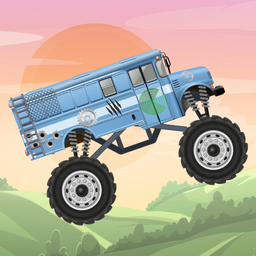
Hill Car Racing
Adrenaline junkies who live for high-stakes mountain challenges will find Hill Car Racing incredibly addictive. Master the art of the perfect climb as...
▶ Play FreeBest Free Karting Games Online
All of these games are playable free in your browser on FreeJoy.games — no account, no installation required.
Super Karting Race
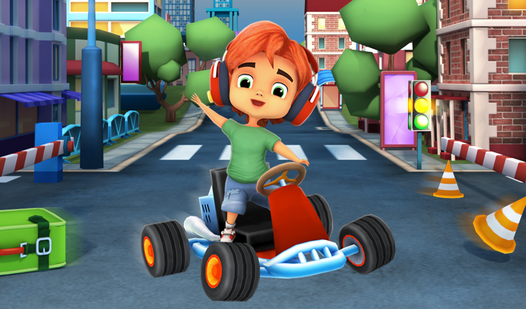
Super Karting Race is the cleanest starting point for anyone new to browser karting. The racing mechanics are approachable, physics are responsive, and the circuits are designed to develop good habits from the first lap. Single-player mode lets you learn tracks without pressure; multiplayer lets you test your developed skills against real opponents. If you've never played a karting game before, start here and get comfortable with the basics before moving to more demanding titles.
Kart Hooligans
Kart Hooligans turns the volume up on everything. The circuits are wilder, there are obstacles to smash through, and fuel management introduces a resource layer you won't find in standard karting games. Running out of fuel mid-race is a genuine possibility, so you need to balance aggression with awareness of your consumption rate. It's chaotic in the best possible way — perfect for players who find pure circuit racing a little too clean.
Kart Hooligans
Smashing through city traffic and causing absolute mayhem is the primary objective in Kart Hooligans while you outrun the pesky police. You pilot a zi...
▶ Play Free4WD Test Driver
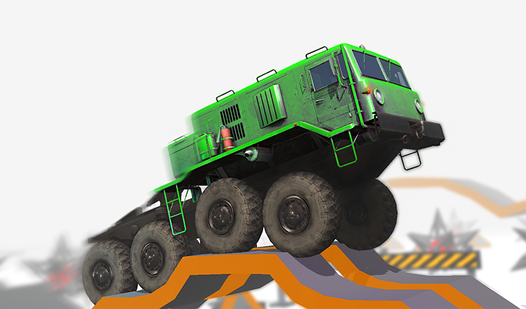
4WD Test Driver steps outside traditional karting into off-road driving territory. Four-wheel-drive mechanics change how you approach corners and power application compared to standard rear-drive karts. If you've ever felt like karting games all feel the same, this one offers a genuinely different physical challenge. The terrain variation keeps your inputs honest — what works on a smooth circuit fails completely on loose gravel or uneven terrain.
4wd Test Driver
Navigate treacherous terrain and conquer extreme slopes as you push your 4x4 vehicles to their absolute limits. Mastering 4wd Test Driver requires a d...
▶ Play FreeHill Car Racing
Hill Car Racing does something smart with its difficulty curve — tracks get progressively more demanding as you advance. Skills built early get tested and expanded throughout the game. The hill-climbing element introduces weight transfer physics that most karting games ignore entirely. You'll find yourself learning to read terrain gradients and adjust inputs in ways that feel genuinely educational rather than just repetitive.
Hill Car Racing
Adrenaline junkies who live for high-stakes mountain challenges will find Hill Car Racing incredibly addictive. Master the art of the perfect climb as...
▶ Play FreeRace: 6 Modes
The name explains the value proposition directly. Six distinct race modes means six different strategic environments — some prioritize outright speed, others endurance, others obstacle navigation or close-quarters combat racing. Playing through all six modes is the fastest way to develop a broad skill set, because each mode punishes different weaknesses in your driving. If you only play one karting game to improve overall, Race: 6 Modes gives you the widest development range.
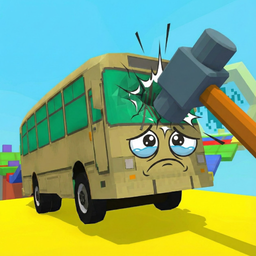
Race: 6 Modes
Arcade racing games thrive on pure adrenaline, and Race: 6 Modes delivers that chaotic energy in every single round. This title transforms basic car p...
▶ Play FreeMore Games Worth Your Time
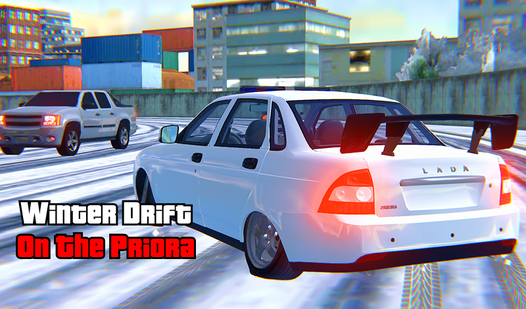
Winter Drift on the Priora takes everything you think you know about grip driving and inverts it. Winter surfaces mean controlled oversteer is your friend, not something to avoid. Learning to drift properly on this game — not just spin out — builds an understanding of rear traction limits that carries over into every other racing game you play.
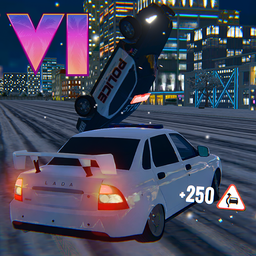
Winter Drift on the Priora
Staring at a blank screen while your coffee gets cold is the universal sign that you need a high-octane distraction right now. Winter Drift on the Pri...
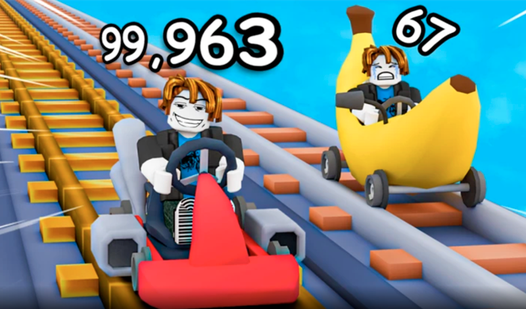
▶ Play FreeObby: Climb Up and Slide Down on Minecarts is a completely different flavor — more obstacle course than pure race, but the minecart mechanics demand sharp timing and spatial awareness. It's a useful mental shift from pure lap-time optimization toward reactive, moment-to-moment decision-making. Also just genuinely fun in a way that intensely competitive games sometimes aren't.
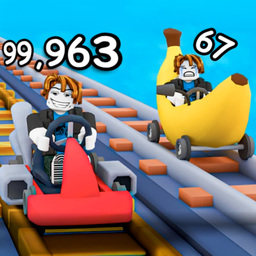
Obby: Climb Up and Slide Down on Minecarts
Staring at a blank screen during a lunch break often feels like a chore, but Obby: Climb Up and Slide Down on Minecarts turns those dull moments into ...
▶ Play FreeCommon Mistakes to Stop Making
Over-steering into corners. New players turn the wheel as far as it goes through corners. This almost always causes understeer or a spin. Less steering input at the right speed is faster than maximum steering input at too much speed.
Braking too late too soon. Everyone wants to brake at the last possible moment — but without knowing where that moment is, you'll regularly miss corners. Build up to late braking incrementally rather than starting there.
Ignoring opponents until contact happens. In multiplayer, situational awareness is a skill that improves with practice. Know where nearby karts are at all times, especially approaching tight corners where contact is likely.
Trying to recover too aggressively. After a mistake, the urge is to push hard and immediately recover the lost position. This causes second mistakes. Reset, find rhythm, recover gradually.
Not using the mini-map. Most karting games include a radar or mini-map showing track layout and opponent positions. A quick glance before a tricky section gives you information that pure reaction time can't compensate for.
Why Karting Games Stay Relevant
Among all racing game formats, karting games have remarkable staying power. The reason is the low barrier combined with a high skill ceiling. You can pick up a karting game in five minutes and be having fun immediately. You can also play for years and still find new lines to refine, new opponents to study, new mechanics to master.
The best karting games also have great replay value because close racing is inherently dramatic. When two karts are wheel-to-wheel going into a hairpin, the outcome is genuinely uncertain — and that tension, even in a browser game, is real. It keeps players coming back.
With Karting онлайн games available free in browsers, there's no commitment required. Try a game, find something else you like, try another. The variety is significant, and the games listed in this guide represent a solid cross-section of what the genre can offer across different play styles.