How to Play Fish Eat Fish: Rules & Strategies
Fish Eat Fish games are one of the most addictive game genres you can find in a browser. The concept is beautifully stripped-back: you start as a tiny fish, eat smaller fish to grow bigger, and avoid everything that could swallow you whole. Learning how to play Fish Eat Fish properly is what separates someone who restarts every twenty seconds from someone who dominates the whole map. This guide covers the rules, the strategies that actually matter, and the best free games to start with right now — no account, no downloads required.
What Is the Fish Eat Fish Genre?
Fish Eat Fish games trace their roots back to the early browser gaming era, but they exploded in popularity with the rise of .io games and platforms like Roblox. The core mechanic has always been the same: size determines power. Eat fish smaller than you, grow, and eventually rule the water.
The genre has branched into several distinct styles over the years:
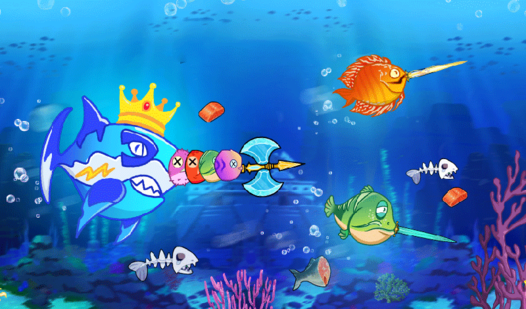
Classic eat-to-grow survival: The purest form. You're a fish in an ocean, there are fish smaller than you and fish bigger than you, and you eat your way to the top or die trying.
IO multiplayer: The competitive version. Real players, real time, everyone starting tiny and racing to become the dominant force. These are the most intense Fish Eat Fish experiences because other players are unpredictable in ways AI never is.
Roblox evolution and obby games: Platformer mechanics layered over underwater creature themes. You evolve through size tiers, complete obstacle courses, and navigate 3D environments that browser games can't replicate.
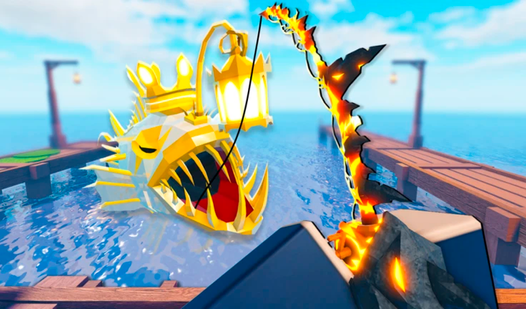
Fishing simulators: The perspective switches. Instead of being the fish, you're the fisherman — casting lines, managing gear, selling catches, and upgrading your operation across multiple sessions.
Puzzle and merge variants: A creative departure where you connect or merge fish to hit size or value targets. More puzzle game than survival game, but the growth loop remains satisfying.
The puzzle variant is a good example of how creative the genre gets:
Connect the fish. Sea merge 2048
Fans of relaxing brain training sessions will adore the colorful underwater world of Connect the fish. Sea merge 2048. You spend your time dropping vi...
▶ Play FreeHow to Play Fish Eat Fish: Rules and Basics
Regardless of which game you pick, the foundational mechanics are consistent across the genre. These are the rules that apply everywhere.
The Size Rule
This is the one rule that defines every Fish Eat Fish game: you can eat what's smaller, and what's bigger eats you. It sounds obvious until you're in a chaotic mid-game with fish overlapping everywhere. New players consistently misread size in crowded areas and bite something that bites back. Always verify relative size before committing to a chase or a confrontation.
Most games give you visual cues — proportions on screen are usually clear, but some games add health bars, size meters, or colored outlines to help you read the situation faster.
Controls
Fish Eat Fish games almost universally keep controls simple, which is a big part of the appeal:
- Mouse movement: Hover in a direction and your fish follows. Clicking often triggers a boost or dash. Standard in most browser IO games.
- WASD or arrow keys: Common in Roblox variants, platformer-style games, and some fishing simulators.
- Boost or dash: Nearly universal across the genre, but the cost varies wildly. Some games cost you mass or size on boost. Some use a separate energy meter. Some have no downside at all.
- Camera management: 3D Roblox games add a camera dimension that browser games skip entirely. You need to manage both your creature and your perspective simultaneously, which adds real complexity.
Growth Systems
How your fish grows depends on the game type:
- Continuous mass growth: Each fish you eat immediately adds to your size. Common in IO games and creates constant forward momentum.
- XP-based evolution: Eat to fill a progress bar, then evolve to the next size tier. Used in games with distinct evolution stages.
- Resource and upgrade loops: Fishing simulators use this — catches convert to currency, currency to gear, gear to better catches. Growth here is in your equipment, not your body.
Some IO games add passive size decay: if you stop eating, you slowly shrink. This prevents camping and forces constant activity.
Death and Restart
Most Fish Eat Fish survival games follow a hard-reset model — you get eaten, you start over from scratch. This is intentional. It keeps each run tense and meaningful. Some games soften this with persistent upgrade trees where you unlock permanent bonuses between runs, reducing but not eliminating the sting of dying.
Fish IO: Be the King
Staring at the clock during a long afternoon is the worst, but your next gaming obsession is just a click away. Fish IO: Be the King turns your screen...
▶ Play FreeHow to Play Fish Eat Fish: Strategies That Work
Knowing the rules gets you in the door. Strategy is what keeps you alive long enough to actually enjoy the game.
Map Awareness Over Tunnel Vision
The single biggest mistake new players make is focusing entirely on the fish directly in front of them. A good Fish Eat Fish player reads the whole screen constantly — where are the apex predators? Which direction are they moving? Where are the dense clusters of small fish you can move through efficiently? The player who reacts to the whole map lives longer than the player reacting only to their immediate target.
Start at the Edges
In IO games especially, the center of the map is where all the big fish hang out. For the first phase of any run, navigate toward the edges or quieter zones. Prey is still plentiful there, but competition is much lighter. Build size before engaging the center.
Target Fleeing Fish, Not Stationary Ones
Stationary fish look like easy targets, but they often sit near larger predators — that's why they haven't moved. Fish that are already fleeing something else are focused on escape, not on watching for threats from behind. They also move in more predictable straight lines, making interception easier than chasing an erratic fish.
Use Boost as a Precision Tool
Boost is your most powerful ability and your most misused one. New players burn it for general movement speed. Effective players save it for three specific moments:
- Closing the final gap on prey — when you're close but just out of eating range, one short burst seals the catch.
- Escaping a locked-on predator — the moment a bigger fish is clearly targeting you, boost immediately. Don't wait to see if they lose interest.
- Cornering prey against walls — cut off a fleeing fish's escape route by boosting into position. Walls and map edges do half the work for you.
In games where boosting costs mass, do the math before using it. Spending significant size to catch a tiny fish is often a net loss.
Connect the fish - Reach the Pike
Fans of relaxing puzzle challenges will adore the charming aquatic world found in Connect the fish - Reach the Pike. This addictive merge experience i...
▶ Play FreeThe Mid-Game Patience Problem
The most dangerous phase of any run is the mid-game. You're large enough to feel confident but still very much edible. This is when players get reckless. In the mid-game:
- Only chase fish that are clearly smaller, not fish roughly your size that might turn the tables.
- Avoid long pursuits across open water — they cost time and energy and attract attention from bigger players.
- Prioritize dense clusters of small fish you can pass through multiple times over chasing individuals.
- Keep moving — stationary mid-tier fish are the easiest targets for the apex predators patrolling the area.
Upgrade Priorities in Fishing Simulators
If you're playing a fishing simulator rather than a survival game, the strategy changes completely. Instead of dodging predators, you're managing a progression loop. Upgrade priority generally follows this order:
- Line strength — prevents losing high-value catches mid-reel
- Bait quality — attracts rarer fish worth more per catch
- Rod power — faster reeling, better catch rates
- Depth or zone upgrades — opens new areas with better fish
Pick one stat, commit to it, then move to the next. Spreading early upgrades thin means you're mediocre at everything.
Best Free Fish Eat Fish Games on FreeJoy
All of these are playable instantly in your browser — no account or installation needed.
Mine Fishing
Mine Fishing combines fishing with deep resource management. You're not just casting a line — you're managing a whole operation, unlocking deeper zones with rarer catches as your gear improves. The progression loop is tight: resources unlock upgrades, upgrades unlock new zones, new zones provide better resources. It's surprisingly satisfying for a browser game and rewards patience over frantic clicking.
Noob Fishing
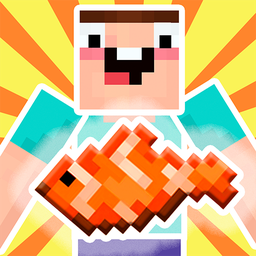
The name is a bit tongue-in-cheek — Noob Fishing has a genuinely well-built progression system. It's designed around steady improvement: you start with basic gear and work toward mastering more demanding catches. The pacing is relaxed compared to survival IO games, making it an ideal entry point for players who want depth without the constant threat of being eaten.
Noob fishing
Staring at a blank screen during a lunch break often feels like a waste of precious downtime. Noob fishing turns those idle moments into an addictive ...
▶ Play FreeObby: Fish Training
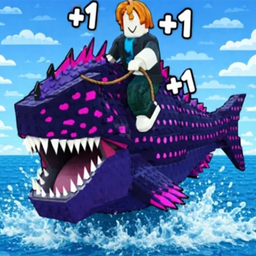
Obby: Fish Training moves the Fish Eat Fish concept into Roblox platformer territory. You control and evolve underwater creatures across increasingly complex obstacle courses. As your creature grows, its handling changes — getting bigger isn't just a size number, it affects how you move and what you can navigate. It's chaotic in the best way, and the evolution arc keeps each session feeling different from the last.
Obby: Fish training
Midday slump hitting hard and need a refreshing escape from the daily grind? Obby: Fish training offers the perfect underwater remedy by letting you n...
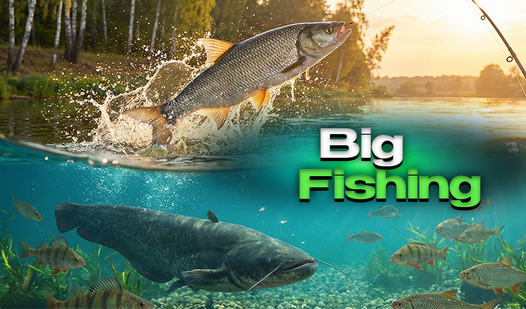
▶ Play FreeBig Fishing
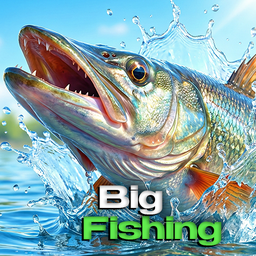
Big Fishing leans into atmosphere alongside mechanics. It's a fishing simulator with strong visual presentation and a deliberate pace — less about frantic clicking, more about the feeling of being out on the water. The progression gives you long-term goals to work toward, and if you want a more relaxed counterpart to the fast-paced survival games on this list, Big Fishing is the one to pick.
Big Fishing
Fishing is more than just waiting for a bite, it is a test of patience that keeps millions of players hooked on the thrill of the perfect catch. Big F...
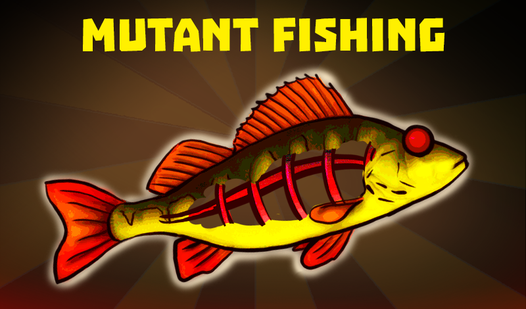
▶ Play FreeMutant Fishing
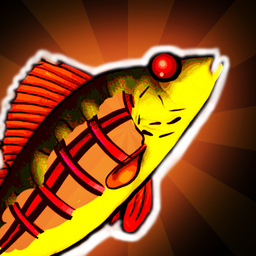
Mutant Fishing breaks from the standard fishing template entirely. The underwater world is filled with mutated fish — stranger designs, different behavior patterns, and a more unpredictable environment than any standard simulator. If you've worked through a few of the other games on this list and want something that challenges your assumptions about the genre, this is the one.
Mutant Fishing
Fans of offbeat fishing adventures will find their new obsession in Mutant Fishing while exploring radioactive rivers filled with bizarre creatures. Y...
▶ Play FreeDon't Wake the Fish!
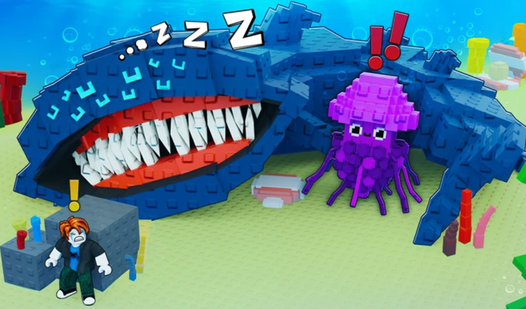
Don't Wake the Fish! is the wildcard on this list in the best possible way. It mixes stealth mechanics with tycoon progression and fishing into something that doesn't fit neatly into one category. Your job is to navigate around fish without waking them while building and upgrading your operation. The tycoon layer gives it lasting depth, and the stealth element adds tension you won't find in any standard fishing game.
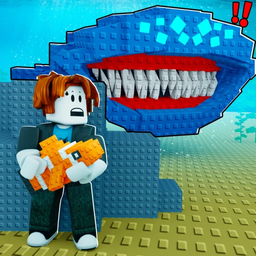
Don't Wake the Fish! Obby Magnate Farm Tycoon +1
Stealing slippery creatures from their watery slumber takes nerves of steel and perfect timing. You creep past massive sleeping aquatic pets while man...
▶ Play FreeMore Games Worth Trying
Once you've worked through the main picks, these are well worth your time.
Cat Fisherman: Catch a Shark! takes an absurdist premise — a cat trying to catch increasingly large sea creatures — and backs it with solid mechanics. The escalating challenge of working your way up to actual sharks keeps the progression arc genuinely interesting across multiple sessions.
Robbie Fishing brings more character and charm to the fishing formula. Robbie's personality and the game's visual style give it more life than the average browser fishing sim, and the catch progression keeps sessions engaging over time.
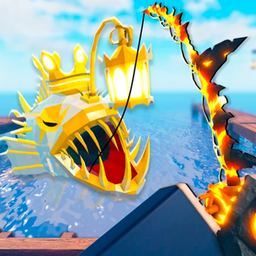
Robbie Fishing
Staring at the clock waiting for the workday to end feels like an eternity, but a quick escape to the water is exactly what you need. Robbie Fishing t...
▶ Play FreeCommon Mistakes to Avoid
Here are the patterns that kill new players faster than any predator:
Chasing fish that are too fast to catch: If the target is significantly faster than you, breaking off the chase and finding easier prey is almost always the right call. Long chases drain energy and split your attention.
Only watching what's directly ahead: Threats in IO games come from all directions. Players hyperfocused on a target in front get blindsided constantly from behind or the sides.
Burning boost before it's needed: Using boost for general travel speed in open water is almost always wrong. Save it for decisive moments.
Playing fishing sims like survival games: In a fishing sim, aggression and reflexes matter far less than patience and upgrade planning. These require different approaches entirely.
Forgetting about size decay: In games with passive shrinking, parking and waiting for prey to come to you bleeds size. Stay active and keep eating.