How to Play Endless Runner: Rules, Tips & Free Games
Endless runner games are one of the most addictive genres in casual gaming history. If you've ever wondered how to play Endless Runner games properly — not just survive the first ten seconds but actually rack up massive scores — you're in the right place. This guide breaks down everything: the core rules, the smartest strategies, and the best free endless runner games you can play right now without signing up for anything.
Whether you're picking up the genre for the first time or looking to sharpen your reflexes, the fundamentals of how to play Endless Runner are simple to grasp and endlessly satisfying to master.
What Is an Endless Runner?
At its core, an endless runner is a game where your character moves forward automatically and your only job is to keep them alive. The game doesn't have a finish line. There's no final boss waiting at level 20. The track just keeps generating — faster, trickier, more chaotic — until you mess up.
The genre exploded in popularity with mobile gaming, but it has roots going back to older arcade titles. The appeal is obvious: the gameplay loop is immediately understandable. You jump. You dodge. You collect. You die. You try again.
What makes endless runners so sticky is the combination of low entry barrier and high skill ceiling. Anybody can pick up the controls in 30 seconds. Beating your own high score — or a friend's — can take hundreds of runs.
Endless runners come in a lot of flavors. Classic on-foot runners, car chase games, side-scrolling platformers, even mining or crafting endless games. The unifying mechanic is always the same: constant forward motion, procedurally generated obstacles, and survival as the primary goal.
Core Rules and Basics of Endless Runner Games
Before you start optimizing your runs, it helps to understand the fundamental rules that govern almost every endless runner out there.
The Character Always Moves
You don't control speed — at least not directly. Your character runs, drives, flies, or rolls forward automatically. Your inputs are reactive, not proactive. You're responding to what the game throws at you, not dictating the pace.
This is a crucial mindset shift if you're coming from platformers or action games. In an endless runner, patience and reading the environment ahead matter more than fast fingers.
Obstacles Are Procedural
Every run is different. Obstacles are generated on the fly, often from a set of preset patterns that the game shuffles and recombines. This means muscle memory helps, but not in the way you'd memorize a specific level. Instead, you're training pattern recognition — learning the types of obstacles and the signals that tell you what's coming.
Death Is the Checkpoint
There are no checkpoints. When you die, you start over from the beginning. This is intentional design — the run itself is the experience. Each death teaches you something: where you hesitated, what pattern tricked you, when you panicked and made the wrong call.
Score Is Time (or Distance)
Most endless runners score you by how far you've traveled, how long you've survived, or how many objects you've collected along the way. Multipliers are common — collect enough coins or power-ups to boost your score rate, and surviving longer becomes exponentially more rewarding.
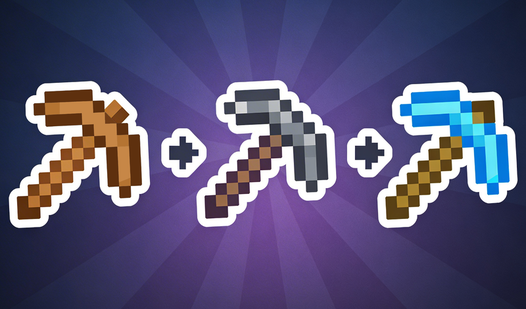
The Endless Pickaxe
A great example of how the endless formula can be twisted into something fresh is The Endless Pickaxe. Instead of running horizontally across a landscape, you're mining downward through a cave, collecting ore and avoiding hazards buried in the rock. The rhythm feels completely different from a standard runner, but the core loop — keep going, don't die, beat your score — is identical. It's proof that "endless" is a mechanic, not just a visual style.
The Endless Pickaxe
Fans of addictive idle tycoon games will find their next obsession with The Endless Pickaxe as they watch a falling pickaxe smash through infinite lay...
▶ Play FreeStrategies That Actually Work
Knowing the rules is one thing. Knowing how to survive long enough to actually enjoy an endless runner — that's where the real skill lives. These strategies apply across the genre.
Look Ahead, Not at Your Character
New players instinctively watch their character's feet. Experienced players watch the space two or three seconds ahead. In a fast-moving endless runner, by the time an obstacle reaches you, it's too late to react if you weren't already watching for it.
Train your eyes to scan the upcoming terrain. Your peripheral vision handles the character; your focus should be on what's coming.
Understand the Jump Arc
In almost every endless runner, jumps follow a fixed arc. The character rises at one speed and falls at another. Learning your character's exact jump arc — how high they go, how long they're in the air, how fast they land — lets you time jumps with precision instead of guessing.
A common beginner mistake is jumping too early. You see an obstacle and panic-jump, only to land right on top of it. Wait until the last reasonable moment, and you'll find your timing improves dramatically within just a few runs.
Master the Double Jump (When Available)
Many runners give you a double jump — a second jump you can trigger while already airborne. This is incredibly powerful because it lets you adjust mid-air. Jumped too early? Second jump can save you. Need extra height for a high obstacle? Chain the jumps.
The trick is holding the first jump in reserve. Don't commit to the double jump immediately — keep it as a correction tool.
Collect Strategically
Coins, gems, power-ups — they're everywhere in endless runners, and they're tempting. But chasing every single collectible will get you killed. The best players learn which collections are worth the risk and which ones lead you into an obstacle trap.
Early in a run, when the pace is slow, collect freely. As the game speeds up, prioritize survival over score. You can't spend the coins if you're dead.
Use Power-Ups at the Right Moment
Shields, magnets, score multipliers — power-ups can massively extend your run or inflate your score. But using them at the wrong time wastes their potential.
Don't burn a shield immediately after collecting it when the path is clear. Save it for dense obstacle sections. Similarly, activate score multipliers when you're confident in your survival — not as a panic response.
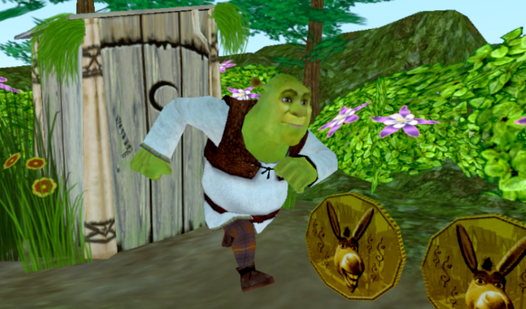
Shrek: Endless Run
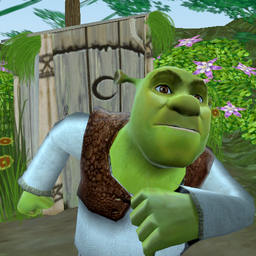
If you want endless runner mechanics wrapped in pure chaotic fun, Shrek: Endless Run delivers exactly that. The beloved ogre tears through obstacles at increasing speed, and the humor of the character makes every death a little less frustrating. It's a solid demonstration of how popular characters make the endless runner formula feel fresh without changing a single mechanic.
Shrek: Endless Run
Fans of iconic movie memes and frantic arcade action will find their new obsession in Shrek: Endless Run. This high-energy runner puts you in the boot...
▶ Play FreeThe Mental Side: Handling Tilt
Endless runners have a psychological trap built into them: the longer your run goes, the more you have to lose, and the more anxious you get. This leads to tilt — where increased emotional investment causes worse decision-making.
The players who set records aren't necessarily faster or more coordinated. They're calmer. They've learned to treat a 500-meter run and a 5,000-meter run with the same mental state.
A few practical tips for staying calm:
Breathe deliberately. Sounds silly, but if you're holding your breath during a tense sequence, your reaction time suffers.
Accept that death will happen. Every run ends. The question isn't if you'll die, it's when. Accepting this removes the pressure of protecting your run and lets you play naturally.
Take short breaks between runs. The "one more run" spiral is real. After three or four deaths in a row, step away for two minutes. You'll come back with a clearer head.
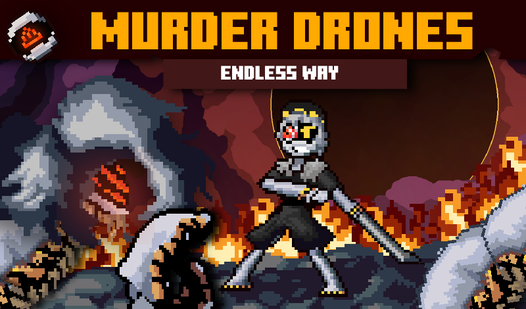
Murder Drones Endless Way
For players who want their endless runner with a darker, more cinematic atmosphere, Murder Drones Endless Way brings a distinct visual identity to the genre. The theme is striking enough to make you forget you're playing a reflex game — until an obstacle snaps your attention back. It's a strong example of how a unique aesthetic can make a familiar genre feel completely new.

Murder Drones Endless Way
Navigating a treacherous wormhole as a rogue machine tests your reflexes like nothing else in the arcade genre. Murder Drones Endless Way puts you in ...
▶ Play FreeAdvanced Techniques for High Scores
Once you're consistently surviving the early game and hitting decent distances, these advanced techniques separate good players from great ones.
Rhythm Running
At high speeds, endless runners often settle into rhythmic obstacle patterns. Instead of reacting to each individual obstacle, experienced players find the rhythm of the pattern and respond to the beat. It sounds abstract, but once you feel it, runs become significantly smoother.
Pay attention to audio cues — most endless runners telegraph obstacles with sound effects or music changes right before something appears.
Risk Calibration
Not all risks are equal. Some obstacles are easy to dodge but surrounded by tempting coins that pull you into danger. Others look scary but have a safe path through the middle. Advanced players assess risk constantly, asking "is this worth it?" rather than "can I do it?"
The coin trail that leads over a gap with minimum landing space? Probably not worth it at 5,000 meters into your best run. That same coin trail at 200 meters? Take it.
Position Management
In runners with lane-switching mechanics, your default position matters. Staying in the middle lane gives you maximum reaction time in both directions. Drift to one side and you've cut your options in half.
Be intentional about where you are at any given moment, not just where you're going.
Know When to Use Shields Offensively
A shield isn't just protection — it's a guaranteed obstacle clear. Some obstacle configurations are nearly impossible to dodge cleanly. Experienced players recognize these and intentionally take the hit, knowing the shield will absorb it and keep them moving rather than wasting time trying to find the perfect path through.
Smashing Runner 3D
Smashing Runner 3D takes the endless runner into three dimensions, which changes the entire spatial calculation. Instead of reading a flat 2D environment, you're tracking obstacles in depth. The game is clean, the mechanics are immediately legible, and it's a great entry point for anyone curious about how 3D changes the endless runner feel.

Smashing Runner 3D
Fans of arcade runners will find Smashing Runner 3D to be the perfect test of their reflexes. This addictive smash runner challenges you to navigate a...
▶ Play FreeBest Free Endless Runner Games to Play Right Now
Here's a curated look at the best free endless runner games available on FreeJoy, playable directly in your browser with zero downloads and no registration required.
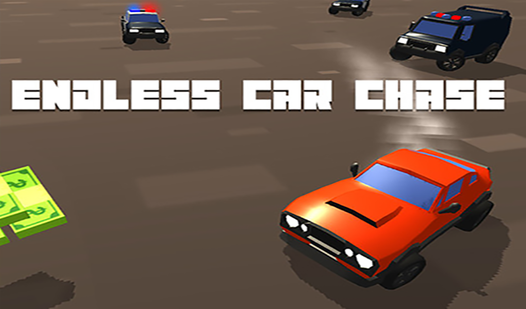
Endless Car Chase
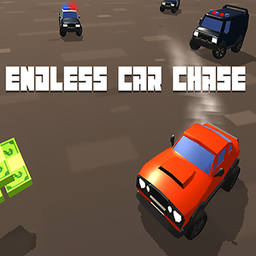
Endless Car Chase swaps feet for wheels and turns the genre into a high-speed police evasion game. You're behind the wheel, weaving through traffic, cutting corners, and outrunning cop cars that get faster every second. The tension is completely different from a foot-running game — vehicles have momentum, turns feel weighty, and the sense of speed is genuinely exhilarating. If standard runners feel too simple, the added physics layer here makes it significantly more engaging.
Endless Car Chase
Swerving through city traffic while dodging relentless police cruisers is the ultimate thrill in Endless Car Chase. Every second counts as you drift a...
▶ Play FreeEndless Siege Tower Defense
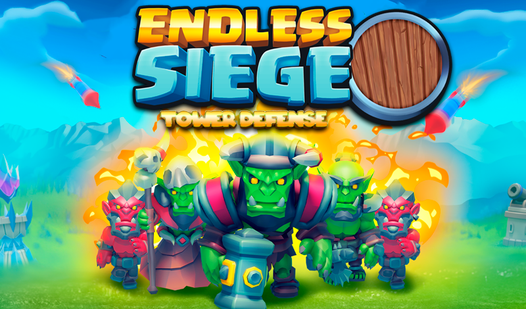
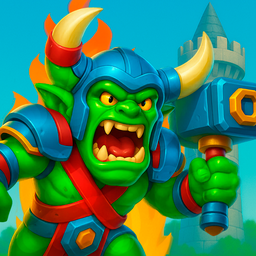
This one blends endless game mechanics with tower defense strategy. Waves keep coming — the "endless" here refers to the assault on your defenses rather than physical running. It's a natural evolution of the endless format into a more tactical space.
Endless Siege "Tower Defense"
Strategy fans who crave intense action will find their new obsession in Endless Siege Tower Defense. This addictive experience challenges you to defen...
▶ Play FreeEndless Games
A collection-style entry that bundles multiple endless game variations in one place. Great for players who want to explore what the genre can do across different mechanics without jumping between separate games.
Level Up Runner
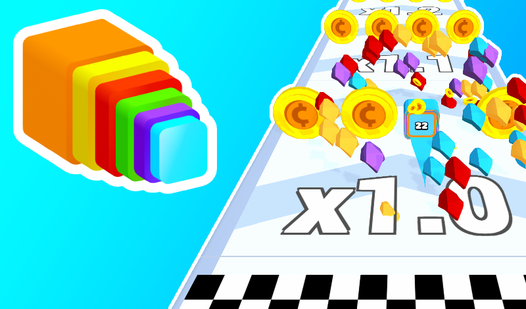
Level Up Runner adds RPG progression to the endless runner formula. Your character gets stronger between runs, which changes the calculus significantly — early runs are about survival, but later runs are about reaching the zones where your upgraded character can really shine.

Level Up Runner
Competitive players who love a high-octane 3d runner will find their new obsession here. You start as a lean fighter and must punch your way through w...
▶ Play FreePimp Your Car: Endless Highway
This game wraps the endless highway mechanic in a customization layer. You're not just surviving — you're building toward something. The endless highway provides the challenge while the car customization gives you a reason to keep returning even after a strong run.
Obby World: Parkour Runner
Obby World: Parkour Runner takes the endless runner into a blocky, obstacle-course style world. The parkour mechanics add verticality that most runners lack — you're not just moving forward, you're climbing, vaulting, and timing drops. It's a fresh variation that rewards players who've mastered basic timing and want something more spatially complex.
Why Endless Runners Stay Addictive
The psychology here is worth understanding, because it explains why these games hold up across years and platforms.
Endless runners operate on a variable reward schedule — the same mechanism that makes slot machines compelling. You never know how far this run will go. Maybe it's 300 meters. Maybe it's your personal best. That uncertainty keeps you hitting restart.
They also provide clear, immediate feedback. You died? You know exactly why. You can immediately try again with that specific failure in mind. This creates a clean learning loop that feels productive even when you're losing.
Finally, the runs are short. Five minutes is a long run. Most are 30 seconds to two minutes. This makes the game easy to fit into any gap in your day, which is why the genre thrives on mobile — and translates perfectly to browser games you can play at any moment.
Common Mistakes to Avoid
Overcommitting to lanes too early. Moving to a lane when you don't have to removes your options for the next obstacle. Stay central unless you have a clear reason to shift.
Ignoring the game's audio cues. Most endless runners telegraph danger through sound before it appears visually. Playing with sound off puts you at a significant disadvantage.
Rage quitting after long runs. The instinct after dying on a personal best is to restart immediately and "fix it." But you're usually tilted. A short break produces better results than an immediate emotional restart.
Treating every run as a practice run. Go all-in every run. Playing casually when you're "just practicing" builds sloppy habits. The intensity of a real attempt is what trains your instincts.