How to Play Durak — Rules, Strategy & Tips for the Classic Card Game
Few card games have the staying power of Durak. This Russian classic has been a staple at kitchen tables, dacha porches, and dormitory common rooms for generations — and now it's thriving online too. If you want to learn how to play Durak from scratch, sharpen your strategy, or find the best free online versions, you're in the right place.
Durak (дурак) literally means "fool" in Russian. The goal is brutally simple: don't be the last person holding cards. No points, no elaborate scoring — just pure, cutthroat card-shedding competition. That simplicity is exactly what makes it so addictive.
Durak Rules — How the Game Works
Understanding how to play Durak starts with the deck. The game uses a 36-card deck (a standard 52-card deck with the 2s through 5s removed, leaving 6 through Ace in all four suits). With two players you deal six cards each; with more players the same rule applies. The remaining cards form a face-down draw pile, and the top card of that pile is flipped and placed sideways beneath the deck to reveal the trump suit.
Trump is everything in Durak. A trump card beats any non-trump card regardless of rank, which completely changes how you value your hand. A 6 of trumps can defeat an Ace of clubs — keep that in mind at every step.
The objective
Players take turns attacking and defending. After each completed bout, both sides draw back up to six cards from the draw pile. Once the draw pile is exhausted, the end game begins — players fight on with the cards they hold. The first player to empty their hand wins (or rather, avoids losing). The last person left holding cards is the Durak, the fool.
Dealing and first attacker
The player dealt the lowest trump card attacks first. If nobody has a trump card, the player with the lowest card of any suit goes first. The attacker sits to the left of the dealer in most traditional rulesets — though in online versions this is handled automatically.
The trump card and draw pile
After everyone has seen the trump suit, the revealed card slides back under the deck face-up. It stays there until the draw pile runs out, at which point the trump card itself is the last card drawn (usually by the player who legally gets to take it last).
One critical Durak rule beginners often miss: you must always draw back up to six cards at the end of a turn as long as cards remain in the draw pile. Attacker draws first, defender draws second, and any other attackers draw after that.
Attacking and Defending — Core Mechanics
The attack-defend mechanic is the beating heart of Durak, and mastering it is the difference between winning regularly and spending the evening as the fool.
How attacking works
The attacker places one or more cards face-up on the table. In standard Durak only one card initiates an attack, but once the defender responds, other players at the table (if playing multiplayer) can pile on by adding cards of the same rank as any card already on the table — whether that card was played by the attacker or the defender.
The total number of attacking cards can never exceed the number of cards the defender holds. So if the defender only has three cards, a maximum of three attack cards can be thrown at them.
How defending works
The defender must beat each attacking card with a higher card of the same suit, or any trump card (if the attacking card is not itself a trump). The defender places their response card on top of each attack card to show it's been beaten.
If the defender cannot or chooses not to beat all the attacking cards, they must pick up every card on the table — both the attacks and any defense cards already played. This is a brutal penalty in the early game when everyone is flush with cards, but it becomes existential near the end.
Transferable Durak (Perevodnoy)
In the transferable variant, instead of defending, a player can transfer the attack to the next player — but only by playing a card of the same rank as the attacking card. The attack passes down the line. This adds a tactical layer: sometimes eating cards is better than passing an attack you can't fully stop.
Durak
Staring at the clock and waiting for your shift to end can be mind-numbing, but a quick round of Durak is the perfect remedy for your boredom. This cl...
▶ Play FreePassing and "taking"
When the defender picks up the table, the attacker's turn ends and the next player to the attacker's left becomes the new attacker. When the defender successfully beats everything and nobody adds more cards, the beaten cards are discarded face-down into a discard pile — they're gone from the game. The defender then becomes the next attacker.
Collective attacks (in multiplayer)
In three-plus player games, every player except the defender can contribute to an attack, as long as they match the ranks already on the table. This is where reading the table becomes vital — sometimes deliberately playing a card you know others will pile onto can trap the defender.
Winning Strategies for Durak
Once you understand the mechanics, strategy is what separates consistent winners from perennial fools. Here are practical tactics that work at every level.
Protect your trumps early
New players burn trumps too quickly. Trumps are your panic button — save them for when you genuinely need to save a bad defense rather than wasting them on early low-stakes rounds. Count roughly how many trumps are out there: there are nine trump cards in a 36-card deck (6 through Ace of the trump suit). If you have four, you're holding nearly half of them, which is an enormous defensive advantage.
Attack with cards you can follow up on
When you attack, lead with a rank you have multiples of. If you have both 8s, play one as an attack — if the defender beats it, you've opened the door to pile the second 8 on as an additional attacking card. This forces the defender to cover one more card and depletes their hand faster.
Watch the discard pile
The discard pile is public information. If you've seen both Aces of a non-trump suit go to the discard, nobody can beat that card's rank in that suit anymore. Cards that seemed weak (like a Queen) become powerful when everything higher is already gone.
Count your opponent's hand size
Players draw back to six cards after each turn. Late in the game, when the draw pile thins and eventually empties, hand sizes diverge. A defender with only two cards can receive a maximum two-card attack. Force players with small hands to defend against their limit — or make them take cards they can't afford.
Durak: Classic & Transferable
Card games have a unique way of testing your memory and strategic foresight under pressure. Durak: Classic & Transferable brings this legendary challe...
▶ Play FreeWhen to take cards intentionally
Sometimes taking a small pile is the right play. If you're late in the game and holding several medium-rank cards in a non-trump suit that nobody can beat, taking one mediocre pile is better than burning your last trump to defend. You'll lose one turn but survive with strong cards.
In transferable Durak: set up chain transfers
When holding multiple cards of the same rank, you can sometimes trigger a chain transfer that passes an attack all the way around the table and back to the original attacker. This requires reading hand sizes and knowing who will or won't be able to match the rank — but pulling it off is deeply satisfying.
Late game aggression
Once the draw pile is empty, your goal shifts from hand management to raw aggression. Target the player with the fewest cards first — getting someone else out before you puts pressure back on the remaining opponents. Never let a player sit on a tiny hand without attacking them.
Best Free Online Durak Games
Playing Durak online is a great way to practice the mechanics without needing to gather friends around a table. The free browser games below cover everything from classic single-player sessions to transferable multiplayer matches — no download required.
Durak Сards is a modern, polished take on the classic. The UI is clean, the AI opponents are challenging without being unfair, and the game does a good job of teaching the core mechanics through play. If you want a version that looks and feels contemporary, this is a strong starting point.

Durak Сards
Staring at a blank screen while your coffee cools down is the universal sign that you need a quick mental escape. Durak Cards is the perfect digital f...
▶ Play FreeDurak Master takes the formula a step further by adding an upgrade system on top of the classic gameplay. As you win matches, you unlock improvements that change how the game feels — it turns a familiar game into something with progression, which keeps sessions from going stale.
Durak Master
Card game enthusiasts who crave a strategic showdown will feel right at home with the classic thrills of Durak Master. This title brings the tradition...
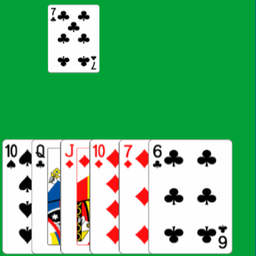
▶ Play FreeCards in Fool leans into the competitive, head-to-head nature of Durak. The goal is to force your opponent into taking more cards — and the game reinforces this with tight, turn-based pacing. It's a good pick if you want to practice attacking patterns specifically.
Cards in Fool
Staring at a blank screen during a coffee break is the perfect sign that you need a strategic challenge to sharpen your mind. Cards in Fool offers the...
▶ Play FreeAll three are free to play directly in your browser. No accounts, no downloads — just pick a game and start playing.
Durak vs Other Card Games
If you're coming to Durak from other card games, here's how it compares — and what prior experience transfers over.
Durak vs Poker
Poker and Durak are almost opposites in structure. Poker is about building the best hand and reading bluffs; Durak is about emptying your hand and surviving defensive pressure. Bluffing doesn't exist in Durak (cards are played openly), but table reading absolutely does — knowing who wants to pile onto an attack, who's conserving trumps, and who's close to empty matters as much as your own hand.
Durak vs Rummy
Rummy players will feel at home with the hand-management aspect of Durak — you're constantly evaluating which cards are valuable versus expendable. But Rummy's set-building doesn't translate; in Durak, rank matters only for pile-on attacks and transfers, not for combinations.
Durak vs Solitaire
Solitaire is entirely single-player and solitary (obviously), while Durak is inherently competitive. That said, plenty of card game fans who enjoy solo Solitaire also love the low-stakes, short-session feel of a one-on-one Durak match. If you play Solitaire online to wind down, give Durak a try for a more interactive challenge.
If you enjoy turn-based card games beyond Durak, the broader category of board and card games online has plenty of options. From trick-taking to matching and beyond, the genre is vast.

Board and card games
Board and card games enthusiasts craving a massive library of classics will find their new digital home here. This massive collection brings together ...
▶ Play FreeDurak vs 101 (Sто Одно)
101 (also called Sto Odno or Pharaoh in some regions) is another Russian card game classic that often gets played at the same table as Durak. Where Durak is about not holding cards, 101 is about keeping your total score below 101 points. They share the discard-focused DNA but play completely differently. If you enjoy one, you'll probably enjoy the other.

101 Pharaoh Online
Discard your hand as fast as possible by matching suits and values in this thrilling competitive card challenge. Strategy meets luck in 101 Pharaoh On...
▶ Play FreeDurak vs Backgammon
Backgammon and Durak are completely different games — one is a board game with dice, the other a card game — but both have enormous popularity across Russia and Eastern Europe. The comparison is worth making because they share a cultural footprint: both are games you play for hours on a slow afternoon, both reward probabilistic thinking, and both have a competitive following far beyond casual play.
Backgammon Narde online
Staring at the screen during a long afternoon slump is the perfect excuse to sharpen your mind with a classic challenge. Backgammon Narde online bring...
▶ Play FreeWhy Durak has outlasted many competitors
Card games come and go, but Durak has survived for centuries for a few concrete reasons:
- The rules fit on one page — you can teach a complete beginner in five minutes.
- Every game is different — trump suit selection, hand randomness, and player count create massive variety.
- The social element is built in — the person who loses is the "fool," which creates a natural moment of good-natured ribbing that reinforces the social dynamic.
- Transferable rules add depth without complexity — you can layer in the transferable variant once everyone knows the basics, and the game immediately becomes more strategic without becoming more complicated to learn.
For players who want to round out their card game repertoire, classic solitaire variants are always worth knowing. Klondike is the most widely played solitaire in the world, and Spider Solitaire — especially the four-suit variant — is a rigorous solo challenge.

Spider Solitaire (1, 2, and 4 suits)
Arrange descending sequences of the same suit from king to ace to clear the board. Spider Solitaire offers a classic card game experience with multipl...
▶ Play Free
Klondike Solitaire
Card enthusiasts seeking a classic mental challenge will find their perfect match in Klondike Solitaire. This timeless puzzle tests your patience and ...
▶ Play Free