How to Play Diamonds: Rules, Strategies & Free Games
If you've ever wondered how to play Diamonds — whether it's a classic match-3 game, a merge puzzle, or a gem-collecting adventure — this guide covers everything you need. Diamond-themed games are among the most consistently popular casual games on the web. They're easy to start, surprisingly deep once you know what you're doing, and available completely free in your browser. No downloads, no registration, just sparkling puzzles waiting to be solved.
This guide walks through the rules for each major Diamonds format, shares strategies that actually work, and lists the best free Diamonds games you can play right now.
What Are Diamonds Games?
Before getting into how to play Diamonds specifically, it helps to understand what falls under this category. "Diamonds games" isn't one single genre — it's a loose collection of puzzle titles where diamonds or precious gems are the main gameplay element. These games typically fall into a few main formats:
Match-3: The most classic format. A grid is filled with colored gems, and you swap or connect three or more of the same type to clear them. Points, levels, and objectives stack up as you go.
Merge puzzles: Two identical diamonds combine into a single higher-tier gem. The endgame is reaching the biggest, rarest diamond possible. Grid management is everything here.
2048-style: Sliding tile mechanics where the entire board shifts in one direction at a time. When matching gems collide, they merge. The challenge is thinking several moves ahead.
Mining and digging games: Excavate through layers of earth and rock to uncover diamonds buried below. These are more action-oriented but share the same satisfying gem-collecting loop.
What unites all of these is a common reward psychology: you see a diamond, you want it, you figure out how to get it. That loop — simple enough to understand immediately, challenging enough to keep you thinking — is the core of why these games are so addictive.
The aesthetic also matters. Diamonds are universally associated with value, sparkle, and achievement. Every match, every merge, every discovery feels like a small win. Game designers know this and lean into it hard: high-pitched chimes, glittering particle effects, satisfying animations when pieces combine. It all reinforces the feeling that you're doing something worthwhile.
Rules and Basics: How to Play Diamonds
The rules of how to play Diamonds vary depending on the format. Here's a breakdown of each major type with enough detail to get you from zero to confident.
Match-3 Diamonds: Core Rules
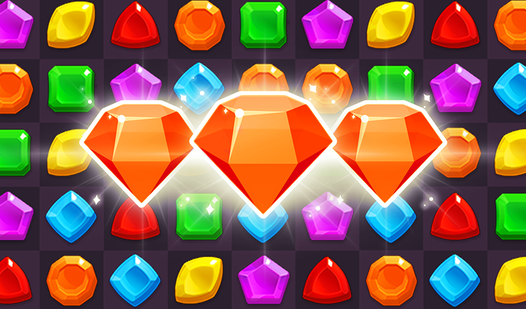
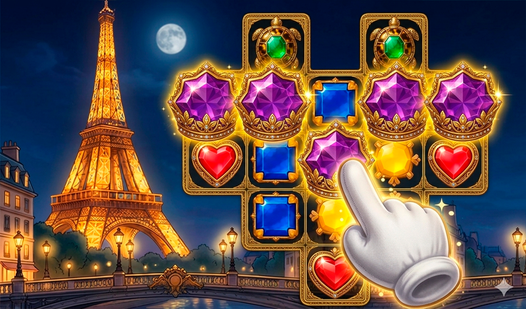
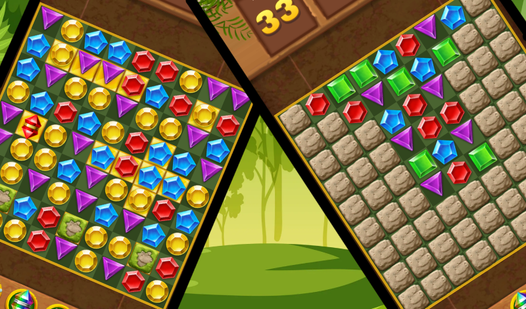
Match-3 is probably what you picture when someone says "Diamonds game." The board is a grid — usually 7×7 or 8×8 — filled with colored gems. Your objective changes level by level, but the core interaction is always the same:
- Identify a group of three or more identical adjacent gems. Adjacent means horizontally or vertically connected — diagonals usually don't count in most titles.
- Swap neighboring gems or click connected clusters to trigger the match. Some games use swapping; others let you click a group and watch them disappear.
- Complete the level objective. This might be: collect 50 red diamonds, clear all ice tiles, score 10,000 points before running out of moves, or reach a specific level of a meter. Read the objective screen before your first move.
- Earn and use special tiles. Matching 4 or 5 gems in specific formations usually creates a power piece — a bomb that clears a radius, a rocket that clears a row or column, or a rainbow gem that wipes out all of one color. These are crucial in harder levels.
- Manage your moves or time. Most match-3 games are move-limited (you have 25 moves to reach the goal) or time-limited (90 seconds on the clock). Move-limited games reward careful planning; time-limited games reward quick scanning.

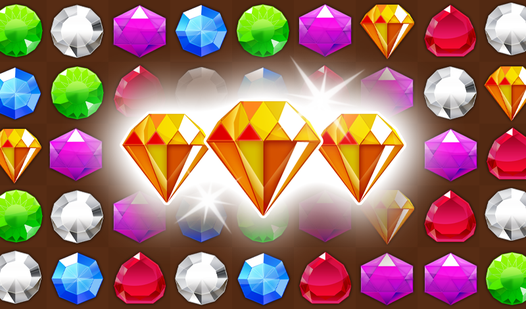
Сlassic Diamonds
Match 3 puzzle games have a unique ability to turn a stressful day into a relaxing session of pure mental satisfaction. Classic Diamonds offers exactl...
▶ Play FreeClassic Diamonds removes both constraints entirely — no lives, no timer, no move counter. This makes it an ideal game to learn match-3 mechanics at your own pace before moving to more competitive formats.
Merge Diamonds: Core Rules
Merge games have a completely different rhythm. Instead of clearing a board, you're building up toward a goal:
- A grid starts (mostly) empty. New diamonds appear either by your action or automatically every few seconds.
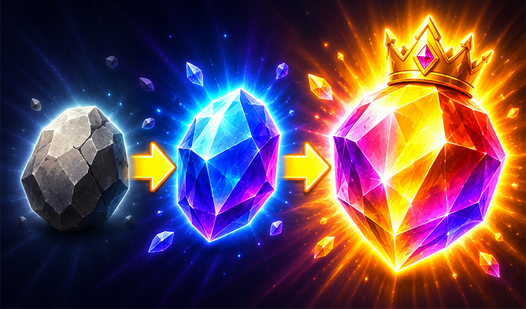
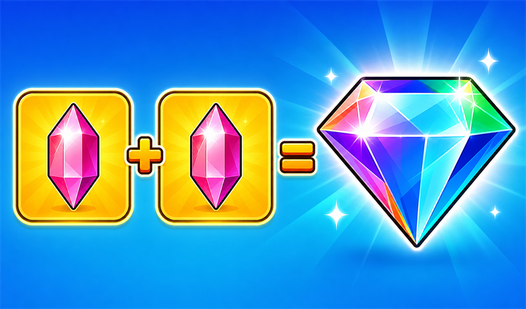
- Place or drag two identical pieces next to each other. They merge into a single higher-tier diamond. A Tier 1 + Tier 1 becomes a Tier 2, two Tier 2s become a Tier 3, and so on.
- The grid fills up as you play. Every new piece takes space. Every failed merge leaves pieces sitting around. If your grid is completely full and you can't merge anything, it's game over.
- The goal is usually the highest-tier gem. Some games ask you to create a specific legendary diamond; others are endless score-chasers.
The strategic depth comes from the tension between merging everything quickly (which fills the board) and being patient (which requires you to hold pieces in place while waiting for matching partners to appear).

Merge Diamonds: Treasure!
Staring at a blank screen during a midday slump is the worst, but finding an instant distraction shouldn't be a chore. Merge Diamonds: Treasure! provi...
▶ Play FreeMerge Diamonds: Treasure! is a clean, well-balanced implementation of this formula with a 2048 skeleton underneath it. Each tier has a clear visual identity, so you always know what you're working with at a glance.
2048-Style Diamonds: Core Rules
The 2048-style variant adds a layer of chaos to the merge concept by removing individual piece control:
- Swipe or press an arrow key. Every tile on the board slides in that direction simultaneously.
- Matching tiles that collide merge. Two Tier-2 diamonds sliding into each other become one Tier-3.
- A new piece spawns after every move. Usually a Tier-1 or Tier-2, placed randomly on the board.
- Survive as long as possible. The board fills gradually. When no more moves are possible, the game ends.
The crucial difference from individual-move merge games is that you can't move one piece without moving all of them. Every decision has board-wide consequences.
Mining and Digging Games: Core Rules
These are simpler to explain. You control a character digging downward through earth, rock, and rubble. Diamonds and gems are scattered throughout. You collect what you dig through. Some versions add physics (dig carefully or rocks fall on you), upgrade systems (buy better tools to dig faster), or enemies to avoid.
Strategies and Tips for How to Play Diamonds
Knowing the rules is the starting point. Playing well requires something different. These strategies apply across the different formats.
Match-3 Strategy
Read the objective before your first move. This sounds obvious but most players just start swapping whatever looks good. If the level needs you to collect 30 blue diamonds, you should be scanning for blues first, not clearing whatever combo is most visually obvious.
Work from the bottom. When you clear gems near the bottom of the board, pieces above fall down and can trigger chain reactions. Clearing near the top wastes the cascade potential entirely.
Plan for what falls, not just what's there. Before you make a move, imagine what will drop in after the match. A swap that looks weak now might set up a beautiful cascade if you can see two steps ahead.
Build special pieces on purpose. Matching 4 in a row creates a directional rocket. Matching 5 in an L-shape creates a bomb. Matching 5 in a straight line creates a rainbow gem. Learn these formations and aim for them. A rainbow gem used well is worth 10 ordinary matches.
Save boosters for critical moments. If you use a bomb on move 3 of a 30-move level, you've wasted it. Boosters are most valuable when you're one or two pieces away from the goal with very few moves left.

Merge Diamonds in Match 3!
Drop vibrant gems onto the grid to combine identical pieces and watch them evolve into larger, more brilliant versions. Every move in Merge Diamonds i...
▶ Play FreeMerge Diamonds in Match 3! combines both mechanics — you're matching gems to merge them into larger ones rather than simply clearing them. This hybrid approach means your strategy has to consider both the clearing and the building simultaneously, making it more complex than either format alone.
Merge Game Strategy
Lock your highest-tier piece in a corner. This is the foundational principle of all 2048-style and merge-style games. When your best piece is in a corner, it can't accidentally drift to the center and break your setup. Every merge you make should keep feeding toward that corner.
Build in a snake pattern. Arrange pieces so that Tier 1 → Tier 2 → Tier 3 flows in a line: left to right on the top row, right to left on the second row, and so on. This way, merging always happens in a predictable direction and your highest pieces stay near each other.
Never fill the board. The moment the board fills, you're one bad spawn away from game over. Always maintain at least two or three free cells. If you're getting close to full, prioritize merges over placement even if the resulting piece goes somewhere inconvenient.
Don't rush. Merge games reward patience. If you have two Tier-3 diamonds on opposite ends of the board, it's better to wait and rearrange the board to bring them together than to panic-merge everything in between just to make space.
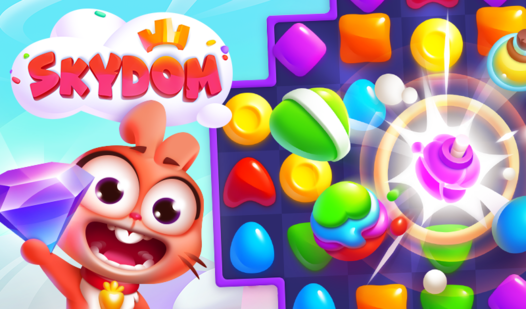
Skydom - Match 3
Feeling bored and need a quick mental escape? Skydom - Match 3 is here to whisk you away to vibrant sky kingdoms packed with enchanting challenges! Fo...
▶ Play FreeSkydom - Match 3 has a well-designed difficulty curve that forces you to develop match-3 skills naturally. Early levels teach you how combos chain together; later levels require you to plan specifically for objective tiles while managing a crowded board.
Universal Tips Across All Formats
Play untimed first. Almost every Diamonds game has both timed and relaxed modes, or at least untimed practice levels. Learn the mechanics without a clock running before you add time pressure.
Notice what you're ignoring. Most players focus on the center of the board. Corners and edges are where boards get clogged — or where clever setups pay off. Train yourself to scan the full board, not just the most active area.
Accept that some runs will fail. Especially in merge and 2048 games, randomness plays a role. Sometimes new pieces spawn in the worst possible spots. Rather than fighting an unwinnable board, recognize when it's better to reset and start fresh with better positioning from move one.
Match during animations. Many match-3 games allow you to queue your next move while the previous match is still animating. Experienced players never stop moving — they're already scanning for the next swap while gems are still falling.
Best Free Diamonds Games: How to Play Diamonds Online
Here are the top picks available on FreeJoy.games. Each one is free, browser-based, and playable without an account.
Merge Diamonds in Match 3!
This game is worth playing just to experience how two puzzle formats can coexist in one design. You're on a match-3 board, but instead of clearing gems, connecting them merges them into higher tiers. The strategic demand is double: think about which matches clear space and which combinations are building toward something bigger. Once it clicks, the feeling is genuinely satisfying.
Merge Diamonds in Match 3!
Drop vibrant gems onto the grid to combine identical pieces and watch them evolve into larger, more brilliant versions. Every move in Merge Diamonds i...
▶ Play FreeMerge Diamonds: Treasure!
A 2048-style gem merger wrapped in a warm treasure-hunting visual theme. Each diamond tier is distinctly colored and animated, so you always know what you're working with. The progression from tiny uncut gems to gleaming mega-diamonds is handled well — each new tier feels like a genuine achievement. If you enjoy 2048-style thinking but want more personality than plain numbered tiles, this is a strong pick.
Merge Diamonds: Treasure!
Staring at a blank screen during a midday slump is the worst, but finding an instant distraction shouldn't be a chore. Merge Diamonds: Treasure! provi...
▶ Play FreeClassic Diamonds
Some games are better for being stripped down. Classic Diamonds removes the timer, the energy bars, the daily limits, and the competitive pressure. You connect stones, clear the board, and keep going. The unlimited lives mechanic alone makes this stand out — most mobile-style games gate your attempts behind wait timers, but Classic Diamonds just lets you play. Great for long casual sessions without interruption.
Сlassic Diamonds
Match 3 puzzle games have a unique ability to turn a stressful day into a relaxing session of pure mental satisfaction. Classic Diamonds offers exactl...
▶ Play FreeSkydom - Match 3
Skydom takes the match-3 formula to visually rich sky-kingdom levels with animations and color palettes that genuinely look polished. The puzzle design introduces new mechanics across different worlds without overwhelming you — each new element gets room to breathe before the next one arrives. Difficulty is honest: later levels are genuinely hard without feeling arbitrary. A solid choice for players who want a match-3 game with production values.
Skydom - Match 3
Feeling bored and need a quick mental escape? Skydom - Match 3 is here to whisk you away to vibrant sky kingdoms packed with enchanting challenges! Fo...
▶ Play FreePirate Treasures
The pirate theme gives this match-3 a sense of adventure that most gem games lack. You're a captain hunting treasure — the diamonds just happen to be on match-3 boards between you and your reward. Levels are creative, special pieces have good variety, and the narrative framing (however thin) adds enough context to make clearing boards feel purposeful. Good game for players who get bored with abstract gem grids.
Pirate Treasures
Fans of swashbuckling adventures and challenging logic riddles will find their new obsession with Pirate Treasures. This vibrant match 3 game tasks yo...
▶ Play FreeMore Games to Explore
These games share mechanics and themes with the Diamonds genre — puzzles, digging, gem collection, and pattern matching. All free, all browser-based:
The Mystery of Jewels: Adventure - Match 3
Matching shimmering crystals is the ultimate way to sharpen your brain and satisfy the urge for rapid-fire puzzle action. The Mystery of Jewels: Adven...
▶ Play Free
Starr Drops
Staring at a blank screen while waiting for your next meeting or class is the ultimate buzzkill. Starr Drops is the perfect way to break that monotony...
▶ Play Free
Come in here
Navigate through vibrant 3D environments while hunting for hidden diamonds and unraveling quirky secrets. Come in here challenges you to master moveme...
▶ Play Free
Obby: Dig Down
Fans of digging simulators and block-breaking challenges will find their new obsession in Obby: Dig Down. This addictive mining adventure tasks you wi...
▶ Play Free
Stone Merge: 2048
Drop colorful stones from the top of your screen to create massive chain reactions and climb the leaderboard. Stone Merge: 2048 challenges you to find...
▶ Play Free
Obby: Dig to the center of the Earth
Mining for hidden treasures is an addictive thrill that turns every layer of dirt into a potential gold mine. Obby: Dig to the center of the Earth cha...
▶ Play Free
Digging Master
Fans of management sims and history buffs will find their next obsession with Digging Master as they uncover the secrets of the past. This engaging ar...
▶ Play Free
Treasures of Paris: The Secret of Gems - Match 3
Matching colorful gems is the ultimate way to unwind while sharpening your cognitive skills through strategic thinking. Treasures of Paris: The Secret...
▶ Play Free