How to Play Detective: Rules, Strategies & Free Games
If you've ever wondered how to play Detective games or what makes them so addictive, you're in the right place. Detective games are one of those rare genres that work for absolutely everyone — kids, adults, casual players, hardcore puzzle-solvers. They scratch that itch to figure things out, to notice what others miss, and to feel genuinely clever when the pieces fall into place.
This guide covers everything: what detective games actually are, the core rules and mechanics you'll encounter, strategies that separate sharp investigators from clueless bystanders, and a curated list of the best free detective games you can play right now — no downloads, no registration required.
What Are Detective Games?
At their core, detective games are about observation, deduction, and problem-solving. You're presented with a mystery — a crime, a disappearance, a theft — and your job is to gather clues, analyze evidence, and figure out what happened.
The genre is broad. It includes:
- Hidden object games — scan scenes for specific items that unlock story progress
- Logic puzzle games — use deductive reasoning with grids, clues, and elimination
- Adventure/point-and-click games — explore environments, talk to characters, piece together narratives
- Word and language games — use vocabulary and wordplay as investigative tools
What unites them all is the mental engagement. You're not just pressing buttons — you're thinking. That's why detective games have built such a loyal following and why players keep coming back even after finishing a game. There's always another mystery to solve.
Rules and Basics of Detective Games
How to play Detective games varies by subgenre, but there are universal rules that apply across the board.
The Core Loop
Almost every detective game follows this structure:
- Receive the case — a briefing, a cutscene, a note. You learn what happened (or what's missing).
- Investigate the scene — click around, search locations, talk to witnesses.
- Collect evidence — clues go into your inventory or case file.
- Connect the dots — use logic, elimination, or deduction to form conclusions.
- Solve the mystery — identify the culprit, find the missing item, crack the code.
Hidden Object Rules
In hidden object detective games, each scene presents a list of items you need to find within a cluttered image. Rules typically include:
- Click on items exactly — close isn't good enough
- Random clicking is penalized (hint deductions, temporary lockouts)
- Items may be partially hidden or disguised
- Completing the list unlocks a piece of the story or a new location
Logic Puzzle Rules
Logic-based detective games use grids and categorical reasoning. You're given a set of clues ("The suspect in the blue coat wasn't in the library") and must deduce who did what, where, and when. Rules here are strict:
- Each conclusion must follow from the clues given
- Mark possibilities and eliminations systematically
- Never assume — only deduce
Adventure Detective Rules
Point-and-click detective adventures are more freeform. You explore, pick up objects, use them on other objects, and have conversations that branch. The "rules" are more like guidelines:
- Interact with everything — you never know what's a clue
- Combine items in your inventory
- Pay attention to dialogue — characters drop hints constantly
Strategies and Tips for Detective Games
Knowing the rules is one thing. Playing smart is another. Here's how experienced players approach detective games.
1. Observe Before You Click
Especially in hidden object scenes, take a moment before you start clicking. Scan the whole image. Your brain will naturally pick out items that feel "placed" rather than organic to the scene. That deliberate pause saves time and reduces random clicking penalties.
2. Keep Notes
For logic puzzles and longer mystery narratives, write things down. Seriously. Character names, alibis, locations, timestamps. Your short-term memory will betray you. A notepad beside your screen isn't a crutch — it's what real detectives do.
3. Work by Elimination
When you're stuck, flip your thinking. Instead of asking "who could have done it?", ask "who definitely couldn't have?" Eliminate impossibilities and what remains, however unlikely, must be your answer.
4. Use Hints Strategically
Most free detective games offer hints, but they're limited. Don't burn them the moment you're stuck — give yourself 2-3 minutes of honest searching first. But don't stubbornly refuse hints when you've been stuck for 10 minutes. Hints exist to keep momentum going.
5. Pay Attention to What Seems Irrelevant
Game designers are sneaky. That random painting on the wall, the weird number on a calendar, the offhand comment from a minor character — these are often the keys to progress. Nothing in a detective game is placed accidentally.
6. Revisit Scenes
In adventure-style detective games, you often need to backtrack. A door that was locked earlier might open after you've spoken to a specific character. A hidden object scene might reset with new items after a story beat. Always be willing to go back.
Best Free Detective Games to Play Online
Now for the good part. Here are the best detective games you can play for free on FreeJoy — no download, no registration, just straight into the mystery.
Detective - Logic Puzzles
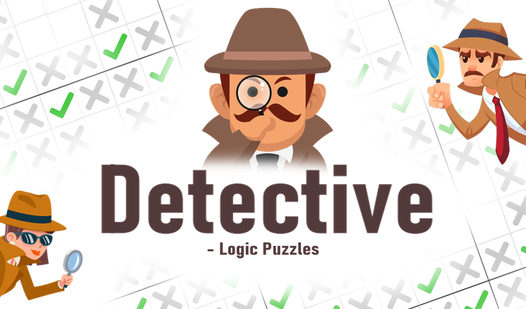
This is detective gaming at its most cerebral. Detective - Logic Puzzles puts you in the role of an investigator working through complex deduction challenges. Each puzzle presents a scenario with multiple suspects, locations, and conditions — your job is to use the provided clues to figure out exactly what happened. It's methodical, satisfying, and genuinely challenging in the best way. If you love the "aha!" moment when all the clues click into place, this is your game.
Detective - Logic Puzzles
Staring at a blank screen during your lunch break is the perfect sign that you need a bit of mental stimulation. Detective - Logic Puzzles turns your ...
▶ Play FreeHidden Objects: Detective Agency
You've just joined a detective agency, and the cases are already piling up. Hidden Objects: Detective Agency sends you to crime scenes where you need to find specific items to gather evidence about a robbery. Each scene is packed with detail — objects hidden in plain sight, disguised by clutter or shadows. The game has a satisfying case-by-case structure that keeps you pushing forward, always curious what the next crime scene will look like.

Hidden Objects: Detective Agency
Scour cluttered crime scenes to uncover vital clues and crack the case of the century in Hidden Objects: Detective Agency. You play as a sharp-eyed in...
▶ Play FreeFairy Tale 2022: Detective
What if your favorite fairy tales hid dark secrets? Fairy Tale 2022: Detective takes classic stories and twists them into mysteries waiting to be solved. It's a clever mashup — familiar settings and characters, but nothing is quite as innocent as you remember. The art style is gorgeous, and the puzzles are woven into the narrative in ways that feel organic rather than forced. A genuinely unique take on the detective formula.

Fairy Tale 2022: Detective
Stuck in a dull meeting or just need a quick mental escape from the daily grind? Fairy Tale 2022: Detective serves up the perfect distraction with its...
▶ Play FreeWord Detective
Language is a clue. Word Detective turns vocabulary and wordplay into investigative tools, challenging you to solve word puzzles that advance a detective story. It's one of those games that feels educational without ever feeling like homework — you're engaged in solving mysteries, and the word mechanics are the mechanism through which you do it. Great for players who love both language games and detective stories.
Wheely 7 Detective
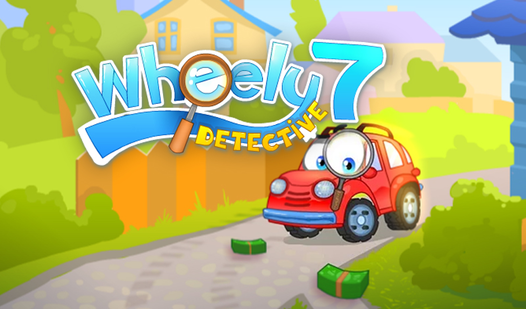
Even cars can be detectives. In Wheely 7 Detective, the lovable Wheely discovers his friend has been stolen and takes matters into his own wheels. The game is built around finding clues, solving environmental puzzles, and following the trail of a theft across charming, cartoonish scenes. It's accessible for younger players but has enough puzzle depth to keep adults genuinely engaged. The animations are delightful, and the detective premise gives the whole thing a fun narrative pull.

Wheely 7 Detective
Fans of clever puzzles and cute car adventures will find a new favorite mission in Wheely 7 Detective. Our favorite red car takes on the role of a pri...
▶ Play FreeMore Detective Games Worth Playing
The detective genre is rich and varied. Beyond the featured titles above, here's a collection of additional games that bring different flavors of mystery-solving to the table.
Hidden Objects: Island Secrets
A hidden object mystery set on a secluded island — which means atmospheric scenery, layered scenes, and the creeping feeling that something is very wrong in paradise. The locations are varied and beautifully drawn, and the mystery has enough twists to keep you guessing.

Hidden Objects: Island Secrets
Fans of detective games will find themselves hooked by the mysterious atmosphere of Hidden Objects: Island Secrets. This captivating adventure challen...
▶ Play FreeHidden Object: Clues and Mysteries
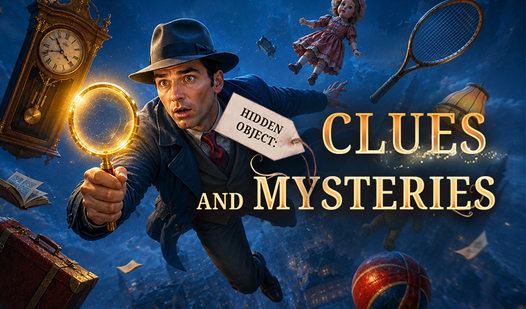
A more traditional hidden object experience that doesn't waste time with frills. Each scene is a puzzle, each found object is a clue, and the overall mystery builds at a satisfying pace. If you want clean, well-executed hidden object gameplay, this delivers.

Hidden Object: Clues and Mysteries
The human brain is naturally wired to find patterns in chaos, making the classic hidden object genre the ultimate test of observation. Hidden Object: ...
▶ Play FreeRachel Holmes
Rachel Holmes is a detective who doesn't back down from a challenge. This game follows her through a series of cases that blend hidden object mechanics with narrative-driven investigation. Rachel is a proper protagonist — smart, resourceful, and worth rooting for across the whole adventure.

Rachel Holmes
Scan two side-by-side images to pinpoint subtle inconsistencies before your high-speed rivals steal the glory. Rachel Holmes invites you on a global i...
▶ Play FreeMary's Mystery: Hidden Object
Mary has stumbled onto something she wasn't supposed to find. Mary's Mystery is a cozy mystery in the best sense — the kind where you're invested in the characters as much as the puzzle. Hidden object scenes are well-designed, with a difficulty curve that keeps things challenging without becoming frustrating.

Mary's Mystery: Hidden Object
Staring at the clock waiting for your shift to end or just need a quick mental escape from the daily grind? Mary's Mystery: Hidden Object turns your b...
▶ Play FreeSolitaire Crime Stories
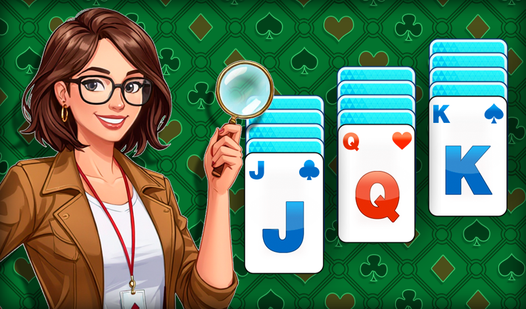
What happens when you combine solitaire card gameplay with a crime narrative? Something surprisingly compelling. Solitaire Crime Stories uses card game mechanics to advance a detective story — each hand you play reveals new information, new suspects, new twists. It's an unusual hybrid that works much better than it sounds.
Solitaire Crime Stories
True detective work often hides in the most unexpected places, blending sharp logic with the thrill of a gripping mystery. Solitaire Crime Stories tra...
▶ Play FreeHidden Object: Emily's Case
Emily's case is personal — and that makes it gripping. This hidden object game wraps its scene-scanning mechanics around an emotionally engaging mystery. You're not just looking for objects; you're uncovering a story. The personal stakes give it narrative weight that elevates it above a pure puzzle exercise.

Hidden Object: Emily's Case
Fans of mystery thrillers who love testing their observational skills will find their next obsession with Hidden Object: Emily's Case. This gripping t...
▶ Play FreeHow to Play Detective Games: A Practical Walkthrough
Let's put the theory into practice. Here's how a typical session in a hidden object detective game looks for a player who knows what they're doing.
Step 1: Read the objective carefully. Before touching the scene, read the task list completely. Your brain will start pattern-matching before you even begin clicking, which makes the search faster.
Step 2: Start from the edges. Designers tend to hide objects in corners and along borders because that's where players look last. Start there and work toward the center.
Step 3: Use color and shape, not names. If you're looking for a "wrench," don't search for the word wrench — search for the shape of a wrench. Your visual system is faster than your verbal system for this kind of task.
Step 4: Don't ignore the obvious. Sometimes items are hidden in plain sight, sitting right in the middle of the scene at full size. Players often scan right past them because they're looking for something more cleverly concealed.
Step 5: When stuck, change the angle. Tilt your head, squint, or step back from the screen. Sometimes a different visual approach reveals items that your brain was filtering out.
Step 6: Keep the story in mind. In detective games, the story context often gives you hints about what you're looking for. If the narrative says a theft happened in a kitchen, objects related to cooking or kitchen activities are likely candidates.
How Detective Strategies Work in Logic Puzzles
Logic-based detective games deserve their own strategy breakdown because they play very differently from hidden object games.
The most effective approach is the grid method. Draw (or use the in-game grid if provided) a table with suspects on one axis and attributes — locations, weapons, times — on the other. As you read each clue, fill in what's definitively impossible with an X and what's confirmed with a checkmark.
The key insight is that every clue eliminates something. Even a clue like "the suspect in the red coat was NOT in the library" seems minor — but it crosses off one cell in your grid. Enough eliminations, and the solution becomes visible by pure logic.
Common mistake: Players try to solve logic puzzles by intuition or narrative logic ("well, it makes sense that the butler did it"). Resist this entirely. Detective logic puzzles are mathematical exercises. Follow only what the clues actually say, not what feels right.
Why Detective Games Are So Satisfying
There's a psychological reason detective games feel so rewarding. Humans are pattern-recognition machines — we evolved to notice inconsistencies, track cause and effect, and construct narratives from fragmentary evidence. Detective games give that cognitive machinery a structured workout.
When you solve a mystery, you're not just completing a game objective. You're confirming that your observation and reasoning are sharp. That's a genuinely meaningful feedback loop, which is why detective games create such loyal players.
The best detective games — whether they're logic puzzles, hidden object adventures, or narrative mysteries — understand this. They're designed not to trick you unfairly, but to challenge you in ways that feel solvable in retrospect. The satisfaction of saying "I should have seen that coming" is the entire point.